
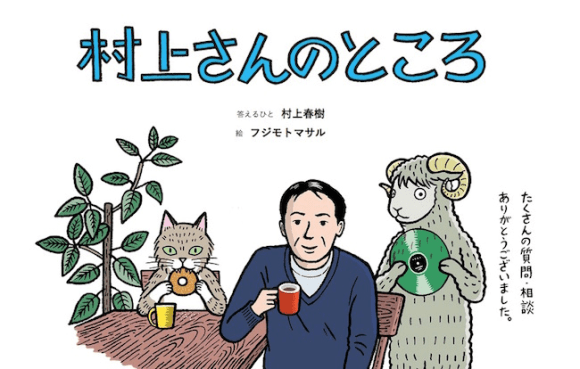
You may have heard that legendary Japanese novelist Haruki Murakami runs a blog where he answers questions sent in by readers. He’s tackled subjects ranging from the meaning of life to how to become a writer to what animal ability he’d like to have.
In one of his most recent questions, Murakami gives his opinion on a very touchy subject in Japan: nuclear power. Instead of calling out for reform or regulations though, he suggests one very simple change: that Japanese people refer to what they currently call “atomic energy power plants” as “nuclear power plants” instead.
Ever since the 2011 Tōhoku earthquake, tsunami, and subsequent Fukushima nuclear power plant meltdown, nuclear power has been a very controversial subject in Japan. Just a few months ago the first official steps were taken to restart two nuclear reactors in Sendai, causing outrage among the local population.
All this is probably what caused an anonymous 54-year old female lecturer to ask Haruki Murakami this question:
“In your 1999 collection of essays, you wrote: ‘Japan, as an economic power, should find another source of power besides atomic energy. It may cause a temporary economic dip, but we will be respected as a country that does not use nuclear power.’ …Then in the speech you gave when you received the International Catalunya Prize, in regard to the meltdown, you said: ‘Japan should say “no” to nuclear.’ Now, several years later, what is your opinion?”
Before we get to Murakami’s answer, we need to just clear up a bit of linguistic information. In Japanese, nuclear power plants are referred to as “atomic energy power plants,” using the word genshi (atomic) instead of kaku (nuclear). This may not seem like an incredibly important point, but it is a little strange that “nuclear weapons” is translated into Japanese using kaku, while “nuclear power plant” conveniently avoids that scary word and opts for the less-evocative-of-destruction genshi instead.
Here’s Murakami’s (abridged) response:
“Ah, I did write something like that, didn’t I? Either way though, my thoughts on nuclear energy haven’t changed since then.
“In my opinion, I don’t think we should call them ‘atomic energy power plants.’ They’re called ‘nuclear power plants’ in English, so why is it different in Japanese? Just that small change makes it seem like they’re trying to hide how dangerous these places are from people. It makes them sound more peaceful.
“The big electric companies pour money into these (comparatively) poor areas, get the government on their side, then before you know it they’ve constructed a plant with the approval of only the small area it’s actually being built in (when they really should require the approval of the surrounding areas as well). That’s how disasters like Fukushima happen.
“So can we call them ‘nuclear power plants’ from now on? It would help validate the opinions of the people who oppose them. That’s my two cents on the matter.”
Nuclear energy in Japan is not going to stop being a contentious issue anytime soon. There are those who argue it’s by far the safest and cleanest form of reliable energy, but anyone traumatized by the Fukushima meltdown is going to have a very different opinion.
What do you think? Do you agree with Murakami? Or do you think changing a few words around is just a silly idea? Let us know in the comments!
Source: Murakami-san no Tokoro via BLOGOS
Top image: Murakami-san no Tokoro
 Take a tour of the Fukushima Daiichi Nuclear Power Plant seven years after the disaster 【Video】
 First nuclear power plant set to restart in Japan after 2011 meltdown
 Author Haruki Murakami’s Q&A blog closes, posts hint at his own incredibly sad marriage
 Tokyo Electric Power Company admits it knew earthquake sensors are broken at Fukushima power plant
 Foreign workers being hired for Fukushima nuclear power plant decommissioning project
 Studio Ghibli unveils new anime calendars and diary planners for 2027
 Japan’s final Penguin Suica train cards have already shipped, and when they’re gone, they’re gone
 Hikaru Utada sings new song in Shinkansen commercial for Japan’s Supreme Class cabins
 Farewell Final Ceremony announced for Tokyo’s life-size Gundam statue, will stream live
 Hobonichi unveils new 2027 planners, diaries and stationery with One Piece, Suica Penguin, Hello Kitty and a must-buy Mini Techo
 Mister Donut releases new doughnuts that look and taste like Japanese sweet potatoes
 Tokyo’s Haneda Airport opens new Terminal 1 North Satellite next month
 Foreign travelers arrested in Japan following smash-and-grab robbery in Tokyo shopping mall
 This Japanese 7-Eleven has the most expensive drinks, and item, we’ve even seen at the chain
 Starting this fall, you’ll be able to take a Pokémon Jet flight to Japan
 Japan approves foreign resident visa renewal fee increases of up to 967 percent, starts soon
 Japan tripled its departure tax to fund tourism but is using the money on cherry blossoms and bears
 Nike x One Piece collection brings Devil Fruits to sneakers and streetwear in Japan
 We recommend not buying one pack of Japan’s new convenience store corn soup-flavor fried chicken
 Police in Japan looking for who’s responsible for dumping 80 loaves of bread on side of road [Video]
 Japan’s double-decker portable rice cooker/bento maker is better than ever with new version
 Nephew of Studio Ghibli director Hayao Miyazaki serves up Totoro Shaved Ice in Tokyo
 12-year-old British girl who went missing in Tokyo found safe after visiting anime sites around Yokohama
 7-year-old boy left behind on Mt. Fuji by his own dad
 Air-conditioned dress shirts arrive in Japan to save working professionals from sweltering heat
 Sushi Bus: Japan’s first conveyor-belt bus lets you eat sushi while sightseeing around Tokyo
 Pokémon Center Online designates first Pokémon items that will require Japanese ID card to buy
 Japanese toilet aims to attract foreign tourists but not everybody is happy about it
 Tokyo’s newest viral dessert is like a Japanese parfait inside a bread bun [Taste test]
 New Japanese vending machine at Shinkansen station sells cups of ice on platform
 Study finds hundreds of people in Indonesia legally named after Naruto, Inuyasha, other anime stars
 Japan announces sudden 400-percent increase in visa fees for foreigners entering the country
 Japan’s human washing machines will go on sale to general public, demos to be held in Tokyo
 Studio Ghibli has a new anime out, and there’s only one place in the world where you can see it
 Starbucks Japan releases new drinkware and goods for Valentine’s Day
 Starbucks Japan releases new sakura goods and drinkware for cherry blossom season 2026
 Japan’s newest Shinkansen has no seats…or passengers [Video]
 Tokyo subway installing new ticket gates that don’t accept payment through Suica or other IC cards
 Japanese ninja certification exam attracts 131 candidates from Japan and abroad
 Salomon releases Japan-exclusive Mt. Fuji hiking gear that doubles as an amazing souvenir
 Put sesame oil in your coffee? Japanese maker says it’s the best way to start your day【Taste test】
 Japanese Documentary Tells the Real Story of the Daiichi Nuclear Plant Evacuees
 TEPCO in hot water for use of tasteless hashtag in recent tweet about Fukushima Nuclear Plant
 More Than Half of Cleanup Staff at Fukushima Nuclear Plant on Counterfeit Contracts
 First worker to die from Fukushima radiation exposure officially recognized by Japan’s government
 U.S. military in Japan bulk buys Japanese scallops as China’s Japanese seafood ban continues
 Japan government makes cute illustrated version of radioactive isotope it plans to dump into sea
 U.S. military personnel launch US$5 billion lawsuit against Tokyo Electrical Power Company
 Tokyo Electric Power Company airs first commercial since Fukushima disaster, creates new mascot
 Return to Fukushima: Decontaminated town reopens to residents, but is anybody living there?