There’s no need to use toxic substances to kill off unwanted insects in Japan, because there’s a much more eco-friendly method they’ve been using for hundreds of years. Although it may not be scientifically proven, many people feel this is still the best way to get rid of everything from garden aphids to mosquitoes. And if the method has endured for centuries, it must be at least somewhat effective right?
This uniquely Japanese insect repellent is far cheaper than commercial insecticides, easier to implement, and you only have to use it once a year in spring or early summer. And the best part? It involves Japanese sake!
What’s the secret? We’ll let you know after the jump.
Hundreds of years ago, agricultural communities in Japan’s countryside worked together to rid their areas of insects that threatened to damage crops. Locusts would swarm through and devastate rice paddies and leaf and root-eating bugs were a constant threat. Since most people were farmers in such areas, there was a lots that needed to be protected in order to ensure a bountiful harvest.
But the rural communities managed to come up with a way to rid their rice fields of harmful creepy crawlies while leaving the good ones behind to spread insect joy. And it was all accomplished in one day, so the farmers were able to enjoy the rest of the year until the harvest feeling a lot less threatened. And no, it does not involve eating insects, a different kind of Japanese tradition.
With no chemicals to turn to in those days, instead the villagers depended on something they had an infinite supply of: mind power. They figured the best way to get rid of bad insects was to convince them to leave of their own accord. And to do this, they would have to offer them something more attractive than crops. Like offering honey to ants carrying bread crumbs, the idea was to distract the offenders by promising them something that at least seemed better than what they already had!
Different country towns varied in their exact method of performing the ritual, called mushi okuri (seeing off the insects), but here on Shiraishi Island in the Seto Inland Sea, they’ve been persuading uncooperative insects to leave via, drum roll please…a free boat ride! Yes, in a peculiar twist on one of Japan’s peculiar crimes called sagi, even bugs are fair game! And believe it or not, the crawlies fall for it every time and clamor on board for the charter boat headed for Kyoto.
Just in case you’re also at your wit’s end with insects, we’re going to reveal the entire process of how to get rid of erroneous visitors, just in case you want to try it yourself.
1. Build a Boat
Build a boat and they will come! While in the old days the islanders used a larger wooden vessel that was carried on the shoulders like a mikoshi (portable shrine), these days it’s a smaller, lighter straw boat made expressly for the purpose.
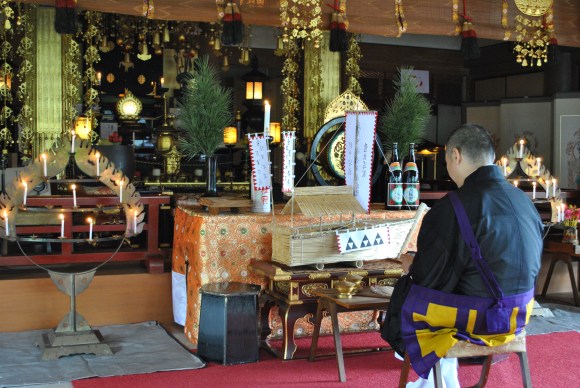
The boat is then put on the altar in the temple and is blessed by the priest. Notice the bottles of sake to the right of the boat. We’ll get to that later!
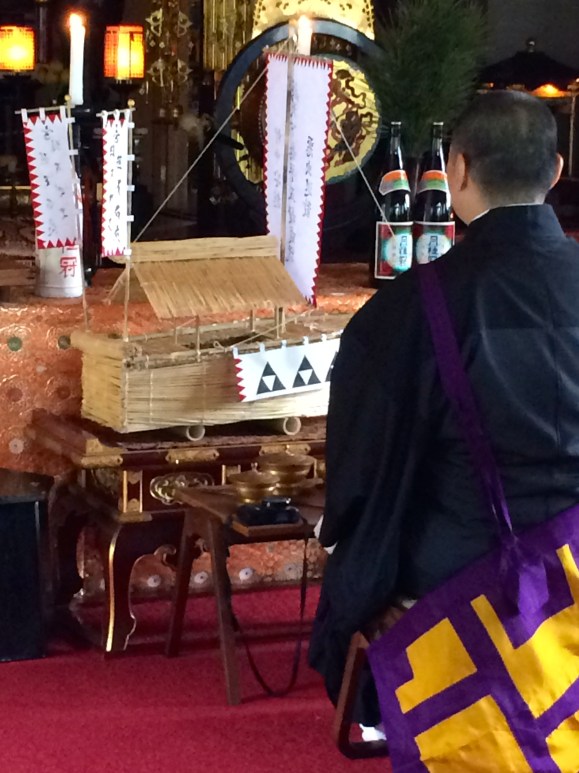
After copious chanting inside the temple, the vessel is carried outside where the locals have assembled and a taiko drum awaits.
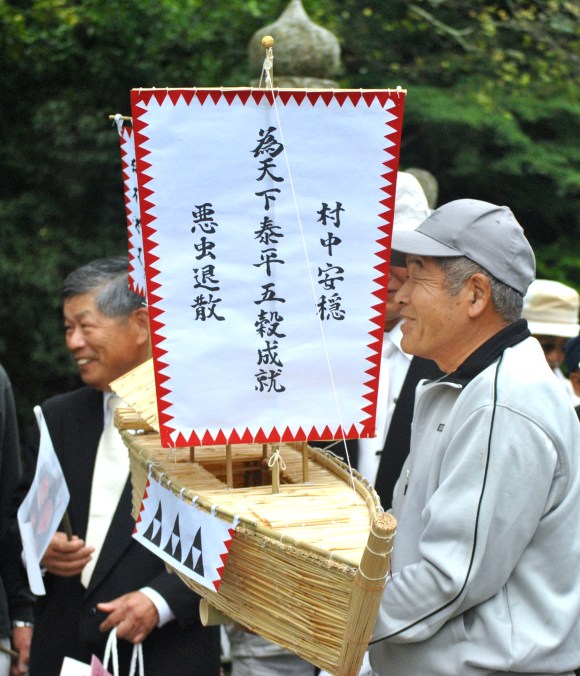
2. Draw Insect Effigies
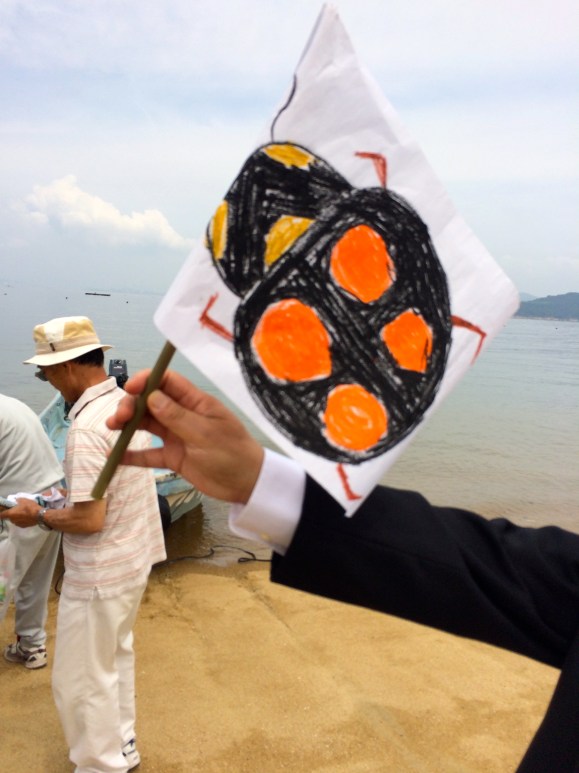
Although the children on the island do not take part in the mushi okuri event, they do have a role to play. At school, the elementary school students draw insects on paper flags. These banners are like mirrors for the vermin who will recognize themselves and be mesmerized by their own color and beauty.
▼ This was the flag I held during the ceremony, but I suspect a teacher drew it as it is missing the distinct artistry of an elementary school student.
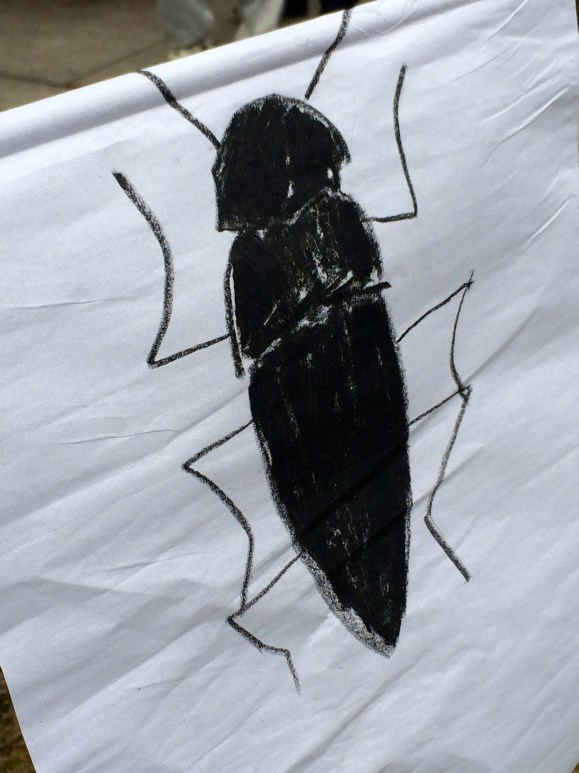
▼ Yes, that’s more like it!
3. Hold a procession
The participants, assembled outside of the temple, now start marching around the island in a zigzag route through vegetable gardens and neighborhoods.
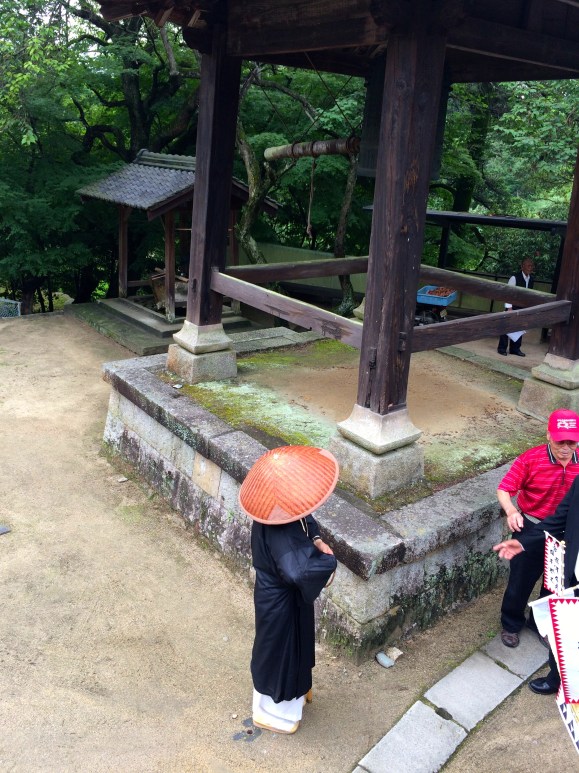
The insect boat is at the lead, followed by the holy man in priestly garb, two men carrying a taiko drum suspended between them on a bamboo pole, and the remaining islanders carrying the insect flags.
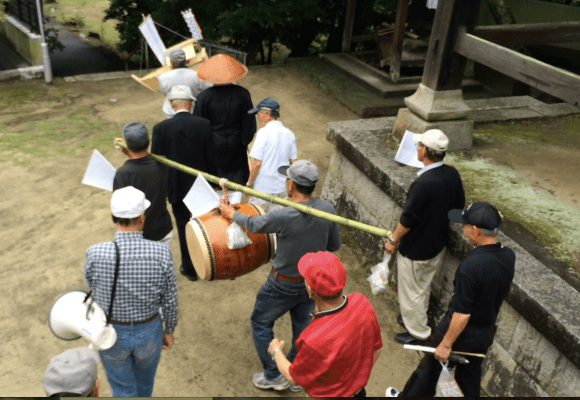
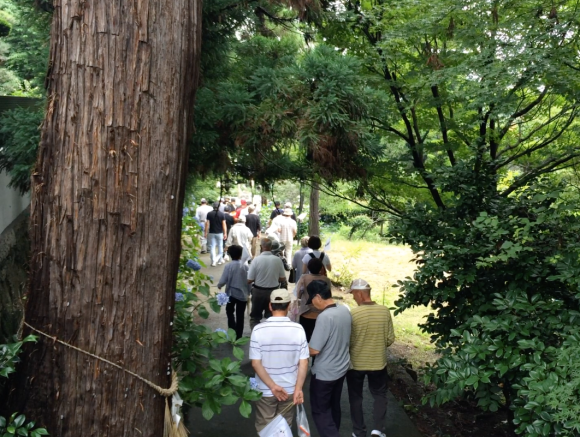
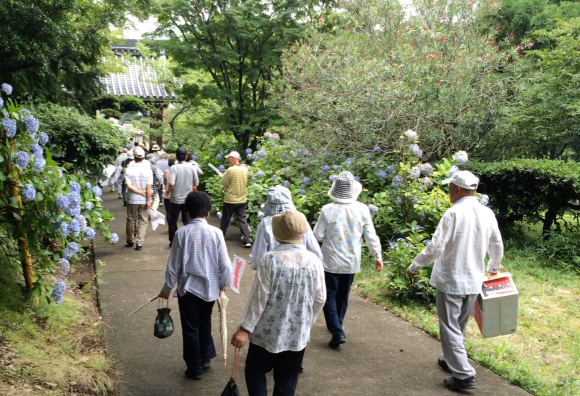
Throughout the procession they sing out as they march through the fields and neighborhoods, beckoning the creatures to climb aboard the tiny vessel for a three-hour tour, a three-hour tour. The insects, who have very small brains, are unable to resist the heady music, entrancing drum beat and the promise of attractive arthropod shipmates, so they all clamor on board.
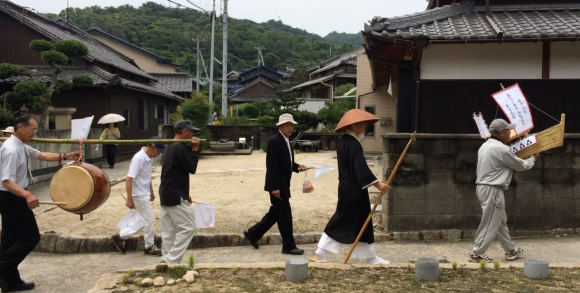
From mountains to sea level, the island is completely swept clean of rogue hemipterans so parsimonious, they can’t resist a free boat ride.

4. Launch the boat
Finally, with the procession having meandered down to the sea, the craft is placed on the sand from which it will be launched.
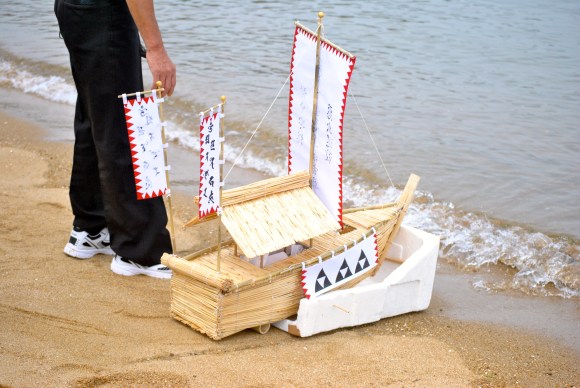
But first, everyone who is carrying an insect flag must rip it from its base, crumple up the paper, and stuff it inside the ark.
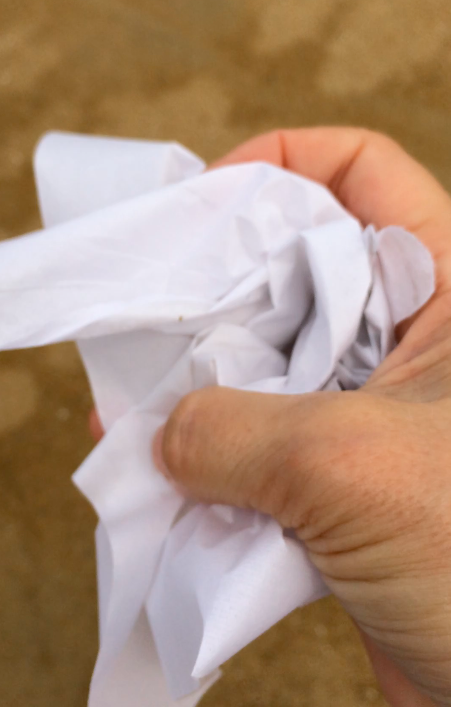
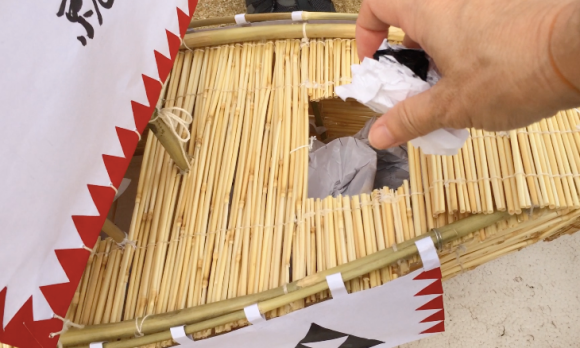
This is a symbolic gesture, which is probably how the island gets around getting fined for littering, since we all know the likelihood of the water taxi arriving at its destination in Kyoto is very slim.
Being polite Japanese, the participants send the insects off in style, with everyone praying for them on the shores until they are completely out of sight.
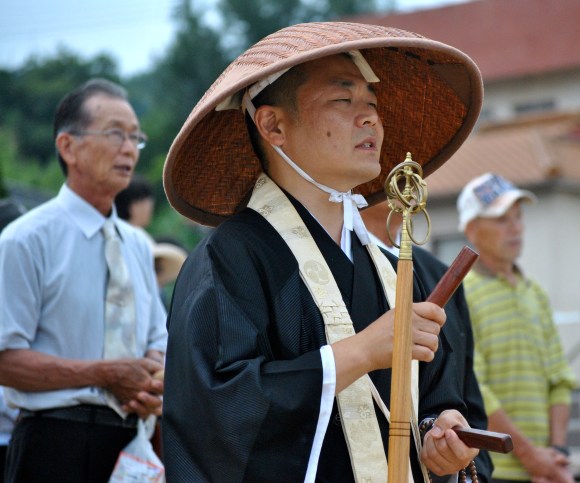
▼ We just hope the insects don’t have any sailing skills.
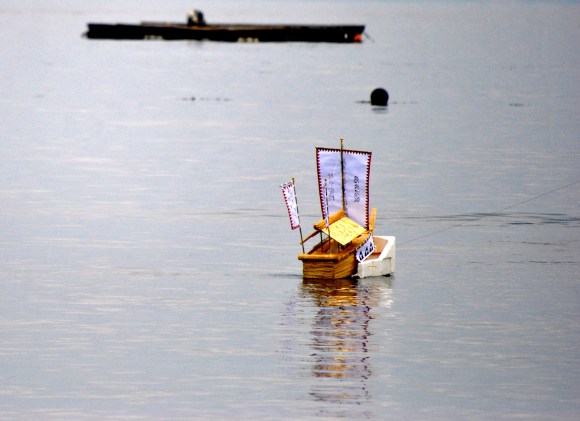
Sayonara, insects!
And then, everyone drinks the sake.
Mushi okuri is an ancient Japanese custom that, while not a scientifically proven method of getting rid of bad insects, reminds us that no matter how loathsome we may find them to be, these six-legged creatures have a purpose in the higher order of things and that we should still respect their existence in our ecosystem.
See the festival and hear the insect song in the video!
All images © Amy Chavez/RocketNews24 except where noted
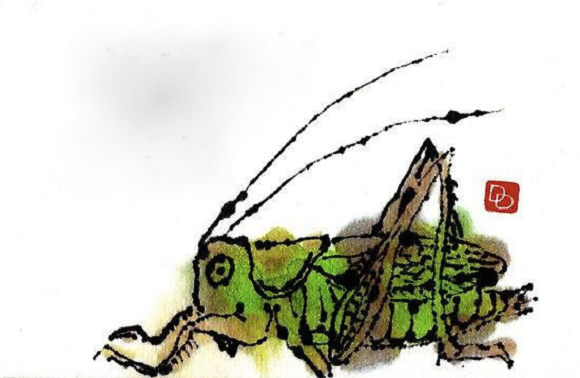
Top image: Grasshopper (dosankodebbie)