
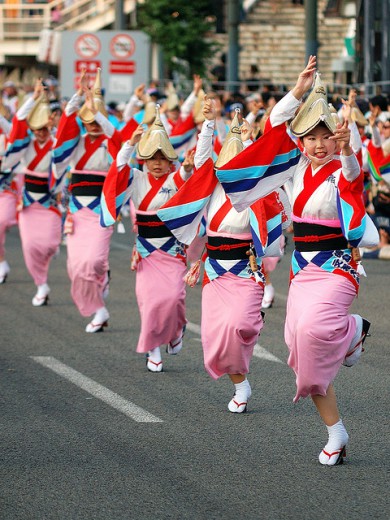
If the idea of your loved ones leaving this earth never to return again seems unfair, then you should consider the Japanese view of the afterlife. While nothing can change death itself, it is comforting to know that in Japan there is a special time of the year when the souls of the dead come back to visit the living. This is called Bon (or Obon using the honorific “o”) a holiday period from August 12-16 (exact dates may vary depending upon location), a time when the entire country takes a break to celebrate the “festival of the dead.” It’s a lively few days when the living and the dead can once again unite to eat together, drink together and share good times.
The Bon tradition gives the country some of the unique dances that Japan is so famous for. Tokushima’s Bon dance, called Awa Odori, for example, draws over one million tourists every year. Traditional Bon entertainment is so lively, colorful and intriguing that a Bon dance is a must-see on every traveler’s itinerary.
Today we’ll introduce you to a five things you should know about Obon. Needless to say, it’s a very exciting time to be in Japan as a tourist!
While the Bon festival starts around Aug. 12, towns and cities hosting Bon dances have likely been planning for months in advance. Dance practices, the blocking off and closing down of city streets, and the taking of bookings for hotels and restaurants keep everyone busy up to the last minute. In Tokushima, accommodations are so full of tourists who wish to experience the Awa Odori, that those who can’t find a room end up sleeping on the floor of the train station. And believe me, it’s worth it!
While some bon traditions may vary according to the region of Japan, here are some things you can expect to see at Obon no matter where you are in the country:
1. Welcome fire 迎え火/mukaebi
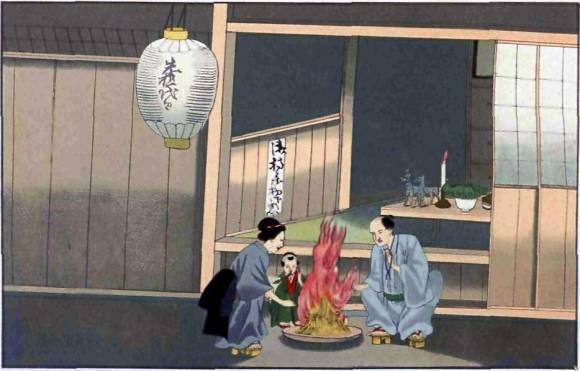
On the first day of Obon, people set out lanterns, the light of which is meant to guide the spirits back to their homes. These electrified paper lanterns (or sometimes very small fires lit outside the home) are placed inside the house or, if it’s the first Bon holiday after a family member has passed away, it will be more conspicuously placed outside the house to help the spirit find its way back for the first time. Some people will have fires at the family grave, burning natural fuels such as wood or husks to feed the fire.
On Shiraishi Island, where I live in the Seto Inland Sea, the temple holds a fire ceremony to welcome back all of the souls of the people who have lived on the island.
2. Offerings of food, drinks, sweets お膳/ozen
▼ A mold for sweets in the shape of the lotus.
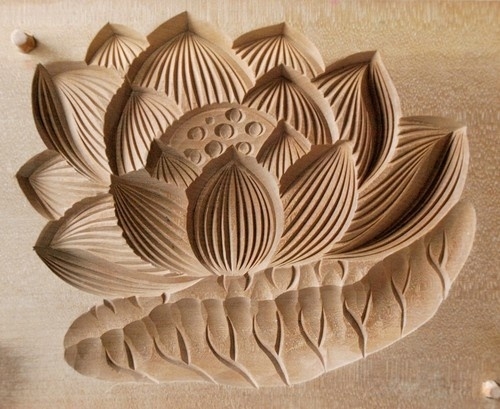
Inside the homes, offerings of fruit, rice, green tea, sake and special handmade sweets, especially those in the shape of lotus leaves, are offered at the family’s Buddhist altar. Food, when shared with the dead, is called ozen and can be small and simple offerings or larger meals. This reunion with the dead is an attempt to treat the spirits as if they are still alive.
3. Grave visits and cleaning 御墓参り/ohakamairi
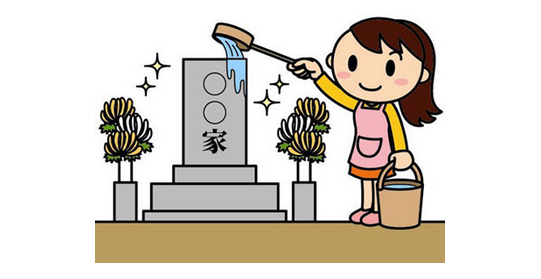
Obon is also a time when the family visits the graves of the ancestors. They perform the ritual cleaning of the grave stones, something like outdoor housekeeping. Using a brush they wash away any dirt or stains, then rinse off the stone using a special pail of water and ladle for this purpose. Thus you’ll always find a water tap at graveyards in Japan.
 Matcha Japan Travel Web Magazine
4. Bon Dances 盆踊り/bonodori
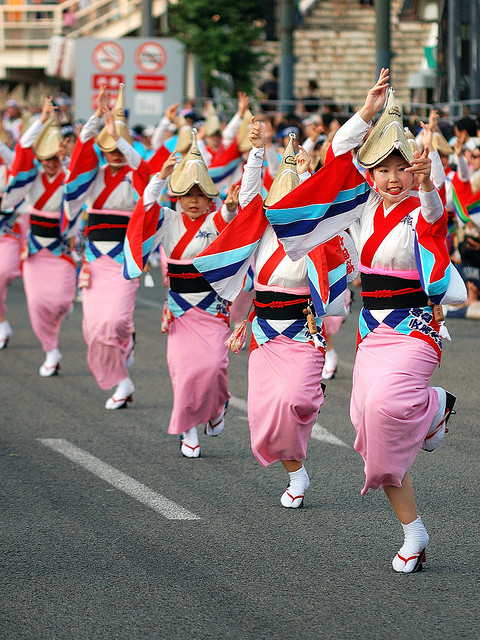
Bon dances started hundreds of years ago as religious and spiritual acts. The dances generally take place around a yagura, a central raised platform from which one person sings out a tune and others play traditional instruments such as a taiko drum. The dancers perform the same steps simultaneously, while moving in a large circle around the yagura. Others styles do exist such as the Awa Odori, performed with small entourages of dancers who move around the city streets in their own smaller circles. These dances were traditionally performed from evening until the early morning hours. Perhaps that’s why some believe the dances were great for match-making.
▼ A participant in traditional costume performing in Tokushima’s Awa Odori.
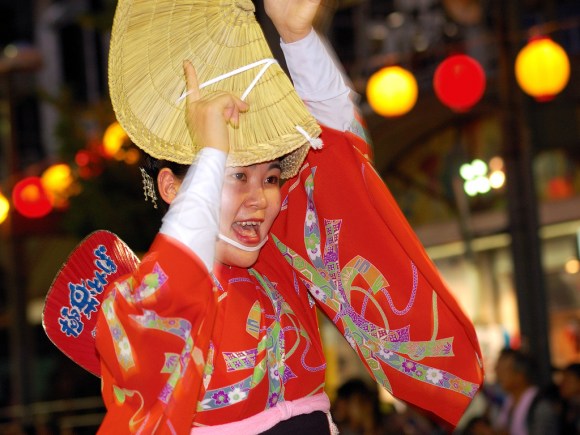
Hundreds of dancers practice for weeks leading up to the Awa Odori festival. The odori is performed to choreographed traditional music that includes lutes, taiko drums, shamisen and bells.
There still exist Bon dances performed for ritualistic purposes rather than entertainment. The Shiraishi Odori has been performed for over 700 years and was used as a vehicle to pray for the souls of the fallen warriors in the sea battles of the Gempei Wars (1180-1185). It is still performed every day of the Bon period for this purpose and is a designated National Intangible Cultural Property in Japan. Because of the island’s small population of just 548 people the production retains a sober, yet intimate feel, and is performed on the beach at sunset with one large group of performers who move slowly and deliberately around the yagura. The ensemble encompasses seven different dance routines, each with a different costume, and is danced by all islanders, most of whom are named Amano, from elementary school children to the elderly.
▼Men dancing the Shiraishi Odori, performed on the beach at sunset.
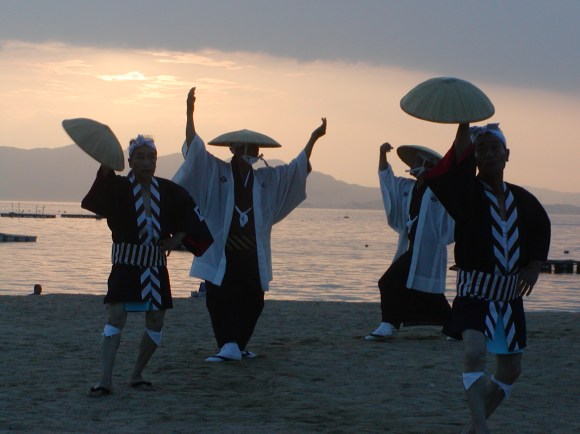
(Tadashi Amano)
The Shiraishi Bon Dance is taught at the local school, staring in kindergarten. As the children grow up dancing every year for Obon, and throughout the weeks of practices, they cultivate a relationship with the dance that includes learning how to use the implements (fans, straw hats, etc) and how to play the taiko drum to appease the spirits of the fallen Heike warriors.
This video shows an exhibition dance put on by the islanders just before Obon. While the video does not use the original music, it does show the intricacies of the dance, the costumes and the spirit of the island people.
5. Seeing off the spirits: 送り火/灯籠流し/okuribi/toronagashi
At the end of the Bon period it’s time for the ancestors to return to where they came from. The family sees them off with another fire and, if the location is near water, lanterns may be set out on the river or sea in a ceremony called toronagashi. Shiraishi Island has both a fire ceremony sponsored by the temple, as well as a toronagashi, where candles are lit inside paper lanterns and set out floating on the sea, each candle representing a soul of the ancestors.
There are other forms of sending off ceremonies such as Kyoto’s famous Daimonji Gozan Okuribi, or “Daimonji” for short, which are five fires lit on the slopes of mountains around Kyoto Basin. These formations, the most famous being the kanji character 大/dai (big), are said to be for sending off the spirits of the ancestors on August 16, the end of Obon.
▼ The kanji character “dai” on the side of the mountain at the end of Obon.

▼ Toronagashi
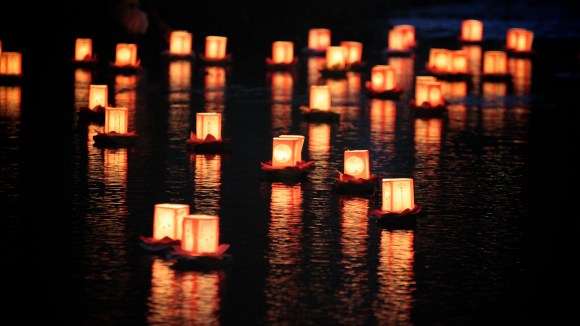
It’s hard not to agree that Obon is a beautiful tradition. It brings family together from all over the nation and further unites them with siblings, cousins, parents, grandparents, great grandparents and all those before them. But the biggest beneficiaries are probably the ancestors themselves, who get to meet and spend time with family old and new, even if just spiritually.
The Bon holiday starts next week and I bet our Rocketeers have some great recommendations for you based on their own experiences! Which Bon dances would you recommend visitors try to see?
Feature image: Flickr (Rosino)
 Japan’s biggest Obon dance festival makes its international debut in Paris
 Silent Bon odori dance?! Japan’s traditional summer festival gets a modern twist
 First-ever Bon-Odori dance festival to be held at Shibuya scramble crossing for Obon
 The top 11 Japanese summer festivals, according to travellers
 Tokyo’s Nakano adds rock and disco to its annual summer bon dance【Videos】
 Japanese onsen egg maker from 100-yen store Daiso needs to be on your shopping list
 When will the cherry blossoms reach full bloom in Japan this year?[Forecast]
 Universal Studios’ Sailor Moon theme park attraction is finally coming to America
 Peko-chan Milky Time Cafe opens in Chiba and we go to check out all of the pastries and merch
 Cherry blossoms begin blooming in Japan with record-early starts for sakura season
 “Newtype” Hatsune Miku poised for comeback in 2020
 Akiba Dental Clinic: The Akihabara dentist where a moe maid in cosplay cleans your teeth
 Train station platform ramen store closes its doors on half a century of history in Tokyo
 Japan’s cherry blossom season predicted to start earlier than we’d thought, especially in Tokyo
 Mamoris: Looks like a toilet, works like a hard hat
 Studio Ghibli releases Catbus pullback keychain that runs like the anime character
 Studio Ghibli adds new Mother’s Day gift sets to its anime collection in Japan
 Starbucks Japan releases new My Fruit³ Frappuccino at only 34 stores around the country
 Virtual idol Hatsune Miku redesigned with look that adds new elements and brings back old ones
 The next time you’re feeling stressed out, you could relax on a Pokémon Psyduck chair from Japan
 Komachi Shokudo: Japanese mum’s-style cooking for breakfast, lunch and dinner in Tokyo
 The top 10 graduation songs in Japan as chosen by current Japanese high school students
 Starbucks Japan unveils new sakura cherry blossom collection for hanami season 2026
 The 10 most annoying things foreign tourists do on Japanese trains, according to locals
 Nine great places to see spring flowers in Japan, as chosen by travelers (with almost no sakura)
 Starbucks Japan releases new sakura goods and drinkware for cherry blossom season 2026
 Starbucks Japan releases first-ever Hinamatsuri Girls’ Day Frappuccino
 Survey asks foreign tourists what bothered them in Japan, more than half gave same answer
 Japan’s human washing machines will go on sale to general public, demos to be held in Tokyo
 Starbucks Japan releases new drinkware and goods for Valentine’s Day
 We deeply regret going into this tunnel on our walk in the mountains of Japan
 Studio Ghibli releases Kodama forest spirits from Princess Mononoke to light up your home
 Japan’s newest Shinkansen has no seats…or passengers [Video]
 Major Japanese hotel chain says reservations via overseas booking sites may not be valid
 Put sesame oil in your coffee? Japanese maker says it’s the best way to start your day【Taste test】
 No more using real katana for tourism activities, Japan’s National Police Agency says
 McDonald’s adds a new Cheese Bacon Potato Pie to its menu in Japan for a limited time
 Japan petitions to add 40 traditional folk dances to UNESCO’s Intangible Cultural Heritage list
 Expat’s video says “Welcome to My Japan,” and you ought to take him up on the awesome invitation
