

University means a lot of things to people, but most of us have the same initial thought when we receive that glorious acceptance letter: FREEDOM! You are rid of your parents, can ignore those pesky siblings and finally carve out your own space in the world. You get to experience all sorts of the highs and lows, like living on your own for the first time, cooking for yourself and being the only one who cares if you make it to class.
All the responsibility lies with the student; university is the time for coming of age and shaping the adult that you will be. Recently though, Japanese parents have become increasingly vocal about their concerns for their children and the fact that there are not many support systems in place to give the parents some peace of mind. Well, as it turns out, the universities are listening and bowing to parents’ wishes.
Programs that support incoming students at universities are a great idea and can go a long way to increasing student retention and graduation numbers. The new freedom and lifestyle can be extremely stressful for students, but it’s the parents in Japan who are the most concerned. They’re worried about whether their children are attending classes, eating properly and/or able to adapt to their new environment. Fear not, fretting fathers and mothers! Some Japanese universities are willing to calm your anxieties with some of the most over-protective programs you can think of. Here are the top four!
1. Smartphone applications to check your child’s attendance

Worried that your irresponsible child isn’t going to class regularly? There’s an app for that. At universities in the Kinki Region (Osaka, Kyoto, and Nara, etc.), many are turning to digital forms of taking attendance, which are promptly uploaded to a server where parents can access the information. Easy symbols are used to denote attendance records so parents can get all the information at a glance. “○”means the student attended, an “x” means they were absent, a “△” means they were tardy, and a “▽”means they left the class early.
2. Free or practically free breakfast

Breakfast is the most important meal of the day, but it’s hard telling that to a university student who can barely roll out of bed 10 minutes before their class starts. A clear incentive is to make the first meal of the day free, which some universities do, while others offer a breakfast for only 100 yen (US $0.83) which is still a pretty good deal. This program is an attempt to reassure parents that their children are getting enough sustenance to maintain a healthy body and mind while studying. What many people might not realize is that most universities in Japan don’t have on-campus dormitories and thus don’t force students to purchase a meal plan. So while breakfast might be on the house, lunch and dinner leave the students fending for themselves. Cup noodles, anyone?
3. First year university students attend a homeroom-like class
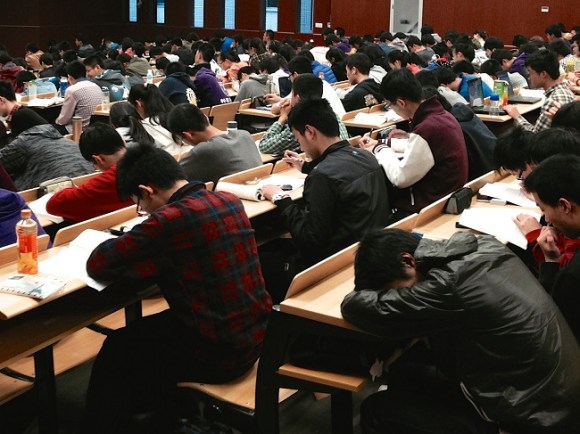
Homeroom in Japanese schools is a very important part of a student life. Attendance is recorded, the students’ well-being is noted and any important or disturbing news is announced. It fosters a sense of community in students that also makes it easy for teachers to keep tabs on their pupils. Things are extremely structured, so some parents are worried that their children might be having a hard time getting used to the completely new and unstructured university atmosphere.
In some universities, homeroom-style classes have been introduced where all the freshmen gather once or twice a week to do exactly the same things they did as little children. The “homeroom teacher” (read “annoyed professor”) consults their records on each individual’s attendance and test scores and gives students a talk if they need some encouragement.
4. A support system for students and parents for job hunting (AKA “Do you want someone to hold your hand?”)

The most stressful time in a Japanese university student’s life is when they have to start job hunting. It requires impeccably pressed suits, a number of stressful interviews and an almost equal number of disappointing results. However, most people see it as a rite of passage to adulthood. After spending two or three years on your own, it’s time to show the world what kind of person you are and get a job!
Needless to say, parents worry constantly about whether or not their offspring are doing all the right things necessary to get a good job at a good company. That puts extra pressure on the students, which in turn makes the parents worry even more.
To alleviate these pressures, universities are creating programs that will help guide students from the very first day of enrollment. Students and parents will be required to attend classes on job hunting together, and while it seems like this “nanny state” of affairs would cause more harm than good, it has actually garnered successful results thus far.
▼ All of this makes us want to flip the table!

We suspect that many students would say, “No way!” to practices like this at their university — except for the free breakfast, of course. But what about you? If you are a student, would any of these programs be of use to you? If you are a parent, would you use any of these programs if they were offered? Let us know in the comments below!
Source: Naver Matome
Top Image: Flickr/Dick Thomas Johnson