
Earlier this year, news of a letter sent to presidents of national universities—purportedly telling them to get rid of or modify their humanities departments to better “benefit” Japanese society—spread across the Internet. Since then, it has even been picked up by some high-profile English sites, with considerable (and understandable) consternation. And you can believe there were academics in Japan who were incensed at the idea as well.
But is it actually going to happen? It turns out the short answer is a weak “probably not.” The long answer, though, is a bit more complicated.
Plenty of digital ink has been spilled on this topic—and it’s one that deserves to be discussed, so we’re not complaining. Everyone from the Japan Times to Times Higher Education to Cracked has written about it, but in case you’re not familiar with the situation, here’s a brief rundown of what happened.
In June, the Ministry of Education, Culture, Sports, Science & Technology (MEXT) in Japan, sent out a letter ostensibly from Hakuban Shimomura, the head of the organisation, saying that public universities need to do a better job of meeting the country’s needs. The letter also said that universities should modify or even completely abolish their social science and humanities departments as a means of achieving this.
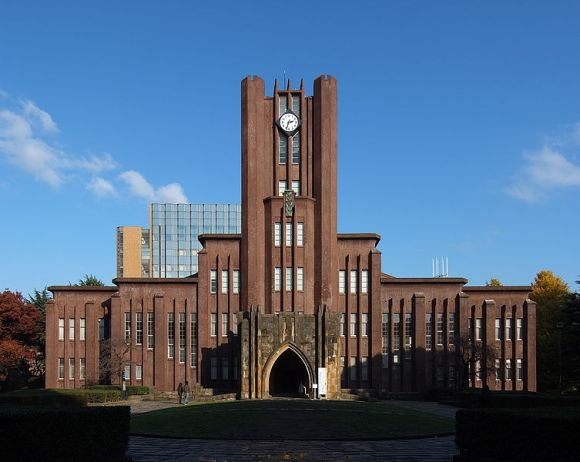
▼ Tokyo University released a statement flatly refusing to do any such thing.
If you find that a terribly strange thing for the head of the education ministry to tell universities to do, you’re not alone. Nevertheless, the Yomiuri Shinbun reported of the 60 schools with humanities and social sciences departments who responded to a survey, 26 confirmed that they had plans to “reform or abolish” their humanities departments in line with MEXT’s wishes in 2016 or later. The Yomiuri article continues by explaining that recruitment of over 1,300 people for teacher training departments would be cancelled, among other reforms.
But things are looking a little different now at the end of September. A number of articles have been released indicating that the ministry seems to be attempting to walk back the original letter, though not particularly well.
For example, Japan’s Mainichi Shinbun recently publish an article whose lengthy title explains quite a bit: “Notification of Humanities Departments Abolishment: It was a mistake; it was really only meant for the education departments, says MEXT in a panic trying to soften the message, but not apologizing.“
According to the Mainichi article, MEXT is attempting to “put out fires” caused by the letter, which has drawn sharp criticism both domestically and internationally. The article quotes Takashi Onishi, the president of the Science Council of Japan, as saying, “I was really worried about the abolishment of humanities and social sciences departments, but after hearing [their] explanation, I see that’s not the case. I’m quite relieved.” This is a big change from a comment he made in July, when he said, “The contempt shown for humanities and social sciences departments will damage the entire education system.”
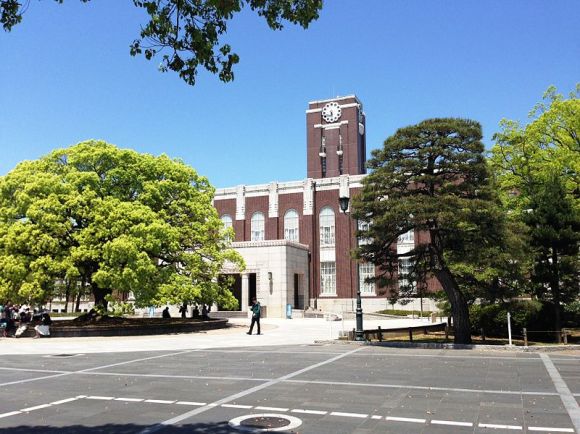
▼ Kyoto University also refused to snub the humanities.
Onishi’s reversal comes after a top MEXT official, Yutaka Tokiwa, held a meeting during which he spent 30 minutes explaining “the real meaning” of the letter. He was quoted as saying that universities must foster the strength to survive in a difficult future and that the letter was asking if the current structure was fine the way it is. He also explained that as the country’s birthrate is declining, parts of the curriculum for training future teachers that is not directly necessary for graduation should be abolished, if they’re unnecessary.
Onishi actually agreed that some reform was important, but he also said that, “I’ve reread the letter any number of times, and I can’t see where they’re actually saying that.”
Nevertheless, MEXT seems adamant that they’re not trying to get rid of humanities and social sciences departments, only cutting back on teacher training and encouraging reform in the other departments. However, the ministry is also in the process of advancing the goal of rethinking the education system—a goal which has been in place since 2012, according to the Mainichi Shinbun.
As for the letter and the kerfuffle it has caused, the blame has fallen on the public servant who wrote it (though it was not Shimomura as near as we can tell), for a certain “lack in writing ability.” Still, MEXT insists they will not be issuing a redaction, and Onishi even conceded that “abolishment” could be interpreted to mean “abolish and reform,” an idea to which we would like to award a gold medal for mental gymnastics.
Or, as this Twitter user commented:
[tweet https://twitter.com/sunaharay/status/648063570991714309 align=center]
“MEXT leadership says, ‘The civil servant who composed the letter was lacking in writing ability.’ That’s an impressive display of avoiding responsibility.”
So, what does all this mean? Well, it seems that Japan’s national universities probably won’t be closing all their humanities and social sciences departments—at least not just yet. It’s entirely possible that the letter meant exactly what everyone thought it meant and that MEXT is just reacting to the anger of Japan’s universities. Put simply, we’re not sure many people believe (or necessarily should believe) the current explanation. The History News Network has a very detailed look at the budgetary and policy issues facing Japan today, if you’re looking for a more in-depth analysis.
However, it’s also unclear what will happen with the 26 universities that told the Yomiuri they would be following the letter earlier this summer. We can hope that they somehow understood the implication that they should be reforming and not closing the departments.
It might also be worth noting that this is hardly Shimomura’s only scandal at the moment. MEXT is, of course, also the ministry in charge of sports in Japan, and the minister is also involved in the debacle with the Olympic stadium; a debacle that saw him offering to resign just last Friday and proposing to return half of his pay for the last six months as a penance.
Hopefully Japan will still have humanities departments around to see the Olympic Games in a nice stadium in 2020. Or at least that there will actually be someone prepared to take the blame…
Sources: Mainichi Shinbun, 47 News, Yomiuri Shinbun, Times Higher Education
Top image: MEXT
 Japan’s Ministry of Education hosts Twitter campaign to recruit teachers, it backfires right away
 Knife-wielding professor fired from international department of one of Tokyo’s top universities
 University of Tokyo announces new department with all classes taught in English
 The top 10 universities in Japan determined by 2021 World University Rankings
 Tokyo Medical University accused of dropping women’s entrance exam scores 10-20 percent each year
 Starbucks Japan closing only Shinkansen platform branch for popularity-triggered renovations
 You can assemble a well-balanced team of Pokémon, them eat them, thanks to Japanese cake chain
 Pokémon and Ikea Japan cross over into each other’s worlds with collaboration events
 Can a downtown Tokyo super sento bathhouse beat a hotel for a one-night stay?
 Japan’s full-facemask Ninja Parka still lets you eat ice cream[Photos]
 Sailor Moon’s Artemis is part of the Artemis II NASA mission control team[Video]
 Japan named most sleep-deprived country for fourth year in a row, according to survey
 Animal Crossing plushie pouch towels and cozy socks show up at Family Mart convenience stores
 Tokyo turns its phone booths into free Wi-Fi hotspots, and here’s how to use them
 The results are in! One Piece World Top 100 characters chosen in global poll
 Tokyo’s best museum for foreign travelers finally reopens after being closed for four years
 Pokémon lacquerware series expands for Year of the Horse with new handcrafted design[Video]
 Two food hacks take Japan’s convenience store fried chicken to amazing new sandwich heights
 Tokyo subway and almost all Tokyo train lines now accepting credit card tap payments
 Totoro Fund line of beautiful artwork and apparel lets you help the real-world Totoro Forest
 Fading Tokyo – Searching for signs of the Showa era as local neighborhoods evolve[Photos]
 Famous Tokyo cherry blossom spot installs view-blocking screens to fight overcrowding[Video]
 Studio Ghibli adds new My Neighbour Totoro 2026 Corn Gift to its anime store for Mother’s Day
 Japan now has a special desk for people who work at home with a pet cat[Photos]
 Uniqlo announces new T-shirts for One Piece, Naruto and more for manga publisher’s 100th birthday
 Train station platform ramen store closes its doors on half a century of history in Tokyo
 Starbucks Japan releases new My Fruit³ Frappuccino at only 34 stores around the country
 Studio Ghibli releases Catbus pullback keychain that runs like the anime character
 Krispy Kreme releases Super Mario doughnuts in Japan for a limited time
 Japanese onsen egg maker from 100-yen store Daiso needs to be on your shopping list
 Nine great places to see spring flowers in Japan, as chosen by travelers (with almost no sakura)
 Survey asks foreign tourists what bothered them in Japan, more than half gave same answer
 Japan’s human washing machines will go on sale to general public, demos to be held in Tokyo
 Starbucks Japan releases new drinkware and goods for Valentine’s Day
 We deeply regret going into this tunnel on our walk in the mountains of Japan
 Studio Ghibli releases Kodama forest spirits from Princess Mononoke to light up your home
 Starbucks Japan releases new sakura goods and drinkware for cherry blossom season 2026
 Japan’s newest Shinkansen has no seats…or passengers [Video]
 Major Japanese hotel chain says reservations via overseas booking sites may not be valid
 Put sesame oil in your coffee? Japanese maker says it’s the best way to start your day【Taste test】
 No more using real katana for tourism activities, Japan’s National Police Agency says
 Tokyo women’s university will accept transgender students who identify as female, a Japan first
 Nanotech professor from one of Japan’s top universities arrested for panty-theft
 Is it time for Japan to get over trying to connect your personality and blood type?