

Use of Swastika-like maji symbol deemed “inappropriate” for maps for foreign users.
In an effort to make travelling in Japan more convenient for overseas visitors, the Geospatial Information Authority recently conducted a survey of foreigners on the streets of Asakusa, the historical district of Tokyo that’s one of the city’s largest draws for travelers from abroad. In particular, the GSI, as the government organization is also called, wanted to pick the brains of non-Japanese people on the symbols and pictograms used on foreign-language maps in Japan.
Based on participants’ responses, the GSI is suggesting a number of changes to maps being produced for foreigners in the upcoming fiscal year (which begins in April). For example, the organization is cautioning against using a capital H to designate the location of hotels, since some might mistake the letter as an abbreviation for “hospital.” Instead, the GSI suggests a pictogram of a bed. And while every Japanese native knows that 〒 on a map means there’s a post office there, foreigners aren’t likely to be familiar with the symbol that can be found on Japanese mailboxes, and so the GSI would prefer mapmakers use the more universally intuitive picture of an envelope.
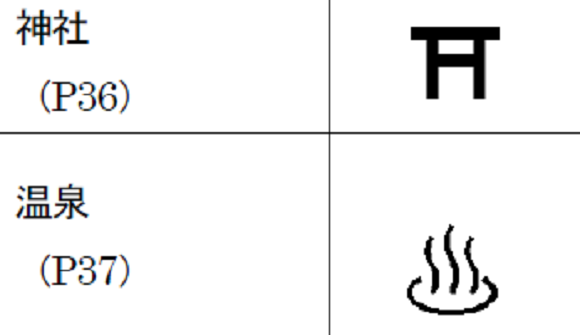
On the other hand, some traditional Japanese symbols were found to present no particular problems for foreign users. The “onsen mark,” three squiggly lines of steam rising out of a round body of water, was widely understood to denote a hot spring. Likewise, most foreigners could suss out that a drawing of a torii gate represented a Shinto shrine, thanks to the distinctive shape of the entrance to their grounds.
▼ No problems here.
But one symbol was found to have extremely different connotations for Japanese and foreign map users: the manji.

The manji clearly indicates a Buddhist temple, at least for those up on their Buddhist iconography (the symbol is also used in Hinduism and Jainism). But to many westerners who don’t have much occasion to come into contact with Asian religions, the first thing they’ll think of when seeing a manji is the Swastika used by Nazi Germany.
In the manji’s defense, the symbol had been used as a religious icon for centuries before the Nazis took a shining to it. Also, in Japan the manji is always drawn with its prongs turning counter-clockwise, as opposed to the Nazi Swastika’s clockwise twists.
Nevertheless, Japan’s Geospatial Information Authority has deemed that the manji is ill-suited to foreign-language maps, and is instead suggesting that it be replaced with a drawing of a three-story pagoda.
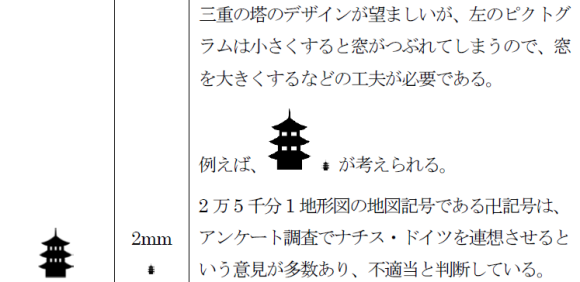
To clarify, the GSI isn’t asking Buddhist temples in Japan to remove manji symbols from their premises, nor is it asking for changes to be made to Japanese-language maps. And while the organization did refer to the manji as “inappropriate” for foreign-language maps in its newest set of guidelines, it didn’t specify whether that judgement was based on the potential to offend sensitive foreign visitors or simply the high probability of confusing them because of their lack of a mental connection between the symbol and Buddhism.
It’s worth pointing out, though, that the GSI-recommended symbol is an imperfect substitute for the manji. While honest-to-goodness pagodas are generally only found at Buddhist temples in Japan, it’s not hard to imagine someone mistaking the symbol for a simplified drawing of a castle.
So remember, if you’re a foreigner in Japan who’s on the run from enemies and looking for a stronghold, make sure to double-check with your tour guide or concierge to avoid accidentally holing up in a much less siege-worthy temple by mistake. Oh, and if you decide to start one of the most reviled political/military groups in history, please design your own logo, OK? It’ll save map makers a lot of trouble down the road.
Source: Nico Nico News via Jin
Top image: RocketNews24, Geospatial Information Authority of Japan (edited by RocketNews24)
Insert images: Geospatial Information Authority of Japan, RocketNews24
 Japanese discount clothing chain selling swastika necklaces (also ugly tank tops)
 Japan’s government reconsiders plan to change country’s iconic hot spring symbol after backlash
 Japan’s northernmost brewery on the mainland is…a temple?!?
 Kyoto temple goes modern with Techno Memorial combining music and lights with Buddhist Festival
 Tokyo’s beckoning cat temple asks foreign tourists to stop writing on the beckoning cats they buy
 Japan’s best conveyor belt sushi restaurant of seven years ago has now, finally, come to Tokyo
 Wisteria season starts early with blooming of Japan’s Great Wisteria in its beautiful garden
 Japanese trains in Sapporo might be better than those in Tokyo, thanks to one special feature
 Starbucks Japan releases FIVE new Frappuccinos in a day, and we try them all in 90 minutes
 Downtown Tokyo’s meaty monster Kaibutsu ramen will challenge your stomach, thrill your taste buds
 Peanuts and Coke becomes a viral hit in Japan, but is it a trend worth joining?
 Pringles Chocolate, but with a Japanese twist, is the snack hack you should be trying right now
 Lawson convenience store at popular tourist site is one of the most unusual in Japan
 Tokyo Station staff share their top 10 favorite ekiben
 Foreign man arrested for walking on Shinkansen tracks, claims he was on the run from yakuza
 Japan reportedly adding Japanese language skill requirement to most common foreigner work visa
 Mt. Fuji decorated with a 500,000-flower pink carpet is Japan’s ultimate spring view
 30 Pikachus want to share a Tokyo hotel room with you that has separate Grass, Water, Fire spaces
 You can assemble a well-balanced team of Pokémon, them eat them, thanks to Japanese cake chain
 Man bites woman at cherry blossom park in Japan, dies shortly after
 7-Eleven Japan’s new baked-in-store sweet treat is only available in three parts of the country
 Starbucks Japan closing only Shinkansen platform branch for popularity-triggered renovations
 Pokémon and Ikea Japan cross over into each other’s worlds with collaboration events
 Japan now has a special desk for people who work at home with a pet cat[Photos]
 Famous Tokyo cherry blossom spot installs view-blocking screens to fight overcrowding[Video]
 Uniqlo announces new T-shirts for One Piece, Naruto and more for manga publisher’s 100th birthday
 Train station platform ramen store closes its doors on half a century of history in Tokyo
 Starbucks Japan releases new My Fruit³ Frappuccino at only 34 stores around the country
 Krispy Kreme releases Super Mario doughnuts in Japan for a limited time
 Japanese onsen egg maker from 100-yen store Daiso needs to be on your shopping list
 Survey asks foreign tourists what bothered them in Japan, more than half gave same answer
 Japan’s human washing machines will go on sale to general public, demos to be held in Tokyo
 Starbucks Japan releases new drinkware and goods for Valentine’s Day
 We deeply regret going into this tunnel on our walk in the mountains of Japan
 Starbucks Japan releases new sakura goods and drinkware for cherry blossom season 2026
 Studio Ghibli releases Kodama forest spirits from Princess Mononoke to light up your home
 Japan’s newest Shinkansen has no seats…or passengers [Video]
 Major Japanese hotel chain says reservations via overseas booking sites may not be valid
 Put sesame oil in your coffee? Japanese maker says it’s the best way to start your day【Taste test】
 No more using real katana for tourism activities, Japan’s National Police Agency says