
Use of Swastika-like maji symbol deemed “inappropriate” for maps for foreign users.
In an effort to make travelling in Japan more convenient for overseas visitors, the Geospatial Information Authority recently conducted a survey of foreigners on the streets of Asakusa, the historical district of Tokyo that’s one of the city’s largest draws for travelers from abroad. In particular, the GSI, as the government organization is also called, wanted to pick the brains of non-Japanese people on the symbols and pictograms used on foreign-language maps in Japan.
Based on participants’ responses, the GSI is suggesting a number of changes to maps being produced for foreigners in the upcoming fiscal year (which begins in April). For example, the organization is cautioning against using a capital H to designate the location of hotels, since some might mistake the letter as an abbreviation for “hospital.” Instead, the GSI suggests a pictogram of a bed. And while every Japanese native knows that 〒 on a map means there’s a post office there, foreigners aren’t likely to be familiar with the symbol that can be found on Japanese mailboxes, and so the GSI would prefer mapmakers use the more universally intuitive picture of an envelope.
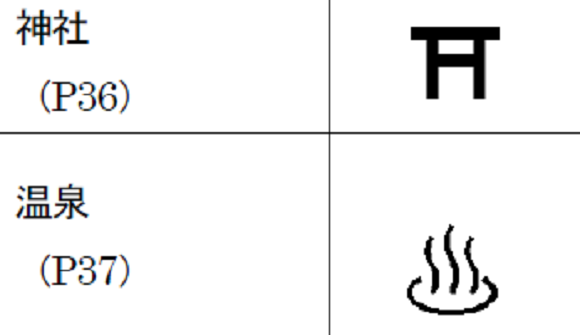
On the other hand, some traditional Japanese symbols were found to present no particular problems for foreign users. The “onsen mark,” three squiggly lines of steam rising out of a round body of water, was widely understood to denote a hot spring. Likewise, most foreigners could suss out that a drawing of a torii gate represented a Shinto shrine, thanks to the distinctive shape of the entrance to their grounds.
▼ No problems here.
But one symbol was found to have extremely different connotations for Japanese and foreign map users: the manji.

The manji clearly indicates a Buddhist temple, at least for those up on their Buddhist iconography (the symbol is also used in Hinduism and Jainism). But to many westerners who don’t have much occasion to come into contact with Asian religions, the first thing they’ll think of when seeing a manji is the Swastika used by Nazi Germany.
In the manji’s defense, the symbol had been used as a religious icon for centuries before the Nazis took a shining to it. Also, in Japan the manji is always drawn with its prongs turning counter-clockwise, as opposed to the Nazi Swastika’s clockwise twists.
Nevertheless, Japan’s Geospatial Information Authority has deemed that the manji is ill-suited to foreign-language maps, and is instead suggesting that it be replaced with a drawing of a three-story pagoda.
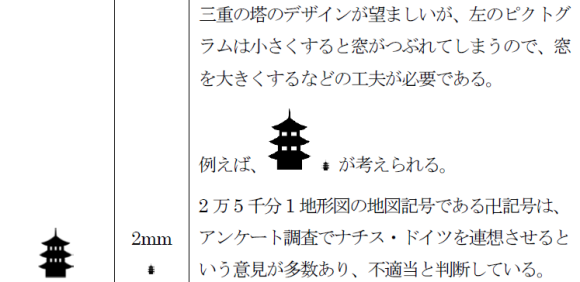
To clarify, the GSI isn’t asking Buddhist temples in Japan to remove manji symbols from their premises, nor is it asking for changes to be made to Japanese-language maps. And while the organization did refer to the manji as “inappropriate” for foreign-language maps in its newest set of guidelines, it didn’t specify whether that judgement was based on the potential to offend sensitive foreign visitors or simply the high probability of confusing them because of their lack of a mental connection between the symbol and Buddhism.
It’s worth pointing out, though, that the GSI-recommended symbol is an imperfect substitute for the manji. While honest-to-goodness pagodas are generally only found at Buddhist temples in Japan, it’s not hard to imagine someone mistaking the symbol for a simplified drawing of a castle.
So remember, if you’re a foreigner in Japan who’s on the run from enemies and looking for a stronghold, make sure to double-check with your tour guide or concierge to avoid accidentally holing up in a much less siege-worthy temple by mistake. Oh, and if you decide to start one of the most reviled political/military groups in history, please design your own logo, OK? It’ll save map makers a lot of trouble down the road.
Source: Nico Nico News via Jin
Top image: RocketNews24, Geospatial Information Authority of Japan (edited by RocketNews24)
Insert images: Geospatial Information Authority of Japan, RocketNews24