
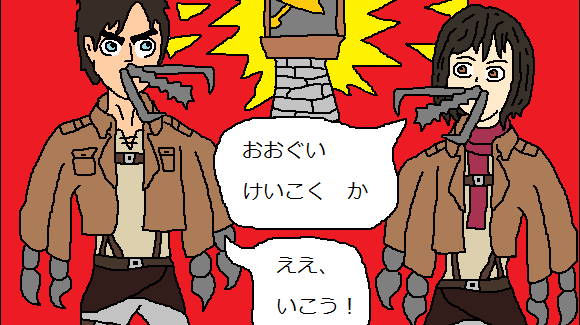
“On that day, we ticks received a grim reminder. We lived in fear of the five-foot-tall humans.”
Hey there and welcome to to the third installment of Learn Japanese through Ridiculous Manga, where every Friday we study Japanese together in a quick, fun way!
New to the series? Check out the intro article which will help explain all this craziness. And if you missed last week’s article, be sure to take a gander at it here.
▼ There may or may not be a manga about
a disembodied toe called Naru-toe.
Today we’re going to look at the next five hiragana. As always, I highly recommend putting these five into Anki, a flashcard program, so that you can practice them between articles. As long as you just do whatever Anki tells you to do every day (which usually isn’t much), you’ll be a master in no time.
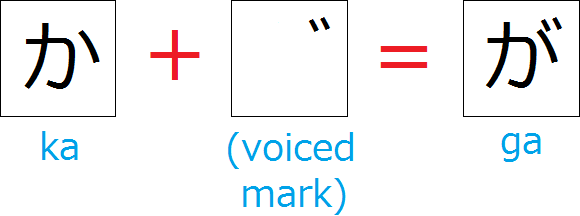
And good news! Today’s hiragana are the easiest yet; they look exactly like the hiragana from last week, except for one small difference: the voiced marking.
▼ The voiced marking is just two little lines in the upper right
that turn a hiragana from “unvoiced” to “voiced.”
Basically all that means is the hiragana’s sound goes from “not vibrating your vocal cords when you say them” to “vibrating your vocal cords when you say them.”
Go ahead and try it out. Put your fingers on your throat and try to hold the “k” sound as long as you can (so you sound like static on a TV). You shouldn’t feel much of a vibration. Then try holding the “g” sound as long as you can (so you sound like a dying troll). Now you should feel a throat-earthquake. That’s the voicing.
So with all that out of the way, let’s take a look at ga, gi, gu, ge, go!
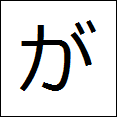
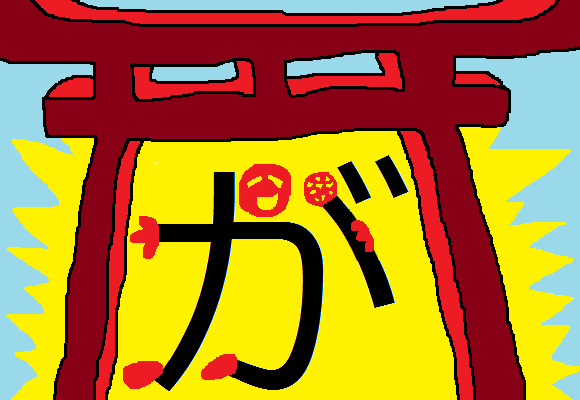
1) Today’s first hiragana: が (ga)
(Pronounced like “Lady Gaga”)
(Click the play button below to listen to our wonderful
native Japanese writer Meg pronounce this hiragana for you!)
▼ Remember the guy singing karaoke for “ka?”
What’s he singing? Lady Gaga, of course.
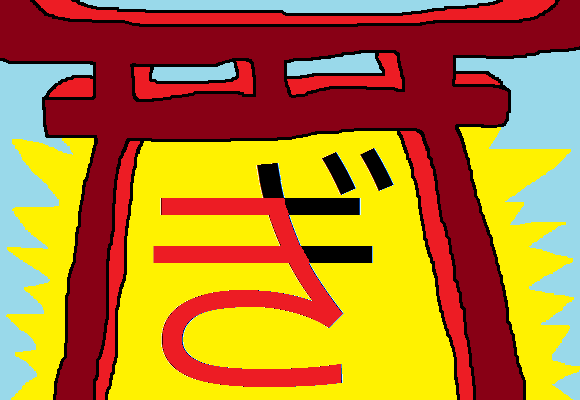
2) Today’s next hiragana: ぎ (gi)
(Pronounced like “geek”)
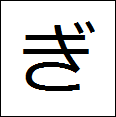
▼ Remember key for “ki?” The key to being a great geek
is coming up with terrible hiragana mnemonics.
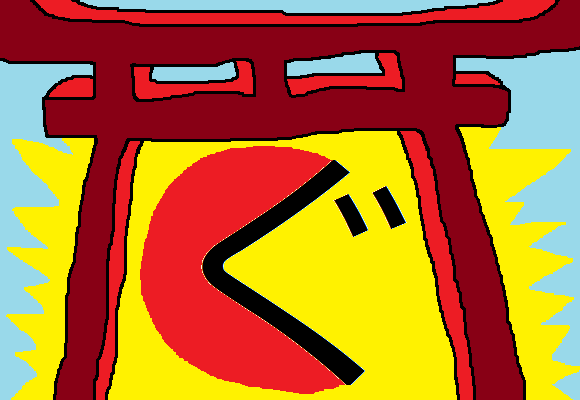
3) Today’s next-next hiragana: ぐ (gu)
(Pronounced like “goopy”)

▼ Remember Paku-man for “ku?”
Now Pac-man is eating some goopy ghosts.
4) Today’s penultimate hiragana: げ (ge)
(Pronounced like “game”)
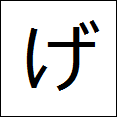
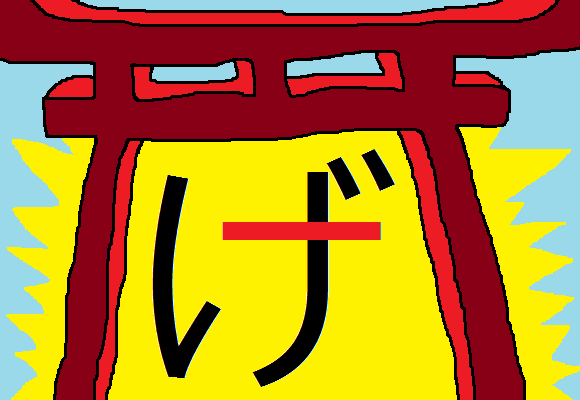
▼ Remember two kebob sticks, for “ke?”
Well, if you want the one with meat, you have to win the game.
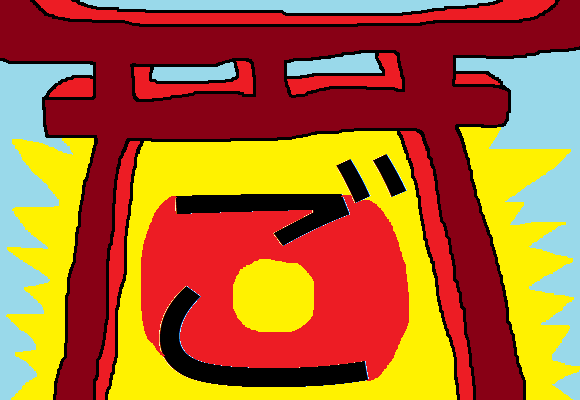
5) Today’s final hiragana: ご (go)
(Pronounced like “The light’s green! Go already!”)

▼ Remember coin for “ko?”
Maybe if you bribe them with a coin, they’ll go.
(Click below to hear Meg pronounce all five hiragana!)
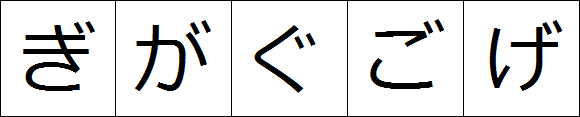
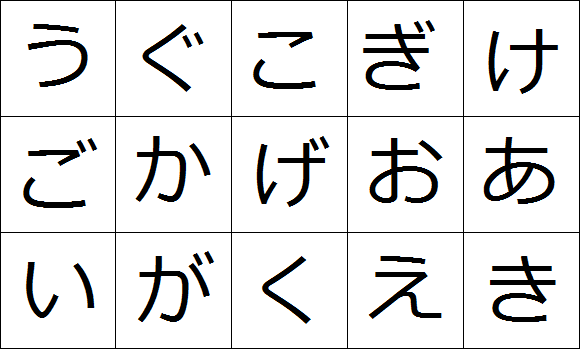
Okay, quiz time! Can you read the new hiragana below? (Hint: they’re not in the same order we just did them.)
And if you’re already a pro at that try reading all fifteen hiragana we’ve learned so far:
.
.
.
.
.
.
.
.
.
.
(1st Quiz Answer: gi, ga, gu, go, ge)
(2nd Quiz Answer: u, gu, ko, gi, ke // go, ka, ge, o, a // i, ga, ku, e, ki)
Did you get them right? If you don’t feel confident yet, just review them in Anki and try again until you can voice like a master.
And now, for today’s post-hiragana bonus, I’d like to introduce you to a new short section: Pronunciation Station.
▼ This train only makes on stop: Fluency-ville.
In Pronunciation Station, we’ll go over some Japanese pronunciation tips. As we talked about in the first article, the focus here is reading not speaking, but it helps to read things out loud sometimes, and you don’t want people to giggle at you when you do…not too much anyway.
Today’s Pronunciation Station is about elongated sounds. In Japanese, sometimes hiragana can be “elongated,” meaning you hold the sound for longer than usual. The difference may seem small, but it can make all the difference.
For example:
obasan = aunt // obaasan = grandma (long “a”)
biru = building // biiru = beer (long “i”)
So unless you want to order a “building” at a bar and insult your aunt, it’s good to get your elongations down. Here’s how elongated sounds look in hiragana:
▼ Hiragana ending in an “a” sound (such as “ka”)
are elongated by using the hiragana あ (a).
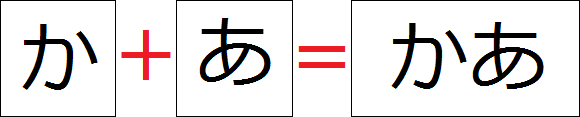
▼ Hiragana ending in an “i” sound (such as “ki”)
are elongated by using the hiragana い (i).
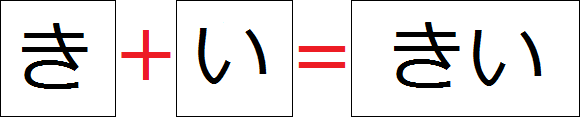
▼ Are you noticing a pattern here? Hiragana ending in an “u” sound
(such as “ku”) are elongated by using the hiragana う (u).

▼ Uh oh, here comes an exception! Hiragana ending in an “e” sound
(such as “ke”) are elongated by using the hiragana い (i), NOT え (e).*
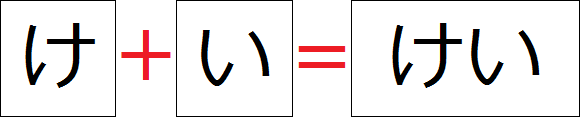 * There are some exceptions to this, but generally it’s true.
▼ And another exception. Hiragana ending in an “o” sound
(such as “ko”) are elongated by using the hiragana う (u), NOT お (o).*
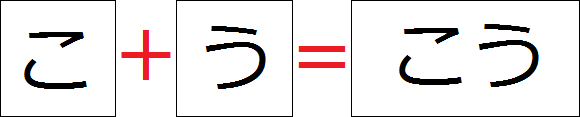 * There are some exceptions to this, but generally it’s true.
Easy enough, right? Okay! Now let’s practice the hiragana you’ve learned along with some elongations in this excerpt from the manga A Tick on Titan.
“Eren Eager and Mikasa Ackerwoman are just normal ticks living in a horrifying world full of… five-foot tall monsters! The sleepy Colozzzuzzz Titan has arrived at their town wall; will they be able to defend it?”
(Read like a real Japanese manga: panels go from top right to left,
hiragana is read from left to right.)
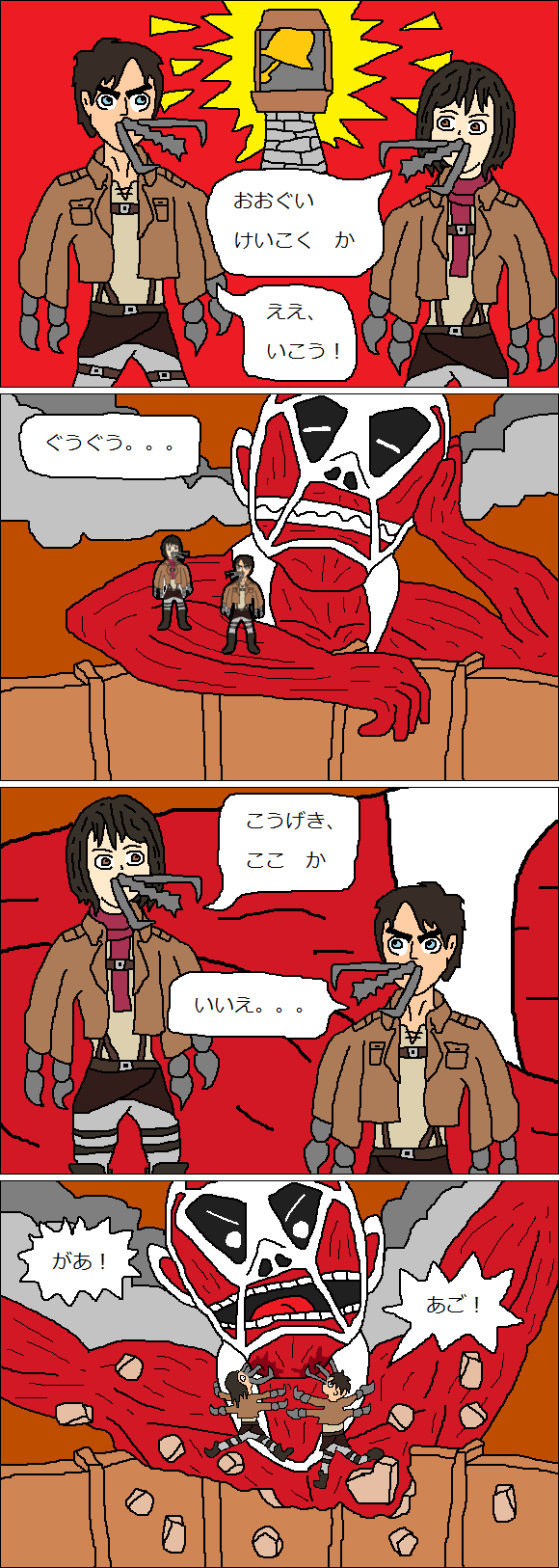
Transcription:
Mikasa: Oogui keikoku ka?
Eren: Ee, ikou!Sound Effects: Guu guu….
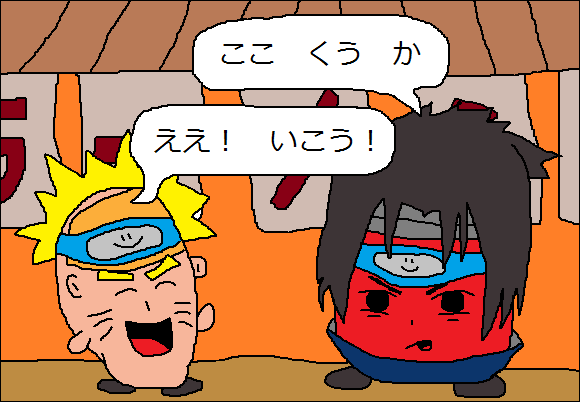
Mikasa: Kougeki, koko ka?
Eren: Iie….Eren: Ago!
Titan: Gaa!Translation:
Mikasa: (Is that the) big-eater warning?
Eren: Yeah, let’s go!Sound Effects: (sound of sleeping)
Mikasa: (As for the) attack (is it) here?
Eren: No….Eren: (It’s on the) chin!
Titan: Arg!
All right! Did you read it yourself? If not, just review Anki a bit and give it another crack.
And don’t worry about the meaning of the words right now. For now, we’re just concentrating on learning to read the hiragana. But don’t fret, we’ll get to those pesky meanings eventually!
Next week we’ll be taking a look at the next five hiragana, which will all be fresh new faces. And as always there will be a delightful manga as well, so get your parody pants ready for that.
In the meantime if you have any questions, feel free to leave a comment or send me a message on Twitter. I can’t promise that I know everything, but I can guarantee at least an attempt at a witty response.
See you next week everyone, and remember to stay ridiculous!
“Extra Credit” Anki Input: (Front / Back)
おおぐい / oogui, big-eater
けいこく / keikoku, warning
ぐうぐう / guuguu, (sound of sleeping)
こうげき / kougeki, attack
こうげき ここ か / kougeki koko ka, (As for the) attack (is it) here?
あご / ago, chin
があ / gaa, arg!
Text/images: ©RocketNews24
 Learn Japanese through ridiculous manga: Narutoe 【Episode #2】
 Learn Japanese through ridiculous manga: Death Vote 【Episode #6】
 Learn Japanese through ridiculous manga: Dragon Bowl【Episode #4】
 Learn Japanese through ridiculous manga: Fullmedal Alchemist 【Episode #5】
 Learn Japanese through ridiculous manga: Two Piece 【Episode #1】
 Studio Ghibli releases the My Neighbour Totoro tea caddy, with a magical self-closing lid
 Create a tiny Ghibli anime world on your bookshelf with new miniature papercraft art kits
 Japan now has a “for foreign tourists only” Mt. Fuji sightseeing train[Video]
 Fake police phone scam also highlights dumb stereotype about how foreigners speak Japanese[Video]
 Nine amazing off-the-beaten-path cherry blossom spots in Japan for yaezakura and shidarezakura
 Japan’s Hello Kitty Airport theming gets extension, avoids autumn end
 Fed up of romance sims? Buddhist-themed visual novel coming to Android and iOS
 Tokyo government organizes food truck event to clear out delinquent/homeless teen gathering area
 Studio Ghibli unveils new Rollbahn notebook in honour of Howl’s Moving Castle
 Japan’s Mos Burger creates tempura rice bowl bento boxed lunch burger, but not for its menu
 Japanese onsen egg maker from 100-yen store Daiso needs to be on your shopping list
 Starbucks Japan releases new My Fruit³ Frappuccino at only 34 stores around the country
 Cherry blossoms begin blooming in Japan with record-early starts for sakura season
 The next time you’re feeling stressed out, you could relax on a Pokémon Psyduck chair from Japan
 Train station platform ramen store closes its doors on half a century of history in Tokyo
 Stunning central Japan wisteria festival is like a purple fantasy straight out of a Ghibli movie
 When will the cherry blossoms reach full bloom in Japan this year?[Forecast]
 Studio Ghibli adds new Mother’s Day gift sets to its anime collection in Japan
 Starbucks Japan unveils new sakura cherry blossom collection for hanami season 2026
 Studio Ghibli releases Catbus pullback keychain that runs like the anime character
 Nine great places to see spring flowers in Japan, as chosen by travelers (with almost no sakura)
 Starbucks Japan releases first-ever Hinamatsuri Girls’ Day Frappuccino
 Virtual idol Hatsune Miku redesigned with look that adds new elements and brings back old ones
 Survey asks foreign tourists what bothered them in Japan, more than half gave same answer
 Japan’s human washing machines will go on sale to general public, demos to be held in Tokyo
 Starbucks Japan releases new drinkware and goods for Valentine’s Day
 We deeply regret going into this tunnel on our walk in the mountains of Japan
 Studio Ghibli releases Kodama forest spirits from Princess Mononoke to light up your home
 Starbucks Japan releases new sakura goods and drinkware for cherry blossom season 2026
 Japan’s newest Shinkansen has no seats…or passengers [Video]
 Major Japanese hotel chain says reservations via overseas booking sites may not be valid
 Put sesame oil in your coffee? Japanese maker says it’s the best way to start your day【Taste test】
 No more using real katana for tourism activities, Japan’s National Police Agency says
 Duolingo free language learning app released their first Japanese lessons, so we tested them out!
 W.T.F. Japan: Top 5 myths about learning Japanese【Weird Top Five】
 Six (and a half) essential resources for learning Japanese
 W.T.F. Japan: Top 5 most difficult Japanese tongue twisters (with videos!) 【Weird Top Five】
 W.T.F. Japan: Top 5 Japanese words with cool ancient origin stories【Weird Top Five】