

Just when you thought reading Japanese couldn’t get any harder.
We’ve seen before that Japanese kanji is hard enough to read as it is, but there’s one special group of kanji that’s hard even for Japanese people to read: place names.
The thing about place names that’s so hard is, even if you know how to read the kanji normally, chances are it doesn’t matter. Unless you’ve specifically memorized that single place’s unique name, you might be doomed before you even start.
That’s why today we’re counting down the top five most insane kanji place names in Japan. There were so, so many ridiculous ones that we had to group them into categories. And even then there were plenty left over, ready to confuse even the most advanced kanji masters out there.
So let’s get to it! Starting off with…
#5. Nonsense numbers
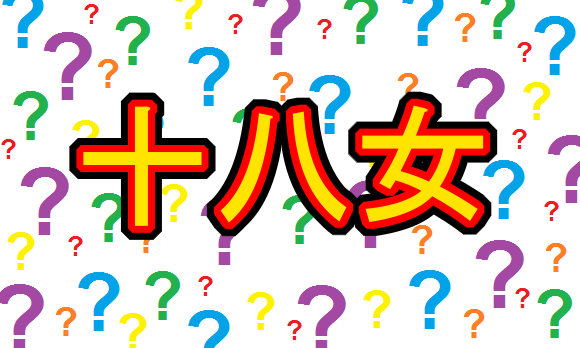
The kanji for numbers are among the first that any student of Japanese usually learns. Ironically they’re also some of the hardest to read. Just the kanji for “one” (一) has five or more readings depending on the dictionary you use.
But even then, once you’ve mastered all the different readings for the numbers, you’re all set, right?
Wrong.
Take a look at that place name up above: 十八女 from Tokushima Prefecture. Those who have studied kanji will immediately recognize the kanji for “ten” (jū) then “eight” (hachi) then “woman” (onna). So putting it all together the place name is Jūhachionna, right?
Nope. It’s pronounced Sakari. Yup. Even using the common alternative readings of the kanji (tō, ya, and jo respectively), you’re still not even in the same universe as Sakari.
But the crazy number-kanji-places don’t end there. There’s 五百井 in Nara Prefecture, pronounced Ioi, 十六島町 in Shimane Prefecture, pronounced Uppurui-cho, 六合 in Gunma Prefecture, pronounced Kuni, and my personal favorite, 一口 in Kyoto Prefecture, pronounced Imoarai.
The number-kanji place names are only number five on the list because most students of Japanese expect a little craziness to come with the numbers. But one thing that they never expect to creep up on them is…
#4. Silent kanji
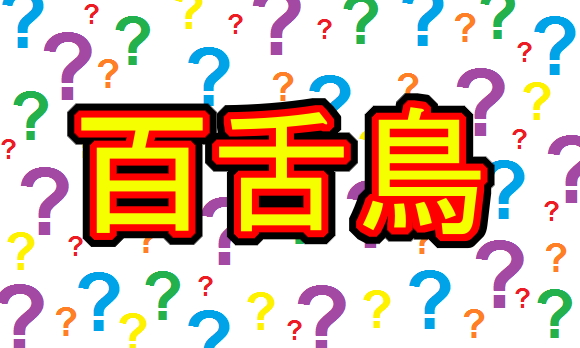
In English we’re used to the “silent e” and “silent k” and the dreaded “silent m” (I’m looking at you, mnemonic). But in Japanese, there aren’t really silent characters. If you see a kanji or a kana, you pronounce it – it’s not just there for decoration.
Until you start reading place names.
Take a look at that place name up there surrounded by question marks: 百舌鳥 in Osaka Prefecture. You may not know all of the kanji in it, but you can clearly see that there’s three kanji there, so you’d expect at least three syllables in the name.
Except it’s pronounced Mozu… only two syllables. Wait, what? Which kanji isn’t being pronounced? Why is it there? Has everything I’ve ever been taught a lie?!
Silent-kanji place names are rare, but a lot of them seem to overlap with the crazy-number place names. There’s 五十部町 in Tochigi Prefecture pronounced as Yobechō, with Yobe (two syllables) somehow being spelled with the first three kanji. And there’s also 七五三場 in Ibaraki Prefecture pronounced as Shimeba that does a similar thing: Shime (two syllables) is spelled with the first three kanji.
As an English speaker, I suppose I really can’t complain about silent kanji. But there’s one thing some place names do that we definitely don’t do in English…
#3. Negatively-conjugated place names
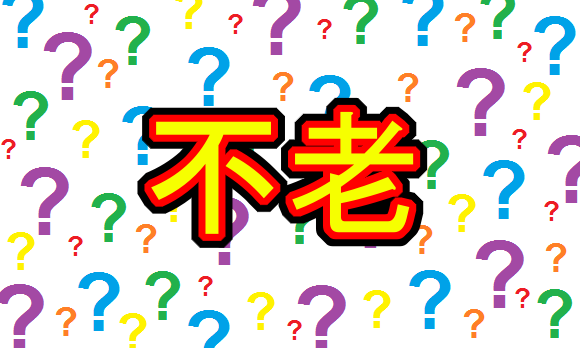
Once you’ve had enough experience reading crazy Japanese place names, your brain starts to recognize some of the patterns. It grows numb to the insanity and illogic and just tries to accept it.
Take for example the kanji place name above: 不老 in Fukui Prefecture. The first kanji means “not” and is usually pronounced fu, and the second one means “old” and is usually pronounced rō. So, just maybe, could it possibly be pronounced as Furō?
No, it’s not, but the actual pronunciation isn’t something completely random like many of the other places. It’s pronounced Oizu, which is formed as a negative conjugation (from the “not” kanji) of the verb oiru (meaning “to grow old” from the “old” kanji). This kind of writing is common in classical Japanese, so it almost makes sense… but then you remember that reading place names shouldn’t require a degree in ancient literature to decipher.
There are many other “negative” place names, such as 不明門通 in Kyoto Prefecture, which is pronounced Akezu no Mon dōri and translates to something like “Gate-Does-Not-Open Street.” Again, the “not” kanji (不) is conjugating the “open/bright” kanji (明), which is kind of like instead of calling a place “New York” we simply “conjugated” the word “York” into the future tense and called it “Will York.” Hmm, it just doesn’t have the same ring to it.
#2. All hope abandon, ye who read these
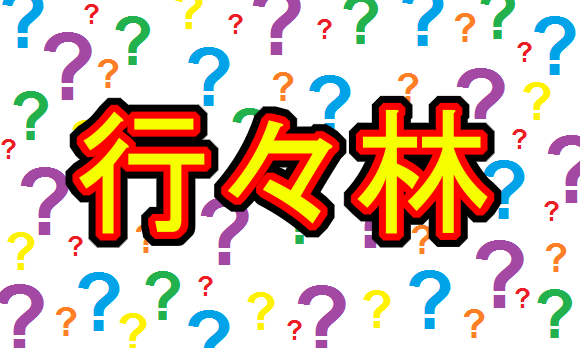
Oh boy. This is one of the scariest categories because these guys can come out of nowhere. When you see number kanji, or single-kanji, or negative-kanji, then you know to expect a crazy pronunciation. But sometimes the weirdest readings can come out of the most innocuous names.
Take the above for example, 行々林 in Chiba Prefecture. That doesn’t look so bad. It has the kanji repetition mark in the middle meaning to just double the sound of the kanji that comes before it, like in 時々 (tokidoki “sometimes”) and 別々 (betsubetsu “separate”). Easy, right?
…have you learned nothing?
Nope, this place name is pronounced Odoro-bayashi, with bayashi being the last kanji only. I don’t know about you, but I don’t see any repetition in odoro besides a bunch of o’s, and that doesn’t count.
The list of these offenders goes on and on, but here’s just some of the most heinous examples:
人里 in Tokyo Prefecture pronounced Henbori, which gives the kanji 人 (“person”) yet another reading on top of the approximately 8,000 it already has.
和布 in Fukui Prefecture pronounced Mera, which gives the kanji meaning “peace” and “cloth” the reading of “bursting into flames” (loose translation of Mera).
月出里 in Ibaraki Prefecture pronounced Sudachi, which gives the kanji meaning “moon leaving town” the reading of “becoming independent/leaving the nest” (translation of Sudachi).
And possibly the most fitting one of all, 稚内 in Hokkaido Prefecture pronounced Wakkanai, which is not only an irregular reading of the first kanji, but can also translate to “I have no idea.” I couldn’t think of a better name for an impossible-to-read place name.
And the #1 most insane kanji place name in Japan is…
.
.
.
.
.
.
.
.
.
.
1. Anything in Okinawa
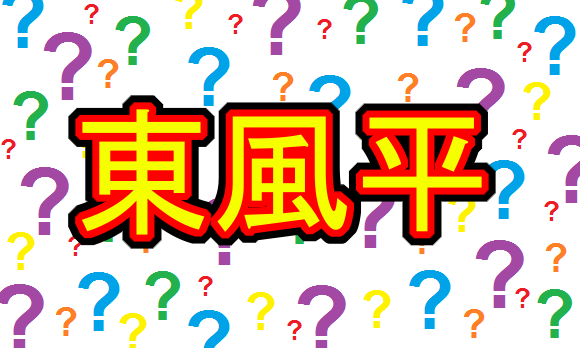
I love Okinawa. I lived there myself for years. I made friends there, even studied the native Ryukyu language. But that doesn’t mean I still have even the tiniest hope of ever reading any of the place names correctly.
Take the place name above for example: 東風平. You might recognize the kanji for “east” (tō), “wind” (fū), and “flat” (hei). “But aha,” you think to yourself, “I’m smart to your game. They must be pronounced using their other readings: higashi, kaze, and hira respectively. Or perhaps a combination of the two readings? Or perhaps some contractions here or there?”
Listen. I appreciate the effort. I really do. But it’s okay. You’re not going to be able to read this until you know what it is. It’s pronounced: Kochinda.
Yup. Good luck finding any of those readings in a dictionary! And that’s just the beginning.
There’s 北谷 pronounced Chatan, 南風原 pronounced Haebaru, 勢理客 pronounced Jitchaku, and one of my favorites, 喜屋武 pronounced simply as Kyan.
▼ So is 喜 pronounced k, 屋 is a little ya, and 武 is… n???
But there is one place name in Okinawa that is the king of all insane place names. Not only does it have silent kanji, not only does it have completely random readings, not only are there pronunciations here that basically don’t exist in the rest of Japanese kanji, but it was so crazy even a Japanese tourist had to take a picture of it:
▼ It’s 保栄茂 pronounced Bin. Three kanji, two syllables, nonstandard readings,
and I can’t think of any other kanji pronounced simply n. Nice job, Okinawa!

So there you have it, the top five most insane kanji place names in Japan. If you’ve been to Japan, or if you’re living there now, do you know any good crazy-place-name-kanji? Let us know in the comments so that maybe we’ll finally be able to read a map to get to a Japanese restaurant and enjoy the top five reasons they’re so awesome.
References: Wikipedia, Okiraku Station
Featured/top image: GAHAG (Edited by RocketNews24)
Insert images: ©RocketNews24
W.T.F. Japan will be back next Thursday. In the meantime, give me a follow on Twitter and let me know if there’s any topics you’d like to see covered. See you next week!
 W.T.F. Japan: Top 5 kanji with the longest readings 【Weird Top Five】
 W.T.F. Japan: Top 5 most ridiculous kanji handwriting shortcuts【Weird Top Five】
 W.T.F. Japan: Top 5 most difficult kanji ever【Weird Top Five】
 W.T.F. Japan: One year anniversary special! Top 5 W.T.F. Japan articles 【Weird Top Five】
 W.T.F. Japan: Top 5 kanji with ironic meanings【Weird Top Five】
 Ramen restaurant in top Tokyo tourist neighborhood skips price gouging, but how does it taste?
 Uniqlo announces new T-shirts for One Piece, Naruto and more for manga publisher’s 100th birthday
 Japan’s ministry of economy reminds us to “use sound judgment” before buying toilet paper
 How many doughnuts can you pack in a Mister Donut all-you-can-pack deal?
 Japanese fast food chain serves up burgers with Camembert “buns”
 Ghibli Museum building becomes a cuddly cushion
 “Online streamer” tops dream job poll for young Japanese kids, older kids not so interested
 Japan now has a “for foreign tourists only” Mt. Fuji sightseeing train[Video]
 Krispy Kreme releases Super Mario doughnuts in Japan for a limited time
 Umamusume food and drinks dash into real world at Family Mart convenience stores[Taste test]
 Japanese onsen egg maker from 100-yen store Daiso needs to be on your shopping list
 Starbucks Japan releases new My Fruit³ Frappuccino at only 34 stores around the country
 Tokyo government organizes food truck event to clear out delinquent/homeless teen gathering area
 Cherry blossoms begin blooming in Japan with record-early starts for sakura season
 Nine amazing off-the-beaten-path cherry blossom spots in Japan for yaezakura and shidarezakura
 Stunning central Japan wisteria festival is like a purple fantasy straight out of a Ghibli movie
 Create a tiny Ghibli anime world on your bookshelf with new miniature papercraft art kits
 Studio Ghibli releases the My Neighbour Totoro tea caddy, with a magical self-closing lid
 When will the cherry blossoms reach full bloom in Japan this year?[Forecast]
 Starbucks Japan unveils new sakura cherry blossom collection for hanami season 2026
 Train station platform ramen store closes its doors on half a century of history in Tokyo
 Studio Ghibli releases Catbus pullback keychain that runs like the anime character
 Nine great places to see spring flowers in Japan, as chosen by travelers (with almost no sakura)
 Starbucks Japan releases first-ever Hinamatsuri Girls’ Day Frappuccino
 Studio Ghibli adds new Mother’s Day gift sets to its anime collection in Japan
 Virtual idol Hatsune Miku redesigned with look that adds new elements and brings back old ones
 Survey asks foreign tourists what bothered them in Japan, more than half gave same answer
 Japan’s human washing machines will go on sale to general public, demos to be held in Tokyo
 Starbucks Japan releases new drinkware and goods for Valentine’s Day
 We deeply regret going into this tunnel on our walk in the mountains of Japan
 Studio Ghibli releases Kodama forest spirits from Princess Mononoke to light up your home
 Starbucks Japan releases new sakura goods and drinkware for cherry blossom season 2026
 Japan’s newest Shinkansen has no seats…or passengers [Video]
 Major Japanese hotel chain says reservations via overseas booking sites may not be valid
 Put sesame oil in your coffee? Japanese maker says it’s the best way to start your day【Taste test】
 No more using real katana for tourism activities, Japan’s National Police Agency says
 W.T.F. Japan: Top 5 myths about learning Japanese【Weird Top Five】
 W.T.F. Japan: Top 5 strangest kanji ever 【Weird Top Five】
 W.T.F. Japan: Top 5 most confusing Japanese compound words【Weird Top Five】
 W.T.F. Japan: Top 5 confusing Japanese Internet slang words 【Weird Top Five】
 W.T.F. Japan: Top 5 best Tamagotchi releases 【Weird Top Five】
 W.T.F. Japan: Top 5 nicest sounds in Japan【Weird Top Five】
 W.T.F. Japan: Top 5 crazy awesome features of Japanese restaurants 【Weird Top Five】
 W.T.F. Japan: Top 5 Japanese words with cool ancient origin stories【Weird Top Five】
 W.T.F. Japan: Top 5 confusing Japanese hand gestures【Weird Top Five】
 W.T.F. Japan: Top 5 most confusing Japanese counter words【Weird Top Five】
 W.T.F. Japan: Top 5 “shikata ga nai” (“it can’t be helped”) situations in Japan【Weird Top Five】
 W.T.F. Japan: Top 5 strangest ways to be polite in Japan 【Weird Top Five】
 W.T.F. Japan: Top 5 craziest Japanese certification exams 【Weird Top Five】
 W.T.F. Japan: Top 5 most perfectly translated Pokémon names【Weird Top Five】
 W.T.F. Japan: The top five “sora” references of all time! 【Weird Top Five】
