

When you’re leaving the office before your coworkers, you don’t tell them “Sayonara,” you tell them “I’m being rude.”
Japan has a complicated relationship with the concept of overtime work. On the one hand, pride in your profession and going above and beyond the bare minimum for the sake of the group are cornerstones of Japanese culture, and both have deep and direct connections to the peace and economic prosperity that Japan has enjoyed for so much of the post-war era. But at the same time, a societal expectation that employees should be willing to regularly put in several hours at the office after their shifts are supposed to end can pose a serious danger to people’s mental and physical health.
In recent years, there’s been an increased effort by companies and workers’ advocacy groups to reduce the amount of overtime Japanese employees feel obligated to do. However, Japanese Twitter user @AdmiralYamabiko feels that all the progressive managers and government guidelines Japan throws at the problem won’t do any good until one part of Japanese linguistics gets reformed too.
「残業をできるだけなくしましょう」みたいなこと言われる度に「お先に失礼します」とかいう挨拶が残ってるうちは無理だと思う。定時には「ジャーンジャーン」と銅鑼みたいな何かを鳴らし、帰る人が「甘寧一番乗り!」って言って、残ってる人が「遅れを取るな!我らも続けー!」って言うようにすべき。
— やまびこ (@AdmiralYamabiko) October 13, 2018
Spend even a day in a Japanese office, and you’ll hear the phrase “Osaki ni shitsurei shimasu,” which is something people say to any coworkers still in the office as they walk out the door on their way home. However, even though that makes it functionally a substitute for “goodbye,” the literal meaning of the phrase is:
“I am being rude by leaving before you.”
▼ Pictured on the right: A jerk?
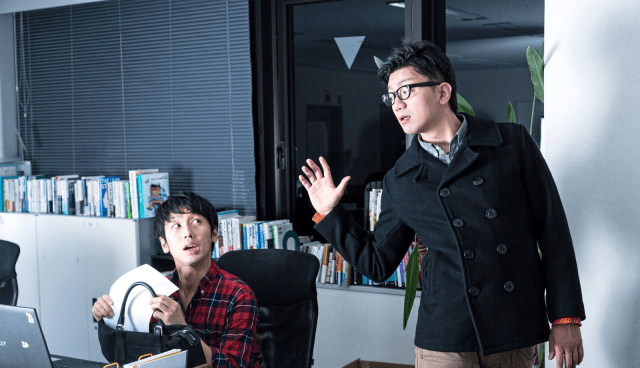
Granted, the frequency with which osaki ni shitsurei shimasu gets used gives it a bit more of a familiar feel to native Japanese speakers, but the sentiment is still “Excuse me for going home before you,” with an explicitly stated acknowledgment that by leaving the office first, you’re putting yourself first by not helping your coworkers out with the remaining workload of the staff as a whole.
“Every time I hear someone say ‘Let’s try to limit our overtime to as little as possible,’” tweets @AdmiralYamabiko, “I think it’s going to be impossible as long as people still say ‘Osaki ni shitsurei shimasu.’”
So what would @AdmiralYamabiko like to see replace the phrase? His suggestion is that at the designated time employees’ shift is supposed to end, the company should strike a war gong, and whoever’s ready to lead should stalwartly make their way to the exit while boldly announcing “Ichiban nori,” a phrase used by warlords of the feudal era that roughly translates to “I’m leading the charge!” Doing so would change the image of whoever’s leaving the office first from lazy clock-watcher to valiant vanguard leader, and thus encourage anyone still working to wrap up as soon as possible so they don’t fall behind the gallant head of the formation.
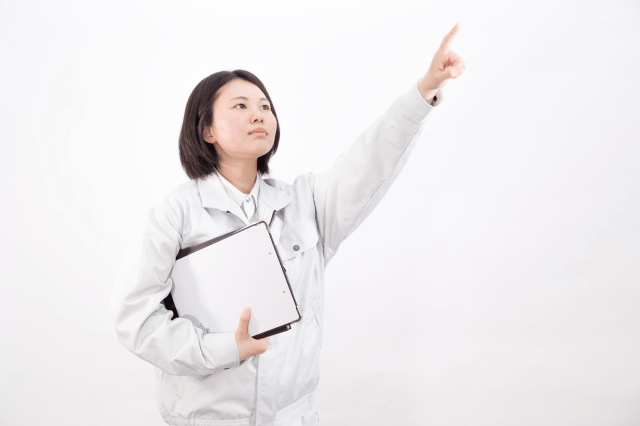
@AdmiralYamabiko’s idea produced online reactions such as:
“I like it. It makes going home seem like a positive thing. You could even have the company president get in on it by ordering everyone to ‘Withdraw from the field of battle!’”
“But what if someone else says ‘Wait! It could be a trap! Hold your positions!’”
“It might only make a small difference, but I think it’s worth a shot to start trying to limit how often we say ‘Osaki ni shitsurei shimasu.’”
“We need to start thinking of people who can finish their work without doing overtime as heroes.”
Unfortunately, that last point is something that’s not so simple in Japanese culture. Yes, being a capable, productive worker is definitely considered worthy of respect in Japan, but unless everyone else is ready to go home too, there’s likely to be a segment of the population that feels it’s selfish to be the first to clock out for the day. Because of that, managers and human resource departments continue to bear a huge responsibility to make sure staff sizes and individual workloads are kept at reasonable levels.
It’s also worth pointing out that just like English-speakers sometimes use the phrase “Excuse me” without actually feeling any deep or genuine guilt, it’d be an exaggeration to say that Japanese people are actually wracked with shame every time they say “Osaki ni shitsurei shimasu.” Still, a shift in semantics so that workers don’t have to apologize for going home when their shifts end could be an important step in Japan achieving a more moderate work/life balance.
Source: Twitter/@AdmiralYamabiko via Jin
Top image: Pakutso
Insert images: Pakutaso (1, 2)
Following Casey on Twitter requires no apologies in Japanese or English.