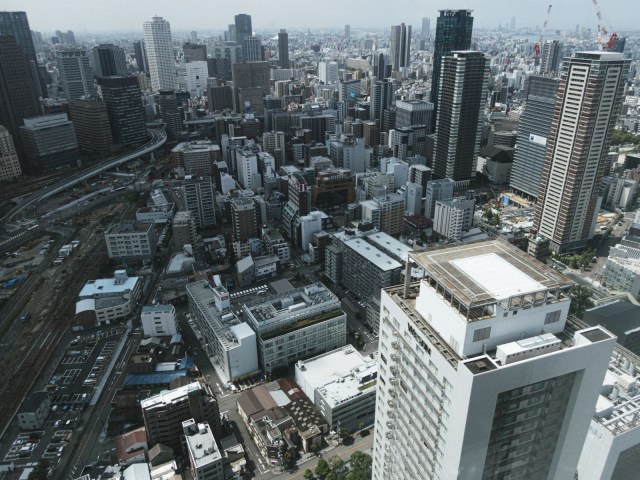
Before the area was known as Umekita, it was known as Umeda Grave.
With people think of a Japanese city with a rich cultural legacy, Kyoto is the first place that springs to mind, but Osaka is no slouch in the historical significance department either. Osaka’s coastal location connected it to trade routes even in Japan’s feudal era, and the town that spread out from Osaka Castle was the country’s most thriving center of merchants and commerce when Tokyo was still a backwater town called Edo.
As present-day Japan’s third-largest city in terms of population, Osaka continues to be a busy place. Right now there’s an urban redevelopment project going on in the area north of Osaka Station, and during construction surveys Osaka’s past, present, and future have intersected.
The district around Osaka Station is called Umeda, and the sub-section where the redevelopment project is taking place is called Umekita (combining “Umeda” and kita/”north”). But once upon a time, it was known as Umeda Haka, or Umeda Grave, one of seven major cemeteries of Osaka. Because of that, survey teams for the Umekita redevelopment project have discovered the bones of more than 1,500 people at a project site, according to a recent announcement from the Osaka CIty Board of Education and Osaka City Cultural Properties Association.
▼ The survey site
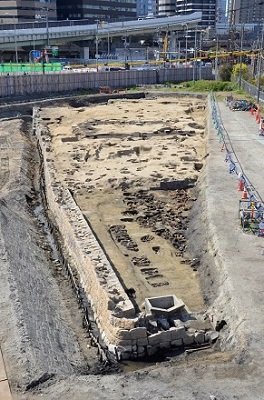
Various burial styles were observed, ranging from enclosed wooden caskets to barrel-like open containers, as well as earthenware coffins called kameganbo (“turtle caskets”). While cremation is the norm in Japan now, surveyors found both cremated and non-cremated remains. Several of the bodies had also been interred with burial items such as juzudama (rosary-like prayer beads), rokusenmon (a set of six coins used to pay passage across the Sanzu River, said to separate the world of the living and the afterlife), pipes, and clay dolls.
In another section of the site, separated from the casket area by a stone wall, a mass grave with bodies of the deceased only covered by earth was found. Given the number of people who were apparently buried at the same time, researchers suspect the burial may have come following a plague that claimed the lives of many in a short period of time.
This isn’t the first time for urban development in Osaka to uncover bodies, as a survey in 2017 found the remains of some 200 people. The new discovery, though, is the largest ever for Osaka. Researchers believe that the graves in the newest discovery were those of commoners, not members of the aristocracy, and further study could yield new insights on the lifestyles and burial customs of everyday Japanese people in the late years of the Edo period (1603-1868) and first 20 or so years of the Meiji period (1868-1912), when the cemetery was still in active use.
Sources: Mainichi Shimbun, Osaka City
Top image: Pakutaso
Insert image: Osaka City
● Want to hear about SoraNews24’s latest articles as soon as they’re published? Follow us on Facebook and Twitter!