
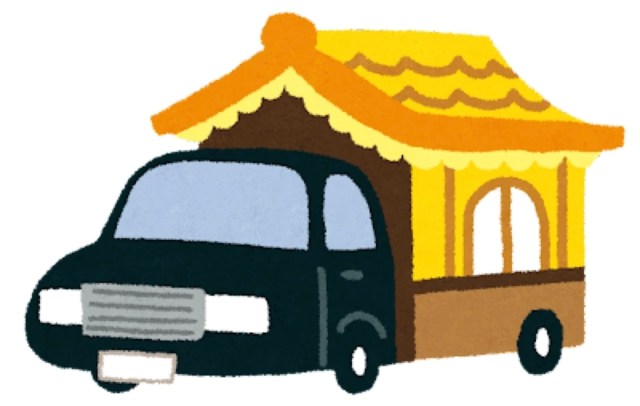
Making a living from driving the dead around.
There are likely very, very… very few kids who say they want to be a hearse driver when they grow up. And yet, when you think about it, it’s probably a pretty decent job to have. There’s always a steady flow of work and everything tends to move at a relaxed pace.
Then again, I could be wrong because I, like many people, don’t really know everything that goes into being a hearse driver. Neither did our Japanese-language writer Go Hatori, so he got in touch with one and learnt the ins and outs of one of society’s often overlooked vocations.
Go spoke with 42-year-old Mr. K, an experienced hearse driver ready to spill the prayer beads about everything the job entails from how it feels to how much it pays.
Go: Hello, Mr. K. What kind of company to you belong to?
Mr. K: I work for a company that mainly deals with the transportation of corpses by hearse.
Go: So, you don’t work for a funeral home?
Mr. K: “It’s a common misconception that I’m a driver for a funeral home, but my company is mostly responsible for transporting the deceased. Large funeral homes might have their own in-house hearse and sleeper car to handle transportation themselves, but recently there are many funeral homes that don’t have cars.
By the way, the funeral home is the business that handles all of the funeral arrangements and proceedings. They are the first point of contact with bereaved families, so in our industry they’re like major advertising agencies.
▼ A “sleeper car,” or “shindaisha,” is the Japanese term for a type of first-call vehicle used to transport bodies for non-ceremonial usage. Shindaisha usually resemble normal vans, while the more ornate type of hearses, such as the one pictured below, are called “reikyusha” (“casket cars”) and are used to transport the body to the crematorium following the funeral service.
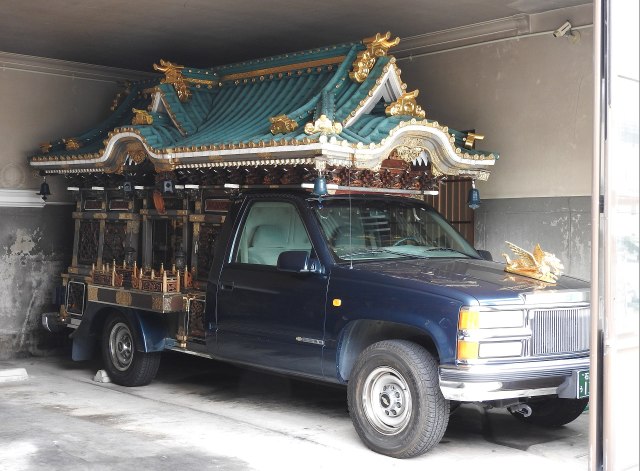 Image: Wikipedia/MathieuMD
Go: What lead you to work as a hearse driver?
Mr. K:”I wanted to work as a driver, so I originally just started looking around at those kinds of jobs.
Go: What kind of work does the job entail?
Mr. K: The job is basically picking up a corpse at the request of a funeral home. They can either be picked up at a hospital, retirement home, police station, or their own home. I just follow the funeral home’s instructions.
Sometimes, my company with take care of the body and other times I take the deceased to their own home. Recently, it’s more common for us to take the body to our company and then transport it to the crematorium later.
Also, if the deceased is left with our company, we can make arrangements for the family to visit.
Go: You take them to their homes sometimes?
Mr. K: “Not very often, but when I do, it’s usually a pretty big home when I do.
Go: What kind of hours do you work?
Mr. K: We have a total of 30 drivers and basically we work in shifts. Of course, that includes graveyard shifts.
Go: What kind of structure does your company have?
Mr. K: Basically, two or three people will be standing by at the office and when a call comes in they’ll take out a car. While waiting, they’ll answer the phone, prepare for visits by the bereaved, and apply dry ice to the bodies if requested to do so by the funeral home.
Go: It seems like a hard job.
Mr. K: Everyone always asks me, ‘It looks like a hard job. Are you OK?” But, you get used to it after about three months. However, I do get sad when I have to transport a young person who took their own life.
Go: What things do you really need to be careful about?
Mr. K: When we get a request to take someone from a funeral home, we really need to be punctual. Because of that, we need to be on time even if there’re traffic jams or construction, so I study the roads extremely well to always arrive on time.
Also, the hearse is very long and wide, so it requires some advanced driving skills. Narrow roads can be very difficult and if you don’t know them well, you’re screwed.
Other things are knowing the polite things to say to the bereaved and staff at the funeral home, as well as smoothly moving the deceased from the bed to the stretcher so it doesn’t make a sound.
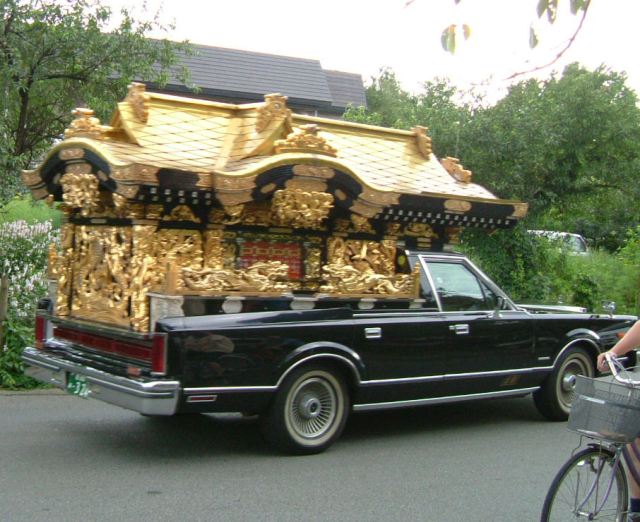 Image: Wikipedia/Ümit Yaldiz
Go: If you don’t mind me asking, how much do you make?
Mr. K: My take-home salary is about 250,000 yen (US$1,777) a month.
Go: What is your honest feeling about this kind of work and what do you think it’ll be like in the future?
Mr. K: I’ve had a few different jobs so far but this one is very rewarding and I feel very appreciated by people. As far as driver jobs go, it’s the one where I’ve felt the most appreciated.
But there are problems. Currently, there are a lot of older drivers and very few young drivers. Hearse driving also takes years of training, so people can’t just jump into it. That and the fact that people tend to shy away from jobs like this mean there may be far fewer hearse drivers in the future.
We’d like to thank Mr. K for his candor and unique insight into the world of hearse driving in Japan. Stay tuned for the next edition of “Curious Job Interview” to learn more about Japan’s lesser known occupations!
Top image: Irosutoya
● Want to hear about SoraNews24’s latest articles as soon as they’re published? Follow us on Facebook and Twitter!
[ Read in Japanese ]
 Kyoto City planning to sell cremated people’s precious metal fillings for millions of yen
 What’s it really like to work at Starbucks in Japan?
 Moving to Japan as a foreigner to work as a taxi, bus or truck driver may be getting easier soon
 Japanese supermarket’s funeral ad sparks controversy, debate over “blasphemy”
 The five least stressful jobs, as ranked by Japanese working people
 Nine great places to see spring flowers in Japan, as chosen by travelers (with almost no sakura)
 Is Daiso’s microwave Japanese rolled omelet maker worth your time and money? [Taste test]
 Pizza Hut Japan teams up with creator of one of the country’s best kinds of ramen for ramen pizza
 Starbucks Japan opens new cafe and art gallery in top Tokyo tourist neighbourhood
 Cowboy Bebop creator’s Samurai Champloo anime to become live-action series from Hollywood studio
 Should you warm up your convenience store onigiri rice balls in the microwave?【Taste test】
 Visiting Japan’s one-and-only, and only-for-a-limited-time, Dragon Ball noodle restaurant[Photos]
 Taste-testing Japan’s real-world Dragon Balls and Senzu Beans at Marugame Seimen
 Starbucks Japan offers special sakura picnics at Reserve Roastery Tokyo beside Meguro River
 Japan’s first hotel with a human washing machine is now ready for you to come and bathe in it
 Starbucks Japan unveils new sakura cherry blossom collection for hanami season 2026
 Japan’s cherry blossom season predicted to start earlier than we’d thought, especially in Tokyo
 Japanese government planning higher ticket prices for foreign tourists at Tokyo National Museum
 Starbucks Japan releases a new Cream Puff Frappuccino for a limited time
 Silicone testicle covers banned from Japanese sauna following cups being left behind and on shelves
 Studio Ghibli now sells Ursula’s backpack from Kiki’s Delivery Service at its anime shop in Japan
 Is Japan’s Crab-shaped Cup Ramen Timer worth the hype?
 One Piece creator has hidden secret of anime treasure’s identity in chest at bottom of real-world ocean
 Is Tokyo Station’s startlingly expensive wagyu bento boxed lunch worth its high price?[Taste test]
 Japan’s newest Shinkansen has no seats…or passengers [Video]
 Starbucks Japan releases new sakura goods and drinkware for cherry blossom season 2026
 Foreigners accounting for over 80 percent of off-course skiers needing rescue in Japan’s Hokkaido
 Super-salty pizza sends six kids to the hospital in Japan, linguistics blamed
 Starbucks Japan unveils new sakura Frappuccino for cherry blossom season 2026
 Foreign tourists in Japan will get free Shinkansen tickets to promote regional tourism
 The 10 most annoying things foreign tourists do on Japanese trains, according to locals
 Naruto and Converse team up for new line of shinobi sneakers[Photos]
 Take a trip to Japan’s Dododo Land, the most irritating place on Earth
 Survey asks foreign tourists what bothered them in Japan, more than half gave same answer
 Japan’s human washing machines will go on sale to general public, demos to be held in Tokyo
 Starbucks Japan releases new drinkware and goods for Valentine’s Day
 We deeply regret going into this tunnel on our walk in the mountains of Japan
 Studio Ghibli releases Kodama forest spirits from Princess Mononoke to light up your home
 Major Japanese hotel chain says reservations via overseas booking sites may not be valid
 Put sesame oil in your coffee? Japanese maker says it’s the best way to start your day【Taste test】
 No more using real katana for tourism activities, Japan’s National Police Agency says
 Bus driver’s kind service towards blind passenger wins praise from Taiwanese netizens
 We talk to a real Japanese butler about life as the chief of staff of a household【SoraInterview】
 Japan sees huge growth in jobs in the “cleaning up the homes of old people who die alone” field
 Tokyo temple holds funeral for personal seals in effort to reform outdated business practice【Vid】
 No gender, photo, or first name – Japanese company makes major shakeup to job application forms
 New employee late to work in Japan shocks older coworkers by blaming the screw-up on “Mama”
 Four frustrating attitudes women in Japan run into when interviewing for jobs, grouped by age
 What are the worst things about the first year working in a Japanese company? Survey investigates
 30 things workers in Japan often find themselves thinking in their first six months on the job
 Japan’s “all-you-can-quit” job-quitting service not what it seems, is also sneakily hard to quit
 Top 11 tweets to make you feel glad you don’t work in Japan
 What’s it like to be a working mother in China? We asked a Chinese mom
 Is 150,000 yen (US$1,389) a month enough to live on in Tokyo? Depends what kind of life you want
 With Japan’s day care shortage, how hard is it to bring your baby to work with you? We experiment
 Number of foreigners working in Japan hits all-time high, 25 percent come from same country
 Japan second-least attractive country for expats to work, survey says, but is it really that bad?

