
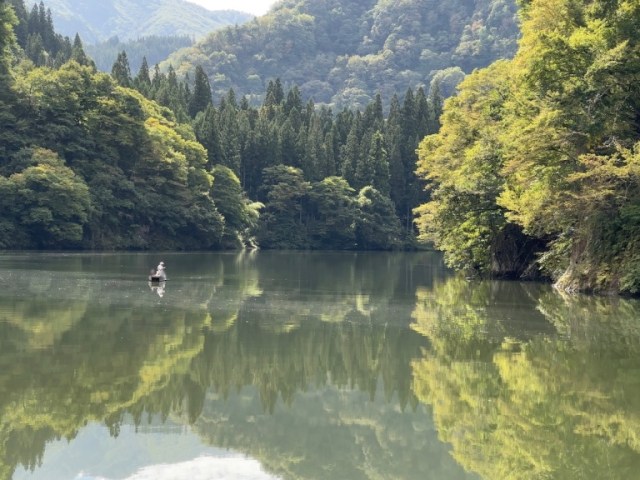
A perfectly peaceful river cruise takes us on a trip back into the past.
Up until the mid-1960s, the people of the town of Mifuke lived a very unique lifestyle. Located on the bank of the Tadamigawa River in the mountains of Fukushima Prefecture, Mifuke had no roads, trains, or bridges that connected it to any outside communities, so if residents of the village needed to go anywhere, they had to go by boat.
But Mifuke wasn’t a large enough village for regular, large-scale ferry services. Instead, each household had a boat of its own. This wasn’t a resort town of wealthy yacht owners, so families had traditional Japanese-style rowboats, wooden and low-lying. Even children learned to pilot them, rowing themselves across the river to the access point to the nearest rail station where they’d catch the train to school in the morning.
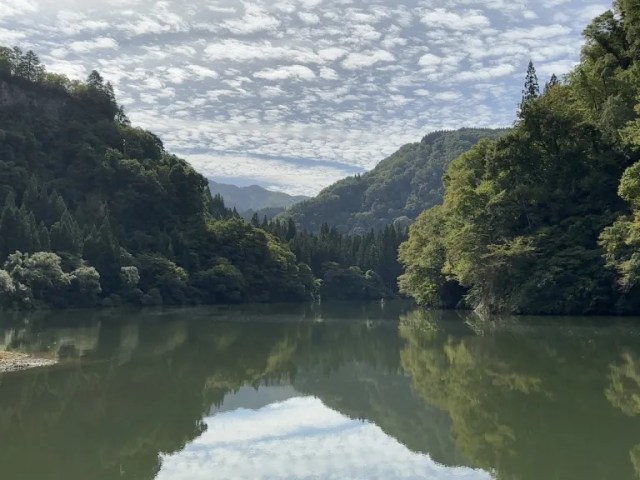
Then, in 1964, disaster struck, as a landslide damaged the village badly enough that the entire population had no choice but to move elsewhere. But Mifuke’s traditions have still found a way to live on, as travelers can cruise the river in the same sort of rowboats the townspeople used to use, and explore the remains of the abandoned village on foot.
That’s just what we did on a recent trip to the area, which is known as Mugenkyo. Mugenkyo translates to “mountain gorge of fog and illusions,” since the river is frequently covered by dense mists on summer mornings and evenings.
▼ A music video shot in Mugenkyo
With our visit coming in early fall, it was too late in the year to see this phenomenon, but our tour did start out mysteriously, as instead of a waiting room, we were instructed to wait for our boat in the open-air of a field.
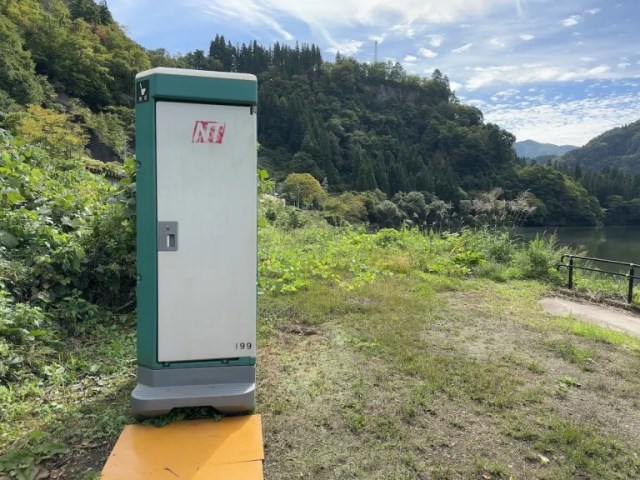
▼ There’s a porta-potty, which you’d be wise to make use of before getting on the water.
▼ The starting-point dock for the tour, which is a two-minute walk from Hayato Station on the JR Tadami Line

At the appointed time, our guide/boatman came gliding over to the dock. Though the Tadamigawa River is usually very calm in this section, there was still a brief safety explanation and lifejacket fitting, after which we got underway.
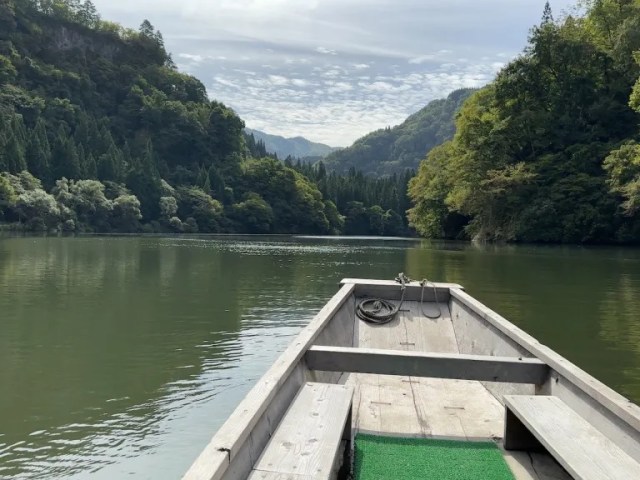
Two different packages are available: a 45-minute boat ride down the river and back, or a 90-minute course with a walking tour of the abandoned Mifuke village site in the middle. Advance reservations are required, and since departure times are staggered, there are no clamoring crowds or clustered boats to diminish the pristine sense of calm and natural beauty.
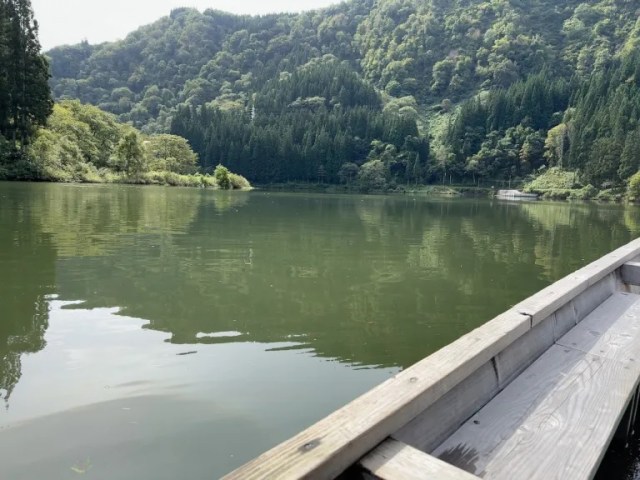
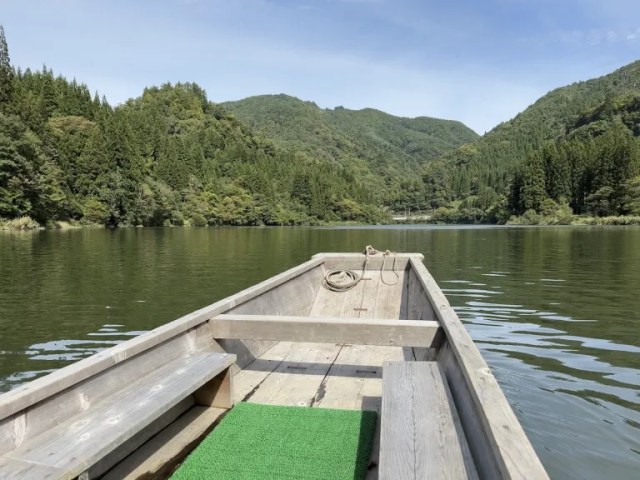
In keeping with tradition, the boats are rowed (though they are equipped with a motor in case of emergency or other urgently required returns). With no roads or other development about, the only sounds we heard were the oar sliding into the water, the chirping of birds, the wind in the trees, and the occasional echoes of a local-line train. It’s so peaceful that it almost felt like we were floating through a dream.
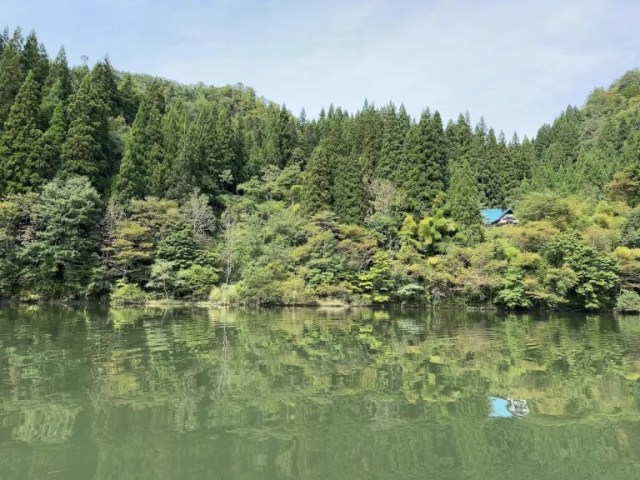
It takes about 20 minutes to reach Mifuke. After docking and securing the boat, our guide began leading us to the site of the abandoned village.
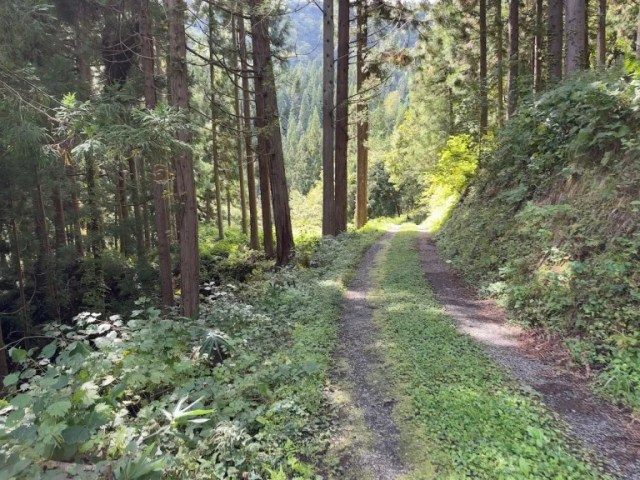
It’s not a particularly treacherous path, but still, you’ll want footwear with grippy soles and good ankle support.
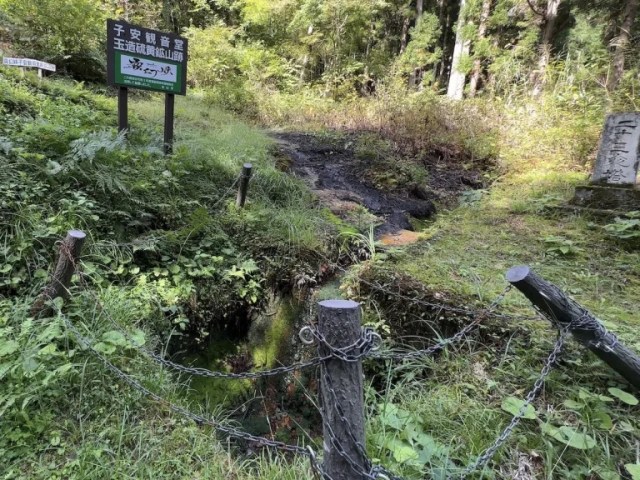
As mentioned above, Mifuke was abandoned following a landslide that took place in 1964, but it wasn’t an entirely natural disaster. In 1957, a sulfur mine was opened at the base of the mountains at the back of the village. Seven years later it ceased operations, but the mine’s tunnels were not sealed. This allowed water to gradually accumulate in the shafts, until eventually the mine collapsed.
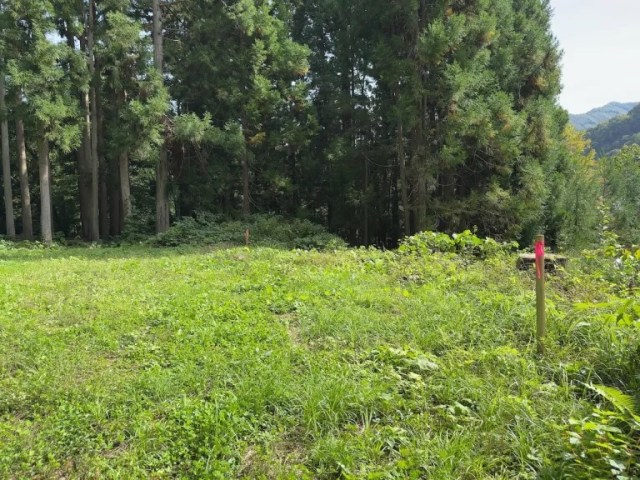
Miraculously, no one was killed. The 10 families living in Mifuke, though, had to relocate, and as we walked we passed by empty plots of land where their houses had been cleared away following the disaster and evacuation.

▼ A photo of the village pre-landslide

▼ The town’s jizo statue, meant to offer protection to travelers, still stands in the same spot it occupied prior to the evacuation.
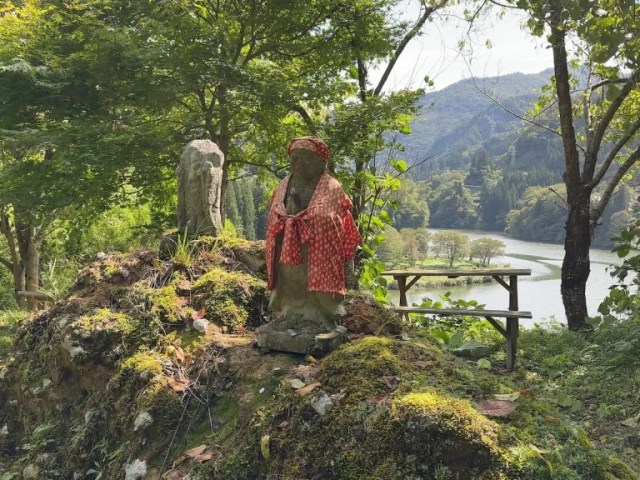
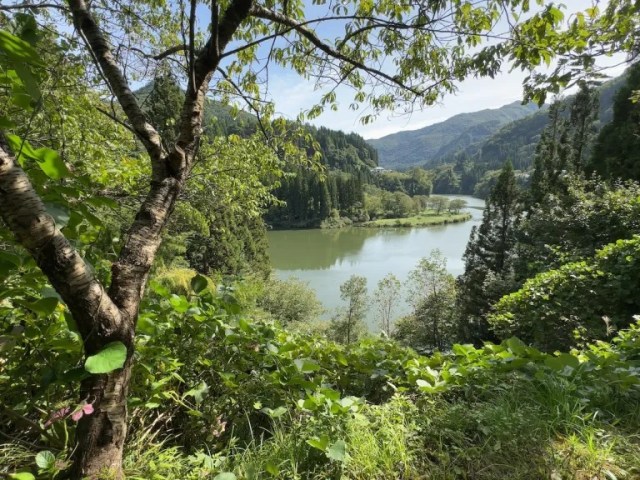
Most of the families relocated to nearby towns, and there is now road access to the Mifuke site, and some former residents do come from time to time to see how the place is doing, but no one has moved back permanently.
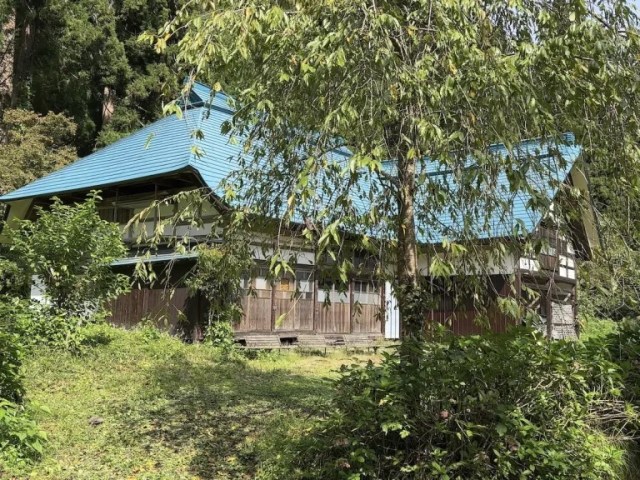
One of Mifuke’s houses is still standing, though, more or less as it was before the landslide. It’s actually a privately owned vacation cottage, but guided tours have permission to visit it and go inside.
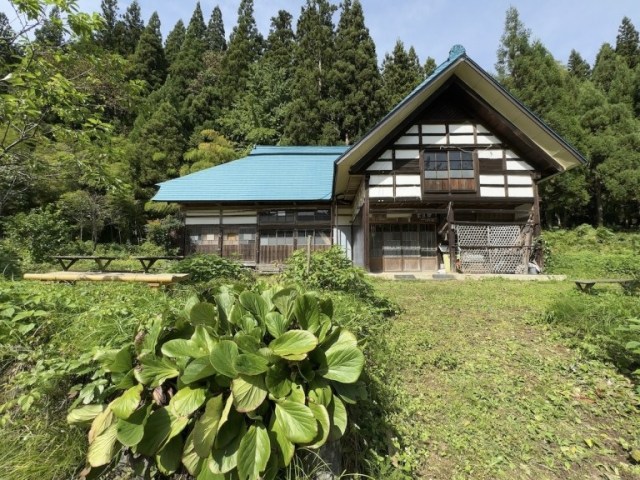
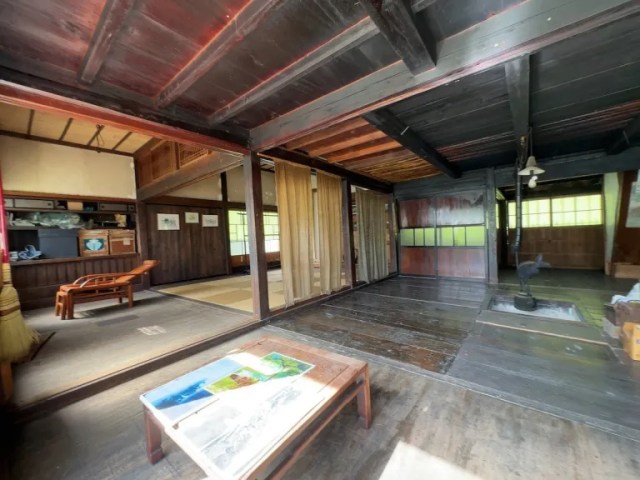
The steeply slanted roof is designed to keep snow from accumulating during the winter. Inside is classical Japanese farmhouse design, with an irori (hearth) set into the floor and sliding doors/walls that allow rooms to be separated or combined as desired.
The words “abandoned village” might conjure up images of a dangerous, or at least gloomy, place. Visiting Mifuke on a sunny autumn afternoon, though, was a great way to de-stress and help keep the town’s memory alive.
The 90-minute tour that includes the walking portion is priced at 8,000 yen (US$53) for one or two people or 12,000 for three, with the respective prices for the 45-minute boat-only course 6,000 and 9,000 yen. Tours are offered until late November before shutting down for the cold winter months, so there’s still time to visit, specially with the area’s leaves starting to change to their fall colors.
Related: Mugenkyo River Crossing reservation website
Photos ©SoraNews24
● Want to hear about SoraNews24’s latest articles as soon as they’re published? Follow us on Facebook and Twitter!
[ Read in Japanese ]
 Abandoned Chinese fishing village gets a natural facelift and it’s awesome 【Photos】
 Japan’s Kizuro Village is a hidden natural beauty and feng shui power spot
 When the pandemic is over…Beautiful photos of places Japan travelers want to visit after corona
 Escape from Tokyo – Another story: Victory beach trip【Photos】
 Cruising around Gunkanjima, Japan’s otherworldly “Battleship Island”【Photos】
 Starbucks Japan releases a new Cream Puff Frappuccino for a limited time
 Japanese government planning higher ticket prices for foreign tourists at Tokyo National Museum
 Science Breakthrough! Japanese Engineers Develop Lunch That Cooks Itself
 The best Hobonichi diaries, covers and stationery for 2026
 Japanese Twitter user stumbles across legendary deep-sea fish, cooks and eats it four different ways
 Tokyo’s “commuter boat” is an awesome hidden way to see the city from the water for dirt-cheap
 Here it is: The finalized map for Super Nintendo World at Universal Studios Japan (and its food)
 Japanese ex-pro wrestler Chigusa Nagayo saves woman from assault in carpark
 Japan’s newest Shinkansen has no seats…or passengers [Video]
 We tried six Japanese burger chains’ coffee to test the state of fast food coffee in Japan[Taste test]
 Starbucks Japan unveils new sakura cherry blossom collection for hanami season 2026
 Japan’s cherry blossom season predicted to start earlier than we’d thought, especially in Tokyo
 Is Tokyo Station’s startlingly expensive wagyu bento boxed lunch worth its high price?[Taste test]
 One Piece creator has hidden secret of anime treasure’s identity in chest at bottom of real-world ocean
 Live-action One Piece’s Luffy teaches Sesame Street’s Elmo a Japanese word for friendship[Video]
 Studio Ghibli now sells Ursula’s backpack from Kiki’s Delivery Service at its anime shop in Japan
 Sakura Festival in Chiyoda mixes illuminations, boats, music, and Rilakkuma in the heart of Tokyo
 Silicone testicle covers banned from Japanese sauna following cups being left behind and on shelves
 Starbucks Japan releases first-ever Hinamatsuri Girls’ Day Frappuccino
 Starbucks Japan releases new sakura goods and drinkware for cherry blossom season 2026
 Foreigners accounting for over 80 percent of off-course skiers needing rescue in Japan’s Hokkaido
 Super-salty pizza sends six kids to the hospital in Japan, linguistics blamed
 Starbucks Japan unveils new sakura Frappuccino for cherry blossom season 2026
 Foreign tourists in Japan will get free Shinkansen tickets to promote regional tourism
 The 10 most annoying things foreign tourists do on Japanese trains, according to locals
 Take a trip to Japan’s Dododo Land, the most irritating place on Earth
 Naruto and Converse team up for new line of shinobi sneakers[Photos]
 Survey asks foreign tourists what bothered them in Japan, more than half gave same answer
 Japan’s human washing machines will go on sale to general public, demos to be held in Tokyo
 Starbucks Japan releases new drinkware and goods for Valentine’s Day
 We deeply regret going into this tunnel on our walk in the mountains of Japan
 Studio Ghibli releases Kodama forest spirits from Princess Mononoke to light up your home
 Major Japanese hotel chain says reservations via overseas booking sites may not be valid
 Put sesame oil in your coffee? Japanese maker says it’s the best way to start your day【Taste test】
 No more using real katana for tourism activities, Japan’s National Police Agency says
 Off the beaten Japan travel path in Amami Oshima’s mangrove forests【Photos】
 Don’t let the rain get you down! Here are Japan’s top 10 most beautiful rainy day travel spots
 A visit to Japan’s priest murder party cliffs of Tojinbo【Photos】
 How many have you seen? 18 must-visit sites in Japan 【World Heritage】
 A daytime visit to Tokyo’s “station of despair” to look for demon lairs【Photos】
 How to do an overnight bus trip to Tokushima from Tokyo – Part 2【Photos】
 A crash course in Japanese folktales from a trip to the five Taro Parks of Gifu【Photos】
 Three beautiful outside-the-cities places to visit in Hokkaido with a connection to Golden Kamuy
 Flying dango: Unique tourist site where Japanese sweets are flown to you over a gorge
 Enjoy a weekend trip to Thailand for less than $50? We show you how【Photos】