
There’s so much more to Tokyo’s Asakusa area than Sensoji Temple.
Our Japanese-language reporter Mr. Sato loves buses, especially ones that run in loops. They took him to the far reaches of Tokyo’s Omori neighborhood and around charming areas of the city of Yokohama, and now he’s ready to take on one of Tokyo’s more bustling areas: Asakusa.
Tokyo’s Taito Ward, where Asakusa is situated, doesn’t have much in the way of trains. That’s probably what inspired the ward to make five bus loops that depart from Asakusa Station and take residents and visitors alike to out-of-the-way areas. It only costs 100 yen (US$0.65) per ride, or you can get an all-day pass for 300 yen.

While Mr. Sato would love to ride all five, he figured that would be pretty confusing for one article, so he settled on the red Kita Megurin Loop Bus to explore the area north of Asakusa Station.

The route, which passes through neighborhoods like Minowa and Senzoku, takes one hour and 45 minutes round trip.
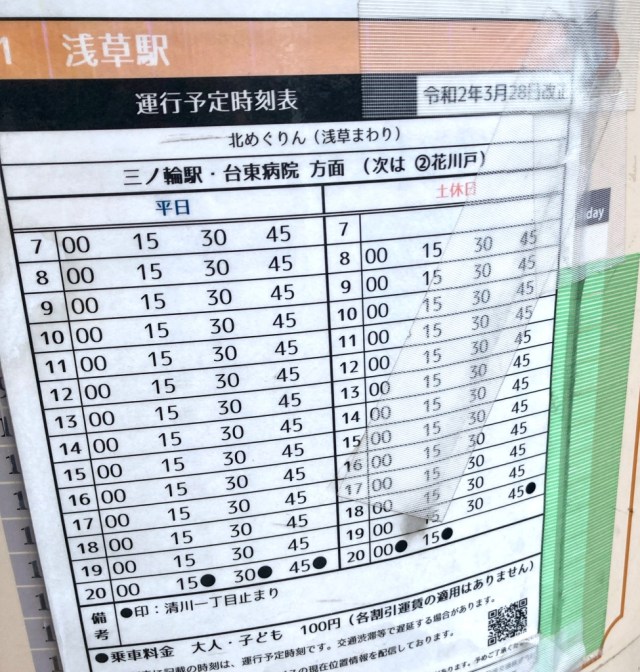
He hopped on his first bus just outside Tobu Asakusa Station. The stops are marked by this orange sign reading “North Asakusa route”.

Buses on this route come every 15 minutes from as early as 7 a.m. to as late as 8:45 p.m., making it quite easy to hop on and off at your leisure.
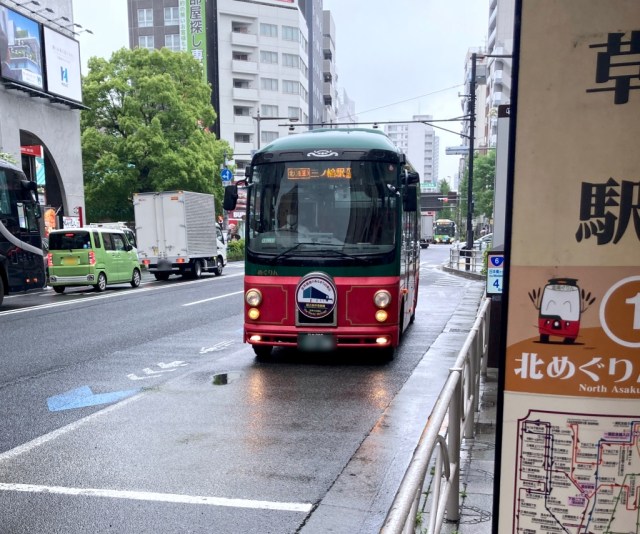
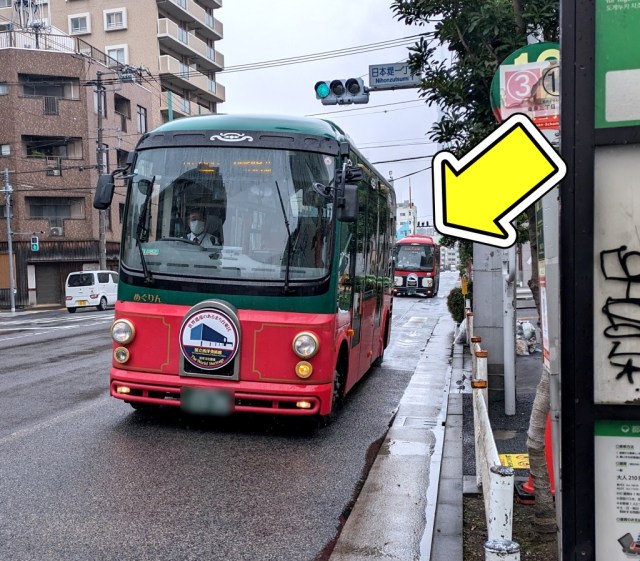
After a few minutes of waiting, Mr. Sato saw the charming Kita Megurin bus approaching. It’s used more as of a community bus than as a sightseeing bus, so it’s rather small.
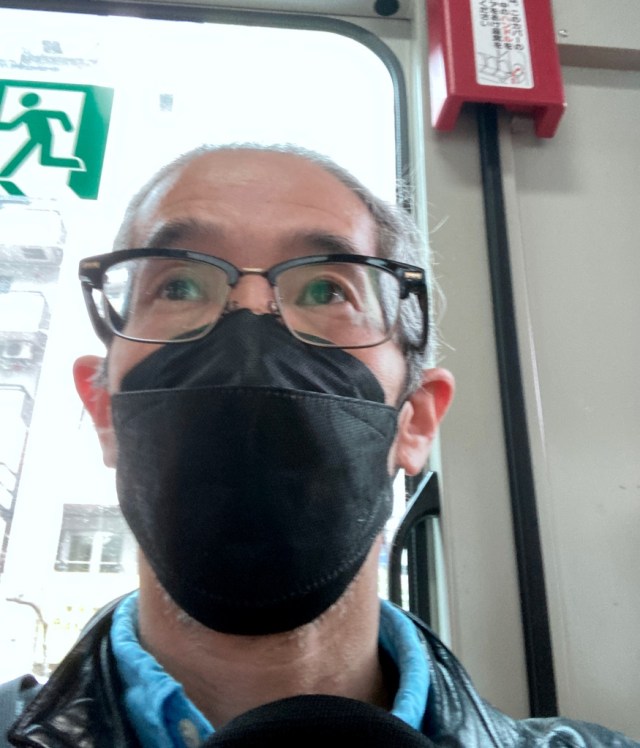
Mr. Sato wouldn’t let the rain stop him from having a good time. Let’s go!
The little bus chugged along, away from the bustling streets near Sensoji Temple and its lively eateries. His first stop was Hashiba-itchome in an area known as “Deep Asakusa.”

Mr. Sato thought the rainy weather actually enhanced its local features. He quickly found the reason why he’d wanted to get off the bus in this sleepy neighborhood: the Haunted Jizo by Joginji Temple.

Jizo statues are made in the image of the guardian deity of children and travelers. The exact origin of how this statue, which towers over three meters (9.8 feet) tall, came to be known as the Haunted Jizo is a bit of a mystery, but local legends say that the hat the statue used to have would move about all by itself, leading to supernatural speculation.
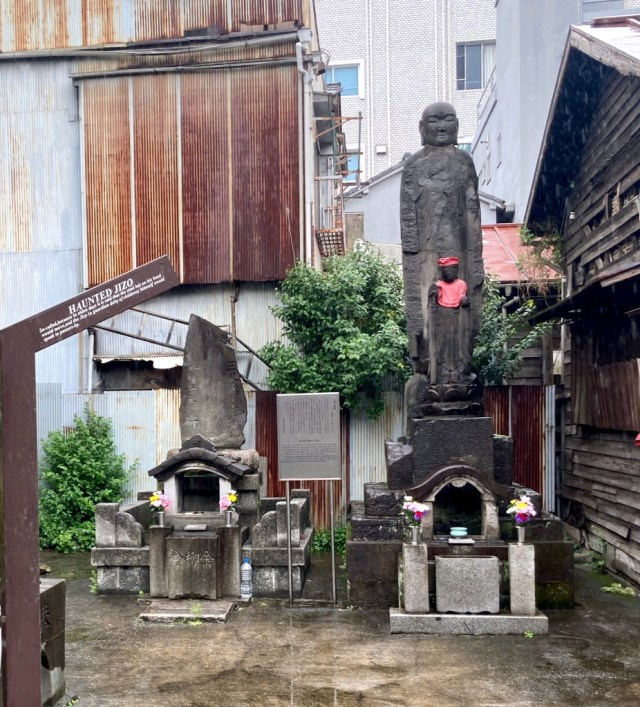
It was originally completed in 1721 and cracked during the Great Kanto Earthquake in 1923. The statue standing today is a restored one. While it may not be the most visually stunning thing, it is one of Deep Asakusa’s many historical offerings.
Mr. Sato continued his walk to the nearby grave of a famous person and was stunned by this giant and colorful structure on the way. It’s apparently a gas tank belonging to Tokyo Gas Energy.

He arrived at his second destination. Any guesses as to whose grave it is?
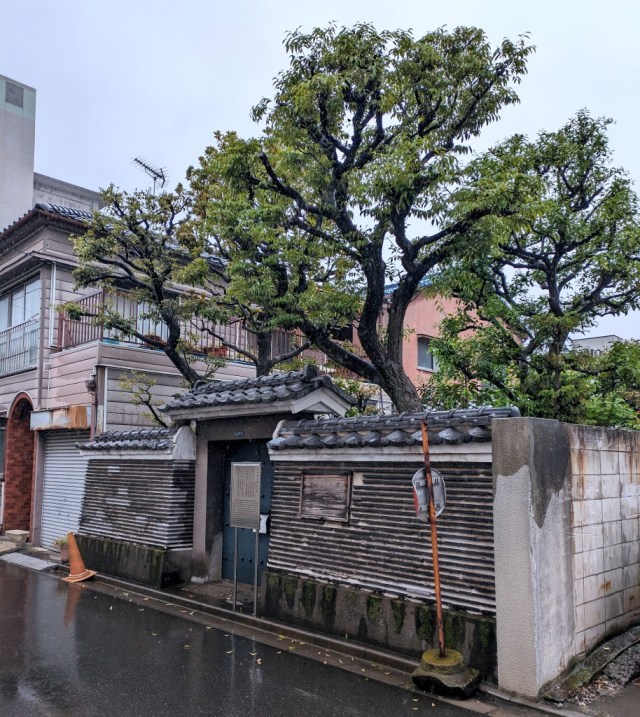
If you guessed Hiraga Gennai, the Japanese Da Vinci, you’d be correct! He was famous for becoming a ronin warrior with no master, working on various inventions, and researching botany, and many other talents. His grave here is designated as a historical property by Japan.
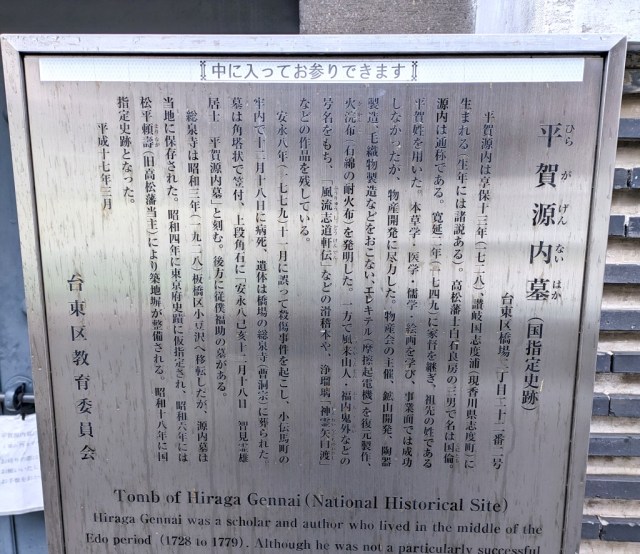
Mr. Sato thought the closed door meant he wasn’t allowed to go in, so he didn’t get a closer look. He later learned that it would have been alright to open said door.
Mr. Sato’s next destination was just one bus station away at Kiyokawa-itchome, so he opted to walk there. His destination was Tamahime Inari Shrine, otherwise known as the Shoe Shrine. Many leather shoemakers have shops near the shrine, and some famous Japanese shoemakers come here to offer prayers yearly.

This shrine holds an annual Konkon Festival during the last weekend of April at which over 30 shoemakers sell over 100,000 pairs of shoes. Other leather goods like bags, belts, and wallets are sold as well.
Mr. Sato continued walking along the Kita Megurin line until the next stop, Hisashi-Asakusa-nichome, where he decided to take a coffee break. He decided on Cafe Bach, who have been in business since 1968.
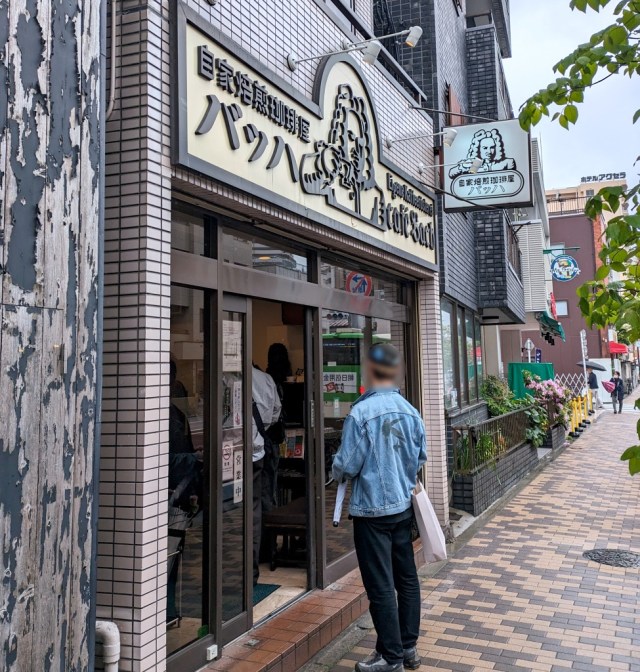
It’s a well-known cafe in the coffee roasting fan community. The shop’s owner, Mr. Taguchi, has many coffee roasting disciples around the country. Mr. Sato isn’t an expert, but he wanted to try beans roasted by one. He chose the Kenya AA blend for 750 yen a cup, which promised to be bitter.
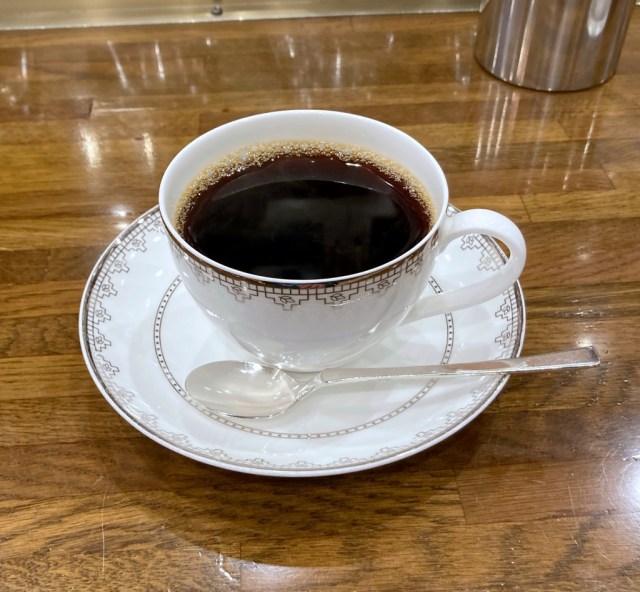
It was totally different than the coffee Mr. Sato made by roasting beans at home! Its flavor had real depth and its bitterness wasn’t too overpowering. This is real coffee, Mr. Sati thought while savoring the brew.
He had it alongside their chocolate cake (600 yen), which had a sweetness made just right for enjoying with a cup of joe.

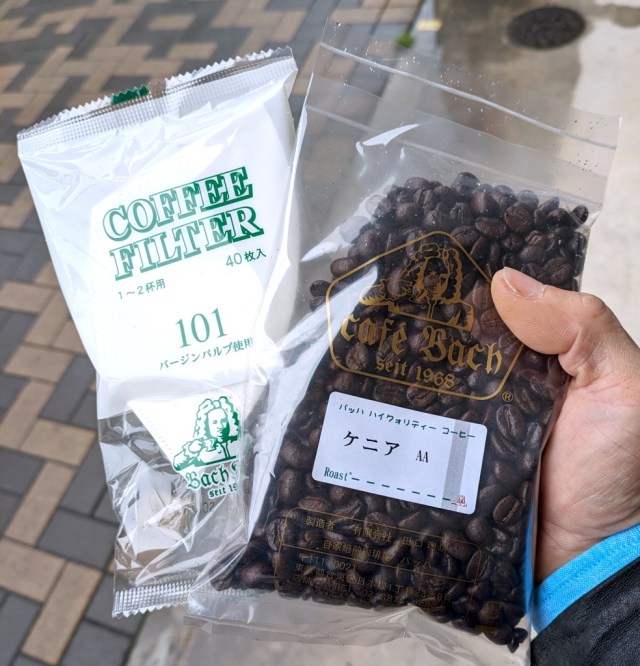
Not confident he could reproduce the same flavor at home, Mr. Sato still bought some pre-roasted Kenya AA beans and some coffee filters to go with it.
Refueled by caffeine, Mr. Sato continued walking along the bus route to Yoshiwara-omon. Can you see what stood out to him?

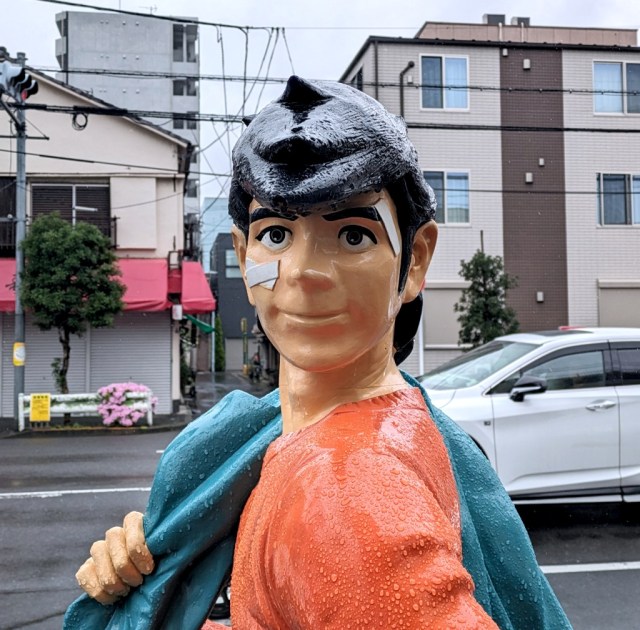
It’s a statue of Joe Yabuki from Ashita no Joe! This neighborhood is one of the many settings of the boxing-themed anime/manga series. This particular statue was erected in 2012.
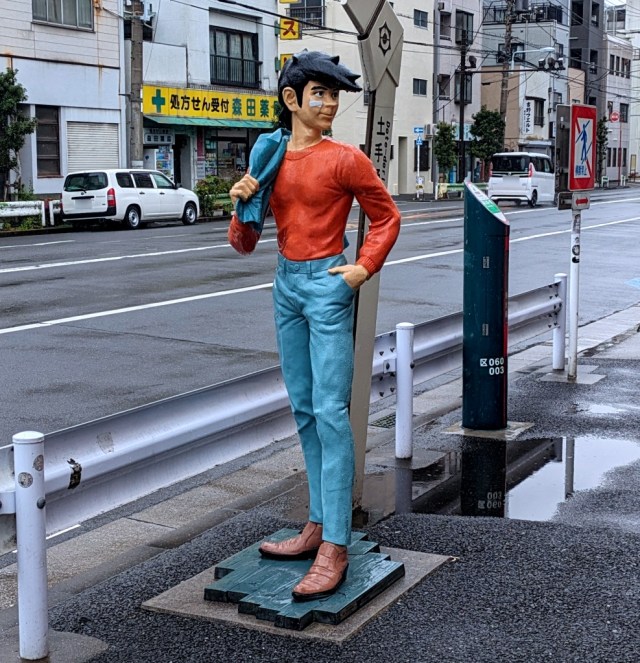
Mr. Sato is a huge Ashita no Joe fan, having grown up with it. Many pivotal scenes came to memory as he gazed into Joe’s eyes.
It was finally time to ride the bus again. Mr. Sato boarded from the neighboring stop, Ryusen-sanchome. He was just in time.
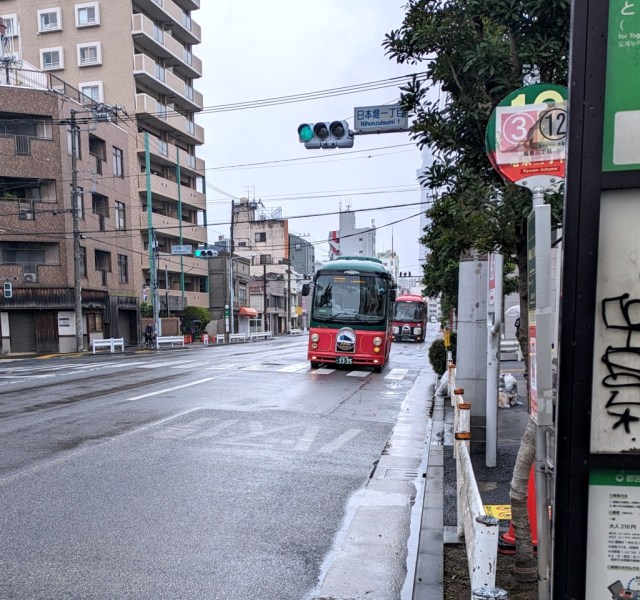
Another challenger appeared! Trailing the Kita Megurin bus was the Tozai Megurin bus, which tours the southwestern parts of Asakusa.
Mr. Sato’s next destination was the Ichiyo Memorial Museum, dedicated to prolific Japanese writer Ichiyo Higuchi. She was known as the first professional female writer of modern literature in the Meiji Era, or the late 1800s. You might also recognize her as the face on the Japanese 5,000 yen bill.
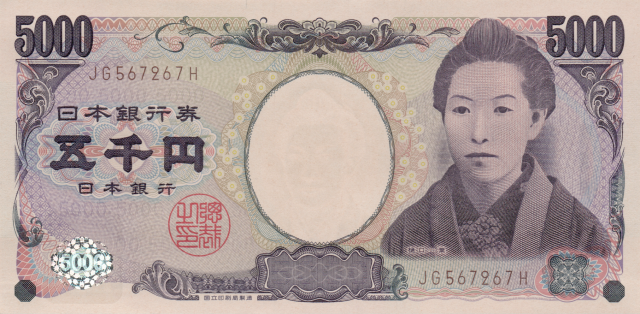 Image source: Wikipedia
Along with being situated in the setting for one of Ichiyo’s famous novels, Takekurabe, the Ichiyo Memorial Museum is also Japan’s first museum dedicated solely to a female writer.
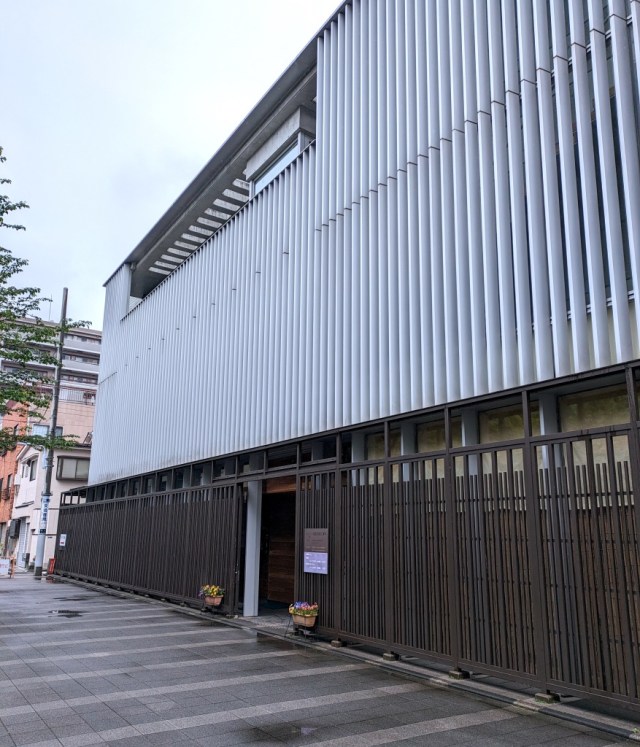
Inside the museum are manuscripts, drafts, and other excerpts of her writing, along with explanations of her upbringing. She lived in relative comfort until her father passed away when she was 24 years old, and she lived with her mother and daughter in a time when it was not easy to make a living as a woman.
After soaking in some more history, Mr. Sato continued on his trek, only to realize he didn’t know where he was. The Kita Megurin Loop’s stops don’t appear on Google Maps, so he was at a loss, but he found the Senzoku Elementary School stop after a bit of wandering, rushing just in time to board the bus.
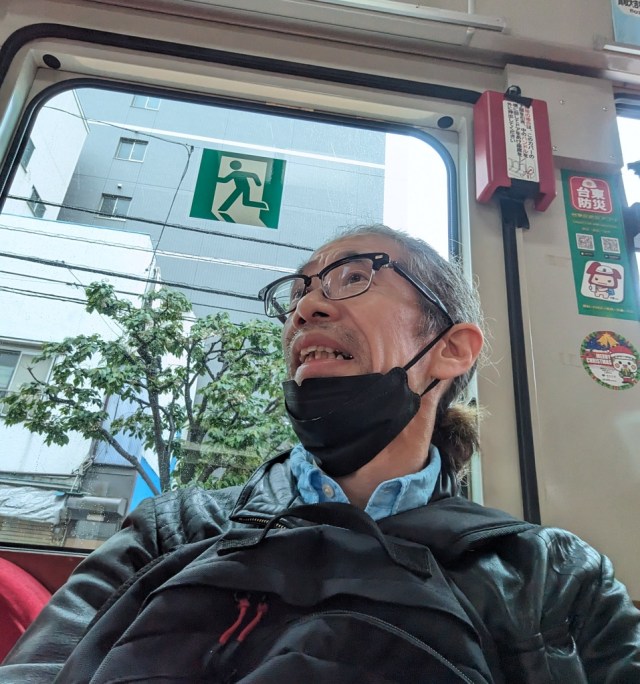
For Mr. Sato’s next intended destination, he got off at the Asakusa-gochome stop.

Unfortunately, the traditional Japanese confectionary shop he’d been looking forward to visiting, Yamaguchiya, was closed this day. Nooo! He should have researched more carefully.
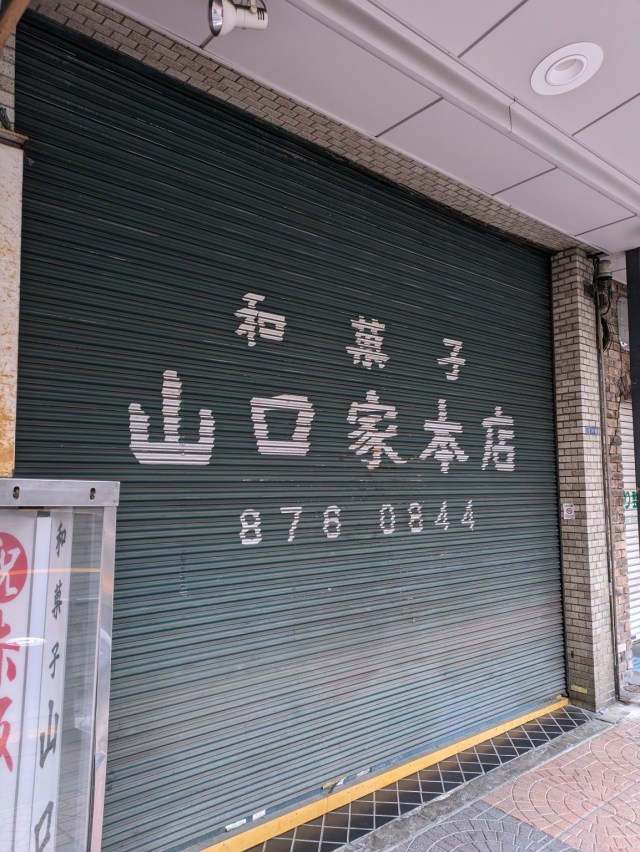

And so, yet again, he waited for the bus to come.
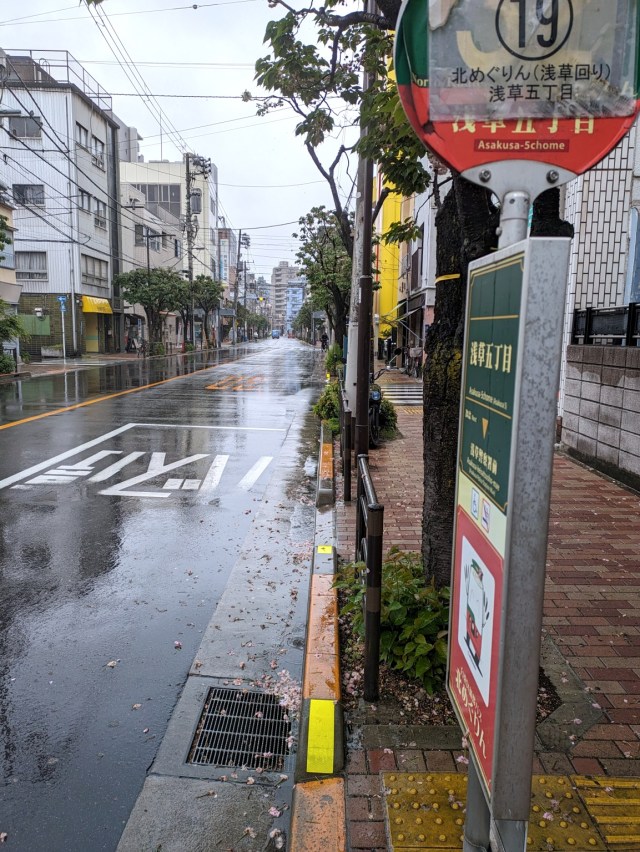
He may have wasted fifteen minutes, but he was ready to take on more of Deep Asakusa.

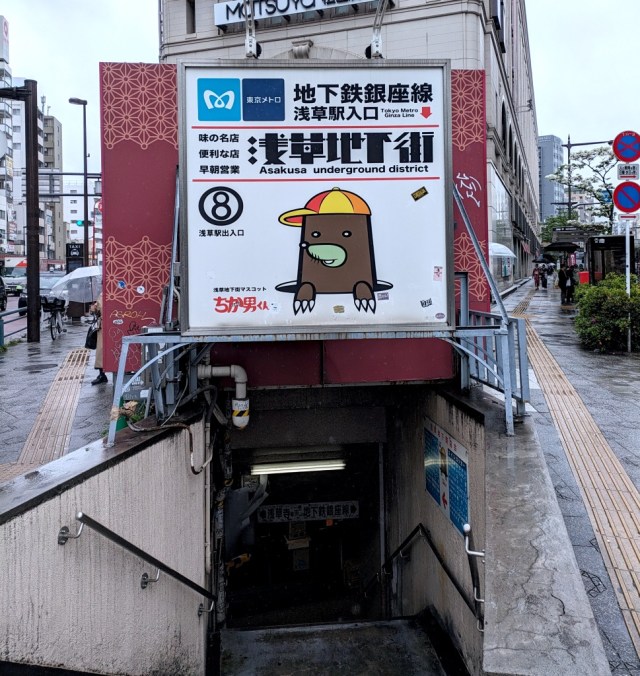
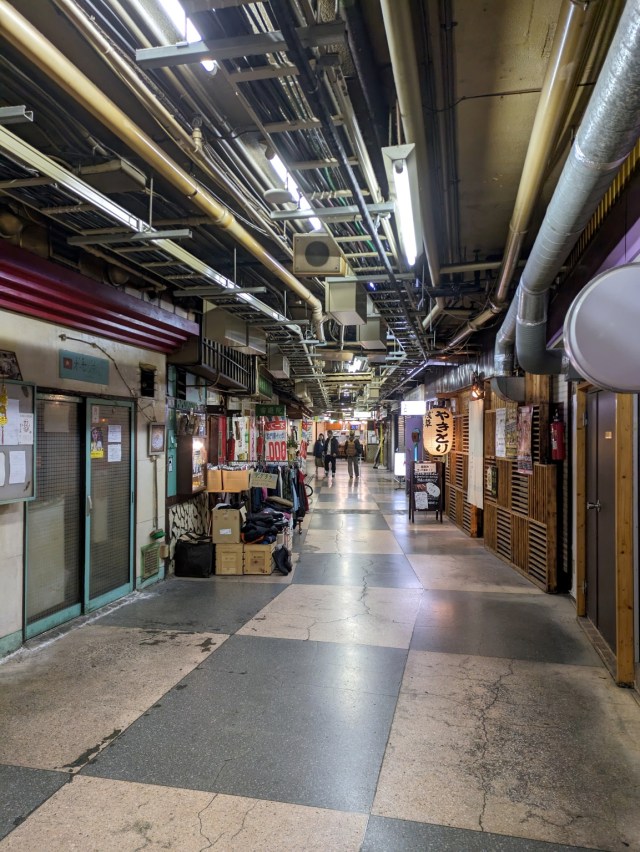
The bus took him back to Asakusa Station. Wait, you might be thinking, didn’t you say he was exploring more of Deep Asakusa? Don’t worry, he is! Mr. Sato set off to explore Japan’s largest underground shopping district, the Asakusa Underground District.
It’s a great place to experience a timeslip, as the now-retro Showa-style interior hasn’t been updated much since its establishment.

Since he couldn’t enjoy sweets earlier, Mr. Sato decided to chow down on some noodles at Monju, an affordable soba and udon noodle shop.
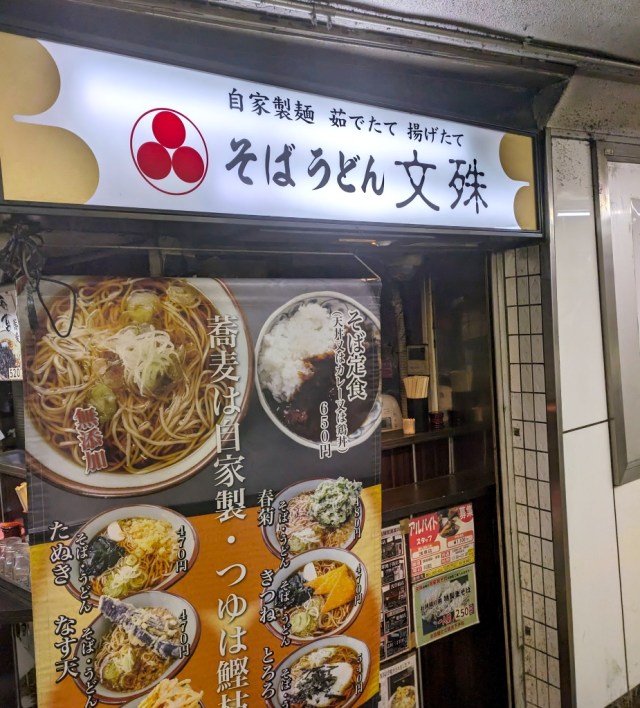
He went with the Soba Teishoku Meal Set for 650 yen, which came with a bowl of warm soba noodles and an optional side of Japanese-style curry rice.
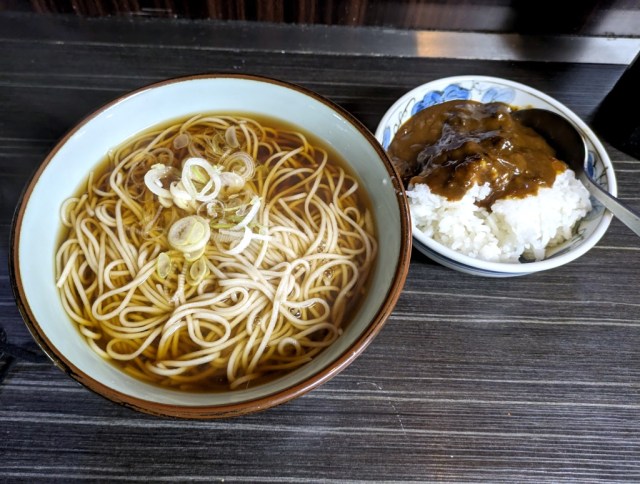
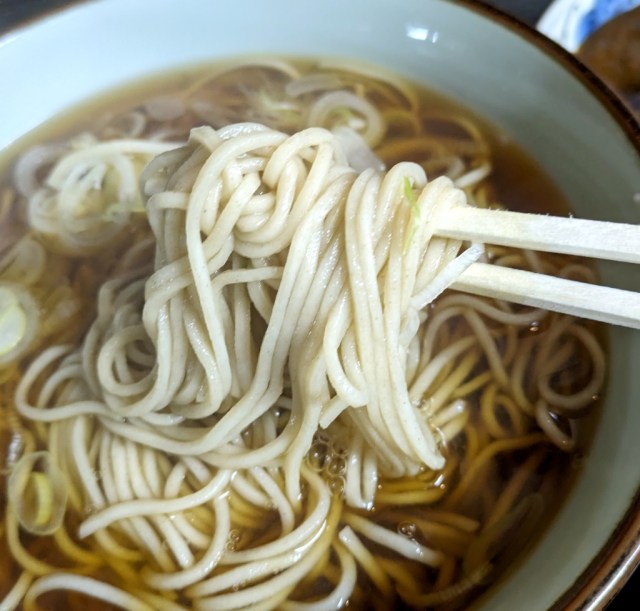
The noodles tasted fresh and handmade and had an umami-filled dashi broth. It was the perfect stomach-warming meal for a chilly and rainy day.
It paired nicely with the warm curry rice, whose flavor has remained unchanged since that nostalgic Showa Era.

A short walk brought him to Asakusa Station on the Tokyo Metro Ginza Line, thereby bringing his journey to an end.
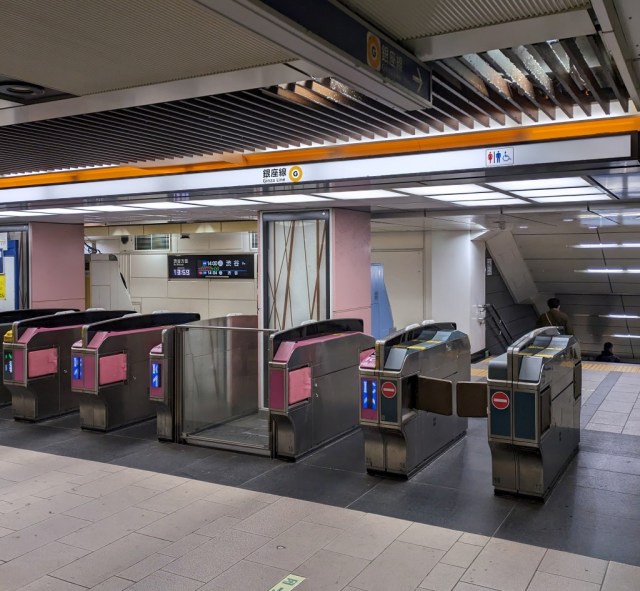
And thus concludes Mr. Sato’s Deep Asakusa Journey. He spent three and a half hours exploring quiet and historical areas of a normally busy neighborhood, and he didn’t even break a sweat thanks to the Kita Megurin Bus Loop. If you’re looking to escape the Tokyo crowds, he highly recommends it!
Photos ©SoraNews24
● Want to hear about SoraNews24’s latest articles as soon as they’re published? Follow us on Facebook and Twitter!
 Delicious ramen, cursed hills, green spaces, and more on the Sugimaru bus【Tokyo Loop Buses】
 Beautiful park, gigantic wholesale market, and smooth-as-silk coffee on Omori bus loop【Tokyo Loop Buses】
 Seaside scenery, history, and so many desserts on Yokohama’s Akai Kutsu【Japan Loop Buses】
 Move aside, taiyaki! Mucchan Manju in Asakusa is the newest food trend we need to jump upon
 This overlooked neighborhood east of Tokyo is awesome in many ways, left us with just one regret
 Starbucks teams up with 166-year-old Kyoto doll maker for Year of the Horse decorations【Photos】
 Tokyo’s Tsukiji sushi neighborhood asks tour groups to stay away for the rest of the month
 Return of Totoro sequel short anime announced for Ghibli Park
 Tokyo adding new anti-littering fines in Shibuya and Harajuku, will require more trash cans too
 Japanese Cabinet to officially announce new romanization spelling recommendation next week
 More people in Japan quit sending New Year’s cards and many have started to regret it
 Street Fighter Hadouken Churros to be launched and eaten in Tokyo, Okami pudding on offer too
 More Shinkansen trains being added to Japan’s “golden route” to meet traveler demand
 The 10 best day trips from downtown Tokyo【Survey】
 Tokyo event lets you travel back in time, for free, to celebrate 100 years since Showa era start
 Japanese avoiding domestic travel as foreign tourists increase, possibly creating vicious cycle
 Japanese man who didn’t know how banks work defrauded out of 21 million yen
 Japanese woman mistaken for bear
 This hot springs town in Japan sets fire across a mountain every winter in a beautiful tradition
 Tokyo considering law requiring more trash cans following litter increase in heavily touristed area
 Gundam and Reebok team up for new GQuuuuuuX Pumps【Photos】
 Japan’s human washing machines will go on sale to general public, demos to be held in Tokyo
 Starbucks Japan unveils new Christmas goods and a rhinestone tumbler that costs 19,500 yen
 Real-world Nausicaa Ghibli anime glider completes its final flight in Japan【Video】
 Japanese train company is letting fans buy its actual ticket gates for their homes
 Is China’s don’t-go-to-Japan warning affecting tourist crowds in Tokyo’s Asakusa neighborhood?
 Nintendo’s Kirby now delivering orders at Kura Sushi restaurants, but not in Japan
 A guide to visiting Sagamiko Illumination, one of the three biggest light-ups in Kanto
 Survey asks foreign tourists what bothered them in Japan, more than half gave same answer
 Japan’s deadliest food claims more victims, but why do people keep eating it for New Year’s?
 We deeply regret going into this tunnel on our walk in the mountains of Japan
 Studio Ghibli releases Kodama forest spirits from Princess Mononoke to light up your home
 Major Japanese hotel chain says reservations via overseas booking sites may not be valid
 Put sesame oil in your coffee? Japanese maker says it’s the best way to start your day【Taste test】
 The top 10 annoying foreign tourist behaviors on trains, as chosen by Japanese people【Survey】
 No more using real katana for tourism activities, Japan’s National Police Agency says
 Starbucks Japan reveals new sakura drinkware collection, inspired by evening cherry blossoms
 How far away from Tokyo can you get with 5,000 yen? Let’s find out!
,_obverse.png)
Leave a Reply