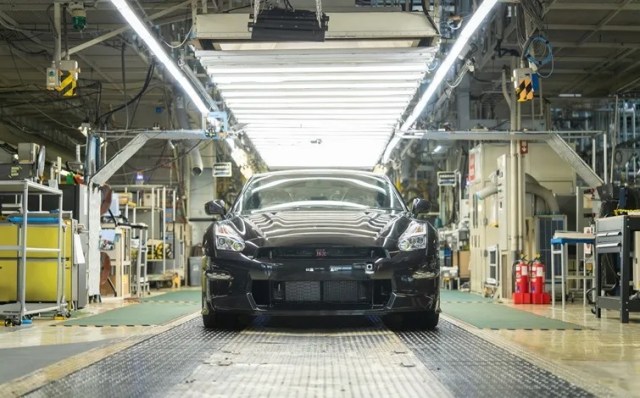
Ceremony held at factory to say farewell to the R35.
August 26 was a sad day for the staff of Nissan’s Tochigi Plant. In fact, it was sad for lovers of Japanese sports cars around the world, because on that day, the production of the GT-R, Japan’s highest-performance sports car, ended.
▼ The last GT-R rolls off the production line.
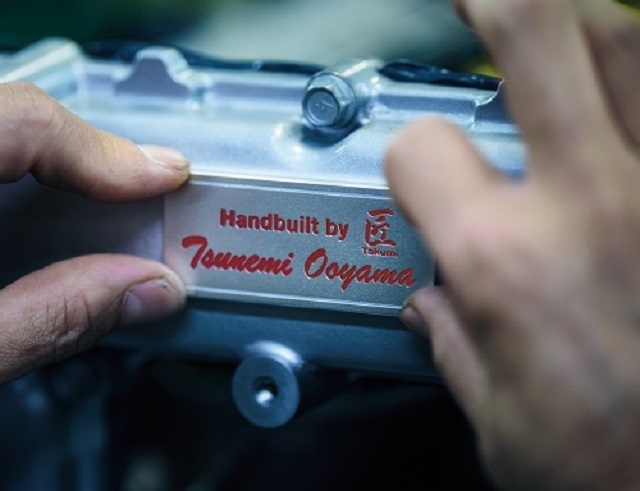
Like all GT-Rs, this model was produced at the Tochigi factory, with its engine hand-assembled by one of nine master technicians chosen for the role. A midnight purple Premium Edition T-Spec model, it closes the curtain on this generation of the fabled nameplate, as well as, for the time being, the entire GT-R legacy, which stretches all the way back to 1969.
This generation of GT-R, called the R35, went on sale at the tail-end of 2007, and there was a lot riding on it. The car had been originally revealed as a concept in 2001, when it was announced that it would be the first GT-R Nissan would sell globally. Though the preceding R32, R33, and R34 models had gained an underground international following through video games, anime, and movies, they weren’t sold at Nissan dealers in North America or Europe. In addition, while the R32-R34 GT-Rs had been tuned versions of Nissan’s Skyline (which was available as either a coupe or sedan with varying degrees of sportiness or comfort depending on the grade), the R35 GT-R became an entirely separate model from the Skyline, now positioned as a world-class super car and jumping from the R34’s 300-ish horsepower up to 480 in order to compete with top-end offerings from even European exotics of the time.
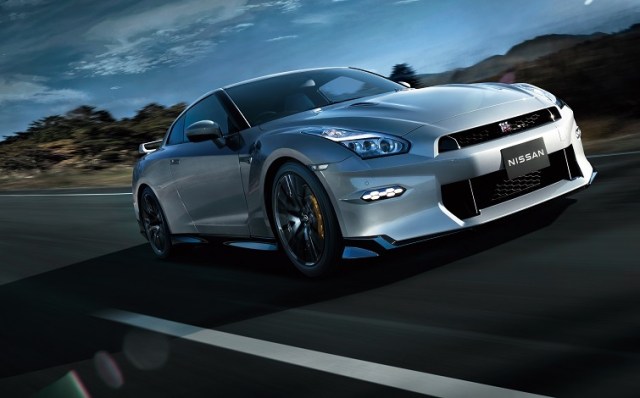
In the beginning, the R35 GT-R was a hit. Praised for its incredible acceleration and glue-like grip, it was seen as a car that was extraordinarily easy to pilot around a circuit at speeds beyond its rivals, while costing only a portion of their prices. So why is Nissan shutting down GT-R production? There are a number of reasons, some the company is saying out loud, and others that can be deduced even without saying a word about them.
Starting with the official ones, Nissan has cited new, stricter emissions and safety standards as an issue, as well as increasing difficulties in sourcing parts. Those likely all contributed to the decision to end production of the GT-R, but there are undoubtedly other factors at play as well.
For starters, the R35 GT-R had been in production for a long time without any significant changes to its appearance. There’s a lot to be said for pursuing timelessness in design, but in the world of premium-priced cars (which the GT-R definitely became when it broke away from the Skyline family), customers often desire aesthetics that signal that their car is fashionably fresh, lending an air of success and affluence to the driver by association. Throughout its production run, the GT-R remained an impressively performing car, but its asking price was far above the point where potential buyers are usually interested in buying a car that, to most people, looks like it’s a decade-and-a-half old, especially with the Nissan name itself not really bestowing much in the way of bragging rights, compared to, say, Porsche or Ferrari.
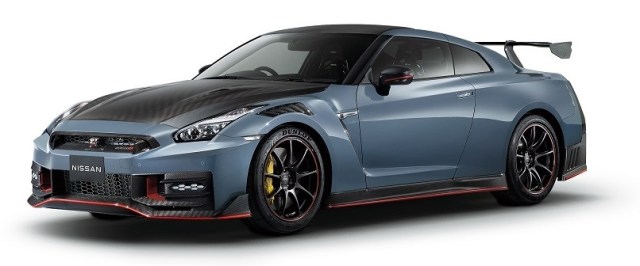
Then there are the changing expectations for what constitutes a super car. In the years since the R35’s debut, horsepower numbers for top-tier performance cars have been steadily rising. Even a Ford Mustang GT, one of America’s most popular sports-but-not-super cars, matches the 480 horsepower that the final standard R35 GT-Rs made. The Nismo model, a limited-edition R35 seen in the photo above, cranked the horsepower up to 600, but even that isn’t a paradigm-shattering figure anymore. Add in the fact that the R35’s starting price in North America went from around US$80,000 to nearly US$120,000, and there was a growing attitude that the R35 was a car that drove well but felt old and overpriced, especially compared to other options for the amount Nissan was asking for. This sentiment became increasingly common overseas, and is likely one of the reasons that despite the R35 being intended as the global GT-R, 37 percent of its sales, including the final model, were to customers in Japan.
Unfortunately, increasing horsepower, updating appearances, and cutting costs aren’t goals that can be effectively pursued simultaneously. Reflecting on the end of the car’s production, Nissan’s Koki Matsumoto, head of GT-R production for the past 20-plus years, said “The biggest problem is that the required development costs and man-hours have become so high that we’re no longer able to offer the car at [an attractive] price to customers.”
▼ A plate being attached to a GT-R engine bearing the name of the technician who hand-assembled the unit
Some hot-blooded enthusiasts might say that rather than pull the plug on the GT-R, Nissan should instead be doubling down on its flagship, even if that means not turning a profit on the project, in order to attract more buyers to models across the brand. The problem with that, though, is that Nissan, as a company, has been in crisis mode for the past several months. Slumping sales are forcing it to close its plant in Oppama, Kanagawa Prefecture, which had been in operation since 1961, and negotiations to be absorbed by Honda Motor Company, seen by many as the best hope for Nissan’s long-term survival, have broken down. As such, the budget right now is probably far too tight for a swing-for-the-fences update to restore the GT-R to its former glory. Truth be told, Nissan’s finances have been far from rosy for a while, which probably explains why the R35 went for so long without a full redesign.
There is, however, still hope that this isn’t the last time we’ll see a Nissan plant pumping out GT-Rs. Following a ceremony at the Tochigi Plant as the final R35 was completed, Nissan president and CEO Ivan Espinosa appeared in a video message, saying “I want to tell you this isn’t a goodbye to the GT-R forever. We don’t have a precise plan finalized today. The GT-R will evolve and reemerge in the future.”
That wouldn’t be the first time for the GT-R to come back from the dead, either. Prior to the R35’s 2007 launch, there was a five-year period where there was no GT-R on the market, since R34 production had ended in 2002. The gap was even wider between the introduction of the R32 GT-R in 1989 and its predecessor, the “Kenmeri” GT-R, for which fewer than 200 models were built in 1972 and 1973.
▼ Obligatory reminder that, yes, Gunmetal Gray is still the best R32 paint color.
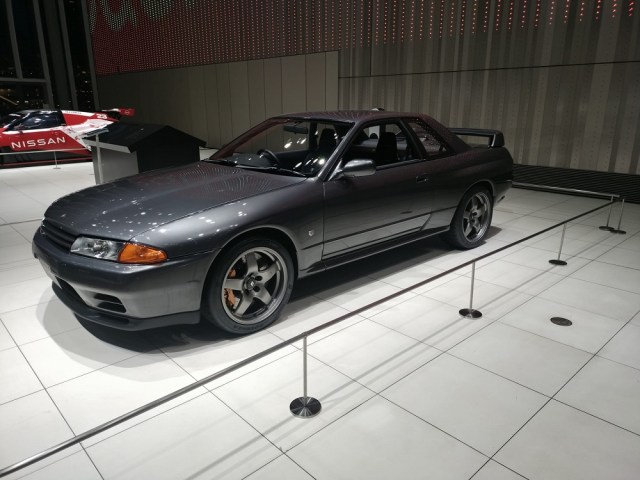
So hopefully there’ll be another GT-R in our future, but just like the R35 felt like a different car from the R32, R33, and R34, which themselves felt different from the Kenmeri and original “Hakosuka” Skyline of 1969, the R36 will probably be something different too, which makes things all the more bittersweet for fans of the R35.
Source: Nissan, YouTube/TBS News
Top image: Nissan
Insert images: Nissan, SoraNews24
● Want to hear about SoraNews24’s latest articles as soon as they’re published? Follow us on Facebook and Twitter!
Follow Casey on Twitter, where he dreams of a world where R36 GT-Rs and S16 Silvias sit side-by-side in Nissan dealer showrooms.