

More foreign tourists leading to fewer Japanese tourists could be leading to more foreign tourists which could lead to fewer Japanese tourists which could…
Every month, the Japan Tourism Agency, part of the Ministry of Land, Infrastructure, Transport, and Tourism, releases statistics about the total number of hotel stays in Japan (i.e. the total number of nights booked times the number of guests in the room). With the most recent publicly available data being the tallies for September, so far this year the number of nights stayed by foreign travelers in Japan has been an increase over 2024 for every month, with the exception of July when superstitions regarding a manga published in 1999 caused an irregular dip in the number of tourists coming to Japan from Hong Kong and China.
● Nights stayed by foreign travelers in Japanese hotels in 2025 (compared to 2024)
January: Up 34.8 percent
February: Up 19.5 percent
March: Up 14.1 percent
April: Up 20.4 percent
May: Up 16.7 percent
June: Up 5.3 percent
July: Down 4.2 percent
August: Up 3.8 percent
September: Up 1.3 percent
Things were even more consistent, though, among Japanese domestic travelers, who have spent fewer nights in hotels every month this year.
● Nights stayed by domestic travelers in Japanese hotels in 2025 (compared to 2024)
January: Down 2 percent
February: Down 5.9 percent
March: Down 3.4 percent
April: Down 5.2 percent
May: Down 2.4 percent
June: Down 5.1 percent
July: Down 2 percent
August: Down 1.5 percent
September: Down 5 percent
The reasons why Japanese people are traveling less within their own country aren’t hard to suss out, and even within this article we’ve actually already looked at a big one: the huge surge in inbound foreign tourism. Many of the places that international travelers are flocking to in Japan, whether the temples of Kyoto and Nara, the ski slopes of Hokkaido, or the big city attractions of Tokyo and Osaka, are places that Japanese travelers would ordinarily like to visit too, and while many of them weren’t exactly sparsely touristed before, the crowds these days are on a whole other level, greatly diminishing their appeal to Japanese residents who can still remember what they were like before they got so packed. Compounding the lack of enthusiasm is that with the yen remaining very weak against other currencies, foreign travelers are much more willing to pay higher prices being charged for hotels, food, and entertainment in popular travel areas, meaning that for Japanese travelers, not only are they going to enjoy their time at their destination less, they’re going to be paying more to do so.
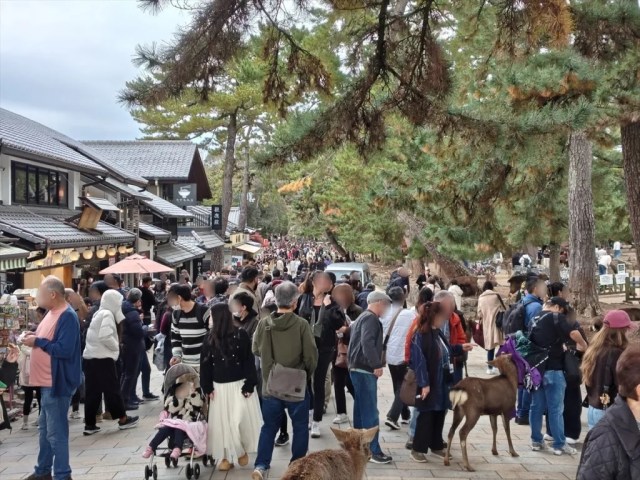
The weak yen is also having a less direct, but just as profound, dampening effect on Japanese residents’ domestic travel by contributing to inflation. The price of pretty much everything has gone up in Japan, with the vast majority of workers not receiving any sort of cost-of-living increase to their wages from their employer. So with less discretionary income, higher costs to travel, and severe congestion at otherwise attractive destinations, a lot of Japanese people are shelving their domestic travel plans for the immediate future.
Of the three parties involved in the situation, it’s not surprising that they’re all acting as they are. Japan is an undeniably cool, fun, and interesting country to visit, and the weak yen means it’s a more affordable destination for foreign tourists than it has been in at least a generation. Travel providers and related enterprises, such as restaurants and shops in neighborhoods with a lot of tourist traffic, are, first and foremost, businesses, and given the chance to increase their profits, they will. And for a lot of Japanese people, even if they find travel a mentally and emotionally rewarding experience, splurging on the pumped-up costs of traveling right now isn’t the wisest move in terms of keeping their household budgets healthy.
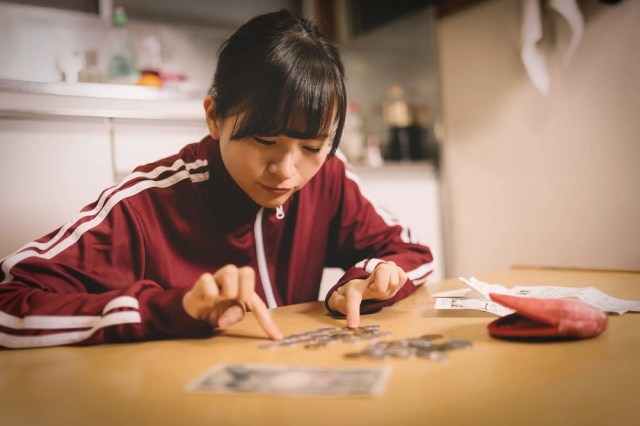
▼ When you’re having to buy old rice to help make ends meet, pleasure travel becomes harder to justify.
Unfortunately, this sets up the potential for a vicious cycle. Travel providers, chasing the higher profit potential of foreign tourists, price and tailor their services to please them. Japanese travelers balk at the prices, crowds, or inauthenticity, and stay away. Travel providers, seeing less interest from Japanese travelers, double down on attracting foreign tourists (or triple or quadruple down, since this is a cycle), with prices to match, making domestic travel feel even less appealing to Japanese travelers.
The eventual endpoint of that cycle is a level of cost and crowdedness that’s acceptable to foreign tourists, a Japan travel sphere that feels like neither a bargain nor a rip-off to international travelers. However, with prices and crowd sizes not yet at that point, but already too high/big for Japanese travelers, by the time Japan gets too crowded and expensive for foreign tourists, it’ll be way beyond the point where Japanese people want to travel domestically anymore. The seemingly obvious solution would be for Japanese domestic travelers to go farther off the beaten path, to places that haven’t been so affected by foreign tourist crowds and prices, but that requires the extra time and expense of finding and making their way to those remote, undiscovered pockets, so the end result is still an experience more costly and less enjoyable than Japanese travelers were used to.
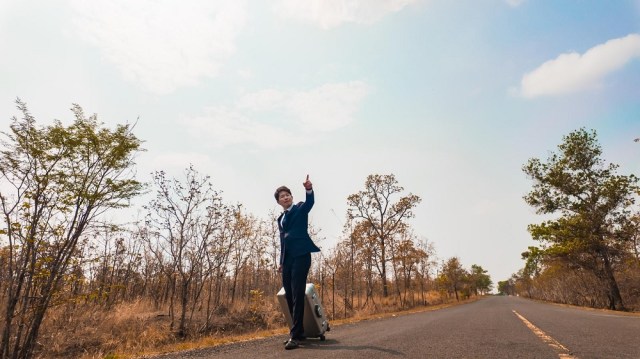
▼ “Finally, I got away from all the tourist crowds…now where am I?”
One could make the argument that this is just the natural order of a free market economy, in which the prices of goods and services are determined by what people are willing to pay for them. This logic then extends to that if foreign tourists are the ones willing to pay higher prices for Japan travel experiences, they’re the ones who should have them, even if Japanese people are priced out of seeing the sights of their home country. Except, even if you’re OK with such a mercilessly competitive economic environment, it might not be the healthiest one, as we saw on our recent visit to the Namba neighborhood. As one of the biggest tourist districts in Osaka, Namba has been on the front lines of Japan’s inbound foreign tourist boom, and the neighborhood’s commercial landscape has adapted to cater to them. However, when we stopped by following the Chinese government’s recent advisory warning its citizens not to travel to Japan, we saw a number of shops that would ordinarily be crowded with Chinese tourists were looking very empty.
The danger of Japan’s domestic travel industry increasingly chasing after foreign tourist profits is that, should there be an event that causes a drop in overseas visitors, whether that’s a governmental spat, scary manga, swing towards an unfavorable exchange rate, or just some other country/culture becoming trendy, businesses that have overspecialized to meet foreign tourists’ tastes are going to have trouble refilling that void with Japanese travelers, and even those who have remained more authentic might not find domestic guests rushing back if they’ve alienated that demographic with exorbitant prices for the last several years.
With Japan’s biggest inbound foreign tourism boom ever coinciding with its most rapidly rising consumer prices in decades, there’s no easy answer as to how the situation should be addressed. Hopefully, though, some sort of balance can be struck so that domestic travel isn’t thoroughly replaced with foreign tourist travel, and then possibly no travel at all.
Source: Japan Tourism Agency (1, 2, 3, 4, 5, 6, 7, 8, 9) via All About via Yahoo! Japan News via Hachima Kiko
Top image: Pakutaso
Insert images: SoraNews24, Pakutaso (1, 2)
● Want to hear about SoraNews24’s latest articles as soon as they’re published? Follow us on Facebook and Twitter!
 Fewer Japanese people traveling domestically, government blames birth rate, others blame foreign crowds, costs
 Japanese travelers are avoiding Kyoto as the city’s number of foreign visitors continues to grow
 Foreign tourists in Japan break inbound fall tourism record, are spending their money differently
 Foreign tourists outnumber Japanese ones at Kyoto hotels for first time ever
 “Foreign travelers are Japan’s guests” – Governor against charging tourists more than locals
 Starbucks Japan closing only Shinkansen platform branch for popularity-triggered renovations
 You can assemble a well-balanced team of Pokémon, them eat them, thanks to Japanese cake chain
 Pokémon and Ikea Japan cross over into each other’s worlds with collaboration events
 Licca-chan dolls released in North America for first time in nearly 60 years
 Can a downtown Tokyo super sento bathhouse beat a hotel for a one-night stay?
 Sailor Moon’s Artemis is part of the Artemis II NASA mission control team[Video]
 Universal Studios’ Sailor Moon theme park attraction is finally coming to America
 Picturesque Tokyo park plays host to millions of flowers and soap bubbles this spring
 Expo 2025 mascot Myaku-Myaku to release tastefully erotic photo book
 Studio Ghibli releases new action figures featuring Nausicaä of the Valley of the Wind characters
 Tokyo’s best museum for foreign travelers finally reopens after being closed for four years
 Pokémon lacquerware series expands for Year of the Horse with new handcrafted design[Video]
 Two food hacks take Japan’s convenience store fried chicken to amazing new sandwich heights
 Tokyo subway and almost all Tokyo train lines now accepting credit card tap payments
 Totoro Fund line of beautiful artwork and apparel lets you help the real-world Totoro Forest
 Fading Tokyo – Searching for signs of the Showa era as local neighborhoods evolve[Photos]
 Famous Tokyo cherry blossom spot installs view-blocking screens to fight overcrowding[Video]
 Tokyo turns its phone booths into free Wi-Fi hotspots, and here’s how to use them
 Studio Ghibli adds new My Neighbour Totoro 2026 Corn Gift to its anime store for Mother’s Day
 Japan now has a special desk for people who work at home with a pet cat[Photos]
 Uniqlo announces new T-shirts for One Piece, Naruto and more for manga publisher’s 100th birthday
 Train station platform ramen store closes its doors on half a century of history in Tokyo
 Starbucks Japan releases new My Fruit³ Frappuccino at only 34 stores around the country
 Studio Ghibli releases Catbus pullback keychain that runs like the anime character
 Krispy Kreme releases Super Mario doughnuts in Japan for a limited time
 Japanese onsen egg maker from 100-yen store Daiso needs to be on your shopping list
 Nine great places to see spring flowers in Japan, as chosen by travelers (with almost no sakura)
 Survey asks foreign tourists what bothered them in Japan, more than half gave same answer
 Japan’s human washing machines will go on sale to general public, demos to be held in Tokyo
 Starbucks Japan releases new drinkware and goods for Valentine’s Day
 We deeply regret going into this tunnel on our walk in the mountains of Japan
 Studio Ghibli releases Kodama forest spirits from Princess Mononoke to light up your home
 Starbucks Japan releases new sakura goods and drinkware for cherry blossom season 2026
 Japan’s newest Shinkansen has no seats…or passengers [Video]
 Major Japanese hotel chain says reservations via overseas booking sites may not be valid
 Put sesame oil in your coffee? Japanese maker says it’s the best way to start your day【Taste test】
 No more using real katana for tourism activities, Japan’s National Police Agency says
 As more foreign visitors visit Kyoto’s top sights, Japanese travelers increasingly staying away
 Japanese government wants to build luxury resorts in all national parks for foreign tourists
 Japan just had its first same-month foreign tourist decrease in four years
 Survey asks foreign tourists what bothered them in Japan, more than half gave same answer
 Foreign tourists spending at Japanese department stores dropping rapidly, study says
 More foreign tourists than ever before in history visited Japan last month
 Japanese prefectural governor wants foreign tourists to pay special extra fee
 Japanese travelers losing interest in Kyoto, top sightseeing spots slip behind Nara at peak season
 Japanese government wants to remove tax-exemption limit for foreign tourists on consumables
 Foreign travelers now spend more money in Japan than ever before, surprise country at top of list
 Kyoto study finds nearly 500 translation errors for foreign tourists, new guidelines released
 Japanese government wants to encourage wealthy foreigners to travel deeper into Japan, NHK says
 Foreign tourists pick the top 10 inconveniences about traveling in Japan【Survey】
 Foreign travelers’ lukewarm reactions to traditional Japanese inn food causing changes in Kyoto
 Japanese manners videos show how to be a “really cool” traveller in Japan 【Videos】