Kyoto City Tourism Association wants the town to clean up its translation act.
Kyoto has always been among Japan’s top tourism destinations, and with Japan receiving more foreign travelers than it ever has before, the same goes for its former capital. But with record-breaking numbers of overseas visitors coming into Kyoto, there’s an increased need for multilingual guidance signage and guidance, and a recent study has found less-then-stellar quality to the translations being provided to Kyoto’s guests from abroad.
Between December and February, the Kyoto City Tourism Association investigated non-Japanese signs, written notices, and audio announcements at 50 locations within the city, including train stations, hotels, restaurants, museums, temples, and shrines. Out of roughly 3,600 items examined, 499 were found to be incorrectly or inaccurately translated.
A greater than 10-percent chance of foreign travelers not being able to understand the intended messages is too high for the association’s liking. “Coming as inbound international travelers are returning to Kyoto,” said association spokesperson Yuya Iwasaki, “[these mistranslations] could potentially damage the Kyoto brand.”
In response, the association has enacted a number of initiatives, including seminars for tourism and tourism-adjacent businesses on how to more effectively communicate necessary information and rules to visitors who can’t read or speak Japanese. Last month the organization also released a 49-page Foreign Language Signage Guideline packet, available for free download through the Kyoto City Tourism Association website here. Right off the bat, the guidelines caution against an over-reliance on machine/A.I. translation, giving the following example.
As a direct translation of the Japanese text, “The current time is unavailable” is all right, but it’s still not something that makes much sense in English. In Japanese, it’s common to omit the subject and object of a sentence of clause if it can be understood from context, and the Japanese text is really saying “[You] cannot use [this space/thing] at the current time,” so the Kyoto City Tourism Association guideline packet recommends this translation instead.
The all-caps CLOSED might look a little harsh, but the guidelines do later go on to stress the importance of making sure not to strip away the polite tone of in-Japanese text when translating it, recommending the consistent use of words such as “please” and “thank you.”
▼ The association recommends the version on the right
The guidelines also include visual design pointers, such as recommending complementing text with pictograms…
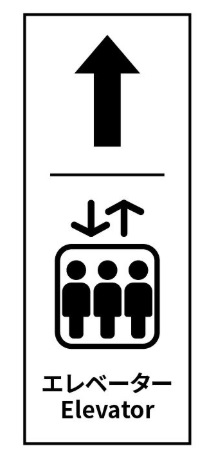
…making sure foreign-language text is adequately sized to be noticeable, and grouping each language’s text together in their own sections of signage.
▼ Recommended versions on right side
It’s worth keeping in mind that though the study that discovered the translation errors was carried out by the Kyoto City Tourism Association, the locations where the errors were found are not necessarily administered by the municipal government. In the post-pandemic travel boom more than a few restaurants, temples, and other places that previously had only limited levels of interest from overseas travelers have suddenly found themselves becoming major tourist draws, and some inaccurate signage was likely put in place with the attitude of “We really need to put up something right away, and we don’t have a translator on staff, so just Google translate it and we’ll sort the details out later.” The study was also not limited to English translations, and the more languages involved, the greater the chance for a translation slip-up.
There is, as always, the argument to be made that it is travelers’ responsibility to study up and acquaint themselves on norms of public behavior and basic phrases in the language of a foreign country that they plan to visit. At the same time, with Japan’s inbound travel boom not likely to cool off anytime soon, and breaches of etiquette by foreign tourists drawing increasing attention and annoyance from the local population, clearer communication itself can only be a good thing, so hopefully the Kyoto City Tourism Association’s efforts will prove effective.
Related: Kyoto City Tourism Association
Source: Yomiuri Shimbun via Livedoor News via Jin, Kyoto City Tourism Association
Top image: Pakutaso
Insert images: Kyoto City Tourism Association
● Want to hear about SoraNews24’s latest articles as soon as they’re published? Follow us on Facebook and Twitter!




Japanese travelers are avoiding Kyoto as the city’s number of foreign visitors continues to grow
Foreign tourists outnumber Japanese ones at Kyoto hotels for first time ever
New book teaches Japanese people English to help out foreign travelers
Foreign tourists spending at Japanese department stores dropping rapidly, study says
Japan Airlines debuts airport translation panels, translation error quickly results
Police in Japan looking for who’s responsible for dumping 80 loaves of bread on side of road [Video]
Data suggests increased bear sightings have led to a decrease in mountain climbers across Japan
Nike x One Piece collection brings Devil Fruits to sneakers and streetwear in Japan
Japan tripled its departure tax to fund tourism but is using the money on cherry blossoms and bears
Nephew of Studio Ghibli director Hayao Miyazaki serves up Totoro Shaved Ice in Tokyo
Pikachu and other Pokémon evolve into hydration types with Thermos drinkware collaboration [Pics]
Amid foreign sex tourist rise, Japanese government considering outlawing paying for prostitution
Winnie the Pooh cosplays as Yuzuru Hanyu for new plushie collaboration
We recommend not buying one pack of Japan’s new convenience store corn soup-flavor fried chicken
Nagoya’s famous Shinkansen platform noodle shop has other, better branches nearby
7-year-old boy left behind on Mt. Fuji by his own dad
Sushi Bus: Japan’s first conveyor-belt bus lets you eat sushi while sightseeing around Tokyo
Studio Ghibli unveils new interactive stationery dioramas that bring anime movies to life on your desk
Studio Ghibli composer Jo Hisaishi just set three Guinness Records
Anime fans can now wear a Seiko watch inspired by Japan’s One Piece Shinkansen
7-Eleven Japan brings back best-selling flat croissant that became a hit on social media
Foreign hiker on Mt. Fuji loses consciousness and dies, becoming climbing season’s second fatality
Universal Studios Japan partners with manga horror master Junji Ito’s Tomie
Starbucks Japan releases two new seasonal drinks that blur the line between summer and autumn
12-year-old British girl who went missing in Tokyo found safe after visiting anime sites around Yokohama
Air-conditioned dress shirts arrive in Japan to save working professionals from sweltering heat
Pokémon Center Online designates first Pokémon items that will require Japanese ID card to buy
Japanese toilet aims to attract foreign tourists but not everybody is happy about it
Tokyo’s newest viral dessert is like a Japanese parfait inside a bread bun [Taste test]
New Japanese vending machine at Shinkansen station sells cups of ice on platform
Study finds hundreds of people in Indonesia legally named after Naruto, Inuyasha, other anime stars
Japanese vending machine sells freshly squeezed lemon juice with a futuristic light show
Japan announces sudden 400-percent increase in visa fees for foreigners entering the country
Japan’s human washing machines will go on sale to general public, demos to be held in Tokyo
Studio Ghibli has a new anime out, and there’s only one place in the world where you can see it
Starbucks Japan releases new drinkware and goods for Valentine’s Day
Starbucks Japan releases new sakura goods and drinkware for cherry blossom season 2026
Japan’s newest Shinkansen has no seats…or passengers [Video]
Tokyo subway installing new ticket gates that don’t accept payment through Suica or other IC cards
Japanese ninja certification exam attracts 131 candidates from Japan and abroad
Salomon releases Japan-exclusive Mt. Fuji hiking gear that doubles as an amazing souvenir
Put sesame oil in your coffee? Japanese maker says it’s the best way to start your day【Taste test】
Japanese prefectural governor wants foreign tourists to pay special extra fee
Survey asks foreign tourists what bothered them in Japan, more than half gave same answer
Kyoto receives more foreign tourists than ever before, but fewer visitors say they’ll return
As more foreign visitors visit Kyoto’s top sights, Japanese travelers increasingly staying away
Japanese travelers losing interest in Kyoto, top sightseeing spots slip behind Nara at peak season
Foreign tourists in Japan break inbound fall tourism record, are spending their money differently
Kyoto experiencing problems with foreign tourists not paying for bus fares, but not on purpose
Kyoto village dealing with poo on floor as Japanese-style toilets confuse foreign travelers
Japanese avoiding domestic travel as foreign tourists increase, possibly creating vicious cycle
Japanese government wants to build luxury resorts in all national parks for foreign tourists
Foreign travelers’ lukewarm reactions to traditional Japanese inn food causing changes in Kyoto
More foreign tourists than ever before in history visited Japan last month
Number of foreigners studying Japanese in Japan hits record high, but are there enough teachers?
Japanese man complains about foreign languages on Tokyo train, Twitter drowns him in kindness
Taipei introduces taxi tours and 24-hour toll-free interpretation services for foreign tourists