

Technical expertise ranks far below other qualities Japanese workers want in a boss.
Work life is a big part of life in Japan. With a culture that emphasizes professional pride and personal responsibility, plus the long hours that come with many jobs in Japan, the quality of your workplace environment can have a huge impact on your overall happiness.
There are a lot of factors that go into determining work satisfaction, but it’s pretty much impossible to have a good job without a good boss. That’s why Japanese recruiting organization Biz Hits recently conducted a survey, asking working Japanese people what qualities make for a good, reliable, and confidence-inspiring boss. Responses were collected from a total of 500 participants (332 women and 168 men), with 26.2 percent in their 20s, 36.4 percent in their 30s, 24.4 percent in their 40s, and 12.6 percent 50 or above.
Though only two thirds of the respondents said they currently have a good, dependable boss, they did have some very similar ideas about what kind of boss they would like to have, so let’s take a look at the top five responses.
5. Observant and perceptive (chosen by 8.8 percent of respondents)
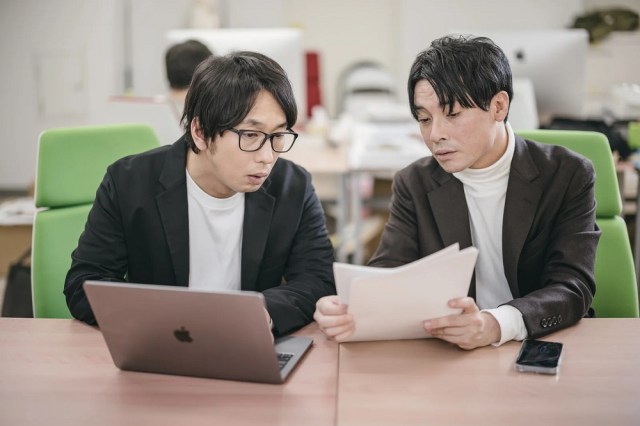
As someone who needs to have a comprehensive understanding of what’s going on in the workplace, a boss who can actively identify situations that are creating problems and realize when and how employees need help is greatly appreciated by the survey respondents. This sensitivity extends to the way in which direction is provided as well, with survey participants saying a good boss can the read the room and create logical, broadly agreeable solutions without slipping into arbitrary random-feeling judgements.
4. Emotionally stable (13.8 percent)
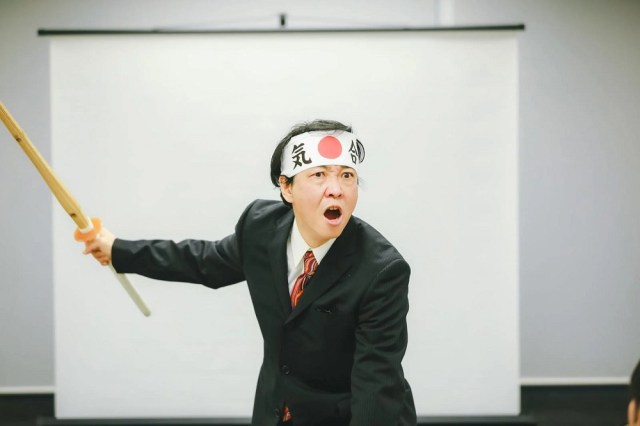
Regardless of the industry or office size, it’s a safe bet that everyone on staff has enough to do without having to navigate a boss’ mood swings. A boss who gets hot under the collar instead of handling pressure and setbacks in a more mature way isn’t just unpleasant to be around, but can also be difficult for employees to approach when they need advice or clarification, which can then snowball into tasks being performed inadequately or improperly, creating one more thing for an irritable boss to bluster about and start the cycle all over again.
3. Provides help when needed (24.6 percent)
The best bosses realize that even though they’re in a position of authority over their staff, the flow of effort and assistance should still be two-directional. If a worker is in a quandary or a jam, the survey participants feel a good boss should be willing to jump in and lend a hand, especially if backstopping an employee and helping correct their mistakes will save the worker from making errors that could get them reprimanded by managers even higher up the chain of command.
2. Provides easy-to-understand instructions (27 percent)
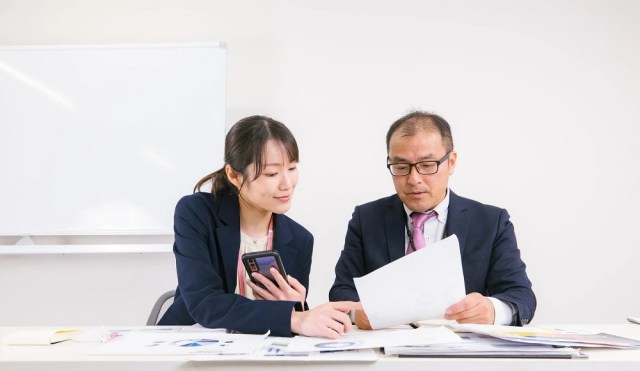
Not to take anything away from what was said in the previous point, but ultimately the thing that makes someone the boss is that they’re the one deciding what should be done and who should do it. Vague objectives, contradictory commands, and other kinds of indistinct communication mean that workers have to spend time and energy guessing, mentally interpreting, and reconfirming instead of actually getting their work done, so a boss who can give clear directions, especially when unforeseen problems pop up and the team has to pivot away from how they usually do things, will avoid wasting the staff’s time and energy.
1. Listens (32.6 percent)
At the top of the list, we swing back to the other side of communication. Sure, a good boss needs to be able to clearly tell workers what needs to be done, but even the most precise instructions can often benefit with some fine-tuning made possible with front-line insights that only the workers themselves can provide. “[A good boss is someone who] shows a willingness to listen to their subordinates and take their opinions into consideration before telling them what to do,” explained one respondent, and another added “When a worker has a question, a good boss should listen and help them.”
It’s worth noting that the top responses are all qualities that are applicable regardless of specific industry or work field. As a matter of fact, a high degree of skill performing the work itself doesn’t show up in the survey’s qualities of a good boss until all the way down in the 8th-ranked response, chosen by only 6.8 percent of the respondents, showing that, at least in the eyes of workers, good communication and interpersonal skills are more important for a boss to have than pure technical talent.
Related: Biz Hits
Source: PR Times
Top image: Pakutaso
Insert images: Pakutaso (1, 2, 3)
● Want to hear about SoraNews24’s latest articles as soon as they’re published? Follow us on Facebook and Twitter!
[ Read in Japanese ]
 Majority of surveyed Japanese workers have dated a coworker, over 20 percent their boss or senpai
 Japan’s workplace drinking party communication is unnecessary, says majority of workers in survey
 Invasion of privacy? Survey asks workers about social media friend requests from the boss
 One in four surveyed Japanese workers admits to wanting to kill boss, Osaka quake helps show why
 Over 30 percent of surveyed Japanese managers feel intense stress from working with foreigners
 Tokyo’s best museum for foreign travelers finally reopens after being closed for four years
 Pokémon lacquerware series expands for Year of the Horse with new handcrafted design[Video]
 Japanese masturbatory aid and insect repellent companies collab on a new product
 Tokyo subway and almost all Tokyo train lines now accepting credit card tap payments
 McDonald’s Japan releases “intense” McPork burger, prompts Michelin chef to create jam hack
 Totoro and Calcifer become little light-up lanterns for Ghibli-style excursions or at-home decor
 Japanese jeweler launches new engagement and wedding rings with Sanrio character Tuxedo Sam
 The humane (and adorable) way to make a flat hamster 【Video】
 How to safely apprehend a chikan pervert and protect women from being groped on a Japanese train
 Here comes a new katsudon: ice cream katsudon?!?
 Japan now has a special desk for people who work at home with a pet cat[Photos]
 Famous Tokyo cherry blossom spot installs view-blocking screens to fight overcrowding[Video]
 Uniqlo announces new T-shirts for One Piece, Naruto and more for manga publisher’s 100th birthday
 Krispy Kreme releases Super Mario doughnuts in Japan for a limited time
 7-Eleven Japan releases a crazy new viral sandwich: Chocolate Sprinkles and Whipped Cream
 Japan now has a “for foreign tourists only” Mt. Fuji sightseeing train[Video]
 Picturesque Tokyo park plays host to millions of flowers and soap bubbles this spring
 Ramen restaurant in top Tokyo tourist neighborhood skips price gouging, but how does it taste?
 Fatal stabbing at Pokémon Center in Tokyo reignites concern over rising stalking cases in Japan
 Starbucks Japan unveils new sakura cherry blossom collection for hanami season 2026
 Train station platform ramen store closes its doors on half a century of history in Tokyo
 Starbucks Japan releases new My Fruit³ Frappuccino at only 34 stores around the country
 Studio Ghibli releases Catbus pullback keychain that runs like the anime character
 Japanese onsen egg maker from 100-yen store Daiso needs to be on your shopping list
 Nine great places to see spring flowers in Japan, as chosen by travelers (with almost no sakura)
 Survey asks foreign tourists what bothered them in Japan, more than half gave same answer
 Japan’s human washing machines will go on sale to general public, demos to be held in Tokyo
 Starbucks Japan releases new drinkware and goods for Valentine’s Day
 We deeply regret going into this tunnel on our walk in the mountains of Japan
 Studio Ghibli releases Kodama forest spirits from Princess Mononoke to light up your home
 Starbucks Japan releases new sakura goods and drinkware for cherry blossom season 2026
 Japan’s newest Shinkansen has no seats…or passengers [Video]
 Major Japanese hotel chain says reservations via overseas booking sites may not be valid
 Put sesame oil in your coffee? Japanese maker says it’s the best way to start your day【Taste test】
 No more using real katana for tourism activities, Japan’s National Police Agency says
 Japan’s “workstyle reforms” are actually making managers’ jobs a lot harder【Survey】
 Survey reveals most Japanese workers want to work from home at least twice per week
 Foreign workers respond to survey about changes they’d like to see in the Japanese workplace
 Japanese women sound off on their minimum height requirements for a husband【Survey】
 Support for coworker drinking parties dropping rapidly in Japan, even among older people【Survey】
 What’s the best way to close the gender gap in Japan? Japanese women weigh in
 Live with parents or burn through your savings? Survey of young anime workers draws bleak picture
 Survey asks foreign tourists what bothered them in Japan, more than half gave same answer
 Nearly one in four Japanese adults admits to crying in the office bathroom in new survey
 Japanese company trips – Workers “absolutely hate” them, so why do they still happen?
 The five least stressful jobs, as ranked by Japanese working people
 Survey finds only six percent of Japanese workers motivated, seventh lowest in the world
 How is Japan coping with telecommuting? Survey asks for the good and bad of working from home
 More than half of young anime workers live with their parents or receive money from them【Survey】
 Majority of polled Japanese workers feel compelled to answer calls, emails from office on day off
 Nearly half of young Japanese women say they “hate” the company they work for in survey