
In-home trespassing, public urination, and other bad manners bring an end to a local tradition.
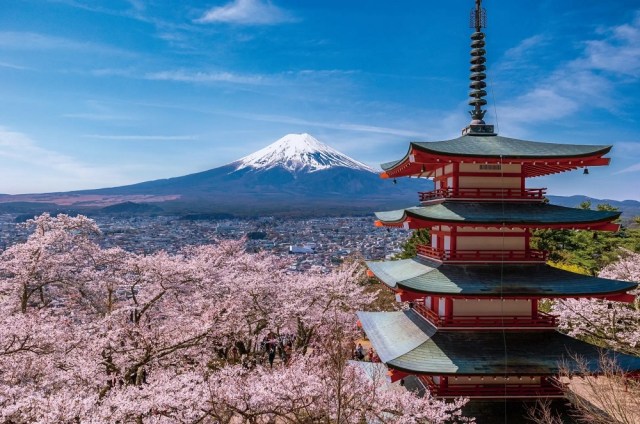
If you’ve got even a little bit of interest in traveling in Japan, odds are that on multiple times over the past few years you’ve seen a photo taken from the exact same vantage point as the one above, with a five-story pagoda in the foreground, a grove of cherry blossom trees at its base, and off in the distance, Mt. Fuji, with its peak shrouded in snow.
It’s such a concise concentration of traditional Japanese beauty that it almost doesn’t seem real, like it’s a collage put together for anyone who needs a splash image that says “JAPAN!” for a report or presentation, but the spot where those photos are taken actually exists. Arakurayama Sengen Park is located in the town of Fujiyoshida in Yamanashi Prefecture, where a walking path leads up from the suburbs to a shrine with a viewing deck offering sweeping views that stretch, unobstructed, all the way to Japan’s tallest mountains.
Arakurayama Sengen wasn’t always a poster-park for the whole country, however. As a matter of fact, 10 years ago Fujiyoshida held the first Arakurayama Sengen Park Sakura Festival, in an attempt to drum up publicity and attract leisure-travel visitors to the area. 10 years and countless social media photos later, though, the situation has changed dramatically, and with less than two months left before the start of sakura season, the municipal government has announced that they’re cancelling this year’s cherry blossom festival.
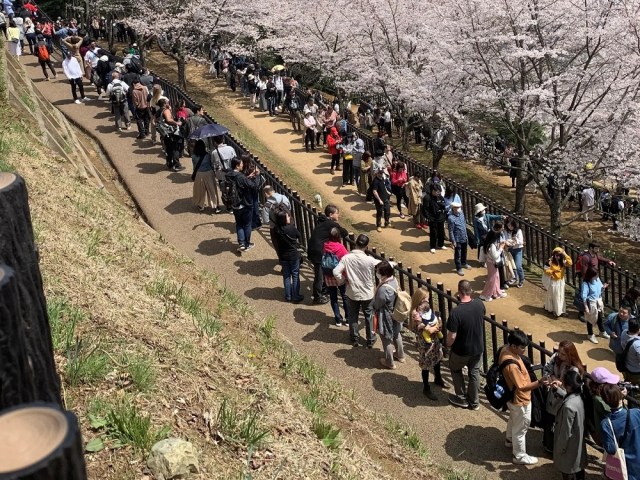
As for why, you can probably guess from the above photo, taken during a previous Arakurayama Sengen Park Sakura Festival: overcrowding and overtourism. With around 45,000 residents, Fujiyoshida isn’t some tiny hamlet, but it’s not a big city by any means either, and the population density is pretty low. The surge in visitors, both Japanese and foreign, is funneling so many people into the neighborhood that it’s negatively affecting the people who live there. Complaints from residents regarding tourist behavior have included:
● Chronic traffic congestion
● Tourists not giving way on sidewalks, forcing children walking to/from school to walk in the street
● Trespassing on private property
● Littered cigarette butts
● Urinating or defecating in residents’ gardens
● Opening residents’ doors and entering their homes without permission to use the bathroom
▼ We’re going to need the help of a team of specialists to determine which of those last two is worse, but their preliminary stance is that they’re both appallingly asinine.

“In recent years, there has been a rapid increase in the number of domestic and foreign visitors [to the park], and harmful overtourism has gone beyond tolerable levels, deeply impacting the living environment of local residents,” says the Fujiyoshida municipal government in its statement cancelling this year’s event, with mayor Shigeru Horiuchi personally adding:
“For the city of Fujiyoshida, Mt. Fuji is not just a mere tourism resource, but a part of our lifestyle. However, the flipside of that beautiful scenery is that our residents’ peaceful lifestyles are being threatened, and I strongly feel that this has become a crisis situation. My first priority is to protect the living conditions and dignity of all of our city’s residents. For that purpose, we have made the decision, after 10 years, to bring the Sakura Festival to an end.”
It’s worth noting that the Arakurayama Sengen Park Sakura Festival wasn’t a single-day event, but rather a blanket term applied for a period of about two weeks when the sakura were in bloom. These kinds of quasi-festivals usually consist of things like an extra advertising/promotional push by the local administration and vendors selling snacks and souvenirs at the venue, resulting in an overall increase in visitors over the course of several days (Fujiyoshida has experienced an increase of around 200,000 extra visitors during its Sakura Festivals in recent years).
Also, while the canceling of the Sakura Festival means no use of the event name or associated promotion by the city government, the cherry blossoms themselves will still bloom, and the park will still be open. Even with no festival taking place, the local authorities recognize that there will still be an increase in incoming tourists once the flowers start to blossom, and so security and traffic direction staff will be deployed around the neighborhood during the first half of April, and temporary parking areas and public restrooms will be set up as well.
Finally, yes, it is ironic that in the very same press release in which Fujiyoshida is announcing “We’re cancelling the Sakura Festival because too many people have been coming,” they also included the absolutely stunning photo seen at the top of this article, showcasing the very view that’s been drawing tourists to the town. It highlights a complicated aspect of Japan’s current tourism situation, which is that locals are proud of what makes their communities special, and are, in principle, very happy to share that with visitors…as long as those visitors are considerate to the people who live there. That last part clearly hasn’t been happening in Fujiyoshida, though, as aside from traffic congestion, their complaints aren’t so much about the number of visitors as they are about the number of visitors who are acting like jerks.
The cancellation announcement of this year’s Arakurayama Sengen Park Sakura Festival doesn’t make any mention about the city council reconvening next year to discuss brining it back, so even if it’s not necessarily gone for good, it looks like it’s going into extended hiatus at the very least. As Japan’s popular sightseeing spots grow increasingly touristed, it’s going to be more and more important for visitors to remain courteous towards the surrounding community, or else we’re likely to see a rush of places coming to the same decision as Fujiyoshida did for their own local traditions.
Source: Fujiyoshida City via Norimono News via Livedoor News via Jin
Top image: PR Times
Insert images: PR Times, Pakutaso
● Want to hear about SoraNews24’s latest articles as soon as they’re published? Follow us on Facebook and Twitter!
 Cherry blossom-viewing bus tour for dogs now available in Japan
 Mt. Fuji festival to combine fireworks and cherry blossoms for unforgettably beautiful night
 Coronavirus forces cancellation of 100-year-old cherry blossom festival in Northern Japan
 Famous Tokyo cherry blossom spot installs view-blocking screens to fight overcrowding[Video]
 Mt Fuji Shiba-sakura Festival, where beautiful “lawn sakura” blossom
 Starbucks Japan closing only Shinkansen platform branch for popularity-triggered renovations
 You can assemble a well-balanced team of Pokémon, them eat them, thanks to Japanese cake chain
 Pokémon and Ikea Japan cross over into each other’s worlds with collaboration events
 Animal Crossing plushie pouch towels and cozy socks show up at Family Mart convenience stores
 Sailor Moon’s Artemis is part of the Artemis II NASA mission control team[Video]
 A Kyoto factory vending machine sells gourmet mystery meals at bargain prices
 Can a downtown Tokyo super sento bathhouse beat a hotel for a one-night stay?
 Japan’s full-facemask Ninja Parka still lets you eat ice cream[Photos]
 Japan reportedly adding Japanese language skill requirement to most common foreigner work visa
 Daiso unveils new official mascot, Daizo the elephant
 Tokyo’s best museum for foreign travelers finally reopens after being closed for four years
 Pokémon lacquerware series expands for Year of the Horse with new handcrafted design[Video]
 Two food hacks take Japan’s convenience store fried chicken to amazing new sandwich heights
 Tokyo subway and almost all Tokyo train lines now accepting credit card tap payments
 Totoro Fund line of beautiful artwork and apparel lets you help the real-world Totoro Forest
 Fading Tokyo – Searching for signs of the Showa era as local neighborhoods evolve[Photos]
 Famous Tokyo cherry blossom spot installs view-blocking screens to fight overcrowding[Video]
 Tokyo turns its phone booths into free Wi-Fi hotspots, and here’s how to use them
 Studio Ghibli adds new My Neighbour Totoro 2026 Corn Gift to its anime store for Mother’s Day
 Japan now has a special desk for people who work at home with a pet cat[Photos]
 Uniqlo announces new T-shirts for One Piece, Naruto and more for manga publisher’s 100th birthday
 Train station platform ramen store closes its doors on half a century of history in Tokyo
 Starbucks Japan releases new My Fruit³ Frappuccino at only 34 stores around the country
 Studio Ghibli releases Catbus pullback keychain that runs like the anime character
 Krispy Kreme releases Super Mario doughnuts in Japan for a limited time
 Japanese onsen egg maker from 100-yen store Daiso needs to be on your shopping list
 Nine great places to see spring flowers in Japan, as chosen by travelers (with almost no sakura)
 Survey asks foreign tourists what bothered them in Japan, more than half gave same answer
 Japan’s human washing machines will go on sale to general public, demos to be held in Tokyo
 Starbucks Japan releases new drinkware and goods for Valentine’s Day
 We deeply regret going into this tunnel on our walk in the mountains of Japan
 Studio Ghibli releases Kodama forest spirits from Princess Mononoke to light up your home
 Starbucks Japan releases new sakura goods and drinkware for cherry blossom season 2026
 Japan’s newest Shinkansen has no seats…or passengers [Video]
 Major Japanese hotel chain says reservations via overseas booking sites may not be valid
 Put sesame oil in your coffee? Japanese maker says it’s the best way to start your day【Taste test】
 No more using real katana for tourism activities, Japan’s National Police Agency says
 14 tips for visiting the Mt Fuji Shibazakura Festival, where beautiful “lawn sakura” blossom
 Tokyo sakura report: Why Shinjuku Gyoen beats Ueno Park for hanami cherry blossom viewing
 Sakura in Japan 2019: The best spots for hanami cherry blossom viewing
 Cherry blossom parties allowed at Tokyo’s most popular sakura spots for first time since pandemic
 Fake cherry blossom viewing failure leads us to international friendship in Ueno Park
 The most popular places in Japan for viewing sakura in 2024, according to local travel agency
 Bad tourist manners at Mt Fuji Lawson photo spot prompts Japanese town to block view with screens
 Mt. Fuji’s “field sakura” coming into bloom as Shibazakura Festival begins
 The top 9 sakura cherry blossom viewing spots in Japan that you should know about
 We went hanami cherry blossom viewing in gorgeous Ueno Park with complete strangers
 Barricades placed on Mt. Fuji as mountain officially closes because of coronavirus【Video】
 Sakura 2017: The best places to see cherry blossoms in Japan
 “Mt. Fuji convenience store” issues apology for bad tourist manners, adds multilingual signs
 Japan’s top sakura cherry blossom viewing spots littered with trash after hanami picnics
 Should you get up early to see the sakura cherry blossoms in Tokyo?
 The not-so-fleeting beauty of the cherry blossoms: An alternate perspective