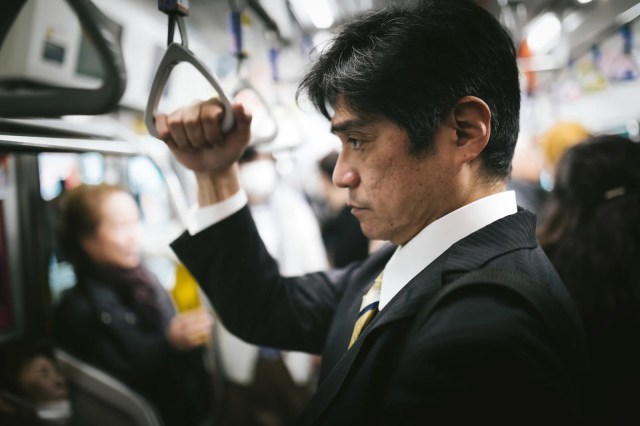
Train etiquette can be hard to navigate for tourists, but locals need to watch their manners too.
Every now and then, we see a number of work and business-related companies conducting surveys on train travel in Japan, but the most definitive and sizeable survey comes from the Japan Private Railway Association, which is made up of 72 private railway companies nationwide.
Through an online multiple choice questionnaire, conducted between 1 October and 30 November last year, the association sought to find out what the most annoying behaviours were at Japanese stations and trains, segmenting them into two categories: behaviours by passengers in general and behaviours by foreign tourists.
After receiving responses from 5,202 locals, the association revealed its results, and surprisingly, the results differed by category, proving that foreigners have some identifying quirks that irritate locals.
So let’s take a moment to find out what foreign tourists do that annoy locals on the train, ranked from the 10th most annoying to worst.
Ranking of Annoying Behaviours by Inbound Tourists at Stations and on Trains
10. Coughing or sneezing without consideration for the people around you (7.6 percent)
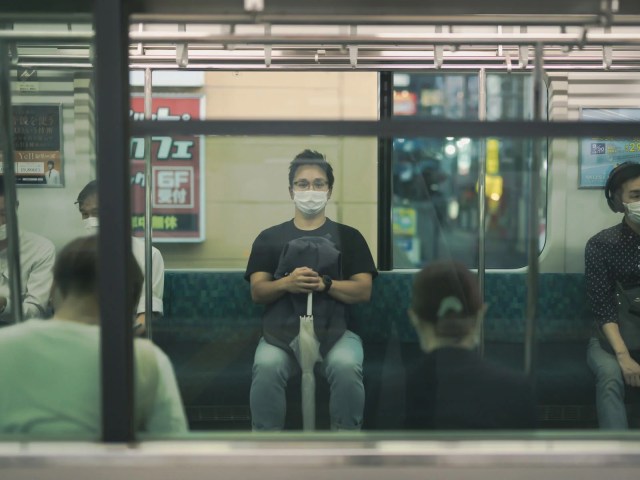
Coughing and sneezing without wearing a mask has long been a source of annoyance for passengers in shared spaces, but ever since the associated health risk increased during the pandemic, it now consistently ranks in the top 10. If you do feel the urge to sneeze or cough, especially without wearing a mask, it’s best to do it as discreetly as possible.
9. Leaving behind trash, including plastic bottles, etc. (8.6 percent)
Whether intentional or accidental, the act of leaving your trash behind for someone else to take care of is frowned upon in Japan, where consideration for the group is the norm. Foreign tourists, who may be accustomed to the convenience of public trash cans overseas, are often held to higher scrutiny in Japan, where trash cans are much harder to find.
8. Others (10.6 percent)
Roughly 551 people have been annoyed by some sort of behaviour on a train or inside a station, but they fall outside of the options presented, slotting into the “others” category instead. With such a wide-ranging array of irritating possibilities, here’s hoping these behaviours were limited to mild inconveniences, like standing in the way of others while navigating station complexes.
7. Priority seating etiquette (10.7 percent)
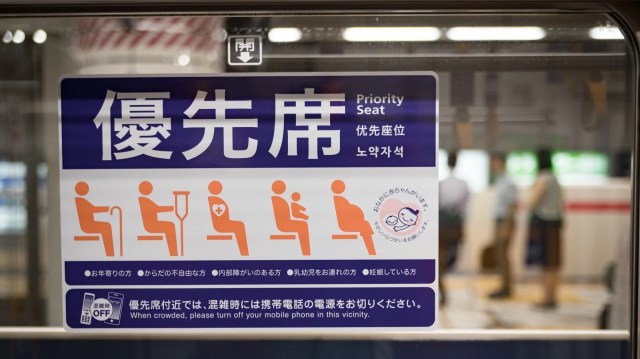
The row of seats next to the doors at either end of the carriage are dedicated priority seats, so if you choose to sit there as a healthy, able-bodied person, you’re expected to give up your seat if less-able bodied passengers board. Though some people who are seemingly deserving of these seats may refuse them when offered, it’s always best to err on the safe side by offering your seat as a common courtesy.
6. Bad manners when boarding and alighting, including running onto the train, cutting in line, etc. (16.4 percent)
Running onto the train in a panic can lead to you knocking into other passengers, and can also hold up the train as the conductor may need to postpone the departure temporarily by opening the doors again. A late departure of just a few seconds at one station can easily compound during the journey, causing anxiety levels to rise on board as lateness is a big taboo in Japan, where people are expected to arrive ten minutes ahead of scheduled meetings and appointments.
5. Standing near the door without moving (24.1 percent)
This is a bugbear across the board, regardless of where passengers are from, as getting off the train is a high point of anxiety made worse when people stand in front of the doors without moving out of the way. If you do find yourself in front of the doors with little room to move for others, you’re expected to step out every time the doors open to let people off, before stepping back on ahead of the new passengers who were waiting at the station to get on.
4. Strong scents, including perfume, detergent, fabric softener, cosmetics, etc. (24.8 percent)
Offensive smells aren’t limited to bad odours in Japan – any strong scent, no matter how nice you think it is, can irritate others as it interferes with their personal space. With trains being so crowded that people are tightly pressed up against each other during rush hour, the air you breathe is sometimes your only comfort, so contributing to a scent-free environment is important for everyone on board.
3. Sitting style that encroaches on others (26.2 percent)
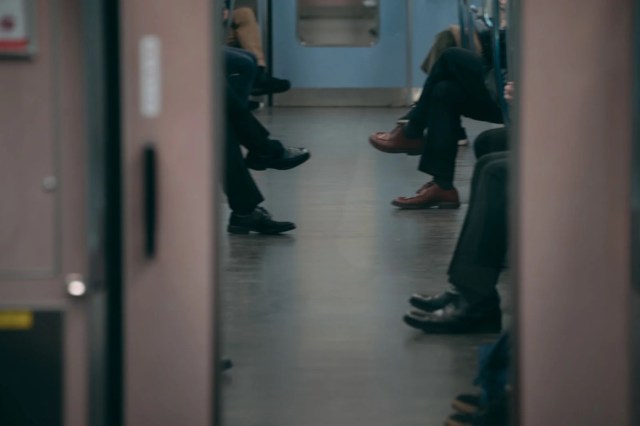
A number of railways have multi-lingual onboard announcements asking passengers to mind the way they sit, suggesting this is a problem that’s notable amongst foreign passengers. Its high ranking as a point of annoyance on this list is further evidence for that, so be sure to avoid spreading your legs and avoid crossing them as well.
2. Carrying and placement of luggage such as bags, umbrellas, etc. (41.9 percent)
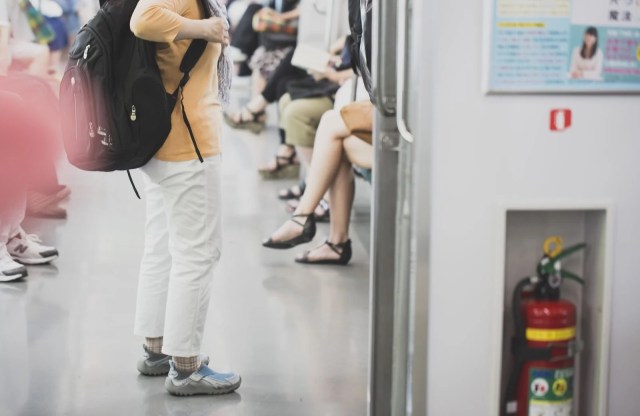
With locals having a low tolerance for even everyday backpacks on board, as they tend to get in the way of others, larger suitcases and bags can become an even greater cause for concern. Be sure to make use of the overhead racks for backpacks, and consider sending larger suitcases to your destination with a door-to-door delivery service like Yamato Transport.
1. Noisy conversations and messing about (69.1 percent)
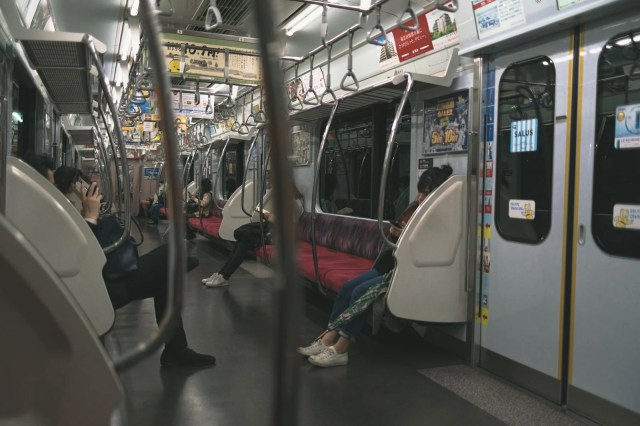
Whether you’re with friends, colleagues or family, trains are considered indoor places where you shouldn’t use your outside voice, and they’re certainly not places where your children can stand on the seats and swing from the railings, as seen in one video of a foreign family in Japan that recently went viral online. As with any public space, a train is a place where respectful behaviour and consideration for others helps things run smoothly, which is one of the things people love about Japan.
So if loud talking and unruly behaviour tops the list of annoying foreign tourist behaviours, was the result the same for annoying locals?
Ranking of Annoying Behaviours at Stations and on Trains
10. Riding while intoxicated (12.5 percent)
9. Leaving behind trash, including plastic bottles, etc. (12.9 percent)
8. Bad manners when boarding and alighting, including running onto the train, cutting in line, etc. (20 percent)
7. Carrying and placement of luggage such as bags, umbrellas, etc. (20.1 percent)
6. Strong scents, including perfume, detergent, fabric softener, cosmetics, etc. (21.5 percent)
5. Smartphone use, including using it while walking and in crowded areas, etc. (21.6 percent)
4. Standing near the door without moving (27.6 percent)
3. Noisy conversations and messing about (30.2 percent)
2. Sitting style that encroaches on others (31.9 percent)
1. Coughing or sneezing without consideration for the people around you (34.7 percent)
It’s interesting to see that the last ranking on the tourist list jumped right up to first place on the generic list. While the majority of other mentions were common to both lists, the only difference was “others” for the inbound ranking, and “riding while intoxicated”, which only appeared on the generic list.
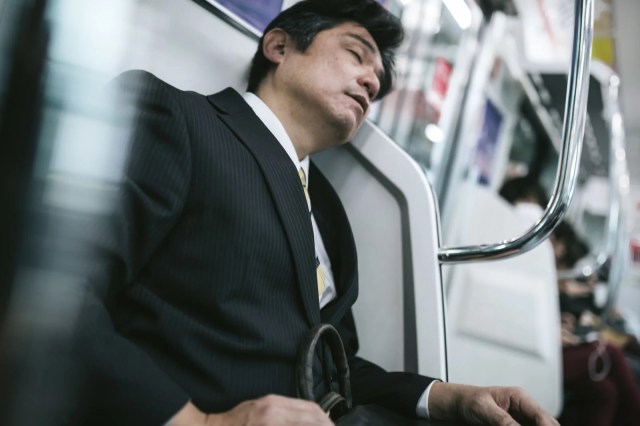
It’s heartening to see that foreign tourists haven’t been singled out for drunkenness on trains, with respondents largely seeing it as a local problem. Overall, though, the common factors between the two lists, albeit to varying degrees, suggests that everyone can do better while riding the trains in Japan…regardless of where they’re from.
Sources: Japan Private Railway Association, PR Times
Featured image: Pakutaso
Insert images: Pakutaso (1, 2, 3, 4, 5, 6, 7 )
● Want to hear about SoraNews24’s latest articles as soon as they’re published? Follow us on Facebook and Twitter!