
Growing up in Southern California, I was no stranger to long road trips, whether up the coast to visit relatives, or out to Las Vegas to visit the craps tables. Along the way I’d pass many freeway rest areas, with amenities whose quality ranged from “a good place to use the bathroom as long as you cover your nose” to “a good place to use the bathroom, as long as you have a friend with you to make sure you don’t get shanked by a hobo.”
So imagine my surprise when I moved to Japan to find that its highway rest stops (called “parking areas” by Japanese motorists) are spotless. Plus, they’re often great spots to munch on regional specialties or pick up local souvenirs. And if you happen to visit one particular parking area, you can even go back in time.
This special rest stop is located in Hanyu City in Saitama Prefecture, Tokyo’s neighbor to the north. The Hanyu parking area, situated along the Tohoku Expressway that connects the capital with the northernmost prefectures of Japan’s main island of Honshu, recently underwent renovations and had its grand re-opening last month. But rather than just slapping a new coat of paint on the old buildings, the rest stop’s planners decided to do something unique.
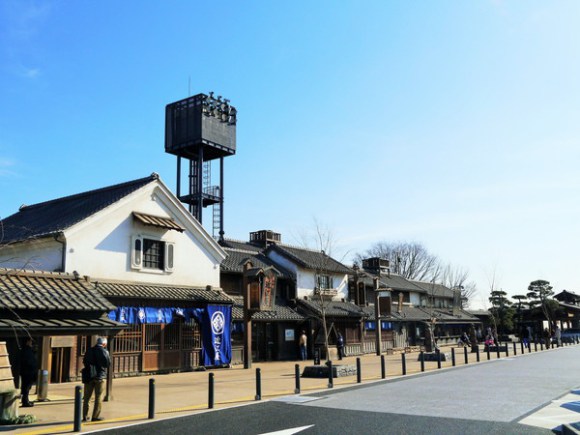
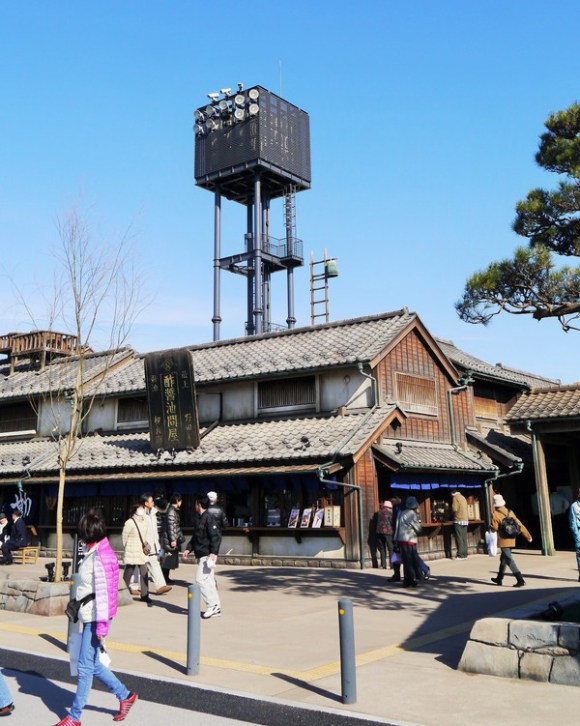
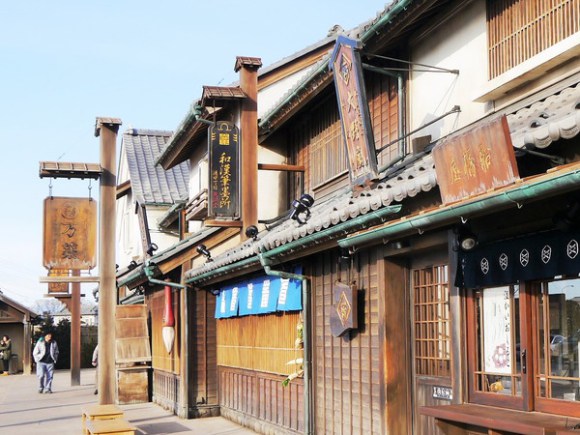
During the time known as the Edo Period, Japan was ruled by a feudal government. During this era, which lasted from 1603 to 1867, the government kept close watch on the movement of people from one region of the country to the next, establishing a system of checkpoints along the system of roads leading to the city of Edo, as Tokyo was then called. One such outpost, the Kurihashi Checkpoint, was set up near to where the Hanyu parking area is today. Inspired by this, those in charge of the rest stop’s renovations set about recreating an Edo Period townscape.
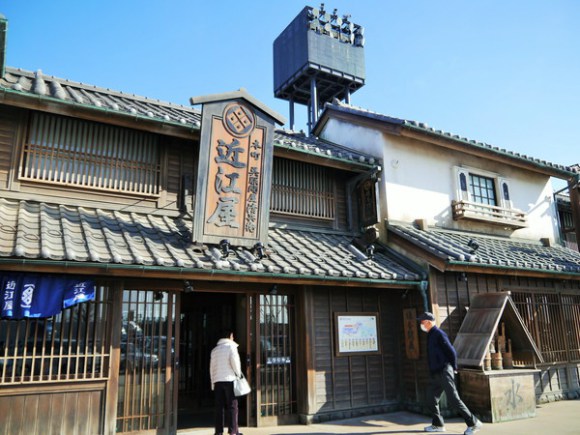
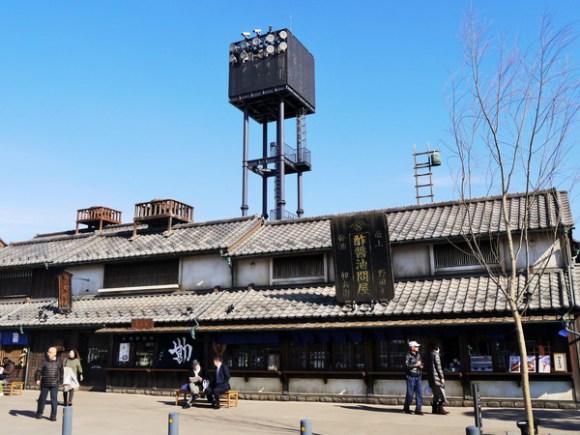
Adding a dash of literary appeal, the newly overhauled parking area has been rechristened the Onihei Edo-dokoro, with Onihei being a reference to the lead character created by the late author Shotaro Ikenami. Ikegami’s Onihei Hankacho franchise contains 24 volumes chronicling Edo Period law enforcement officer Onihei as he protects his town from thieves, arsonists, and other unsavory types. In addition to the books, which were published over a span of 23 years, Onihei Hankacho has also seen movie, TV, stage, and manga comic adaptations.
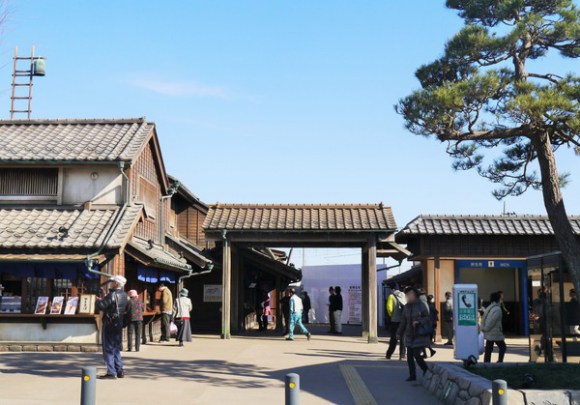
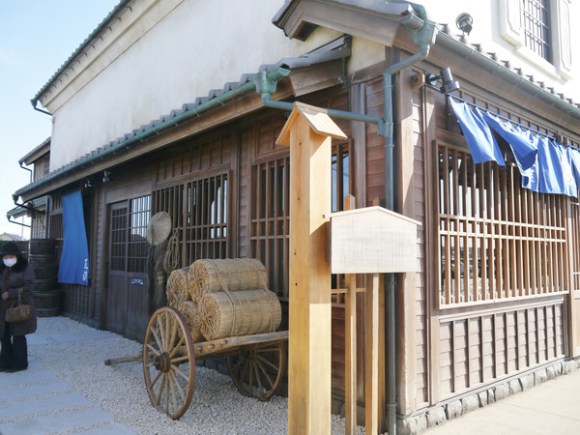
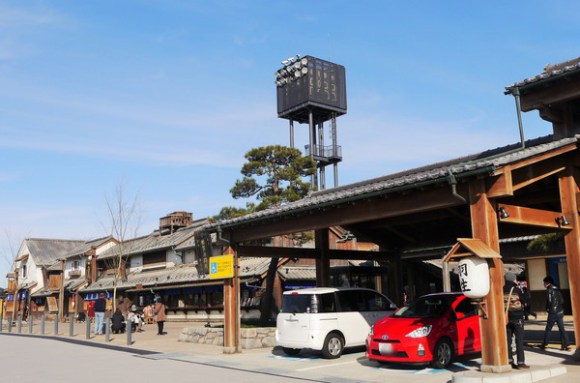
Arriving at the rest stop, only the lack of cameras and abundance of modern cars keep you from thinking you haven’t wandered onto a movie set. Everywhere you look, you can see the feature of an Edo Period town, complete with traditional tiled roofs, a fire watch tower, wooden signposts, and hanging lanterns.
There’s one more characteristic that defines the hero of Ikegami’s series of books. Aside from his strong sense of justice, Onihei is a man who loves a good meal, so of course the Onihei Edo-dokoro needs a few places to eat historically-inspired fare. We grabbed a seat for lunch at Gotestu, a restaurant inside the rest area specializing in shamo, a type of chicken especially popular during the Edo Period.
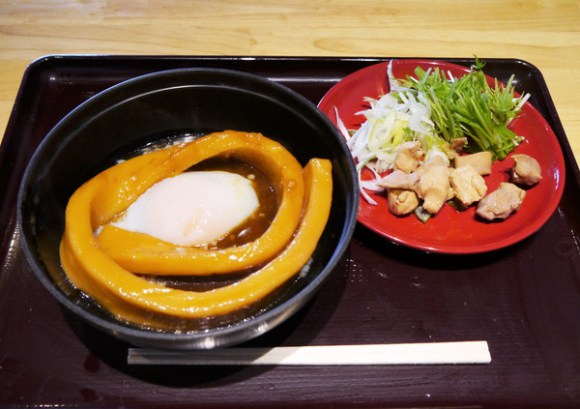
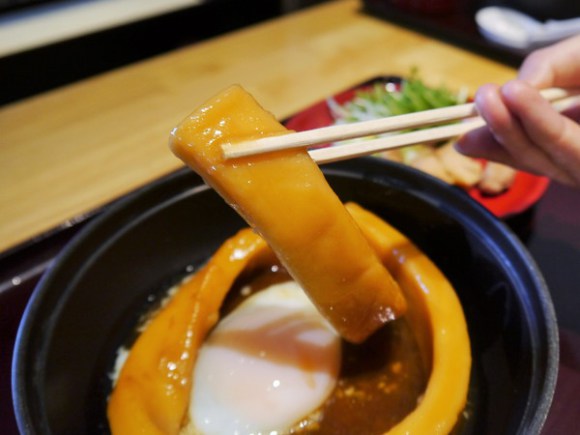
We sampled two dishes, starting with shamo ippon udon, which is mentioned in Ikegami’s novels. Consisting of a single gigantic udon noodle (“ippon” does indicate “one noodle,” after all) with morsel of shamo served on the side, the dish’s sweet broth, similar to that used in sukiyaki, helped draw out the wheat flavors of the firm noodle.
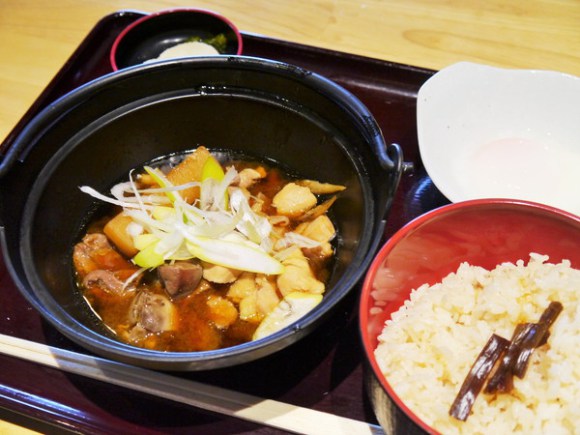
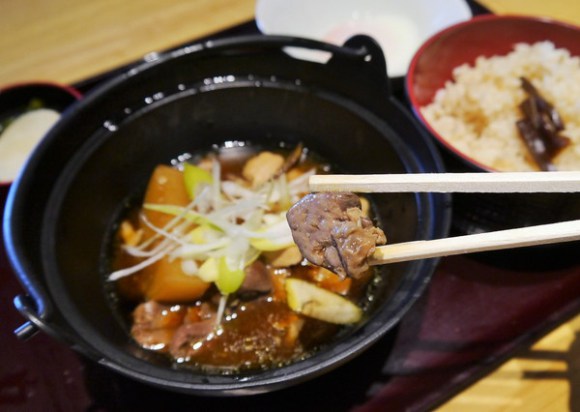
Not nearly as dramatic looking, yet no less delicious, was the Gotetsu shamo hotpot set, which makes use of the same sweet broth and tasty poultry.
And of course, since a true gourmand like Onihei wouldn’t pass up dessert, the rest stop also has a place to indulge your sweet tooth in the confectionary shop Funabashiya. Funabashiya opened its original location in 1805, and, like Gotetsu, the Onihei Edo-dokoro branch is its first in an expressway rest area.
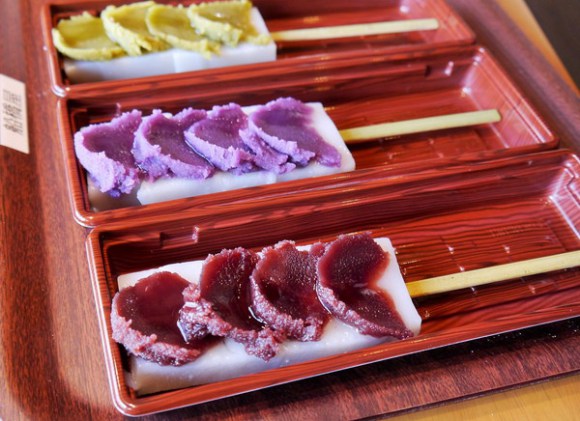
As you’d expect from a candy maker with such a long history, Funabashiya sells treats that have been popular since the Edo Period, such as the sweet sticky rice cakes kuzu mochi, which can be eaten either with a wooden utensil or straight from a skewer.
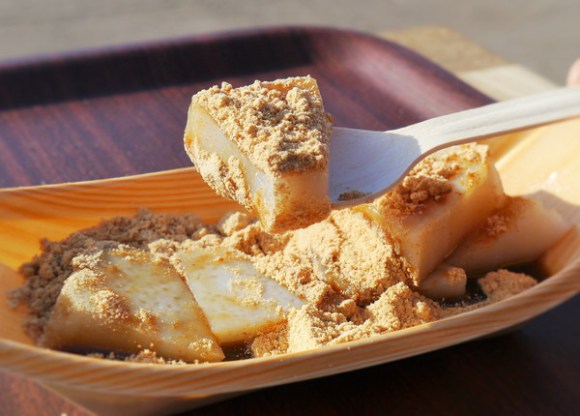
▼ Kuzu mochi in sweet red bean, sweet potato, and green tea varieties
Entertained and full, it was time to head home. We should point out that the Onihei Edo-dokoro is located on the southbound route of the Tohoku Expressway. In other words, if you’re starting from Tokyo you’ll need to first drive north, then loop back around in order to get there. Still, it’s definitely worth making the trip. After all, how can you say no to the rare opportunity of traveling through time using your car?
▼ Especially when Japan builds more entertaining cars than the DeLorean
Related: Onihei Edo-dokoro website
Photos: Rocketnews24
 Step back in time to the Edo period at this unusual highway rest stop in Japan
 Pokémon and Ikea Japan cross over into each other’s worlds with collaboration events
 Tokyo teahouse serves up a sakura matcha dessert you won’t find anywhere else
 Fading Tokyo – Searching for signs of the Showa era as local neighborhoods evolve[Photos]
 Tokyo turns its phone booths into free Wi-Fi hotspots, and here’s how to use them
 Japan’s prime minister exchanges Dragon Ball kamehamehas with president of France[Video]
 Studio Ghibli adds new My Neighbour Totoro 2026 Corn Gift to its anime store for Mother’s Day
 Pokémon Centers across Japan cancel April events after stabbing in Tokyo
 Starbucks Japan opens new Kyoto store in Place of Scenic Beauty
 Why is Yoshinoya called Yoshinoya?
 “Grand sponsor Tokyo day OH Christmas” — say what?
 Japan now has a special desk for people who work at home with a pet cat[Photos]
 Famous Tokyo cherry blossom spot installs view-blocking screens to fight overcrowding[Video]
 Uniqlo announces new T-shirts for One Piece, Naruto and more for manga publisher’s 100th birthday
 Tokyo’s best museum for foreign travelers finally reopens after being closed for four years
 Totoro and Calcifer become little light-up lanterns for Ghibli-style excursions or at-home decor
 Pokémon lacquerware series expands for Year of the Horse with new handcrafted design[Video]
 Krispy Kreme releases Super Mario doughnuts in Japan for a limited time
 Picturesque Tokyo park plays host to millions of flowers and soap bubbles this spring
 Tokyo subway and almost all Tokyo train lines now accepting credit card tap payments
 Final Fantasy invites you to adventure in Fukushima with Fukushima Fantasy Chocobo fun[Video]
 Starbucks Japan unveils new sakura cherry blossom collection for hanami season 2026
 Train station platform ramen store closes its doors on half a century of history in Tokyo
 Starbucks Japan releases new My Fruit³ Frappuccino at only 34 stores around the country
 Studio Ghibli releases Catbus pullback keychain that runs like the anime character
 Japanese onsen egg maker from 100-yen store Daiso needs to be on your shopping list
 Nine great places to see spring flowers in Japan, as chosen by travelers (with almost no sakura)
 Survey asks foreign tourists what bothered them in Japan, more than half gave same answer
 Japan’s human washing machines will go on sale to general public, demos to be held in Tokyo
 Starbucks Japan releases new drinkware and goods for Valentine’s Day
 We deeply regret going into this tunnel on our walk in the mountains of Japan
 Studio Ghibli releases Kodama forest spirits from Princess Mononoke to light up your home
 Starbucks Japan releases new sakura goods and drinkware for cherry blossom season 2026
 Japan’s newest Shinkansen has no seats…or passengers [Video]
 Major Japanese hotel chain says reservations via overseas booking sites may not be valid
 Put sesame oil in your coffee? Japanese maker says it’s the best way to start your day【Taste test】
 No more using real katana for tourism activities, Japan’s National Police Agency says