

As well as being the start of the new business and academic year, April in Japan also marks the time when new graduates make their first forays into the world of full-time employment and many companies rotate their staff both to keep them on their toes and help them acquire new skills. It’s a fun, frenetic time of year, and everyone from kids in their new school uniforms to fresh-faced employees wearing crisp, black suits looks tremendously smart and presentable as they hurry to their place of education or employment, eager to make the most of their day.
In May, however, it all comes crashing down. Reality sets in and people start to realise that everything is just as awful as it was before, albeit with a few quirks and a shiny new name badge or lunchbox. The fire in kids’ bellies goes out, the twinkle disappears from new employees’ eyes, and they start to approach their work with all the enthusiasm of a pot-smoking snail going through a serious emo phase.
This, dear reader, is gogatsu-byou; the phenomenon that occurs every May and affects millions of Japanese to some degree or other.
If you managed to summon the energy to click on this post and are reading these words, then give yourself a big pat on the back. You’re either one of the few who isn’t suffering with early-onset gogatsu-byou – literally “May sickness” – or you’re what people living outside of the UK think we British would call “a bloody trooper.”
Fans of manga and anime may well have heard of chuuni-byou (中二病), literally meaning “middle-two sickness”, from the popular light novel and anime series Love, Chunibyo & Other Delusions. Chuuni-byou is a term that is often used in Japanese junior high schools to describe the change in the attitudes of students as they pass from the first to the second grade. Once spritely little tykes with high-pitched voices and all the enthusiasm in the world, by the time they’ve reached the second grade, the same kids often become moody, lethargic, and generally too-cool-for-school, even if part of them is secretly the same fun-loving kid they always used to be.
Despite both containing the kanji character for sickness (病), neither chuuni-byou nor gogatsu-byou are actual medical conditions, so seeking help with either of them would be like going to your doctor with a minor case of the grumpies or can’t-be-arsed-ivitus.
Nevertheless, at this time of year the May blues are frequently referred to all over Japan, and the syndrome is often taken surprisingly seriously.
Gogatsu-byou becomes a bigger problem around the start of the second week of May. As you may know, Japan has no fewer than four public holidays in the first week of May, collectively known as Golden Week, prompting millions to take trips, visit relatives, go shopping, or just kick back and relax. Although nothing like the mass exodus seen during Chinese New Year, Japan is a hive of movement and activity at this time of year, and the holidays come as a huge boon to the economy, with hoteliers, restauranteurs, and store owners traditionally spending months gearing up for these public holidays since they would make so much money (or ‘gold’, hence the name) in such a short space of time, sometimes even relying on Golden Week to get them through the financial year.
For everyone else, though, Golden Week is all about having fun and taking it easy. So when this extended period of lethargic bliss suddenly comes to an end, you can bet that there are a few casualties, and it’s usually the newbies – most notably the young graduates who just started at university or began working for the first time in April – whom it hits the hardest.
 RocketNews24
Japan’s May blues can be characterised by anything from a general lack of energy to feeling completely dissatisfied with one’s lot in life. Just as how children in the West struggle to get back into a regular routine or carry out the tasks they did prior to the holidays (who among us didn’t “forget” how to write after the long summer break?), school kids in Japan are known to struggle to pay attention following the Golden Week break. Universities, too, often see a marked drop in attendance following the holidays as new students – the thrill of being accepted into their institution of choice, finding their way around the campus and making new friends having worn off – struggle to get out of bed each morning, and start skipping lectures.
Most people get over it within a couple of days and begrudgingly drag themselves to school or work, but in the rarest of cases, gogatsu-byou can become a serious problem.
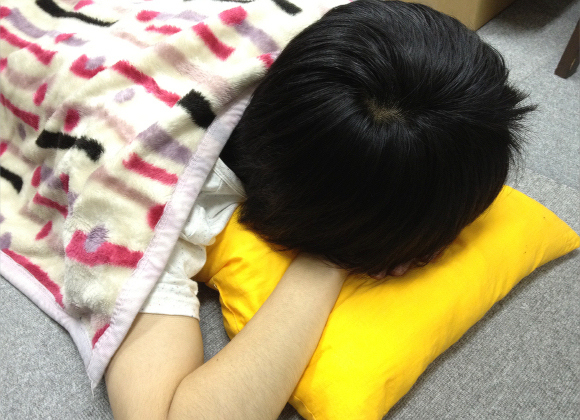
For those starting out at a new company, the time off in May – after barely a month in their new role – allows them time to reflect. It is only then that all the things they previously longed for or saw as marks of success – putting on a suit; taking the train during rush hour; exchanging business cards with clients and coworkers – suddenly start to seem far less glamorous, and the monotony of working life becomes clear.
Perhaps more troubling than that, though, is the sudden realisation by many new employees that this, their new life and working situation, is ‘it’. Add in the fact that, since most Japanese still consider it standard practice to remain at the same company for one’s entire working lifetime (changing careers is often looked on as a sign of indecision or weakness), many new recruits suddenly panic and feel that they have lost all control.
 RocketNews24
For this reason, as well as seeing an increase in the number of sick-days taken by employees both old and new, it is not unheard of for companies to lose newer members of staff during the month of May. The combination of a break so soon after starting work for the first time and the realisation that full-time employment isn’t quite the reward that they’d hoped for when sitting university exams, sending out hundreds of resumes and attending dozens of interviews can hit some people hard, sometimes even causing them to rethink their lives and, in rare cases, hand in their notice.
Thankfully, the vast majority of people manage to shake the May blues off after just a few days and come to realise that, compared to walking miles every day just to fetch a few gallons of clean drinking water or having to be carried across a rapidly flowing river in a plastic bag to get to school, being a bit down in the dumps because the holidays are over probably isn’t the worst deal ever. The temptation to take a sickie will be probably felt more strongly after Golden Week than at any other point in the year for most Japanese, but thankfully most will still suit up and take one for the team.
That being said, if the company you work for happens to have dealings with Japan, you’re an English teacher struggling to motivate a classroom full of Japanese kids, or perhaps you’re simply a reader of a certain Tokyo-based Japan and Asia news site, and you happen notice that things aren’t running quite as smoothly as normal around the second week in May, spare a thought for those of us feeling the effects of gogatsu-byou.
We know we’re supposed to be professional whatever the time of year, but just like how people in the West struggle to find the motivation to head back to work following Christmas and the New Year’s break, most of Japan will be on a major come-down around the second week in May. And after sipping beer in the pleasantly warm spring sun, taking a trip to a hot spring, or spending multiple nights parked in front of the TV watching Game of Thrones until the wee hours of the morning, there’s only one thought going through most people’s minds during the first few days back after Golden Week: Everything is awful and nothing good will ever happen again.
Well, until July 21, when we all get the day off to think about the sea…
 Five currently airing anime series that will kill your motivation to work or study【Videos】
 As Japan’s largest holiday approaches, one island in Okinawa bans guests from local restaurants
 Japan travel alert: Cheapest seats on fastest Shinkansen will not be offered for Golden Week
 Japan’s largest indie ice cream convention returns to Tokyo this Golden Week
 10 things Japan gets horribly wrong
 Japan reportedly adding Japanese language skill requirement to most common foreigner work visa
 Schoolkids learn life skills through shopping field trips at street markets in Kochi Prefecture
 Pokémon and Ikea Japan cross over into each other’s worlds with collaboration events
 Foreign man arrested for walking on Shinkansen tracks, claims he was on the run from yakuza
 Japanese manhole lid raises eyebrows with fertility god symbol that looks like… well, you know
 How to take your home ramen to the next level by making your own chashu pork in a frying pan
 Manga is More than Just Reading, It’s a Cultural Experience – Expo 2025 with The Seven Deadly Sins
 Japanese kindness restores our faith in humanity after a highway bus accident in Tokyo
 The results are in! One Piece World Top 100 characters chosen in global poll
 Japan considering raising international traveler departure tax even more than previously reported
 Starbucks Japan closing only Shinkansen platform branch for popularity-triggered renovations
 Two food hacks take Japan’s convenience store fried chicken to amazing new sandwich heights
 You can assemble a well-balanced team of Pokémon, them eat them, thanks to Japanese cake chain
 Fading Tokyo – Searching for signs of the Showa era as local neighborhoods evolve[Photos]
 Pokémon lacquerware series expands for Year of the Horse with new handcrafted design[Video]
 Tokyo turns its phone booths into free Wi-Fi hotspots, and here’s how to use them
 Tokyo teahouse serves up a sakura matcha dessert you won’t find anywhere else
 Totoro Fund line of beautiful artwork and apparel lets you help the real-world Totoro Forest
 Japan now has a special desk for people who work at home with a pet cat[Photos]
 Famous Tokyo cherry blossom spot installs view-blocking screens to fight overcrowding[Video]
 Uniqlo announces new T-shirts for One Piece, Naruto and more for manga publisher’s 100th birthday
 Train station platform ramen store closes its doors on half a century of history in Tokyo
 Starbucks Japan releases new My Fruit³ Frappuccino at only 34 stores around the country
 Studio Ghibli releases Catbus pullback keychain that runs like the anime character
 Krispy Kreme releases Super Mario doughnuts in Japan for a limited time
 Japanese onsen egg maker from 100-yen store Daiso needs to be on your shopping list
 Survey asks foreign tourists what bothered them in Japan, more than half gave same answer
 Japan’s human washing machines will go on sale to general public, demos to be held in Tokyo
 Starbucks Japan releases new drinkware and goods for Valentine’s Day
 We deeply regret going into this tunnel on our walk in the mountains of Japan
 Studio Ghibli releases Kodama forest spirits from Princess Mononoke to light up your home
 Starbucks Japan releases new sakura goods and drinkware for cherry blossom season 2026
 Japan’s newest Shinkansen has no seats…or passengers [Video]
 Major Japanese hotel chain says reservations via overseas booking sites may not be valid
 Put sesame oil in your coffee? Japanese maker says it’s the best way to start your day【Taste test】
 No more using real katana for tourism activities, Japan’s National Police Agency says
 Five things that keep Japanese people chained to their jobs
 Venture into some of Japan’s tastiest theme parks this Golden Week
 Why does Japan love Halloween so much, and is it celebrating the holiday the right way?
 Meetings and more meetings: Foreigners list the pros and cons of working at a Japanese company
 Oh, Japan, You Make Me So Mad Sometimes! 【Only in Japan】