

Everyone has their own studying methods, but no matter which one you choose, learning a language boils down to mastering four things; reading, writing, listening and speaking. I know people who study so hard they literally memorize words out of a dictionary. There are also the people who think that the best way to pick up a language is to live in the native country and speak the lingo as much as possible.
I believe in practicing over studying. And by “practicing”, I mostly mean “surfing the internet”. If you’re currently struggling with learning the Japanese language, or if you hate studying but would like to improve your Japanese, read on!
A quick search online called up websites stating that the amount of study hours required for a Japanese language learner to be ready for the JLPT N1 (the highest level of the Japanese Language Proficiency Test) exam ranges between 900 to 4,500 hours. Assuming that you stoically study in two-hour sessions once a week without fail, it would take at least eight years of study to prepare for the JLPT N1 examination.
It took me about five years to acquire my JLPT N1 certificate from scratch. Five years isn’t an especially short time, but considering that the examination was only held once a year when I was sitting for the exams in Singapore, I think it’s a fairly short time considering I only took classes once a week and often had to miss classes due to work commitments. I was determined on taking classes because I knew I didn’t have the discipline to self-study. The only time I really ‘studied’ per-se was when I was in class.
This is how I polished my Japanese skills with minimal studying and without even setting foot inside Japan:
1. Watch Japanese anime, movies, drama serials. Listen to Japanese songs. A lot.
It doesn’t matter if you don’t understand a thing these movies or songs are saying at first. Watch them with subs, never dubs. The whole point of watching or listening to a truckload of Japanese media is to train your ears to get used to the nuance of the language.
2. Read Japanese books or magazines which interest you.

My Japanese teacher used to advocate reading the newspapers, but the problem was, there were too many difficult words and I had zero interest in current affairs. Instead, I read manga, novels and magazines that featured topics that piqued my interest, such as fashion magazines and entertainment magazines that featured my favorite artistes. Children’s books are also a good start for beginners.
Such material may not be the most “orthodox” or educational, but at least you’ll be motivated to read. If the price of Japanese books and magazines are a concern, you can always chalk up the reading meter by surfing Japanese websites such as our sister site RocketNews24 Japanese!
3. Talk to yourself (or an imaginary person).

The point of this practice is to get comfortable with speaking the language. It’s not easy to find a language partner who can practice with you at the oddest hours of the day. I used to “talk” to Rukawa-kun (from Slam Dunk) whenever I didn’t have anything to do, such as when I was waiting for a bus, or when I was walking home alone. Since it’s an imaginary person you’re talking to, you wouldn’t have to worry if the topics are mundane and repetitive, or if your Japanese is “weird”. Just blabber on in as much Japanese as you can muster. If you’re conscious of the looks from strangers around you, just pick up your mobile phone and act as if you’re on the phone.
4. Keep a blog/diary. In Japanese, of course.

Again, it doesn’t matter what you write about. Just try your best to express your thoughts in words. If you need some help with words, you can always look it up in the dictionary. Using the dictionary and subsequently writing it out helps you remember the word better. Your blog or diary will also become a good gauge of how much you’ve progressed. After some time, you’ll be able to look back at your old posts, cringe at the horrible writing, and give yourself a pat on the back for being able to tell how bad it was. If you can get your Japanese teacher to read your blog and give you feedback, all the better.
Are you giving up on the thought of mastering Japanese already? That’s just the course for beginners. Once you’ve gained a certain level of confidence in your Japanese language proficiency and would like to try interacting with native Japanese, try hanging out at the following websites!
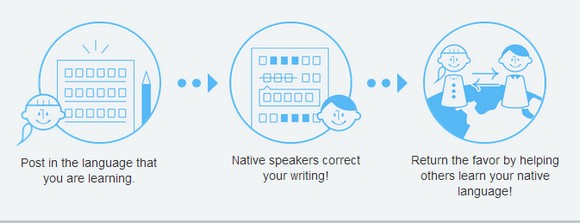
This is a website where language learners help each other learn their native languages. You could make use of this free service alongside your blog posts. Whenever you update your blog, post it on this website as well and receive advice from native speakers. You could even make friends! It’s also nice to support other language learners by returning the favor.
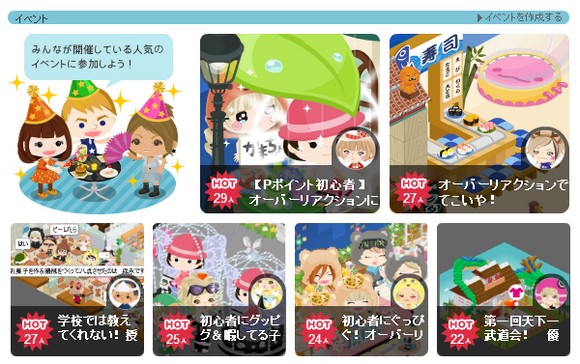
Ameba is a multimedia website packed with all sorts of free functions ranging from blogs to news clips to discussion threads, and even games! The two functions I used the most were the blogs and Pigg. Ameba Pigg is a virtual community in which you can interact with other Ameba users. Create an avatar, and you’re ready to play and make friends! There are various community areas where you can “meet” and chat with others while enjoying the entertainment elements in store. Most of Ameba’s users are Japanese locals, so use the chance to make a few Japanese cyber friends!
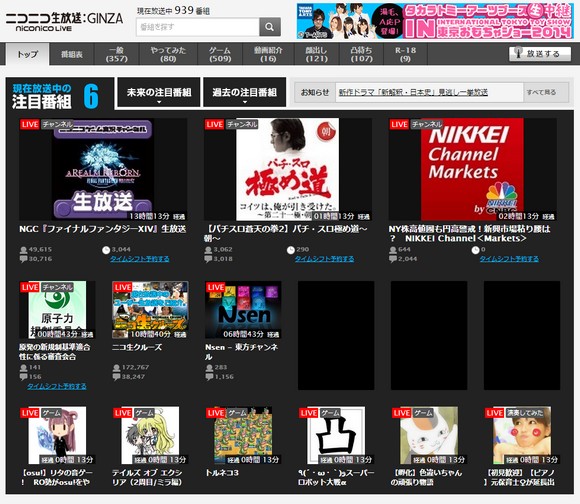 This is by far my greatest “secret weapon”. Although most Japanese nationals I’ve met at work laugh whenever I tell them that I “studied” Japanese on Niconico, it’s undoubtedly the website that I benefited the most out of. Among its many pages covering a wide range of activities such as video sharing, art sharing, and also a news page, the function I recommend the most is its broadcasting function, also known as Niconico Live.
Niconico Live allows users to stream live broadcasts on the website, and viewers are able to make real-time comments to interact with the broadcaster. As a free member, you’ll be able to tune in to the thousands of broadcasts hosted by people from all walks of life. Not only will you be able to train your ears by listening to them talk, you’ll be able to improve your typing speed by commenting, and it’s also possible to make friends through the live sessions.
A monthly subscription of 525 yen (about US$5.15) will allow you to create your own community and host your own broadcast. Use this to practice speaking and make more Japanese friends! Of course, it won’t be easy at the start, but if you’ve been building friendships as a listener in other communities, the people who have befriended you are likely to come by and support your broadcast, easing your transition from a listener to a host.

There is one thing to take note of when practicing on social websites such as Ameba and Niconico, however, and that is the use of dialects and slangs. The users are everyday people from all parts of Japan and they are likely to speak in their own Japanese dialects or slangs and internet lingo. If you’re learning Japanese for work, it’s important to be able to distinguish which are the slangs and dialects so that you don’t end up with a “remixed” version of Japanese (which is why it is still beneficial to take proper lessons alongside)!
Well, that’s basically how I improved my Japanese while having fun. Like I mentioned at the start of this post, everyone has their own methods, so be adventurous and experiment with all sorts of methods and materials to find your own secret formula! If you have any studying methods that worked for you, feel free to share them in the comments section below!
Images: We Heart It, Someecards, Sea of Shoes, Brendafloresm, Lang-8, Ameba, Niconico, C’è Crisi C’è Crisi
 RocketNews24’s six top tips for learning Japanese
 Passing the JLPT N1 — Here’s how I did it, so you can too!
 Learn Japanese from YouTube: Amp up your listening skills with this four-step guide
 Six (and a half) essential resources for learning Japanese
 The Japanese you learn at school vs the Japanese used in Japan【Video】
 Pokémon and Ikea Japan cross over into each other’s worlds with collaboration events
 Can a downtown Tokyo super sento bathhouse beat a hotel for a one-night stay?
 Two food hacks take Japan’s convenience store fried chicken to amazing new sandwich heights
 Tokyo teahouse serves up a sakura matcha dessert you won’t find anywhere else
 Pokémon Centers across Japan cancel April events after stabbing in Tokyo
 A Kyoto factory vending machine sells gourmet mystery meals at bargain prices
 Beautiful Ghibli earrings allow you to finally reunite two of the studio’s star-crossed lovers
 This is the Rei Ayanami doll we’ve been anticipating since last year—and it was worth the wait!
 Tokyo Station staff share their top 10 favorite ekiben
 Owner of ridiculously long tongue is also a former idol, does cool tongue tricks
 Tokyo’s best museum for foreign travelers finally reopens after being closed for four years
 Pokémon lacquerware series expands for Year of the Horse with new handcrafted design[Video]
 Famous Tokyo cherry blossom spot installs view-blocking screens to fight overcrowding[Video]
 Tokyo subway and almost all Tokyo train lines now accepting credit card tap payments
 Fading Tokyo – Searching for signs of the Showa era as local neighborhoods evolve[Photos]
 Totoro Fund line of beautiful artwork and apparel lets you help the real-world Totoro Forest
 Tokyo turns its phone booths into free Wi-Fi hotspots, and here’s how to use them
 Studio Ghibli adds new My Neighbour Totoro 2026 Corn Gift to its anime store for Mother’s Day
 Japan now has a special desk for people who work at home with a pet cat[Photos]
 Uniqlo announces new T-shirts for One Piece, Naruto and more for manga publisher’s 100th birthday
 Train station platform ramen store closes its doors on half a century of history in Tokyo
 Starbucks Japan releases new My Fruit³ Frappuccino at only 34 stores around the country
 Studio Ghibli releases Catbus pullback keychain that runs like the anime character
 Krispy Kreme releases Super Mario doughnuts in Japan for a limited time
 Japanese onsen egg maker from 100-yen store Daiso needs to be on your shopping list
 Nine great places to see spring flowers in Japan, as chosen by travelers (with almost no sakura)
 Survey asks foreign tourists what bothered them in Japan, more than half gave same answer
 Japan’s human washing machines will go on sale to general public, demos to be held in Tokyo
 Starbucks Japan releases new drinkware and goods for Valentine’s Day
 We deeply regret going into this tunnel on our walk in the mountains of Japan
 Studio Ghibli releases Kodama forest spirits from Princess Mononoke to light up your home
 Starbucks Japan releases new sakura goods and drinkware for cherry blossom season 2026
 Japan’s newest Shinkansen has no seats…or passengers [Video]
 Major Japanese hotel chain says reservations via overseas booking sites may not be valid
 Put sesame oil in your coffee? Japanese maker says it’s the best way to start your day【Taste test】
 No more using real katana for tourism activities, Japan’s National Police Agency says
 Japanese Twitter can’t stop laughing at this JLPT listening question straight out of Evangelion
 Why are there different counters for animals and people in Japanese?
 Duolingo free language learning app released their first Japanese lessons, so we tested them out!
 Learn Japanese kanji with captivating stop-motion videos created by Tokyo animator
 Free “Language Learning with Netflix” extension makes studying Japanese almost too easy
 Four ways Japanese isn’t the hardest language to learn
 Number of foreigners studying Japanese in Japan hits record high, but are there enough teachers?
 Japanese Twitter user embarrassed to learn why American friend is studying Japanese, not Chinese
 Learn Japanese through ridiculous manga: Two Piece 【Episode #1】
 Seven mistakes foreigners make when speaking Japanese—and how to fix them
 Five magic Japanese phrases to know before starting a job in Japan
 Aizuchi: The Japanese art of grunting your way through conversations
 Learning Japanese? Beware these 19 loan words—they’re not what they sound like!
 Learning Japanese? All you really need is this one word…
 Japanese elementary school student teaches us all how to pronounce English like a native speaker