With how crowded trains get during rush hour in Japan, finding an open seat can be like discovering an oasis in the desert, or a cold can of Ebisu beer in the fridge nestled behind a group of lesser brews. Oftentimes, though, you’ll step into the train and find every seat occupied.
While no one really likes standing for a 30- or 60-minute ride, for some elderly, pregnant, infant-accompanying, or handicapped passengers, that’s not just an unpleasant situation, but a painful, or even impossible, task. Those groups of people still have as much need for mobility as anyone else, though, so rail companies put up signs directing those passengers to special seats for them along the corner benches of each car.
It seems that able-bodied passengers in different parts of Japan react differently to these suggestions, though. Not only that, not everyone believes keeping those seats open is the right thing to do, and a lot of it has to deal with a subtle difference in the wording used in Tokyo and Sapporo.
Setting off the debate was a photo, shared by artist and Twitter user Robot Nozomi. Snapped while on the train in Sapporo, the largest city on Japan’s northernmost island of Hokkaido, it shows passengers crammed into every available patch of space inside the carriage, except one.
https://twitter.com/ROBOT_NOZOMI/status/498610577799802880
Along with the photo, Nozomi tweeted:
“In Tokyo, a lot of regular people sit in the priority seats, but in Sapporo, none of them do, even if the train is packed. Now I get it. This is how it’s supposed to be.”
As you’d expect from the show of conscientious kindness, many who saw the snapshot were impressed. “That’s wonderful,” earnestly commented one person, and a few of the locals were filled with a sense of pride. “That’s just how we do things here!” replied one Sapporo resident.
Still, not everyone was sold on the Sapporo-style seating standards. “I think that’s really kind and all, but even if I was injured or handicapped, that sort of atmosphere would make it hard for me to take a seat,” explained one self-conscious individual.
Others just didn’t see the upside of leaving seats empty if there was no one around who needed them. “That’s actually a nuisance for the other people on the train,” grumbled another detractor.
For some, there’s even a safety issue involved. “It can be dangerous to have too many people trying to occupy the same space,” he explained, asserting that spreading passengers out, in this case by having some sit in the special seats, would help people from crashing into one another in the case of an accident, sudden stop, or just as a result of the regular swaying of the train. This can turn into a bone-cracking human domino-tipping session surprisingly quickly.
Actually, there might be something more at play here than just the hustle and bustle of 13 million-person Tokyo versus the laid-back kindness of the smaller Sapporo and its two million residents. A lot of this could be chalked up to a difference in how those seats are labeled in the two cities.
If we take a look at the Japanese word Nozomi used in his tweet, he refers to the special seats as yuusenseki, literally “priority seats.”
▼ 優先席 / yuusenseki
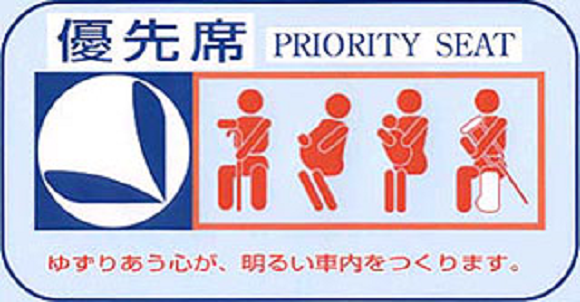
That’s also what you’ll see written inside train and subway carriages in Tokyo, and most people interpret the term to mean that senior citizens, pregnant women, and the disabled should be given the seats ahead of any other passengers. Alternatively, if there’s no one around who fits into those groups, the priority seats are fair game, at least for the time being.
On the other hand, the trains in Sapporo apparently don’t call them yuusenseki. Instead, they’re senyouseki, the kanji characters for which mean “exclusive use seats.”
▼ 専用席 / senyouseki
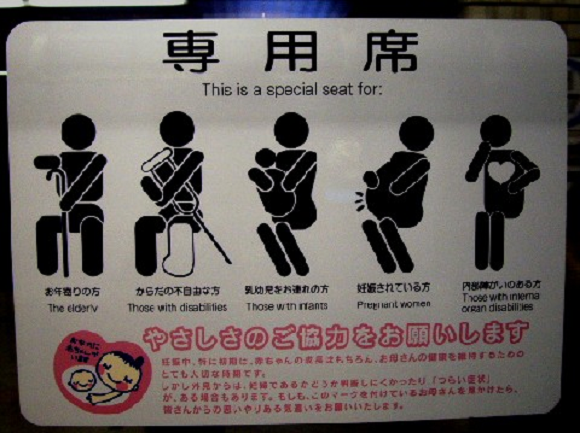
There don’t seem to be any rules expressly prohibiting others from sitting in them, or levying fines against those who do. It’s even possible that whoever chose the name wasn’t even thinking about the stricter connotation it entails. Nevertheless, it looks like passengers in Sapporo take the designation seriously enough that if no one on the train belongs to one of the groups the senyouseki have been set aside for, then they should be left empty.
So who’s got the linguistic high ground? Well according to some people, it doesn’t really matter. In regards to Sapporo’s custom, one commenter felt, “This way of thinking, in and of itself, is admirable, but there’s no need to systematize it. It’s good manners to give your seat up for someone who needs it, and natural to sit down if no one does.”
Another open-minded individual concurred. “Whether you call them ‘priority’ or ‘exclusive use,’ what’s important is to think of the needs of the people around you.”
And as for what to call these seats in English? Well, it may be a little on the vague side, but we think this alternate translation for yuusenseki, used by the Tokyu rail network which runs through southwest Tokyo and Kanagawa Prefecture, perfectly encapsulates the spirit behind them.
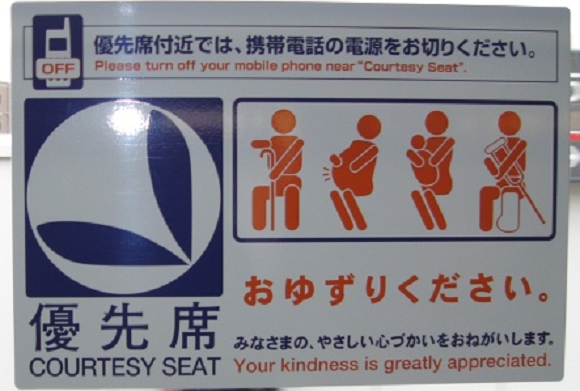
Source: Jin, Twitter
Insert images: University of Tsukuba, Geocities, Nifty Cocolog