The Japanese work environment might qualify as a something of a business paradise because Japanese workers so rarely take a day off. They are instead known to put in tons of free overtime and often don’t use “sick leave“. There is even a word in Japanese for “death from overwork”: karoshi.
Despite the health risks, many won’t take the day off if they are feeling a little under the weather. But what do Japanese people consider “a little sick” and “really sick”? A survey was conducted aiming to answer that question. Do their answers line up with your own, or would you file them away under “only in Japan”?
When you’re feeling ill, it seems like a smart move to call in sick. After all, you should probably stay home and not risk spreading your illness to the rest of your office or the people with whom you’ll be packed into a rush-hour train. Maybe you don’t get paid sick leave, but taking the day off to make sure you are ready to go get ’em the next day seems more efficient in the long run.
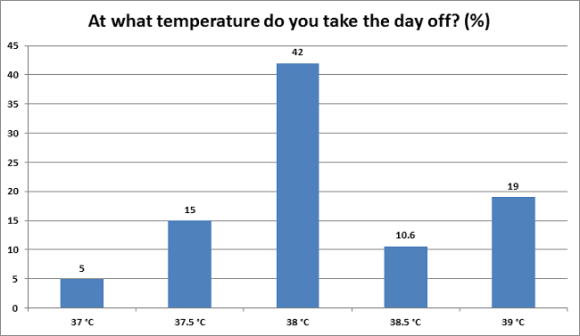
According to a survey though, almost 30% of respondents would still go to work with a temperature of 38°C (100.4°F). Doctors consider that body temperature to mean that you’re running a fever, and recommend getting some rest to allow your body to recover. But in Japan, it seems, the good of the company trumps the good of one’s own health in many cases.
The survey asked 226 men and women between the ages of 20-39 a few different questions about how often they get sick and how it affects their work. For example, one question asked, “If you were running a fever, at what temperature would you take the day off?”
▼There were also 8.4% of respondents who would take the day off for other reasons even without a fever.
Respondents were also asked what reasons they cited for taking the day off. Painful headaches certainly led the way, with 51.3% of the people citing it as the main cause for eating into their holiday time.
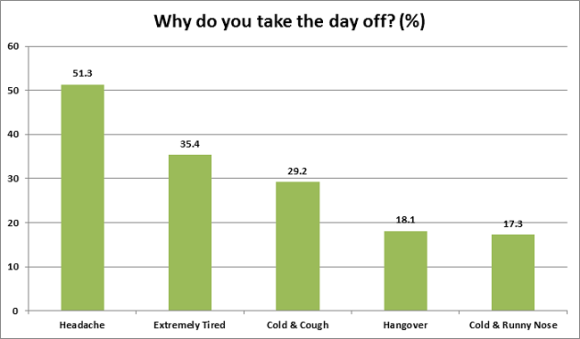
The interesting category here is the number of people who said a runny nose would cause them to take the day off. From our experience, people in Japan just stuff tissues up their nose, ignore the embarrassment, and keep on working. Also, blowing your nose with people around is seen as rude.
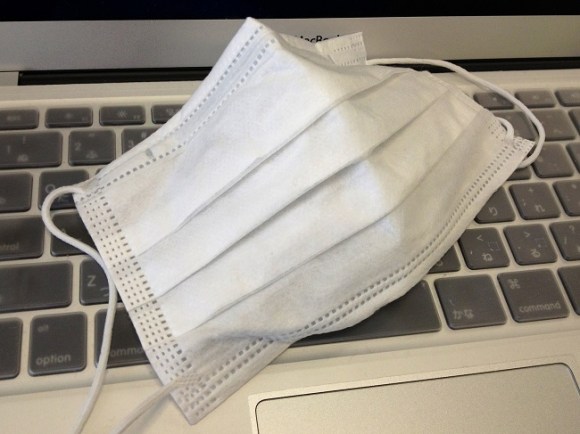
You might wonder why so many people decide to tough it out and stay at work. Perhaps it’s because many Japanese people wear a “face mask of invincibility” when they are sick (and even when they aren’t in some cases!), and are lulled into a false sense of security that the infection won’t spread.
▼Now this keyboard can’t catch a cold!
Some Japanese net users were slightly irked by the idea of taking a day off with only a 38°C fever.
“More than 40°C (104°F) and I’ll take the day off”
“Having a fever has nothing to do with it, I decide based upon whether or not my head and my body can work.”
“Normal salarymen won’t take the day off with even a 40°C fever. Those that immediately do so are communists.”
In no way does this survey completely represent the entire Japanese work force, but at least it gives us a small view of how some people treat their health versus their job.
At what point would you call in sick? As always, let us know in the comments below.
Source: Golden Times
Top Image: Flickr (TheGiantVermin)
Graphs: RocketNews24


Japanese company tells worker he probably doesn’t have coronavirus, to come to work with a fever
Mr. Sato tries a unique method to compellingly call in sick to work【Video】
Twitter thread sparks debate on Japanese vs American sick leave policies, overwork culture
Who do Japanese women want to care for them when they get sick? (Hint: it’s not their boyfriends)
Survey by Japanese ministry reveals high rates of “maternity harassment” in workplace
Studio Ghibli unveils new interactive stationery dioramas that bring anime movies to life on your desk
Pokémon and Polaroid reveal collaboration with adorable Pikachu and Eeveelution camera and film
Studio Ghibli composer Jo Hisaishi just set three Guinness Records
7-Eleven Japan brings back best-selling flat croissant that became a hit on social media
Universal Studios Japan partners with manga horror master Junji Ito’s Tomie
Starbucks Japan releases two new seasonal drinks that blur the line between summer and autumn
New Shinkansen Supreme Class private cabins get try-before-you-ride displays at Tokyo, other stations
Tokyo pub prohibits talking or keeping your phone out, only lets you drink in morning on weekends
Japanese convenience store sunglasses just became our newest Convenience Wear obsession
Japanese workers reveal their top five mysterious rules they wish would disappear【Survey】
12-year-old British girl who went missing in Tokyo found safe after visiting anime sites around Yokohama
Study finds hundreds of people in Indonesia legally named after Naruto, Inuyasha, other anime stars
12-year-old foreign tourist missing in Japan, police asking for help finding her [Video]
Japan’s Rabbit Island in danger of becoming Boar Island, tourists asked to follow feeding rules
Japanese gacha machine in Shibuya now sells tiny capsule terrariums
Stay at a hotel with a bed for your plushie in Japan
The Japanese city where ordering grilled chicken doesn’t guarantee you’ll actually get chicken
Japanese airlines set to cut fuel surcharges for international flights in September and October
Studio Ghibli adds new Jiji’s baby plush toy to its anime merchandise range in Japan
Tokyo subway installing new ticket gates that don’t accept payment through Suica or other IC cards
New Shinkansen luggage drop-off system begins in Japan, making train travel even easier
Air-conditioned dress shirts arrive in Japan to save working professionals from sweltering heat
Japanese Shinkansen becomes an overnight hotel for three nights this summer
Pokémon Center Online designates first Pokémon items that will require Japanese ID card to buy
Japanese toilet aims to attract foreign tourists but not everybody is happy about it
99-year-old woman rescued while attempting to climb Mt. Fuji
Tokyo’s newest viral dessert is like a Japanese parfait inside a bread bun [Taste test]
New Japanese vending machine at Shinkansen station sells cups of ice on platform
Japan announces sudden 400-percent increase in visa fees for foreigners entering the country
Japan’s human washing machines will go on sale to general public, demos to be held in Tokyo
Studio Ghibli has a new anime out, and there’s only one place in the world where you can see it
Starbucks Japan releases new drinkware and goods for Valentine’s Day
Starbucks Japan releases new sakura goods and drinkware for cherry blossom season 2026
Japan’s newest Shinkansen has no seats…or passengers [Video]
Japanese ninja certification exam attracts 131 candidates from Japan and abroad
Salomon releases Japan-exclusive Mt. Fuji hiking gear that doubles as an amazing souvenir
Put sesame oil in your coffee? Japanese maker says it’s the best way to start your day【Taste test】
Majority of polled Japanese workers feel compelled to answer calls, emails from office on day off
Wearing a white mask will make you less attractive, according to Japanese researchers’ experiment
What’s the point? Young Japanese professionals list five business manners they find unnecessary
How long and how often do Japanese women bathe? Survey investigates
How many hours a month do anime artists work in Japan? Survey finds crazy number, unhappy workers
Survey shows most Japanese employees don’t like Western-style work socials
Is work more important to Japanese salarymen than their girlfriends? Survey investigates
What are the worst things about the first year working in a Japanese company? Survey investigates
Survey shows foreigners’ desire to work in Japan long-term dropping, but that’s not the whole story
We asked our Japanese team of writers how they deal with seasonal allergies in Japan
Japanese university students reveal the part-time jobs they’d most like to have
One in four surveyed Japanese workers admits to wanting to kill boss, Osaka quake helps show why
Over 30 percent of surveyed Japanese managers feel intense stress from working with foreigners
Japanese company trips – Workers “absolutely hate” them, so why do they still happen?
Meetings and more meetings: Foreigners list the pros and cons of working at a Japanese company