Japan tends to be a very drug-shy country. Most people you talk to will say that they’ve never gone anywhere near substances like marijuana, and according to a Public Library of Science survey, 98 times out of 100 they’re telling you the truth.
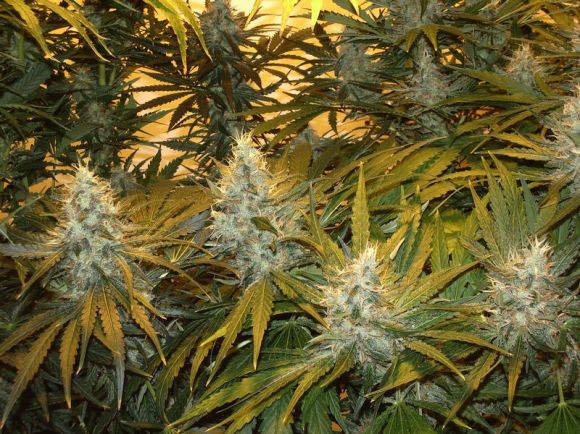
And yet you might be surprised to hear that there is an abundance of cannabis growing wild all over the northern island of Hokkaido. But before you go booking a ticket, you may want to learn why.
■ Crops as high as an elephant’s ear
The wild plants found in Hokkaido have existed there for centuries. Japan had long used hemp for fabrics, rope, and paper, and the government oversaw vast fields of it in production. Hokkaido Seima Kaisha, founded in 1887, was among the biggest growers in Japan. However, even before then, with all the cultivation going on it was only natural for nature to take its course and wild plants to begin popping up outside of fields.
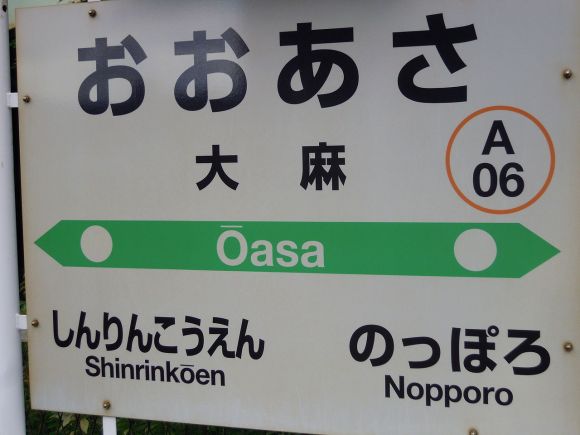
▼ When in Hokkaido, be sure to stop by Oasa Station, which has a different pronunciation but uses the same kanji (the one on the right) as marijuana.
The hemp industry has since been nearly extinguished in Japan, but its legacy lives on in millions of wild plants which can be found there, especially in less-populated northern regions like the Okhokst Coast line. Anyone looking to head out there for a good time might be disappointed, though, as this was largely industrial hemp with presumably low THC (emphasis on the “presumably”).
That doesn’t appear to deter everyone, though, such as a pair of men who were arrested in September of this year. The 23-year-old farmhand and 37-year-old part-time worker were caught in Shari, Hokkaido with eight plastic bags stuffed full of wild growing marijuana that they harvested for their “own personal use.”
■ In Japan, heroin was the gateway drug
Japan’s use of cannabis both as a material and medicine continued well up to the end of World War II. However, with occupation by the US came the Cannabis Control Act in 1948. This shut down all hemp growing occupations and removed all marijuana-based treatments from drug store shelves in the country by 1951. It was a major turn-around in the nation from widely making use of the plant to banning it with extreme prejudice. Especially given most people in Japan didn’t really seem to care about recreational use before or after the law went into effect.
Taking that at face value it would be as if your government suddenly banned polyester or Fisherman’s Friend cough drops: a weird move and inconvenience but nothing that would affect our day-to-day lives all that much. On the other hand, Masamutsu Nagahama, formerly of the Ministry of Health and Welfare, reported back in the ’60s that Japan had successfully nipped a potential narcotics frenzy in the bud.
In a report he made in 1968, Nagahama praised Japan’s efforts to curb drug use in post-war Japan which he says had exploded. Nagahama states in his report that right after World War II there was a surge in amphetamine use between 1946 and 1955, and that trend was followed by a heroin boom from 1955 to 1962. Interestingly, throughout this tumultuous period there was no significant increase in marijuana addiction among Japanese people.
“Cannabis is controlled by the Cannabis Control Law of 1948. Cases of cannabis crime in Japan are generally of foreign origin and the situation is being closely watched. There has been an increase in cannabis offences lately and in the number of arrests of foreign sailors and soldiers on leave from the Vietnamese war fronts who import cannabis into Japan.
…
We cannot find any abuse of LSD but in view of the unfortunate results of its use in some European countries and in the United States of America a strict watch is being kept.
In conclusion, we think we can state that the drugs problem is under control thanks to the strong line taken to eradicate addiction, loyally supported by public opinion, good treatment arrangements in rehabilitation centers and a great improvement in the standard of living of the Japanese people.”
[Masamatsu Nagahama, A review of drug abuse and counter measures in Japan since World War II]
Nevertheless the Cannabis Control Act, which seemed to have been a sleepy counterpart to the overarching Narcotics Control Act, is still in effect, doling out hardline sentences from half a century ago. You may recall back in the ’80s authorities even locked up Paul McCartney for 10 days before deporting him, despite a considerable loss of revenue for all involved.
■ Fish meat processing requires an extreme level of alertness
Back in 2014, September saw another spate of arrests, this time in Shibetsu, Hokkaido. A group of men, nine of whom worked for a local salmon processing plant, were arrested for possession of around 4 kg (8 lbs) of dried marijuana. In addition to their criminal charges, they were terminated from their jobs of packing salmon roe. Apparently, they couldn’t get high off handling fish eggs day in and day out alone.
▼ “Wild marijuana eradication plan underway. Unauthorized harvesting and possession are crimes. Hokkaido Government and Police”

The Japanese government also sends out survey and destruction teams each year to destroy wild growths of marijuana, nearly 90% of which are said to exist in Hokkaido. The peak was in 1983 when 8.5 million plants were removed from their habitat, but recently the number has dropped to around 660,000 plants removed annually. So, if you’d like to help them in the “removal” process, just know it’s probably decidedly crappy and runs the risk of jail time even for a first offense.
It would seem whether it’s dancing, file sharing, or deep-frying weed, a big part of the Japanese government’s solution is to throw the book at any offender in the hopes of curtailing a greater social problem down the road. Whether this is effective policing or the stifling of social progress really depends on how you feel about one or all of these things.
Source: United Nations Office on Drugs and Crime, PLOS, The Beatles Bible, Wall Street Journal (English), Naver Matome, Yomiuri Online, Hokkaido Prefecture, 2NN, Cannabis Control Act (Japanese)
Top Image: Wikipedia – User Dan
Inset Images: Wikipedia – Qiuqizhenghong, Kunneppu