I love business cards, because I’ll admit it, I am not good with names. First names, last names, if you tell me, I will probably forget it. (Kirakira names are usually easier to remember though!) The good thing about living in Japan, however, is that despite there being over 100,000 different surnames, a really high percentage of people use only a few really common names.
To make it even easier for me, different areas of Japan often have higher densities of certain names. For instance, there are about 4,700 people in Japan with surname Maru (丸), but more than 50 percent of them live in southern Chiba. So, if you forget someone’s name in southern Chiba, Maru might be a safe guess.
A website and smartphone application called Myoji-Yurai Net allows you to find out the prevalence, origin and other fun information about the top 3,000 surnames in Japan. It’s actually quite fun!
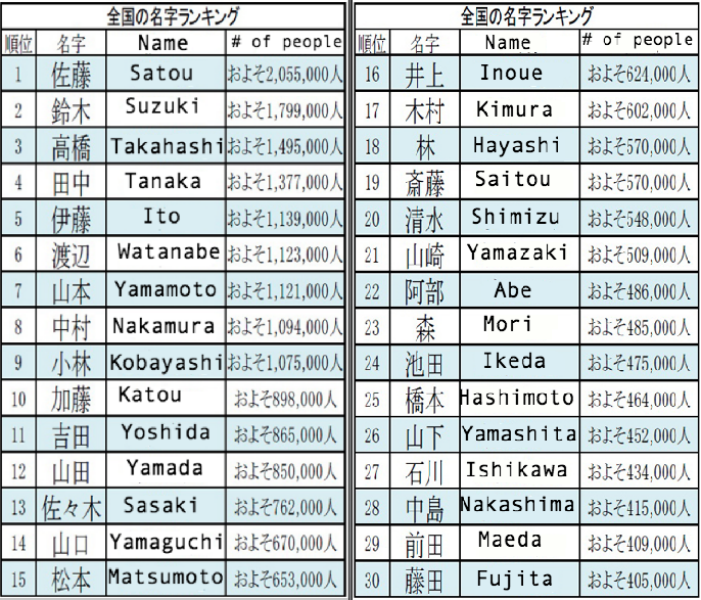
Let’s start out by taking a look at the top and bottom 30 names on Myoji-Yurai Net‘s database of the top 3,000 names.
▼ You’re probably already familiar with the top 30…
▼… but maybe not the bottom 30.
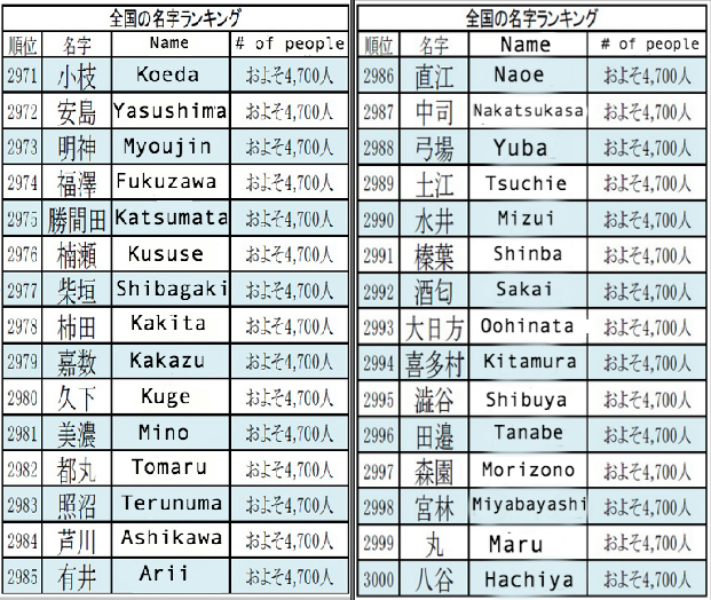
There are 2.055 million people in Japan with the most common name, Sato 佐藤; that’s about 1.5% of all Japanese people. The least common (of the top 3000), Hachiya 八谷, only has 4,700 users, a percentage so small, I’m not even going to bother doing the math.
If you take a look at the bottom 15 names, there might be a few that you recognize in romaji. But one tricky thing about Japanese names, is that the same Chinese characters can have different pronunciations, or vice versa. Myoji-Yurai Net is based on the characters, not the pronunciations. So the 60th most common name上田, has information for both the Ueda and Ueta pronunciations− it’s essentially the same name. However, a name like Shibuya 渋谷 (234th), if written in old-style characters 澁谷 (2,995th), is considered a different name. Or the name Sakai 酒井 (64th), if written as 酒匂, drops all the way down to 2,992nd, despite having the same reading!
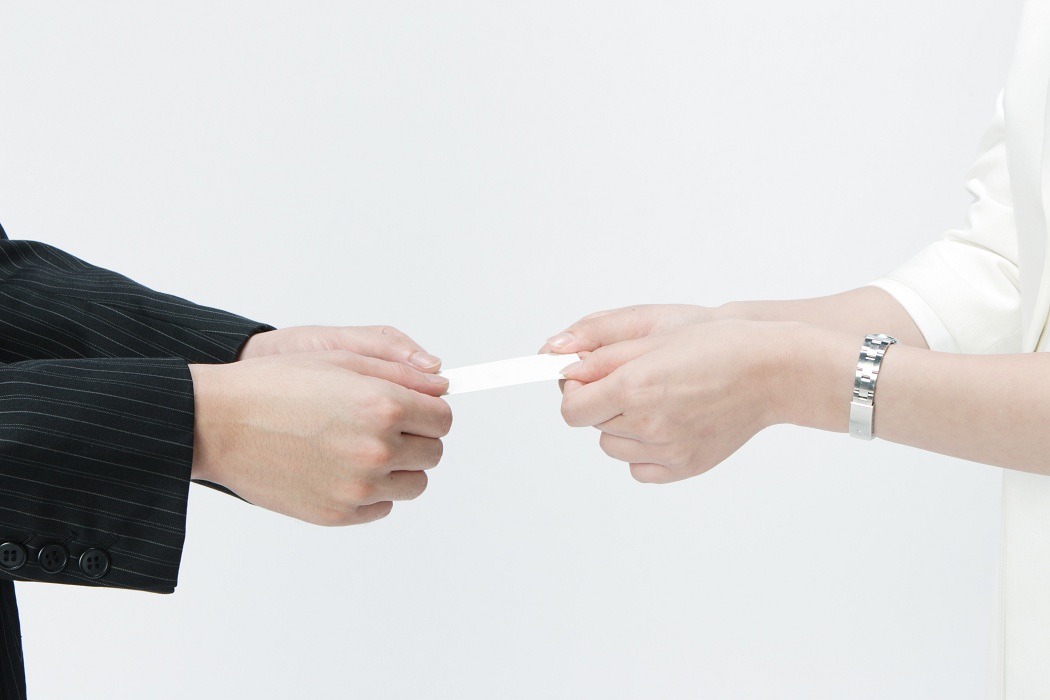
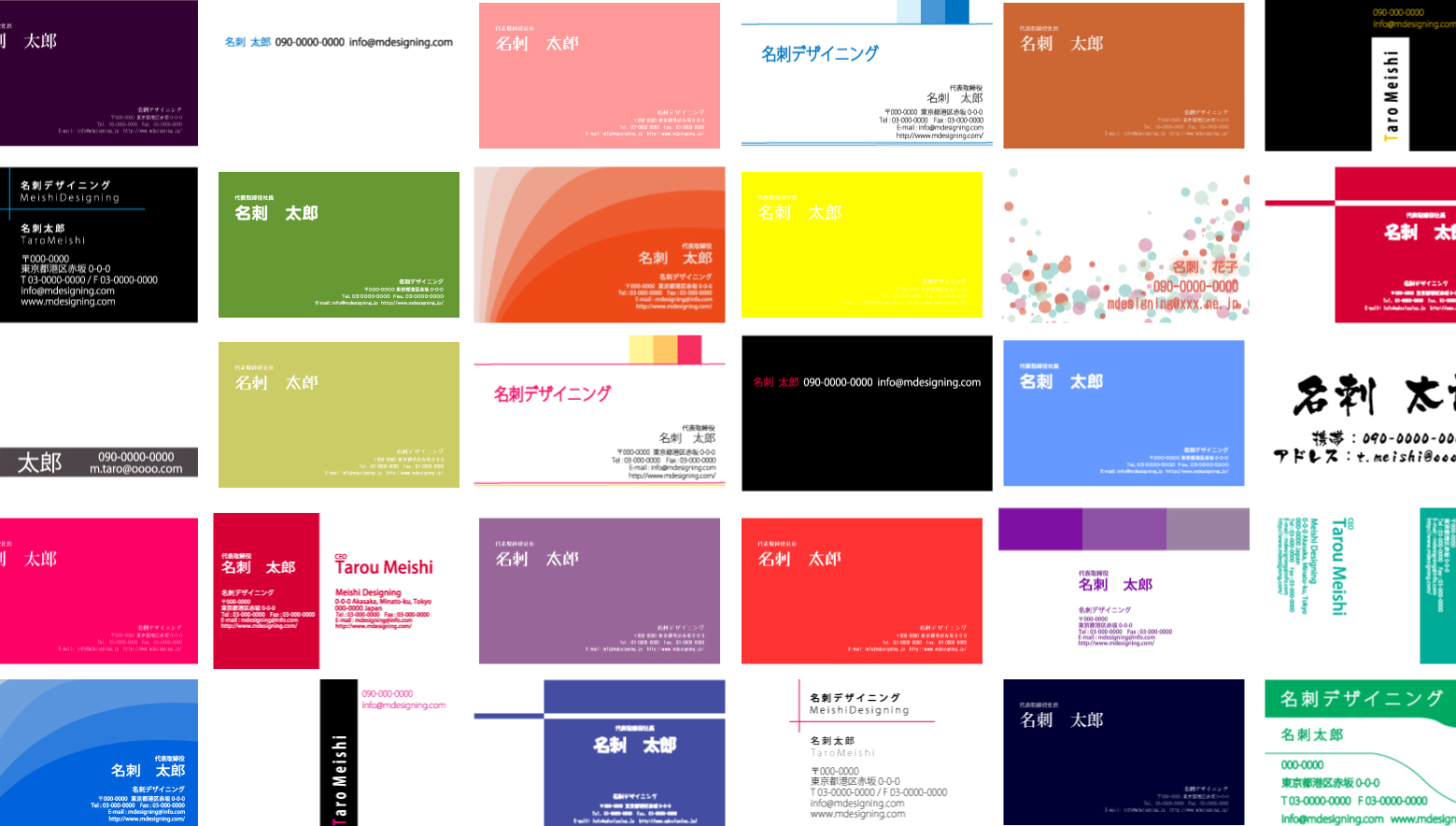
▼ Name cards are really useful for people with rare names or kanji.
Sometimes it can get really old to explain the reading or characters in your name if it isn’t common. You probably wouldn’t run into that problem as much if you lived in a region where your name isn’t as peculiar though. As mentioned above, some names are more prevalent in certain areas, but that doesn’t necessarily mean that today they are the most common in that place. Take for instance the 3,000th most common name (that is to say, not very common), Hachiya 八谷. This name originated in the Kamakura area of Kanagawa Prefecture. In modern day Japan, there are only about 4,700 people with that name, but apparently at some point a branch of Hachiyas moved across the country to Saga Prefecture. With 800 Hachiyas living there, it is the 214th most common name in Saga. Funny how that works!
Myouji-Yurai Net has a ton of interesting information about surnames, but unfortunately it’s only available in Japanese and focuses a lot on complicated history. But if any of our kanji-reading history buff followers find out any more interesting information, let us know in the comment section below. Or if you have a Japanese name, tell us how high it ranks.
Sources: Hachimakiko, Livedoor News
Images: JAS-SoCal, My Navi News (edited by RocketNews24), Shu Ueyama