
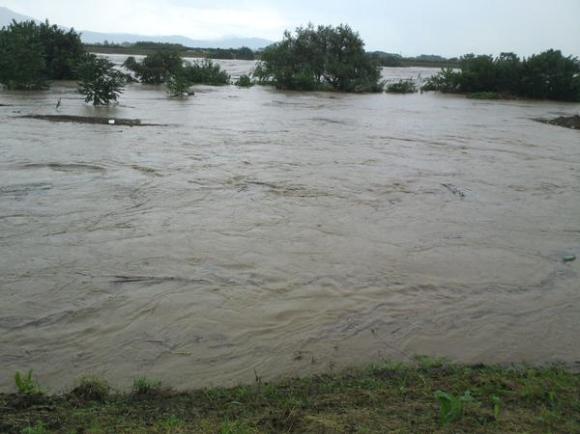
The flooding in Japan has been absolutely awful, without a doubt, and the news has rightly been focused on the resulting devastation. But there is one aspect of the flooding that’s become a bit of a hot topic online, aside from all the rescues and damage. The overflowing river has an…unusual name: Kinu River or the Angry Demon River.
Obviously, the name has proven to be quite apt this year, but it sparked a lot of discussion online as people have wondered: Where the heck did this name come from?!
Of course, when a river has such an evocative name as “the Angry Demon River,” it’s sure to get people’s tongues wagging. And that’s exactly what happened on Twitter, with numerous people discussing the origins (or at least the supposed origins) of the river’s name. There are any number of explanations, but there are two that are particularly common and compelling. The first is that it’s always had the name because its floods were like angry demons and the second is that it was originally called the “Silk River” or the “Cloth River” (the kanji for both “silk” and “cloth” are read “kinu”), but then changed to use the kanji for “angry demon” because of the violent floods.
Here are a few tweets by Japanese Twitter users discussing the river’s name.
爺ちゃん曰く、鬼怒川は昔何度も氾濫してたそうな。
— 🐣MOMO🐣 (@Bashy499) September 10, 2015
鬼が怒ったみたいに氾濫するから、『鬼怒川』らしい。 pic.twitter.com/fWspRyetyC
“According to my grandfather, the Kinu River used to overflow and flood often in the past. Apparently it’s called the ‘Angry Demon’ River because the flooding was like a demon that had gotten angry.”
さっき皆葉で撮ってきた鬼怒川の様子。聞いた話では、昔これ以上の水位になったこともあったとか。 pic.twitter.com/r9DX3cjYfV
— 茶村ニケ (@chamura2k) September 10, 2015
https://twitter.com/masahiko_nis/status/641803061111853058“Here’s a photo of the Kinu River, which everyone has been talking about, right now. Based on what I’ve heard, it used to reach even higher than this a long time ago.”
“The Kinu River is written as the ‘Angry Demon’ River, so it must have been a really scary river since long ago.”
鬼怒川っていつもは本当に静かな川で、昔は「絹川」とか「衣川」って呼ばれました。でも氾濫すると鬼が怒ったように荒れます。 pic.twitter.com/x5GtaIngkr
— rin (@r__nugsaw) September 10, 2015
“The Kinu River is usually a really quiet river, so a long time ago, it used be written with 絹 (kinu), the kanji for silk, or 衣 (kinu), the kanji for cloth. But when it floods, it’s so bad, it’s like an angry demon.”
鬼怒川って、元は”衣川”ってくらいの美しい川なんだが、暴れると酷い災害になるので”鬼が怒る川”ってなったそうなんだよ・・・ま、昔聞いた話なんで、自信ないけど(><;) 茨城に流れた鬼怒川の大水が、酷い事になりませんようにと祈るばかりです
— きつね (@kitune_amekonko) September 9, 2015
“The Kinu River is such a beautiful river that it was originally written with 衣 (kinu), the kanji for cloth, but it causes such awful natural disaster, that it became 鬼怒川 (“Kinugawa”), the Angry Demon River. Well, that’s what I heard a long time ago, but I’m not sure if it’s true. (><;) I’m just praying that the flood from the Kinu River flowing through Ibaraki doesn’t turn into anything too bad.”
▼ Photo of the flooding in Sojo, Ibaraki
スライドショー:茨城県常総市で鬼怒川が決壊http://t.co/xhCrlpws3N pic.twitter.com/UBC1RZZqJ7
— ロイター (@ReutersJapan) September 10, 2015
As you can see, there doesn’t seem to be a lot of agreement or consensus, but you should always take everything you read on the Internet with a grain of salt anyway, right? So, we decided to see if we could find anything like an official explanation for the river’s name. Fortunately, the website for the Shimodate Kasen Office of the The Ministry of Land, Infrastructure, Transport, and Tourism actually has a bit about the river’s name! Let’s see what they have to say.
“There have long been a number of origin stories for the Kinu River’s name. Apparently, long ago, both Ibaraki and Gunma Preferctures were one area called 毛野国 (Kenunokuni), and the river that flowed through it was called 毛野川 (Kenugawa or Kenunogawa), which is today what we call the 鬼怒川 (Kinugawa, or Kinu River). It’s said that in the Ibaraki dialect, the え (“e”) sound is replaced with the い (“i”) sound, and “Kenugawa” got changed to “Kinugawa.” It’s also said that at one point it was written 絹川 (“Kinugawa” or “Silk River”) or 衣川 (“Kinugawa” or “Cloth River”). The reason it is 鬼怒川 (“Kinugawa” or “Angry Demon River”) now is because when it floods, the normally quiet river develops vicious currents and boulders tumble around making loud noises, like a demon getting angry.”
Well, that’s…a little helpful. But at least it’s easier to understand why there’s so much confusion — even the official explanation goes back and forth! But considering the age of many of the place names in Japan are, it’s easy to see how some things could be lost to time.
Of course, the “Angry Demon” River isn’t the only extreme place name in Japan. There’s also 人喰い谷 (“Hitokuidani”) or the Valley the Eats People in Toyama Prefecture, 魔面 (“Maomote”) or the Demon’s Face in Akita Prefecture, 血流れ坂 (“Chinagaresaka”) or the Hill of Flowing Blood in Kanagawa Prefecture, and 地獄谷 (Jigokudani) or Hell Valley in Nagano Prefecture.
Of course, many of these places are also shinrei spots, places believed to be haunted by ghosts. So, if you do decide to take a visit, be sure to bring the Ghostbusters with you!
Sources: Togetter, Ministry of Land, Infrastructure, Transport, and Tourism (Shimodate Kasen Office)
Image: Twitter (@chamura2k)
 Single “Hebel Haus” is the only structure to defy the flooding of Japan’s Angry Demon River
 You can assemble a well-balanced team of Pokémon, them eat them, thanks to Japanese cake chain
 Japan’s full-facemask Ninja Parka still lets you eat ice cream[Photos]
 Pokémon and Ikea Japan cross over into each other’s worlds with collaboration events
 Starbucks Japan closing only Shinkansen platform branch for popularity-triggered renovations
 Licca-chan dolls released in North America for first time in nearly 60 years
 Can a downtown Tokyo super sento bathhouse beat a hotel for a one-night stay?
 Two food hacks take Japan’s convenience store fried chicken to amazing new sandwich heights
 Animal Crossing plushie pouch towels and cozy socks show up at Family Mart convenience stores
 Japan’s favorite popsicle is changing the way it tastes and feels for first time in over 20 years
 Japanese doll enthusiast shares photos of his “daughter” at Tokyo Disneyland and Disney Sea
 Tokyo’s best museum for foreign travelers finally reopens after being closed for four years
 Pokémon lacquerware series expands for Year of the Horse with new handcrafted design[Video]
 Tokyo subway and almost all Tokyo train lines now accepting credit card tap payments
 Totoro Fund line of beautiful artwork and apparel lets you help the real-world Totoro Forest
 Fading Tokyo – Searching for signs of the Showa era as local neighborhoods evolve[Photos]
 Famous Tokyo cherry blossom spot installs view-blocking screens to fight overcrowding[Video]
 Tokyo turns its phone booths into free Wi-Fi hotspots, and here’s how to use them
 Studio Ghibli adds new My Neighbour Totoro 2026 Corn Gift to its anime store for Mother’s Day
 Japan now has a special desk for people who work at home with a pet cat[Photos]
 Uniqlo announces new T-shirts for One Piece, Naruto and more for manga publisher’s 100th birthday
 Train station platform ramen store closes its doors on half a century of history in Tokyo
 Starbucks Japan releases new My Fruit³ Frappuccino at only 34 stores around the country
 Studio Ghibli releases Catbus pullback keychain that runs like the anime character
 Krispy Kreme releases Super Mario doughnuts in Japan for a limited time
 Japanese onsen egg maker from 100-yen store Daiso needs to be on your shopping list
 Nine great places to see spring flowers in Japan, as chosen by travelers (with almost no sakura)
 Survey asks foreign tourists what bothered them in Japan, more than half gave same answer
 Japan’s human washing machines will go on sale to general public, demos to be held in Tokyo
 Starbucks Japan releases new drinkware and goods for Valentine’s Day
 We deeply regret going into this tunnel on our walk in the mountains of Japan
 Studio Ghibli releases Kodama forest spirits from Princess Mononoke to light up your home
 Starbucks Japan releases new sakura goods and drinkware for cherry blossom season 2026
 Japan’s newest Shinkansen has no seats…or passengers [Video]
 Major Japanese hotel chain says reservations via overseas booking sites may not be valid
 Put sesame oil in your coffee? Japanese maker says it’s the best way to start your day【Taste test】
 No more using real katana for tourism activities, Japan’s National Police Agency says