
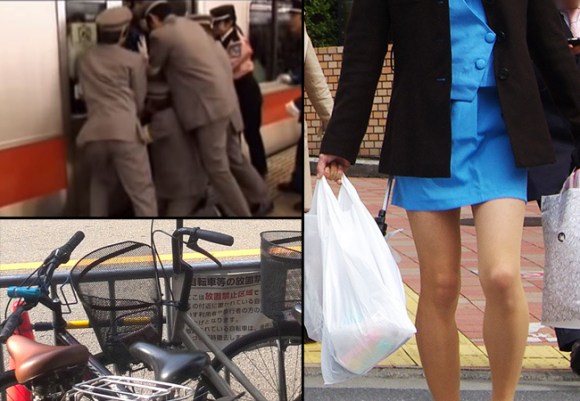
Last year about 5 million Chinese tourists visited Japan, and Chinese website NetEase was kind enough to compile a list of seven of Japan’s most unusual habits according to them.
These observations were listed in no particular order, and are just some examples of Chinese tourists’ individual experiences in Japan which may or may not reflect the way life is in all or any part of the country.
The annual tradition of hanami, when Japanese people take to cherry blossom-dense areas for fun and frivolity, is well known around the world, but some Chinese visitors were taken aback by how some of these alcohol-fueled get-togethers were done in close proximity to graveyards.
While this probably has happened in Japan, it is by no means a custom. And yet NetEase goes on to say “although a cemetery is a solemn place for Asian people, when spring comes Japanese people lay a blanket near a grave and start drinking and eating. They seem to feel happy enjoying the cherry blossoms together with their ancestors.”
▼ There might be some graves around there…tough to tell with so many people.
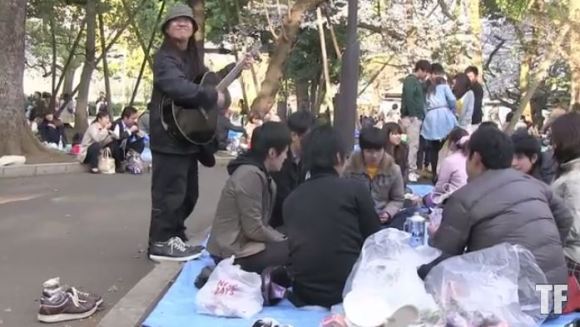 Image: YouTube/Tokyo Fashion
Maybe some visitors have confused other grave visiting occasions with a hanami. Often families will leave gifts of alcohol and food to the deceased while cleaning the grave. Certain common times like Obon exist for grave visits, but individual families may have their own time to do it which may coincide with the springtime hanami.
▼ A book on the art of proper grave maintenance
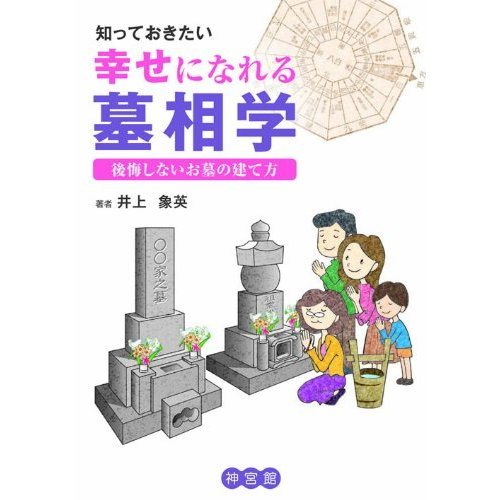 Image: Amazon
Yeah, they got Japan dead to rights on that one. Bikes do get parked all over the place with reckless abandon. This may just be an Osaka thing, but I’ve even seen entire cars parked square on top of sidewalks.
▼ That’s a “no-parking” notice there behind the tangled mess of parked bikes.
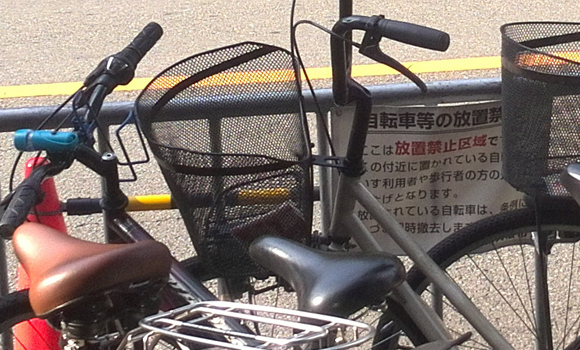 Photo: RocketNews24
However, in the case of bikes, rather than widespread civil disobedience I prefer to think of it as practical risk assessment. Bikes in Japan generally aren’t highly valued possessions, so the threat of getting it confiscated by the city is not a major concern.
Add to that the fact that a in some locations confiscation is only done after they attach a warning tag to your bike for 24 hours, there’s very little chance of actually losing your bike. Even if it does happen, you can either pay the 1,000 yen (US$8.42) or so release fee or just buy another bike for about 5,000 to 10,000 yen ($42-$84).
Meanwhile, if the municipal government is feeling like it needs some extra cash, it can also go on a bicycle harvest and collect the release fees or just sell them off. Since that’s not done very often, people don’t really raise a stink about it. It’s capitalism at its finest!
Busted again. Anyone who’s been to Japan has likely seen a middle-aged man out on the street or in a station dressed in a suit and sprawled out on the ground like a bit player in Reservoir Dogs. While for locals its an unfortunate but tolerated and common sight, for visitors to Japan it really does give the country a bad image.
An odd thing about the passed-out drunks is that they’re almost always salarymen. Rarely, if ever, do you see drunk college students, yakuza, construction workers, hostesses, so-called “yankees,” or otaku calling a trains station bench home for the evening. I’m sure that says a lot about society, but I’m not exactly sure what.
As someone from Canada, in a cute naive kind of way I’m occasionally asked if people there walk around wearing T-shirts in the winter, to which I reply “yes, sometimes” and explain that we call those people “lunatics.” And yet, while they assume that my nation’s people have some kind of super-human tolerance to cold, everywhere in Japan I see little kids dressed in very short shorts as part of their school uniform all through winter.
Also, as the Chinese visitors have pointed out, young women often forsake the warmth of thick fabric during winter for the fashion of miniskirts. Despite plunging temperatures, school girls’ skirts remain at an all-time high and the trend extends to women of all ages who – as ZZ Top put it – got legs and know how to use them.
▼ Even our writer Hatori Go, couldn’t help but get into the act
 Photo: RocketNews24
After struggling with reasons why Japanese women engage in such irrational behavior, the NetEase article finally assumed that they secretly wear special “heat-producing” underwear to compensate. I’m not sure if that is a reference to Uniqlo’s popular high insulation Heattech underwear or not. Also they fail to mention the deceptive skin-colored tights that are often employed as well.

I’m guessing much of the world is in agreement with Chinese people, that dubbing actors in movies is kind of lame. While subtitles can be a pain requiring your constant attention on the screen, it is still a superior cinematic experience to hear the actor’s original emotion in their voice no matter what language it is.
In Japan, however, dubbing is often the preferred method of movie watching. In fact, the voice actors involved in dubbing Hollywood greats sometimes become celebrities in their own right such as Tessho Genda who (along with his vast anime and video game resume) has consistently been the voice of Arnold Schwarzenegger, Sylvester Stallone, Steven Segal, Lawrence Fishburne, Samuel L. Jackson and legendary action hero Dan Aykroyd.
This one was a little shocking at first, as, having dined at fast food establishments often, I never noticed anything unusual compared to other countries. Luckily NetEase provided an example of these unspoken rules.
“In Japan they don’t give you ketchup with your fries unless you ask for it.”
Huh…I never noticed that before, but they’re right. None of the McDonald’s restaurants that I’ve visited in Japan have ketchup dispensers or packets set out for the taking. And no one has ever offered me ketchup. That’s never been a problem since I don’t like the stuff, but I can easily see how that would upset a tourist struggling with the Japanese language and wanting of ketchup. Time to fire up the old McComplaint app!
NetEase cited the classic video we’ve all seen of conductors pushing a sea of commuters into train cars as if they were loading one of those novelty cans of snakes.
And indeed overcrowding happens in Japan’s busiest of areas.
https://twitter.com/_Jiro70/status/534647830137159681But while these are far from an everyday sight in most of Japan, some commuters here certainly do engage in behavior that would cause one to lose a little faith in humanity.
Grown men can be seen cutting in front of elderly women as elderly women are seen knocking me to the ground. And all of this is just to claim a spot on a train pressed up against a bunch of sweaty strangers. It’s enough to make Max Mad look like brunch with the Prince Hans-Adam II of Liechtenstein.
And so those in seven nutshells are some of the odd things Chinese visitors see in Japan. While there seemed to have been occasional misunderstandings about Japanese customs, for the most part it highlighted some nuances of the culture that often go overlooked by those who lived here.
Source: Record China (Japanese)
Video: YouTube/Robin Louw
 Things you won’t believe Chinese tourists are buying in Japan: drugstore edition
 Is China’s don’t-go-to-Japan warning affecting tourist crowds in Shibuya’s Don Quijote?
 Is Kyoto less crowded with tourists after China’s don’t-go-to-Japan warning?【Photos】
 Top 30 tourist sites in Japan: the most popular sightseeing spots for overseas visitors
 McDonald’s Japan is bringing Mushroom Risotto Balls this autumn and people couldn’t be angrier
 Mt. Fuji decorated with a 500,000-flower pink carpet is Japan’s ultimate spring view
 30 Pikachus want to share a Tokyo hotel room with you that has separate Grass, Water, Fire spaces
 New Travelling Bento pouches turn your luggage into a Japanese lunch box
 Howl’s Moving Castle’s scene-stealing dog is here to clean your home as a plushie mop
 Pringles Chocolate, but with a Japanese twist, is the snack hack you should be trying right now
 Drink vending machines disappearing in Japan as number drops to lowest in 30 years
 New Japanese KitKats come in sakura flavour, with poetic symbolism for success
 New 7-Eleven sandwich goes viral in Japan, but is it everything it’s cracked up to be?
 Bear attack shelters going on sale in Japan as country experiences record-high number of incidents
 Japanese city paints well-known prostitution street bright yellow, adds fish art【Video】
 Japan reportedly adding Japanese language skill requirement to most common foreigner work visa
 Pokémon and Ikea Japan cross over into each other’s worlds with collaboration events
 Starbucks Japan closing only Shinkansen platform branch for popularity-triggered renovations
 You can assemble a well-balanced team of Pokémon, them eat them, thanks to Japanese cake chain
 Two food hacks take Japan’s convenience store fried chicken to amazing new sandwich heights
 7-Eleven Japan’s new baked-in-store sweet treat is only available in three parts of the country
 Man bites woman at cherry blossom park in Japan, dies shortly after
 Peanuts and Coke becomes a viral hit in Japan, but is it a trend worth joining?
 Can a downtown Tokyo super sento bathhouse beat a hotel for a one-night stay?
 Japan now has a special desk for people who work at home with a pet cat[Photos]
 Famous Tokyo cherry blossom spot installs view-blocking screens to fight overcrowding[Video]
 Uniqlo announces new T-shirts for One Piece, Naruto and more for manga publisher’s 100th birthday
 Train station platform ramen store closes its doors on half a century of history in Tokyo
 Starbucks Japan releases new My Fruit³ Frappuccino at only 34 stores around the country
 Krispy Kreme releases Super Mario doughnuts in Japan for a limited time
 Studio Ghibli releases Catbus pullback keychain that runs like the anime character
 Japanese onsen egg maker from 100-yen store Daiso needs to be on your shopping list
 Survey asks foreign tourists what bothered them in Japan, more than half gave same answer
 Japan’s human washing machines will go on sale to general public, demos to be held in Tokyo
 Starbucks Japan releases new drinkware and goods for Valentine’s Day
 We deeply regret going into this tunnel on our walk in the mountains of Japan
 Starbucks Japan releases new sakura goods and drinkware for cherry blossom season 2026
 Studio Ghibli releases Kodama forest spirits from Princess Mononoke to light up your home
 Japan’s newest Shinkansen has no seats…or passengers [Video]
 Major Japanese hotel chain says reservations via overseas booking sites may not be valid
 Put sesame oil in your coffee? Japanese maker says it’s the best way to start your day【Taste test】
 No more using real katana for tourism activities, Japan’s National Police Agency says
 Man orders nothing but a free smile from McDonald’s Japan using Uber Eats
 Japan’s 10 best cultural experience activities/tours, as chosen by travelers
 Day Two of our cycling trip across the Inland Sea on Japan’s amazing Shimanami Kaido
 How many have you seen? 18 must-visit sites in Japan 【World Heritage】
 Staying one step ahead of the tourist crowds with a visit to Japan’s main Mt. Fuji shrine【Photos】
 How to dress for summer in Japan: Tips from a rickshaw driver in Asakusa
 How to do an overnight bus trip to Kanazawa from Tokyo【Photos】 – Part 2