
Does Japan’s legal system force suspects to confess, even if they didn’t commit the crime?
Japan is known for being one of the countries with the lowest crime rate in the world. Numerous reasons are given for this such as the illegality of weapons, a smaller wealth gap, or unspoken rules of conduct that people live by.
But one other factor behind such low crime could have a darker reason to it: fear of the Japanese legal system.
Al Jazeera news recently put out a documentary on that very subject, showing one of the scarier parts of Japan that most people don’t have experience with. Here’s the trailer for the documentary, with the full video and highlights below:
This former prosecutor in #Japan admits to using abuse to extract confessions. We investigate: https://t.co/SRwv8t9Mnl pic.twitter.com/M5NkEiw6jS
— 101 East (@AJ101East) October 7, 2016
The documentary follows the story of Keiko Aoki, a woman who in 1995 was convicted of lighting her house on fire and intentionally murdering her daughter to collect life insurance money. Her conviction was based solely on her and her husband’s written confessions that they claimed were made under extreme duress.
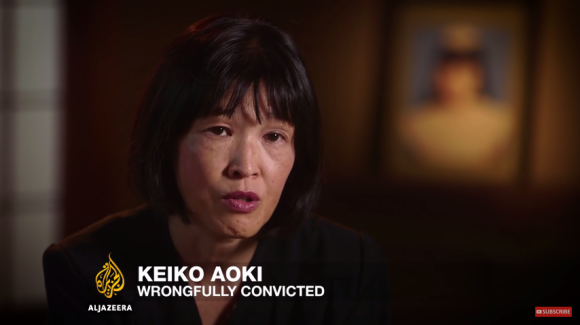
Keiko and her husband spent the next 20 years in jail, claiming they were innocent the entire time. It wasn’t until earlier this year that the verdict for their retrial was finally delivered, proclaiming them not guilty.
But why would someone confess to a crime they didn’t commit? Put simply, the documentary claims that the Japanese legal system is designed to extract confessions no matter what.
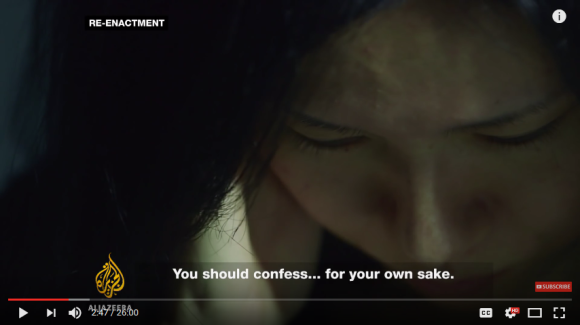
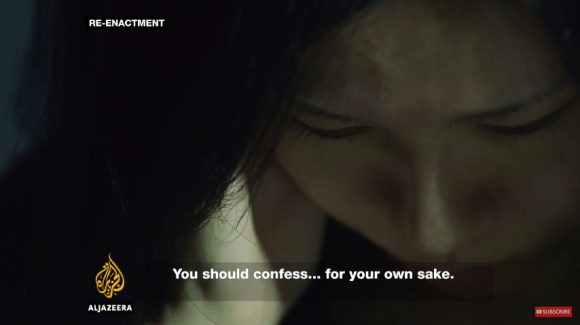
In Keiko’s case, she was held in an interrogation room with police investigators who constantly yelled and berated her for 12 hours straight. She was never allowed to see a lawyer. Eventually, she was told by police that her husband had already confessed to the crime, so she should too. Mentally destroyed, she gave up and wrote a confession dictated to her by police.
Keiko claims that confusion, exhaustion, and the guilt of not being able to save her daughter came together to make her admit to a crime she was innocent of.
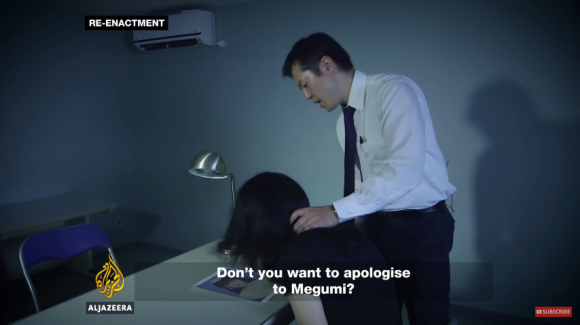
In Japan, anyone can be held by police for 23 days without being charged. Lawyers are not allowed in interrogation rooms, and police are not required to record any of the interrogation sessions. As Hiroshi Ichikawa, a former Japanese prosecutor described, investigators can just rotate in and out as they get tired of questioning the suspect, until he or she is so mentally exhausted that they will admit to anything to make it stop.
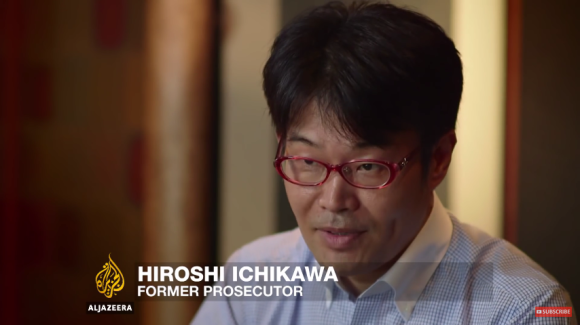
But why is the Japanese legal system so intense when it comes to extracting confessions from the accused? Hiroshi claims it’s because there’s immense pressure on police and prosecutors to obtain a guilty verdict. In a country with a near universal conviction rate, no one wants to be the only lawyer who failed to get a guilty verdict, so they’ll do anything to get it.
The documentary is very enlightening about a part of Japan that is rarely discussed. If you want to watch the full documentary, check it out on Al Jazeera’s website or official YouTube page.
When it comes to false convictions and innocent people behind bars, Japan is not alone. The U.S. and other developed countries have just as many – if not more – legal problems. But the only way any of them can change is by getting the word out that there is a problem in the first place, and this documentary is a great first step in letting people know that the system that is supposed to serve them is broken.
Source: YouTube/Al Jazeera English via Twitter@AJ101East
Images: YouTube/Al Jazeera English
 The Sayama Incident: Kazuo Ishikawa’s half-century struggle against a wrongful murder conviction and Japan’s backward legal system
 Japan reportedly adding Japanese language skill requirement to most common foreigner work visa
 Starbucks Japan closing only Shinkansen platform branch for popularity-triggered renovations
 You can assemble a well-balanced team of Pokémon, them eat them, thanks to Japanese cake chain
 Pokémon and Ikea Japan cross over into each other’s worlds with collaboration events
 Japan named most sleep-deprived country for fourth year in a row, according to survey
 Can a downtown Tokyo super sento bathhouse beat a hotel for a one-night stay?
 7-Eleven Japan’s new baked-in-store sweet treat is only available in three parts of the country
 Sailor Moon’s Artemis is part of the Artemis II NASA mission control team[Video]
 We tried 12 different gummy candies from a Japanese supermarket and found the most delicious one
 Pocky maker Glico talk about their cellular regeneration breakthrough and new candy at Expo 2025
 Tokyo’s best museum for foreign travelers finally reopens after being closed for four years
 Pokémon lacquerware series expands for Year of the Horse with new handcrafted design[Video]
 Two food hacks take Japan’s convenience store fried chicken to amazing new sandwich heights
 Tokyo subway and almost all Tokyo train lines now accepting credit card tap payments
 Totoro Fund line of beautiful artwork and apparel lets you help the real-world Totoro Forest
 Fading Tokyo – Searching for signs of the Showa era as local neighborhoods evolve[Photos]
 Famous Tokyo cherry blossom spot installs view-blocking screens to fight overcrowding[Video]
 Tokyo turns its phone booths into free Wi-Fi hotspots, and here’s how to use them
 Studio Ghibli adds new My Neighbour Totoro 2026 Corn Gift to its anime store for Mother’s Day
 Japan now has a special desk for people who work at home with a pet cat[Photos]
 Uniqlo announces new T-shirts for One Piece, Naruto and more for manga publisher’s 100th birthday
 Train station platform ramen store closes its doors on half a century of history in Tokyo
 Starbucks Japan releases new My Fruit³ Frappuccino at only 34 stores around the country
 Studio Ghibli releases Catbus pullback keychain that runs like the anime character
 Krispy Kreme releases Super Mario doughnuts in Japan for a limited time
 Japanese onsen egg maker from 100-yen store Daiso needs to be on your shopping list
 Nine great places to see spring flowers in Japan, as chosen by travelers (with almost no sakura)
 Survey asks foreign tourists what bothered them in Japan, more than half gave same answer
 Japan’s human washing machines will go on sale to general public, demos to be held in Tokyo
 Starbucks Japan releases new drinkware and goods for Valentine’s Day
 We deeply regret going into this tunnel on our walk in the mountains of Japan
 Studio Ghibli releases Kodama forest spirits from Princess Mononoke to light up your home
 Starbucks Japan releases new sakura goods and drinkware for cherry blossom season 2026
 Japan’s newest Shinkansen has no seats…or passengers [Video]
 Major Japanese hotel chain says reservations via overseas booking sites may not be valid
 Put sesame oil in your coffee? Japanese maker says it’s the best way to start your day【Taste test】
 No more using real katana for tourism activities, Japan’s National Police Agency says