
Recent rule that companies must disclose probabilities not yet added to Japanese App Store, perhaps due to cultural differences.
As an old-school gamer, the free-to-play video game model still feels a little weird to me, as it often seems to involve paying for upgrades that function as in-game time-savers/process-skippers, essentially making the game free to play, but something you have to pay in order to not play. I realize that’s an oversimplification, though. The sheer number of immensely popular games with microtransactions proves that a lot of consumers are comfortable with the system.
But the recent boom in loot boxes is proving especially controversial. With earlier microtransactions, you knew what you were buying, and therefore essentially purchasing content, just like paying for a game, albeit in very small chunks. The randomized nature of loot boxes, though, is a harder pill to swallow, even for newer gamers who’ve never known gaming without microtransactions, and has critics saying they’re no different from straight-up gambling.
The backlash has caused Apple to institute new transparency policies for games sold through its App Store…or at least it’s done so in certain markets, because in Japan, it appears iOS app developers are still allowed to keep customers in the dark about loot box odds.
In its latest update to the English-language page of the App Store Review Guidelines, under the Payments section, Apple lists six bullet points that developers must comply with to have their product sold through the site. The sixth, which was added this week, says:
“Apps offering ‘loot boxes’ or other mechanisms that provide randomized virtual items for purchase must disclose the odds of receiving each type of item to customers prior to purchase.”
However, pop over to the App Store Review Guidelines page for the Japanese-language App Store, and that sixth point, and its stipulations, are still nowhere to be found. So while Apple wants English-language developers to reveal the odds on their loot box content, developers in Japan are seemingly getting a free pass (as of this writing).
It’s possible that the Japanese page simply hasn’t been updated yet, but this could also be a reflection of the lower level of outrage towards randomized video game content purchases in Japan. Part of this might be linguistic.
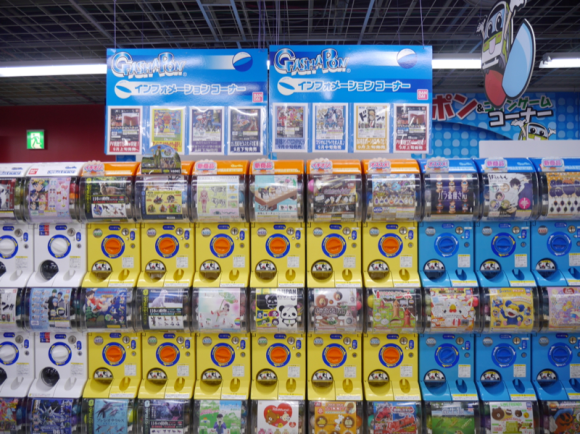
In Japan, such systems aren’t called “loot boxes” or anything that intrinsically implies valuable treasure. Instead they’re called “gacha,” onomatopoeia for “clunk,” coming from the sound made when a capsule drops out of on of Japan’s ubiquitous capsule toy machines (which are called “gachapon” or “gacha gacha”).
成田空港のガチャコーナー。「あまった小銭をオモチャに!」、「なぜか日本で売れてます(Why Japanese people like this!)」と、いい味出してるコメント。 pic.twitter.com/6LPOFH9JFL
— 隅野貴裕:Takahiro Sumino (@t_sumino) December 10, 2016
While you can find toy vending machines in other countries, in Japan they’re practically a cultural institution, and for the past several years grown adults are more the target market than little kids, meaning that even many adults who’re part of a fan community periodically buy things at random.
There’s also the fact that while microtransactions, and thus loot boxes, have risen in prominence in Western gaming along with a spurt in the number of casual gamers, in Japan many popular games with randomized content purchases are targeted at the hard-core otaku market, a demographic that doesn’t typically balk at the idea of spending a lot of cash as long as, in the end, it gets what it wants. Sure, a game might nickel and dime them as they make multiple paid gacha attempts to get the rare card of their favorite character in her special limited-time seasonal outfit, but what’s a few hundred yen here and there for someone who’s already planning on dropping several thousand for a high-grade figure from the same series?
Again, it might be that Apple just hasn’t gotten around to updating the Japanese App Store’s guidelines yet, and that a similar disclosure directive is coming soon for Japanese developers. For the time being, though, it looks like developers still have the option of keeping their loot box odds a secret.
Source: Apple App Store (1, 2) via IT Media
Top image: Pakutaso
Insert image ©SoraNews24
Follow Casey on Twitter, where he still regrets buying that random Final Fantasy key chain and ending up with a character from Type-0.
 Final Fantasy publisher Square Enix receives death threat from gamer angry at loot boxes/gacha
 Anime girls are waiting for you to tell them about your real-life poo for new game’s microtransactions
 Apple would rather you not blow up teen couples on your iPhone, asks developer to edit video game
 League of Pokémon? Fans aren’t too happy about new Pokémon MOBA game from China’s Tencent【Video】
 New Nintendo capsule toys put video game history in your hand with mini NES, Famicom controllers
 Wisteria season starts early with blooming of Japan’s Great Wisteria in its beautiful garden
 Japan’s best conveyor belt sushi restaurant of seven years ago has now, finally, come to Tokyo
 Starbucks Japan releases FIVE new Frappuccinos in a day, and we try them all in 90 minutes
 Japanese government wants overseas anime market to roughly triple in 10 years, but are they crazy?
 Fading Tokyo – Horikiri Station, the Arakawa River, and Kinpachi-sensei[Walking course]
 Japanese trains in Sapporo might be better than those in Tokyo, thanks to one special feature
 Mt. Fuji decorated with a 500,000-flower pink carpet is Japan’s ultimate spring view
 Pringles Chocolate, but with a Japanese twist, is the snack hack you should be trying right now
 Yoshina invites you to give the gift of beef bowls this Mother’s Day
 The top 8 fast food chains in Japan
 Japan reportedly adding Japanese language skill requirement to most common foreigner work visa
 Lawson convenience store at popular tourist site is one of the most unusual in Japan
 30 Pikachus want to share a Tokyo hotel room with you that has separate Grass, Water, Fire spaces
 You can assemble a well-balanced team of Pokémon, them eat them, thanks to Japanese cake chain
 Man bites woman at cherry blossom park in Japan, dies shortly after
 7-Eleven Japan’s new baked-in-store sweet treat is only available in three parts of the country
 Starbucks Japan closing only Shinkansen platform branch for popularity-triggered renovations
 Pokémon and Ikea Japan cross over into each other’s worlds with collaboration events
 Japan now has a special desk for people who work at home with a pet cat[Photos]
 Famous Tokyo cherry blossom spot installs view-blocking screens to fight overcrowding[Video]
 Uniqlo announces new T-shirts for One Piece, Naruto and more for manga publisher’s 100th birthday
 Train station platform ramen store closes its doors on half a century of history in Tokyo
 Starbucks Japan releases new My Fruit³ Frappuccino at only 34 stores around the country
 Krispy Kreme releases Super Mario doughnuts in Japan for a limited time
 Japanese onsen egg maker from 100-yen store Daiso needs to be on your shopping list
 Survey asks foreign tourists what bothered them in Japan, more than half gave same answer
 Japan’s human washing machines will go on sale to general public, demos to be held in Tokyo
 Starbucks Japan releases new drinkware and goods for Valentine’s Day
 We deeply regret going into this tunnel on our walk in the mountains of Japan
 Starbucks Japan releases new sakura goods and drinkware for cherry blossom season 2026
 Studio Ghibli releases Kodama forest spirits from Princess Mononoke to light up your home
 Japan’s newest Shinkansen has no seats…or passengers [Video]
 Major Japanese hotel chain says reservations via overseas booking sites may not be valid
 Put sesame oil in your coffee? Japanese maker says it’s the best way to start your day【Taste test】
 No more using real katana for tourism activities, Japan’s National Police Agency says