
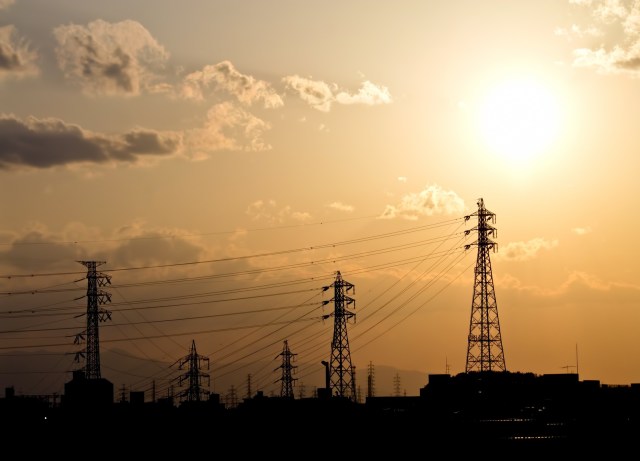
The move is intended to minimize damage during natural disasters, but is it too little too late?
No matter where you travel in Japan, you’re likely to see one familiar sight wherever you go—utility poles, threaded together by thick power cables. These cables carry electricity all over the country and are much cheaper to install and reach for repairs than their underground counterparts. A country that works late into the night and begins again early the next morning needs a stable system to transport all that power to where it’s needed. But unfortunately, overhead power lines aren’t without their risks. They’re easily threatened by natural disasters like earthquakes, typhoons, and tsunamis, which can dislodge them and disrupt power service on a huge scale.
So why is Japan still using them? Well, the issue is that changing from overhead to underground power lines is no small feat, and it has an appropriately huge price tag to match. Though talk of removing power lines have increased in surrounding the Tokyo Olympics, the huge utility poles are still looming all over Japan. It takes time not only to remove the power cables themselves but also to implement new cables into an underground system that already includes a thriving network of water and gas pipes.
The Ministry of Land, Infrastructure, Transport, and Tourism has, however, announced a new plan to eliminate 4,000 kilometers (2485.48 miles) of overhead power cables at sites across the nation by 2025. Their priority will be areas around roads that help to transport goods in the case of emergency situations, as well as cables along roads leading to World Heritage Sites and other popular tourist destinations. They cited improved disaster response and beautifying the landscape as the motivating factors behind the plan.
▼ Citizens often complain about the clutter of utility poles and cables alike.
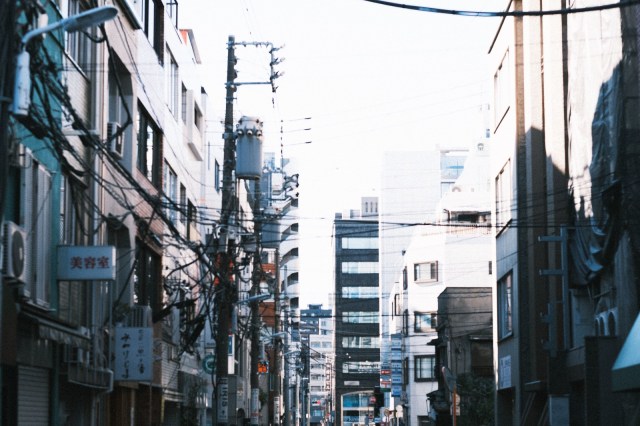
Running counter to this is the fact that around 70,000 new utility poles are installed every year. The government assures that they will be interacting with power companies to try to bring this number down and seek out alternatives for transmitting energy across the nation.
The issue of power cables has earned much more attention in recent years, especially after a typhoon in September 2019 that left vast areas of Chiba prefecture without power. While the new plan aims to address critical areas for disaster response, citizens have criticized both the relatively small scale of the cable removal and the long window of projected time it will take to even remove that. On the other side of the debate, there are also people staunchly against the implementation of underground cables, who imply that the much greater ease of repair to overhead lines more than offsets their higher risk of being damaged in the first place.
“Just 4,000 kilometers? Isn’t it way too late for that? And when are they planning to start? Hurry up and get it over with already!”
“The Ministry of Finance better not get in the way of this. Heck, they should double their budget for it.”
“This is just gonna make it even harder to restore power after earthquakes or natural disasters. Stop this plan.”
“It’s not exactly encouraging to think that it’ll take five years just to get rid of 4,000 kilometers…”
For every person who complains about how ugly the overhead cables look, there is another arguing that the utility poles supporting them are important to mark streets or provide light. The ultimate fate of Japan’s overhead power cables remains in the dark for now, but we’re eager to see how what changes may happen in the next four years.
Source: NHK News Web via Otakomu
Top image: Pakutaso
Insert image: Pakutaso
● Want to hear about SoraNews24’s latest articles as soon as they’re published? Follow us on Facebook and Twitter!
 Japanese communities giving their skylines a spring clean and saying goodbye to power lines
 Tokyo government planning to ban overhead power lines in new housing developments
 Krispy Kreme releases Super Mario doughnuts in Japan for a limited time
 Ramen restaurant in top Tokyo tourist neighborhood skips price gouging, but how does it taste?
 7-Eleven Japan releases a crazy new viral sandwich: Chocolate Sprinkles and Whipped Cream
 Japan’s ministry of economy reminds us to “use sound judgment” before buying toilet paper
 Public restrooms in Osaka to get in-stall video screens with ads
 Ghibli Museum building becomes a cuddly cushion
 Japan now has a “for foreign tourists only” Mt. Fuji sightseeing train[Video]
 Godiva now makes tofu in Japan, and sakura chocolate tofu too![Taste test]
 Senkoji: The Japanese temple that’s more like a theme park to heaven and hell
 Starbucks Japan releases new My Fruit³ Frappuccino at only 34 stores around the country
 Japanese onsen egg maker from 100-yen store Daiso needs to be on your shopping list
 Tokyo government organizes food truck event to clear out delinquent/homeless teen gathering area
 Cherry blossoms begin blooming in Japan with record-early starts for sakura season
 Nine amazing off-the-beaten-path cherry blossom spots in Japan for yaezakura and shidarezakura
 Stunning central Japan wisteria festival is like a purple fantasy straight out of a Ghibli movie
 Create a tiny Ghibli anime world on your bookshelf with new miniature papercraft art kits
 Studio Ghibli releases the My Neighbour Totoro tea caddy, with a magical self-closing lid
 When will the cherry blossoms reach full bloom in Japan this year?[Forecast]
 Starbucks Japan unveils new sakura cherry blossom collection for hanami season 2026
 Train station platform ramen store closes its doors on half a century of history in Tokyo
 Studio Ghibli releases Catbus pullback keychain that runs like the anime character
 Nine great places to see spring flowers in Japan, as chosen by travelers (with almost no sakura)
 Starbucks Japan releases first-ever Hinamatsuri Girls’ Day Frappuccino
 Studio Ghibli adds new Mother’s Day gift sets to its anime collection in Japan
 Virtual idol Hatsune Miku redesigned with look that adds new elements and brings back old ones
 Survey asks foreign tourists what bothered them in Japan, more than half gave same answer
 Japan’s human washing machines will go on sale to general public, demos to be held in Tokyo
 Starbucks Japan releases new drinkware and goods for Valentine’s Day
 We deeply regret going into this tunnel on our walk in the mountains of Japan
 Studio Ghibli releases Kodama forest spirits from Princess Mononoke to light up your home
 Starbucks Japan releases new sakura goods and drinkware for cherry blossom season 2026
 Japan’s newest Shinkansen has no seats…or passengers [Video]
 Major Japanese hotel chain says reservations via overseas booking sites may not be valid
 Put sesame oil in your coffee? Japanese maker says it’s the best way to start your day【Taste test】
 No more using real katana for tourism activities, Japan’s National Police Agency says