Tokyo will look different when people look up under proposed ordinance.
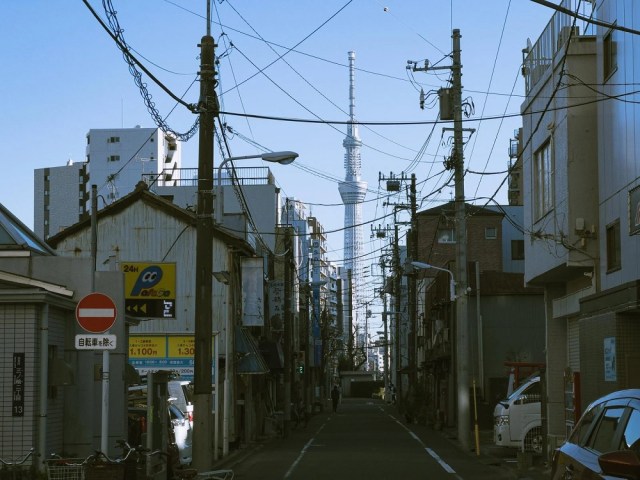
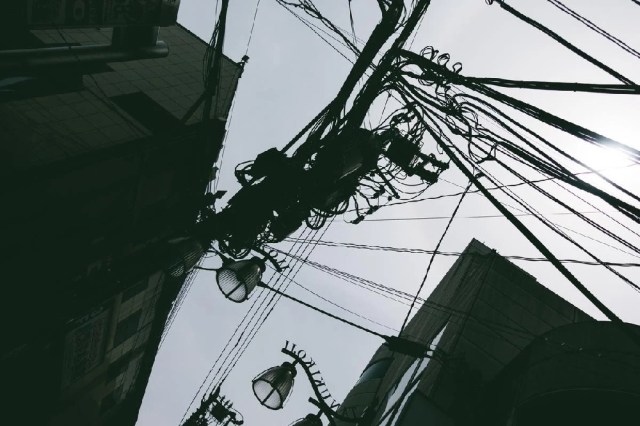
Crane your head back or shift your gaze upward while walking around Tokyo, and the first thing you see might not be the city’s famous neon signage or giant video screens, but a whole bunch of power lines. Exposed lines, strung from pole to pole, have long been the norm in Japan, but the Tokyo metropolitan government wants that to change, and is looking to prohibit them in new housing developments.
The proposal was announced on September 24 during a Tokyo Metropolitan Assembly meeting. As of 2017, the Tokyo government already prohibits the installation of overhead power lines along new metropolitan-administered roads but the new ordinance, if enacted, would be the first in Japan to restrict residential property developers from using them in new projects, even on privately maintained roads.
While some initiatives to move power lines underground are part of efforts to improve aesthetics or preserve cultural legacies in historical neighborhoods, safety is the concern behind the Tokyo ordinance draft. Earthquakes are common occurrences in Japan, and if a quake is strong enough that it requires residents to evacuate and/or emergency service workers to deploy, then it might also be strong enough to have knocked over power poles, blocking road access into and out of the affected area.
So why doesn’t all of Japan’s electricity come from underground lines already? As we’ve discussed before, earthquakes aren’t the only form of disaster that Japan has to deal with. Though not as common, floods and landslides occur too, and in those cases the water and debris left behind can make it difficult to access subterranean power grids and restore electricity, hampering on-site relief efforts and making it more difficult for residents to return to their homes after the danger has passed. Then there’s the cost, which can be several times higher for underground lines as it is for overhead ones.
The Tokyo metropolitan government does offer subsidies to property developers putting in underground lines, with as much as 40 million yen (approximately US$270,000) depending on specific circumstances. Tokyo Governor Yuriko Koike is unsatisfied with the rate of conversion, though, saying “We will be taking measures to accelerate the reduction of existing overhead power lines and prevent the installation of new ones.”
Some developers having continued to opt for overhead power lines despite the subsidies would suggest that the amount offered isn’t always enough to cover the costs of a subterranean system, and so the proposed ordinance could potentially lead to higher housing costs as developers pass along the extra expenses to apartment renters and homebuyers.
The Tokyo Metropolitan Assembly says that it will be accepting comments from the public regarding the ordinance until October 24, one month from the plan’s announcement, and then making its decision. If the ordinance is enacted, it will initially affect the areas of Tokyo’s 23 wards inside of Route 7, where earthquake concerns are particularly pronounced, and later expand to all of Tokyo.
Source: Mainichi Shimbun via Jin, NHK News Web
Top image: Pakutaso
Insert images: Pakutaso
● Want to hear about SoraNews24’s latest articles as soon as they’re published? Follow us on Facebook and Twitter!


Japanese government plans removal of around 2,485 miles’ worth of overhead power lines
Why does Japan have so many overhead power lines?
Japanese communities giving their skylines a spring clean and saying goodbye to power lines
Tokyo proposes new law cracking down on requests for teens to share nude selfies online
End-of-the-Line Exploring in Japan: Tokyo’s Mita Line can give you all the nothing you want【Pics】
Tokyo subway installing new ticket gates that don’t accept payment through Suica or other IC cards
New Shinkansen luggage drop-off system begins in Japan, making train travel even easier
99-year-old woman rescued while attempting to climb Mt. Fuji
Which country’s foreign tourists spend the most money per-person in Japan? Hint: Not the U..S. or China
Starbucks Japan adds a new summer Frappuccino to the menu, but is it as refreshing as it looks?
Kodama Shinkansen trains on popular Japan route get a whole new look this winter
Starbucks Japan releases a miniature display rack so you can create your very own store at home
Eight great words for talking about summer in Japan in Japanese
Foreign hiker on Mt. Fuji loses consciousness and dies, becoming climbing season’s second fatality
Studio Ghibli releases anime T-shirts that pay homage to one of Hayao Miyazaki’s most personal films
Japan now has human refrigerators inspired by Japanese vending machines
Hatsune Miku collaborates with Hokusai’s art in new Vocaloid ukiyo-e illustration series [Pics]
Japanese convenience store releases Japanese convenience store-flavor fried chicken
Family Mart’s new Tokyo flagship convenience store doesn’t feel convenient, but is that a problem?
Starbucks Japan releases new Discovery Series collection celebrating local regions and traditions
Teen girl in Japan refuses to be victim, personally escorts train pervert to police for arrest
Is Japan’s tourism boom slowing down? Foreign visitor numbers fall for first time in five years
Starbucks Japan releases exclusive new Bearista collection…with beary cute details
Studio Ghibli has a new anime out, and there’s only one place in the world where you can see it
Japan announces sudden 400-percent increase in visa fees for foreigners entering the country
Salomon releases Japan-exclusive Mt. Fuji hiking gear that doubles as an amazing souvenir
Japan triples departure tax, foreign tourists and locals now must pay more to leave country
Japan launches first overnight Shinkansen bullet train between Tokyo and Osaka this summer
Family Mart opens new “Famima” flagship store in Tokyo that’s like a tourist attraction
Japan’s human washing machines will go on sale to general public, demos to be held in Tokyo
Starbucks Japan releases new drinkware and goods for Valentine’s Day
Starbucks Japan releases new sakura goods and drinkware for cherry blossom season 2026
Japan’s newest Shinkansen has no seats…or passengers [Video]
Japanese ninja certification exam attracts 131 candidates from Japan and abroad
Put sesame oil in your coffee? Japanese maker says it’s the best way to start your day【Taste test】
Japan reportedly adding Japanese language skill requirement to most common foreigner work visa
Tokyo government to give smartphones to senior citizens, pay for their calling and data plans
Tokyo Electric Power Company admits it knew earthquake sensors are broken at Fukushima power plant
Tokyo Electric Power Company airs first commercial since Fukushima disaster, creates new mascot
Tokyo’s latest plan to boost birth rate: Pay people 100,000 yen per baby they give birth to
Japanese government plans to pay women who move out of Tokyo to get married 600,000 yen【Report】
Tokyo’s downtown Chuo Line now has first-class Green Car carriages for no additional cost to ride
These are Tokyo train lines people most want to live along【Survey】
Japanese government suspends plan to pay Tokyo women 600,000 to move away to get married
The last of the Mohican-hairstyle-wearing people still lining up for iPhones
Japanese government reveals new hot spring symbol for foreign tourists ahead of Tokyo Olympics
Tokyo government announces new name for maternity/paternity leave, hopes to change attitudes
Is overtime work in Tokyo going to get worse thanks to the Olympics’ new last train schedules?
Tokyo partially shut down busiest train line, 3,200 workers fought clock on platform project【Vid】
Tokyo trains set to become less convenient with new last train schedule