
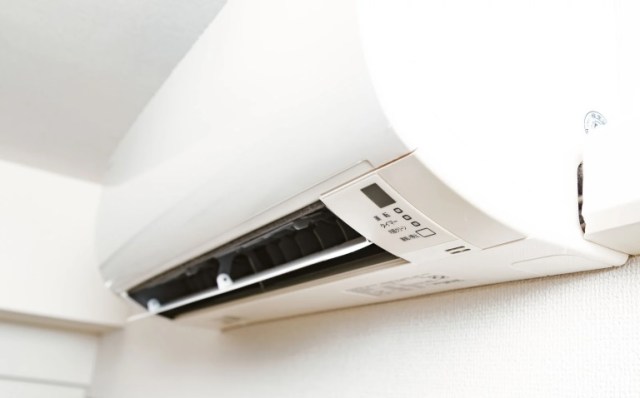
Summer in Japan will always be hot and humid, but your apartment doesn’t have to.
Summer is hot and humid in Japan, and this year especially so. So it’s kind of surprising that in a recent survey from air conditioner manufacturer Daikin, quite a few people said they don’t like running their air conditioner in the summer.
Daikin collected responses from 1,046 people between the ages of 20 and 69, with about one in three saying that they keep their AC off during the summer. When asked why, the two most common responses were the electricity costs of running the AC and “hadasamusa,” which translates literally to “cold skin” and refers to an unpleasant chilly sensation.
You’ll notice, though, that neither of those reasons necessarily means that the person feels comfy with the AC off. So thankfully Daikin has some pointers for how to use your air conditioner to make your living space feel cool but not cold, and also how to keep your electricity costs down. And while it’s Daikin doling out the advice, it applies to pretty much any and all air conditioning units available in Japan, not just the ones Daikin makes. If you grew up in a country where centralized AC is the norm, like the U.S., these tips could be lifesavers if you’re transitioning to living in Japan right now.
1. Make sure your AC’s external equipment has an unimpeded air flow
▼ You want it to look like the picture on the left, not the one on the right.

Japanese air conditioners tend to have two parts: the interior equipment (the vents inside your apartment that blow out cold air) and the external equipment (the compressor and exhaust). Generally, the external equipment will be on your balcony, but given the compact size of Japanese homes, you might have some assorted clutter out there too. If you are storing stuff on the balcony, though, you’ll want to make sure that’s it’s not covering the air conditioner’s air intake or exhaust, though. Keeping those unobstructed and freely flowing is key to keeping the air blowing properly from the AC vents in your interior, which is critical for avoiding wasted electricity.
2. Clean your interior filters
▼ Again, left picture good, right picture bad.
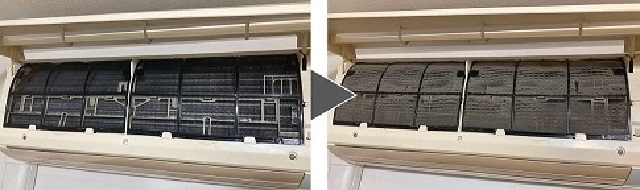
The interior part of your unit has filters inside of it, and there should be an access panel that you can flip open or remove (the exact method varies by unit, but should be diagrammed in the instruction manual). Over time, these filters will fill up with dust and other airborne debris and keep the full amount of air from blowing out, with that inefficiency translating to wasted energy and a higher electricity bill since the AC is having to work harder to cool the room. Daikin recommends opening up the access panel and cleaning the filters once every two weeks, but even a single summertime cleaning goes a long way, so it’s something you’ll want to do at least once per season (preferably in the spring, but better late than never).
3. Angle of attack
▼ This time the image on the right is what you want to do.

Japanese air conditioners are usually mounted up near the ceiling and allow you to select the angle at which the air blows out (most commonly through buttons on the AC’s remote control). You might be tempted to point the vents down at yourself so that the cold air hits you ASAP, but Daikin recommends the exact opposite: keep the AC blowing out horizontally.
Since hot air rises, prior to turning on the AC the temperature is going to be higher up near the ceiling that it is down on the floor. Shooting the cold air downward at a steep angle is going to make the temperature gap even bigger, and that’s going to create humidity. As anyone who’s been through a Japanese summer can tell you, it’s the mugginess that can really make things brutal, more so than the heat. By keeping your AC blowing out horizontally, you’ll even out the temperature throughout the room, and the uniform conditions will help keep you from feeling sweaty and clammy, and as an added bonus, not getting hit directly with cold air will also alleviate that unwanted chilly hadasamusa sensation.
4. Get to know joshitsu unten
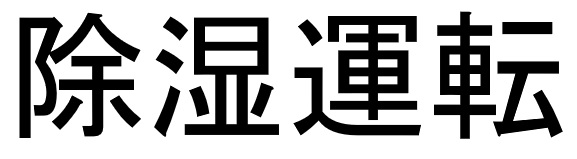
There can be a lot of buttons on Japanese AC remote controls, and a lot of them are labeled with words that might not have come up in a Japanese language class. One of the first ones you’re going to want to familiarize yourself with, though is joshitsu unten / 除湿運転, or the dehumidifier function.
Like we talked about above, “It’s not the heat, it’s the humidity” might be a cliche, but it’s also the absolute truth about summer in Japan. So pretty much all modern AC units sold in Japan now have not only cooling functions, but dehumidifying ones too. If the conditions inside your apartment are sweaty but not necessarily hot, hit the 除湿運転 and your AC will give you some relief without drastically dropping the temperature. Many AC units also have a jidou unten (自動運転), or “automatic operation,” function, in which it’ll automatically combine dehumidifying and mild cooling in the necessary proportions to maximize comfort.
Depending on how sensitive you are to the heat and humidity, we can’t promise that following these tips will leave you completely unbothered by the summer weather, but they’ll definitely make it a lot more bearable, especially if you throw in the occasional Gaburi Peach Frappuccino or giant shaved ice with fire for some extra cooling.
Source: Newscast
Top image: Pakutaso
Insert images: Newscast, SoraNews24
● Want to hear about SoraNews24’s latest articles as soon as they’re published? Follow us on Facebook and Twitter!
[ Read in Japanese ]
Follow Casey on Twitter, where he actually has no complaints about Japan’s hot summer nights.
 Here’s one of the first things you should do if you just moved into a new apartment in Japan
 Japan’s intense heat wave has killed 79 people in Tokyo
 Japan’s new wearable air conditioner belt is here just in time for the Tokyo heat wave
 Japan’s semi-functional air conditioner capsule toys promise to help us cope with the summer heat
 10 tips to help you survive the Japanese summer
 Japan reportedly adding Japanese language skill requirement to most common foreigner work visa
 Japanese manhole lid raises eyebrows with fertility god symbol that looks like… well, you know
 New Japanese KitKats come in sakura flavour, with poetic symbolism for success
 New 7-Eleven sandwich goes viral in Japan, but is it everything it’s cracked up to be?
 Ultra-realistic cat latte art blows us away, puts us off our coffee
 Haku is…Chihiro’s dead brother? Studio Ghibli fans blown away by Spirited Away theory
 Tokyo Station staff share their top 10 favorite ekiben
 How to put together a senbero drinking/snack session at Japan’s 100-yen convenience store【Photos】
 Foreign man arrested for walking on Shinkansen tracks, claims he was on the run from yakuza
 Schoolkids learn life skills through shopping field trips at street markets in Kochi Prefecture
 Pokémon and Ikea Japan cross over into each other’s worlds with collaboration events
 Starbucks Japan closing only Shinkansen platform branch for popularity-triggered renovations
 Two food hacks take Japan’s convenience store fried chicken to amazing new sandwich heights
 You can assemble a well-balanced team of Pokémon, them eat them, thanks to Japanese cake chain
 Fading Tokyo – Searching for signs of the Showa era as local neighborhoods evolve[Photos]
 Pokémon lacquerware series expands for Year of the Horse with new handcrafted design[Video]
 Tokyo turns its phone booths into free Wi-Fi hotspots, and here’s how to use them
 Tokyo teahouse serves up a sakura matcha dessert you won’t find anywhere else
 Totoro Fund line of beautiful artwork and apparel lets you help the real-world Totoro Forest
 Japan now has a special desk for people who work at home with a pet cat[Photos]
 Famous Tokyo cherry blossom spot installs view-blocking screens to fight overcrowding[Video]
 Uniqlo announces new T-shirts for One Piece, Naruto and more for manga publisher’s 100th birthday
 Train station platform ramen store closes its doors on half a century of history in Tokyo
 Starbucks Japan releases new My Fruit³ Frappuccino at only 34 stores around the country
 Studio Ghibli releases Catbus pullback keychain that runs like the anime character
 Krispy Kreme releases Super Mario doughnuts in Japan for a limited time
 Japanese onsen egg maker from 100-yen store Daiso needs to be on your shopping list
 Survey asks foreign tourists what bothered them in Japan, more than half gave same answer
 Japan’s human washing machines will go on sale to general public, demos to be held in Tokyo
 Starbucks Japan releases new drinkware and goods for Valentine’s Day
 We deeply regret going into this tunnel on our walk in the mountains of Japan
 Studio Ghibli releases Kodama forest spirits from Princess Mononoke to light up your home
 Starbucks Japan releases new sakura goods and drinkware for cherry blossom season 2026
 Japan’s newest Shinkansen has no seats…or passengers [Video]
 Major Japanese hotel chain says reservations via overseas booking sites may not be valid
 Put sesame oil in your coffee? Japanese maker says it’s the best way to start your day【Taste test】
 No more using real katana for tourism activities, Japan’s National Police Agency says
 Sony’s wearable air conditioners selling like cold cakes in heat-stricken Japan