
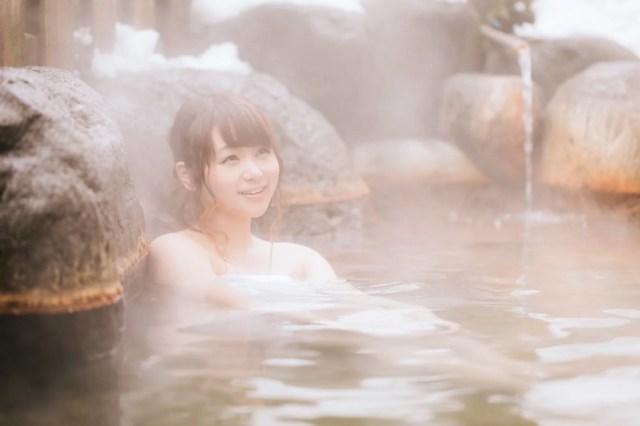
Which came first, the frequent soaks or the day-to-day happiness?
Bathclin, a Japanese maker of household bathroom cleaning and air freshener products, recently conducted a study in collaboration with researchers from Tokyo City University’s Department of Human Sciences. For the survey, 300 men and women between the ages of 20 and 69 were asked a series of questions about their bathing (as in taking a bath, not simply showering) and state of mental and physical health.
Participants were divided into two groups: high-frequency bathers, defined as people who take a bath four or more times a week, and low-frequency bathers, who take baths three or fewer times per week. When the data was sifted, the researchers say that the high-frequency bathers reported a significantly higher average level of happiness in their daily lives. The frequent bathers were also more satisfied with the quality of their sleep, awakening feeling more rested than the low-frequency bathers, and also reported higher levels of self-assessed subjective feelings of healthiness, which was backed up by lower average levels of doctor-diagnosed health issues during their regular medical examinations.
So that’s it then, taking more baths clearly makes people happier, so hopping in the tub more often is a simple and surefire way to create a happier life for yourself, right? Actually, it might not be so simple. Though the survey suggests that more baths and more happiness are connected, that doesn’t necessarily mean that the former is the cause of the latter.
First, let’s look at why someone might not take a bath. The most obvious reason is that taking a bath takes more time than taking a shower. This is particularly true in Japan, where you’re supposed to completely wash and rinse your body in the shower before dipping so much as a toe into the bathtub. This practice originated with Japan’s communal bathing culture and families who take turns soaking in the same tub of hot water, in order to keep the bathwater clean. However, it’s such an engrained part of Japanese bathing customs that even people who live alone will wash and shower off completely before getting in the tub. The idea of washing yourself in the tub, then soaking in the grimy bathwater, is considered pretty gross, even if it’s your own grime.
In other words, by the time you get into a Japanese bath, you’re actually already clean, making the bath a completely discretionary use of your time. The less free time and energy you have, whether because you’re busy with work, child-rearing, or other responsibilities, the less likely you are to take a post-shower soak, and conversely, having that extra free time and energy, perhaps because you didn’t have to run yourself ragged doing all your daily duties, the more often you’re going to take a bath.
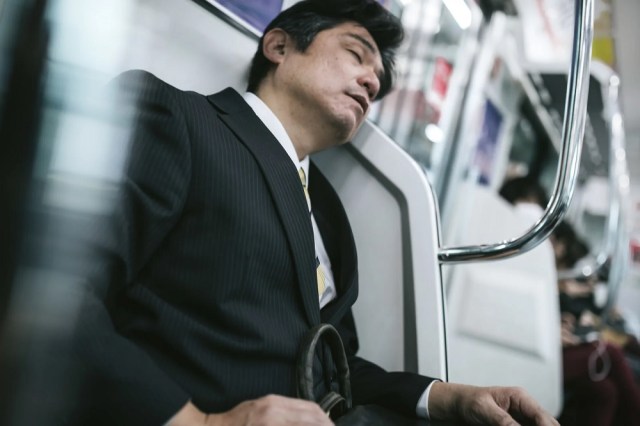
▼ If you’re too tired to stay awake on your train ride home from work, going to bed is going to sound more tempting than going in the tub.
Along with time, money is another always-desirable resource that can influence bath frequency. It’s true that just about every home or apartment in Japan has a bathtub, as shower-only residences are incredibly rare. However, the quality and spaciousness of those bathtubs can vary greatly depending on how luxurious the home is. On the lower end of the economic prosperity scale, cheaper housing will often have only a small, comparatively cramped tub, sometimes in a square shape that only allows you to squat in it, lacking sufficient space to stretch out your legs and really relax.
▼ Oh, yeah, my life is great…
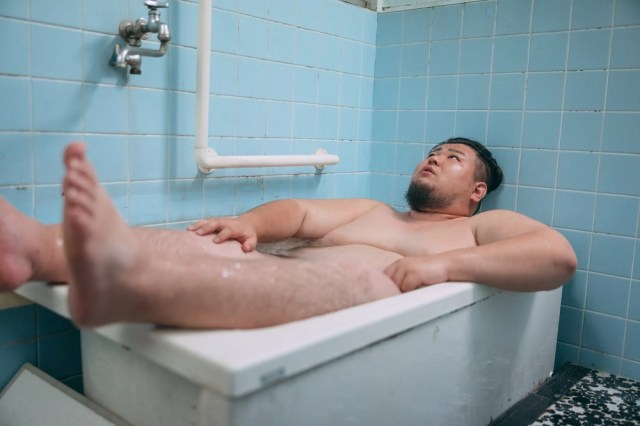
▼ I’ve lived in multiple apartments in Japan with bathtubs just like this one (minus the terrifying ghost girl).
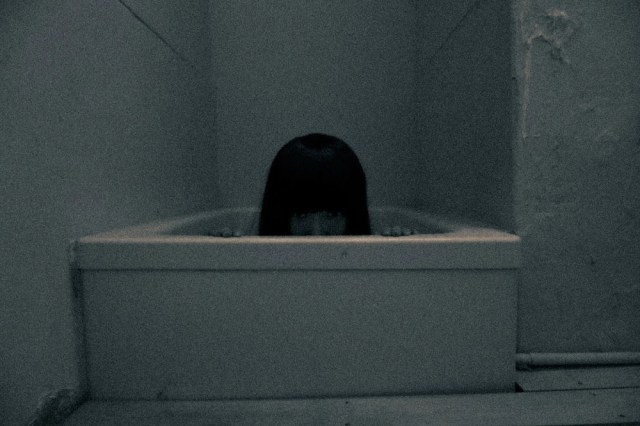
Less expensive apartments also may have the tub and toilet in the same room (as opposed to a separate chamber just for the toilet), and the soothing ambiance of the bath can be somewhat diminished when your head is in arm’s reach of where you poop, making at-home baths less appealing and thus less frequent.
So while the study found a connection between bath frequency and happiness, you could also say that there are connections between bath frequency and both free time and disposable income, both of which are obviously, all else equal, going to contribute to a greater sense of happiness and well-being, as well as lower levels of stress and, by extension, higher quality of sleep. It might not be that frequent baths make people happy, but rather that people who are leading a pretty happy life are the same people who actually can take frequent baths.
Ultimately, “people who take more baths are happier” is probably similar to other studies that have found that people who kiss their spouse goodbye in the morning before going to work make more money. It could be that a smooch gives them extra energy to power through the challenges of the day, or it could be that couples who are regularly both awake and have time for a confirmation of their romantic devotion before work are already making a good enough living that they’re not exhausted and in a mad dash to get to their exhausting job they have to slave away at to make ends meet.
All that said, it’s understandable that Bathclin, as a maker of bath cleaning products, would want to trumpet a connection between bathing and happiness, in order to convince people to clean their bathtubs frequently, which is honestly good advice anyway, just like telling your spouse you love them when you get the chance.
Source: Maido News via Livedoor News
Top image: Pakutaso
Insert images: Pakutaso (1, 2, 3)
● Want to hear about SoraNews24’s latest articles as soon as they’re published? Follow us on Facebook and Twitter!
Follow Casey on Twitter, where he could go for a nice long soak right now.
 Rub-a-dub-dub and relax in a tub: Survey reveals wintertime bathing habits across Japan
 How to have a Japanese rotenburo bath experience without leaving your home【Photos】
 Tokyo changes age limit for kids going into opposite sex’s bath at hot springs and sento
 How long and how often do Japanese women bathe? Survey investigates
 Japanese Twitter user gets a terrifying visit from Mom while taking a bath
 30 Pikachus want to share a Tokyo hotel room with you that has separate Grass, Water, Fire spaces
 Mt. Fuji decorated with a 500,000-flower pink carpet is Japan’s ultimate spring view
 New Travelling Bento pouches turn your luggage into a Japanese lunch box
 Japanese politician arrested on charges of accepting bribes to reduce number of monkeys in park
 Foreign man arrested for walking on Shinkansen tracks, claims he was on the run from yakuza
 Family Mart unveils new Japanese bread that elevates convenience store food to mocchiri levels
 Final Fantasy invites you to adventure in Fukushima with Fukushima Fantasy Chocobo fun[Video]
 Peanuts and Coke becomes a viral hit in Japan, but is it a trend worth joining?
 Ghibli Park opens final area to first visitors, with stunning new attractions and shops 【Videos】
 Suntory explains the simple science behind how it makes its amazing clear tea beverages【Video】
 Japan reportedly adding Japanese language skill requirement to most common foreigner work visa
 Pokémon and Ikea Japan cross over into each other’s worlds with collaboration events
 Starbucks Japan closing only Shinkansen platform branch for popularity-triggered renovations
 Two food hacks take Japan’s convenience store fried chicken to amazing new sandwich heights
 You can assemble a well-balanced team of Pokémon, them eat them, thanks to Japanese cake chain
 Tokyo turns its phone booths into free Wi-Fi hotspots, and here’s how to use them
 Fading Tokyo – Searching for signs of the Showa era as local neighborhoods evolve[Photos]
 Tokyo teahouse serves up a sakura matcha dessert you won’t find anywhere else
 7-Eleven Japan’s new baked-in-store sweet treat is only available in three parts of the country
 Man bites woman at cherry blossom park in Japan, dies shortly after
 Japan now has a special desk for people who work at home with a pet cat[Photos]
 Famous Tokyo cherry blossom spot installs view-blocking screens to fight overcrowding[Video]
 Uniqlo announces new T-shirts for One Piece, Naruto and more for manga publisher’s 100th birthday
 Train station platform ramen store closes its doors on half a century of history in Tokyo
 Starbucks Japan releases new My Fruit³ Frappuccino at only 34 stores around the country
 Studio Ghibli releases Catbus pullback keychain that runs like the anime character
 Krispy Kreme releases Super Mario doughnuts in Japan for a limited time
 Japanese onsen egg maker from 100-yen store Daiso needs to be on your shopping list
 Survey asks foreign tourists what bothered them in Japan, more than half gave same answer
 Japan’s human washing machines will go on sale to general public, demos to be held in Tokyo
 Starbucks Japan releases new drinkware and goods for Valentine’s Day
 We deeply regret going into this tunnel on our walk in the mountains of Japan
 Starbucks Japan releases new sakura goods and drinkware for cherry blossom season 2026
 Studio Ghibli releases Kodama forest spirits from Princess Mononoke to light up your home
 Japan’s newest Shinkansen has no seats…or passengers [Video]
 Major Japanese hotel chain says reservations via overseas booking sites may not be valid
 Put sesame oil in your coffee? Japanese maker says it’s the best way to start your day【Taste test】
 No more using real katana for tourism activities, Japan’s National Police Agency says
 Over half of Japanese adults do this in the shower – How about you?
 Japan’s awesome, eco-friendly, old-school water heaters (and how to use them)
 Bath noodles — Do you know about this strange Japanese bathing custom?
 Take the “Public” Out of Public Bathing and Make a Natural Hot Spring in the Comfort of Your Own Home
 State of the sento — Tokyo’s public baths are disappearing, but statistics show a sliver of hope
 Secret tent onsen in the forest is one of the most unusual hot springs in Japan
 Tokyo hotel lets your rent out entire Japanese bath facility, become lord of the baths【Pics】
 Tokyo day-trip hot springs: Beautiful Mt. Fuji-view bath is just one highway bus stop from Shibuya