
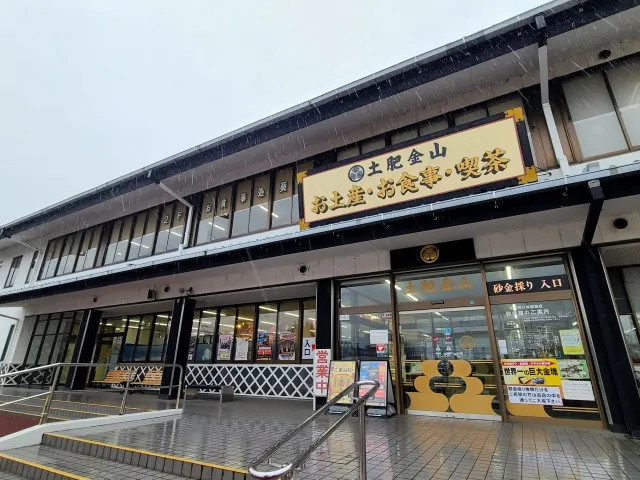
Okay, so the mine might be closed…but maybe we can make bank on gold dust!
With the lingering economic effects of the pandemic and recent international conflicts, the rise of inflation, stagnating wages, and the decreased value of the yen, times feel a bit tough for residents of Japan these days. So much so that our Japanese-language reporter Maro began to wonder, “Is anything worth as much as it used to be anymore?”
After some thought, a brilliant idea came to mind: gold! Gold has to be worth something these days! It’s the only trustworthy currency out there…right? So Maro hopped in her car and drove over to the Ito Peninsula, west of Tokyo, where there’s a huge gold mine, to try and see if she might be able to strike it rich the old-fashioned way.
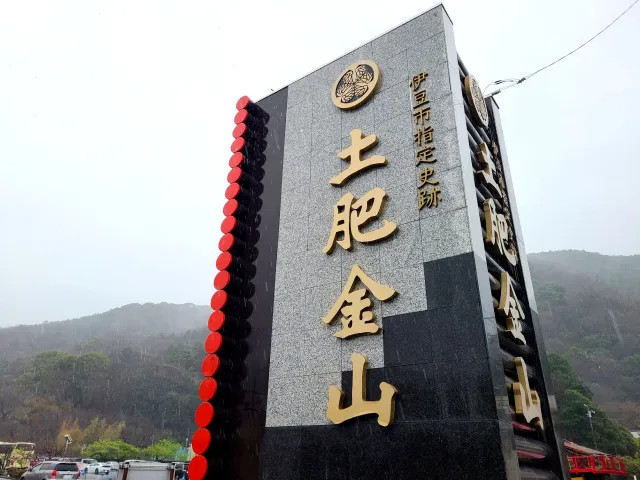
Toi Gold Mine is on the western side of the Ito Peninsula, which is located in Shizuoka Prefecture, west of Tokyo. It’s Izu’s biggest gold mine, which proudly produced the second-highest volume of gold in all of the country during the Edo and Meiji periods.
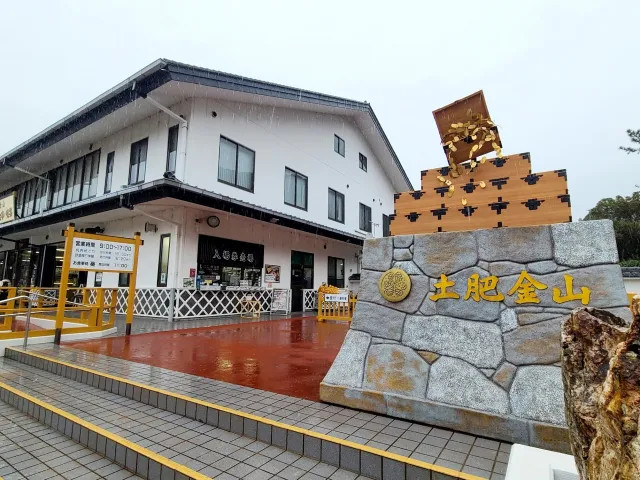
Unfortunately for Maro, the mines are designated as a historic landmark for the city of Izu, and in fact are closed for operation. Maro couldn’t actually mine her own gold…but there are still ways to enjoy the mine as a tourist. For example, the mine shaft is open for sightseeing, and they also offer a gold panning workshop!
Having just recently completed a successful gem-hunting expedition in nearby Yamanashi, Maro felt nothing but confidence about her ability to pan for gold dust. But first she wanted to check out the mine shaft and Gold Museum to learn more about this part of Japanese history.

As Izu’s largest gold mine, Toi’s mine shaft had reached 100 kilometers (62 miles) long and 180 meters deep (590 feet) by the time it closed for operations.
At present, visitors can only walk along a small portion of that, about 350 meters, which has been paved for easy travel. The working conditions and actual labor of the Edo-era miners was represented by animatronic mannequins, which was very interesting.
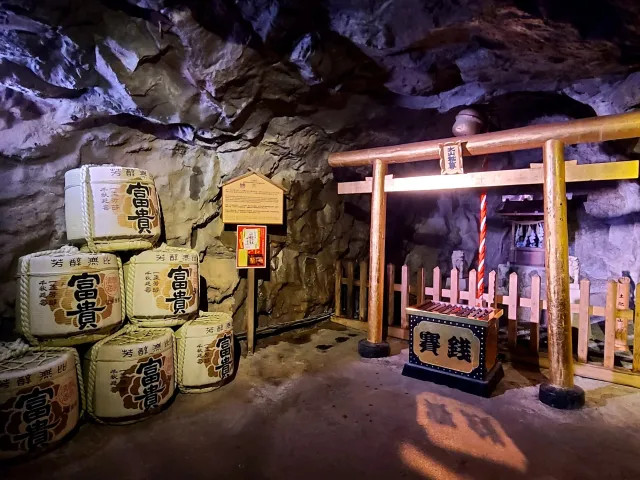
The shaft also contained two special sites: Yama-jinja Shrine and The Golden Spring/Coin Washing Spring. By touching the golden torii gates at Yama-jinja and washing your coins at the Coin Washing Spring, you could bring good fortune to your finances, or so they say. Maro made sure to do both, so hopefully within the next year, she’ll find herself swimming in riches. Or, you know, at least feeling a little more financially comfortable.
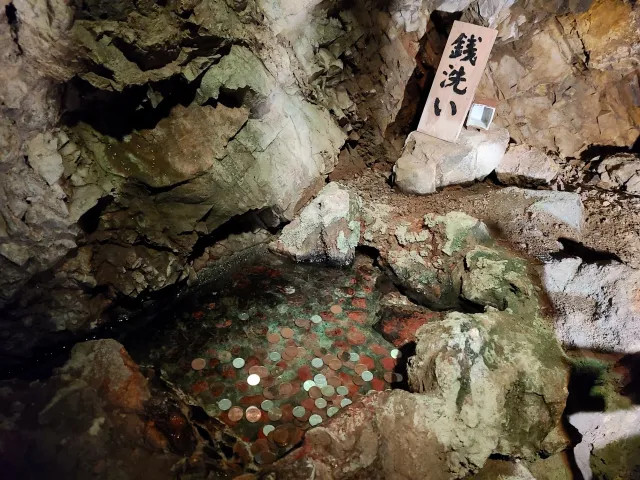
Once you exit the mine shaft, you’ll enter the Gold Museum.
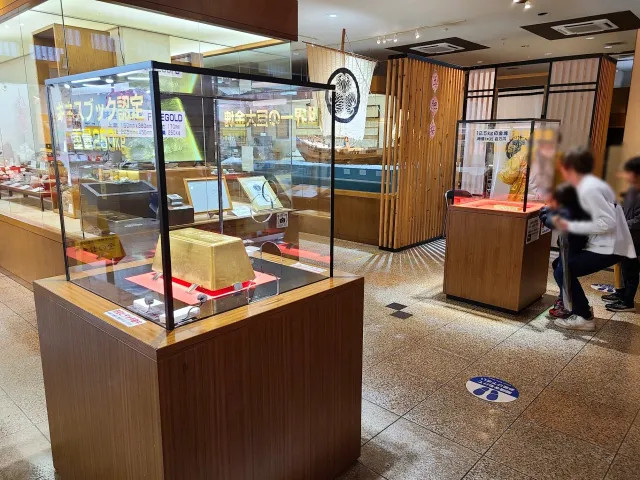
There you’ll see a most impressive monument:

A 250-kilogram (551-pound) giant gold bar!
Apparently, it’s the biggest in the world, and is even recognized as a Guinness World Record. Visitors are actually allowed to touch it, too. Maro would’ve thought they’d want to keep it under lock and key to prevent theft, but there’s no way anyone could just walk off with it. It’s way too heavy!
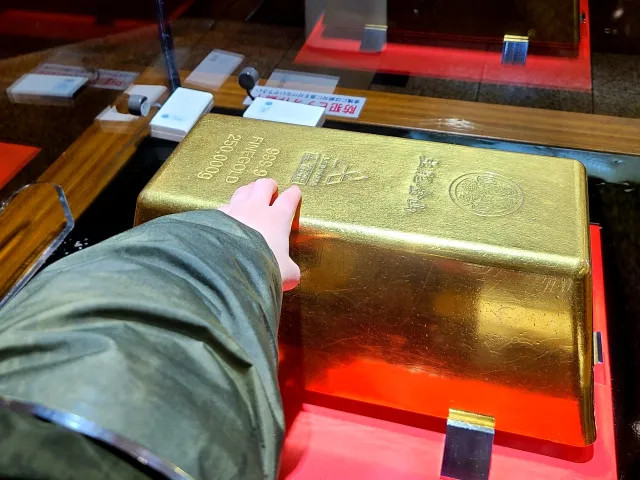
Incidentally, if this gold bar was in the form of gold foil, it would be worth about 70,000 sheets. It was a mind-boggling amount of gold.
The museum also has a section where you can learn how heavy a gold bar really is, and there were lots of gold products produced by the mine on display. There was so much gold in the space, it was honestly shocking.
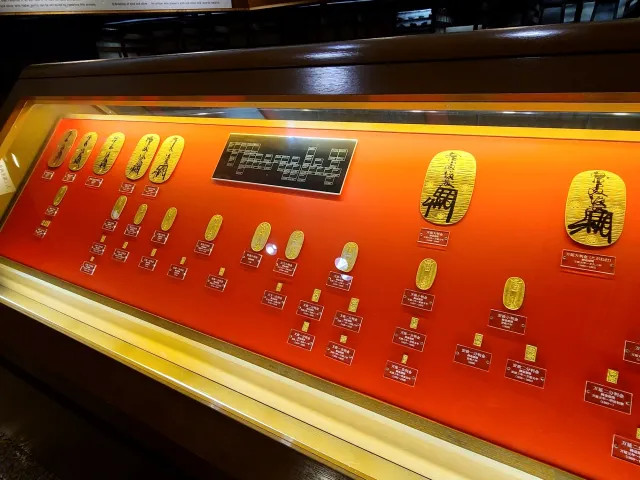
The gift shop was full of shiny gold-related products, too, including sweets and candy made with gold-leaf.
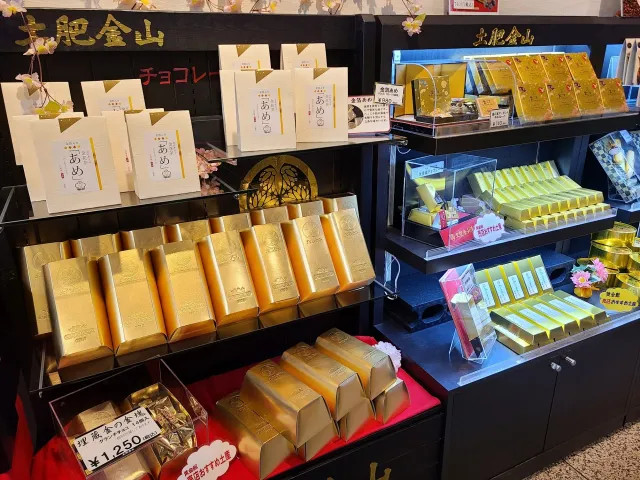
With so much gold around, Maro began to wonder if gold really could be her ticket to untold riches. Well, she was going to try it out anyway. Having thoroughly explored the mine and the museum, it was finally time for her long-awaited attempt at panning for gold. With so much gold in the museum, she was bound to strike upon a fortune, right?
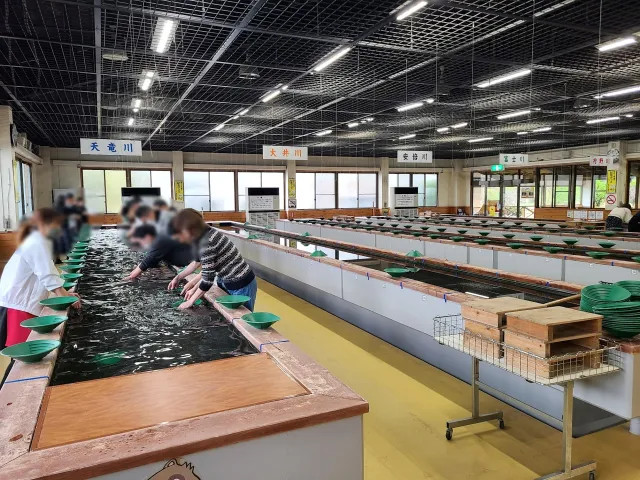
It costs 750 yen (US$5.08) to participate for 30 minutes. They supply a panning plate, which you use to sift for gold dust.

First you dunk the plate into the sand and scoop up a bunch of it.
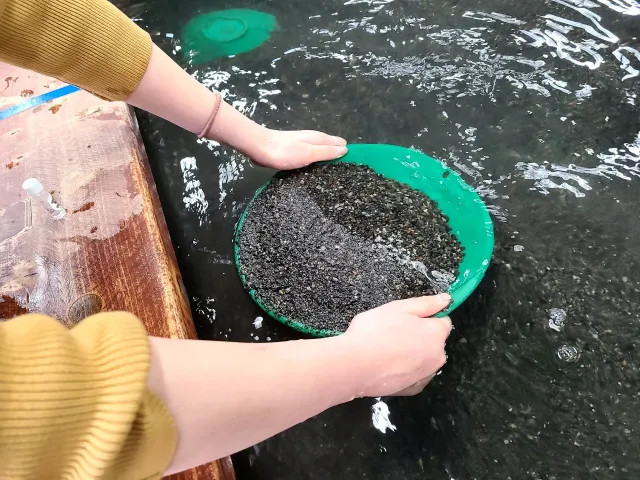
Then you cover it lightly with water and twist it side to side while holding it like a steering wheel. Gold dust is heavier than sand, so apparently as you shake the plate, it settles at the bottom.
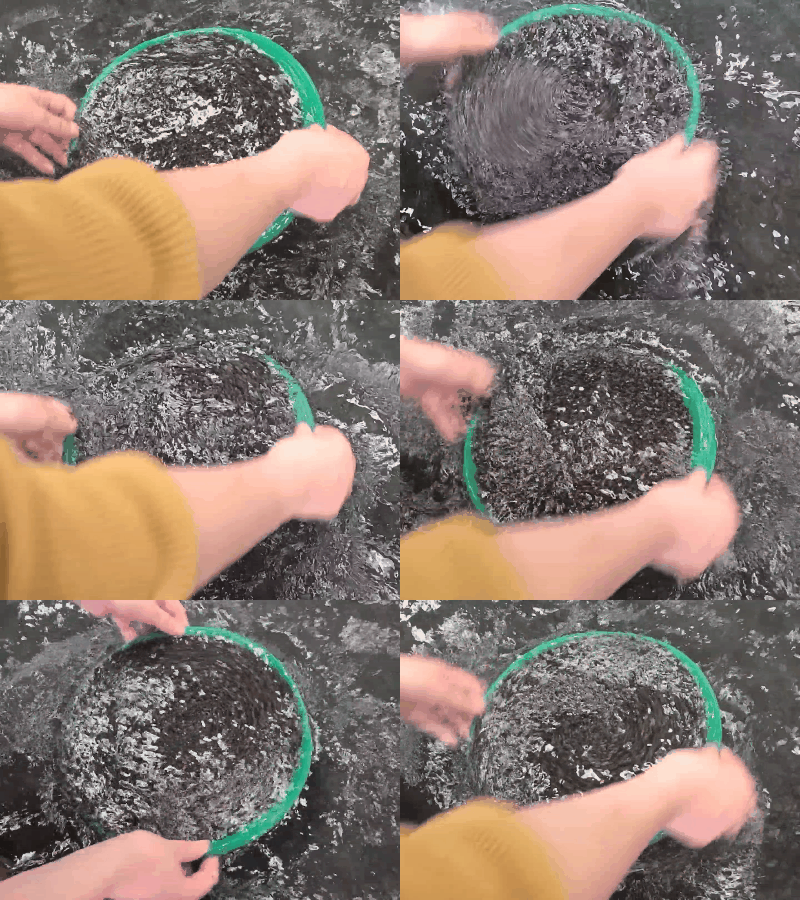
Once you’ve swiveled it enough times to assure that the gold has sunk, it’s time to wash away the sand.

The panning plate has grooves on it to catch the heavier gold dust, so you have to trust it will do its job as you wash out the sand.
How was Maro’s first attempt?
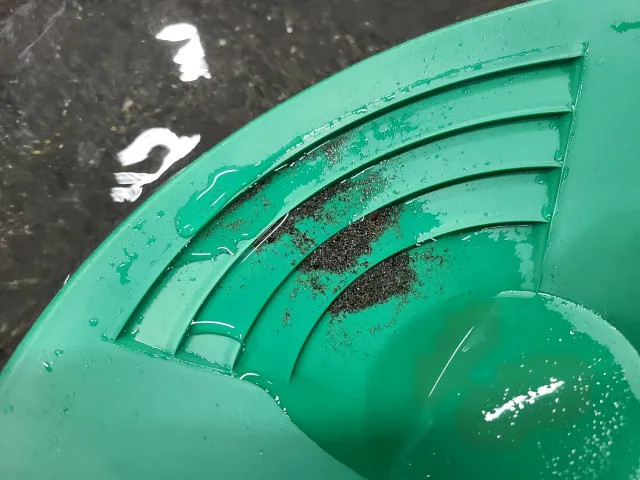
Not very good.
Maro didn’t know if she was just so bad at it that she washed all of the gold dust out, or if there was no gold dust in her pile of sand to begin with. Either way, she didn’t have time to think about it, so she dunked her plate back into the sand and tried again.
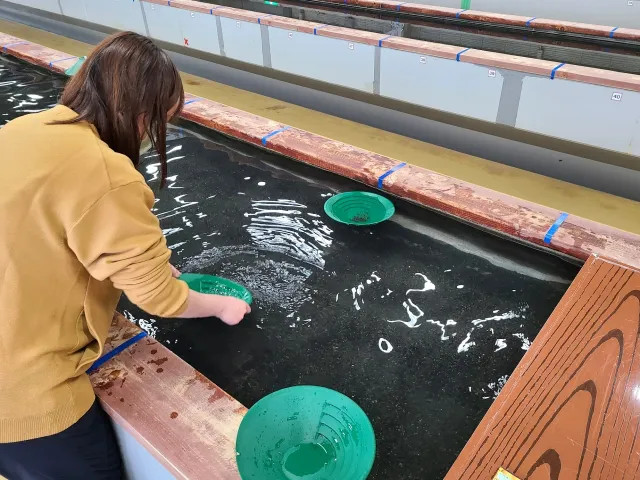
It seemed like it was important to pay attention to your speed and movement, so Maro did her best to go a bit faster as she tried a second and then a third time.
Finally, after vigorously shaking her plate on her third try, she dumped the sand and saw a speck of something shiny.
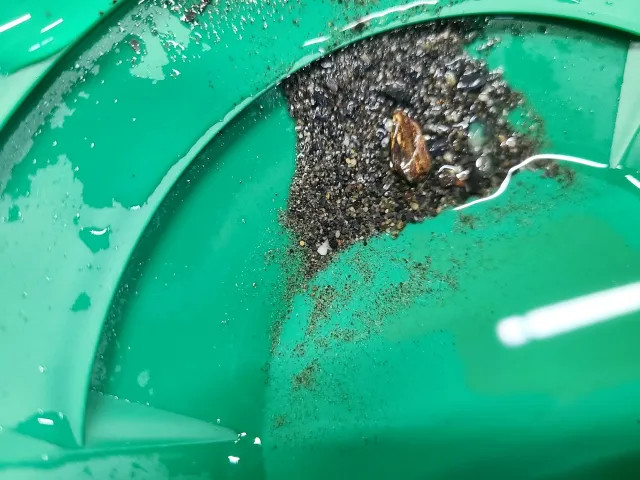
Could it be?
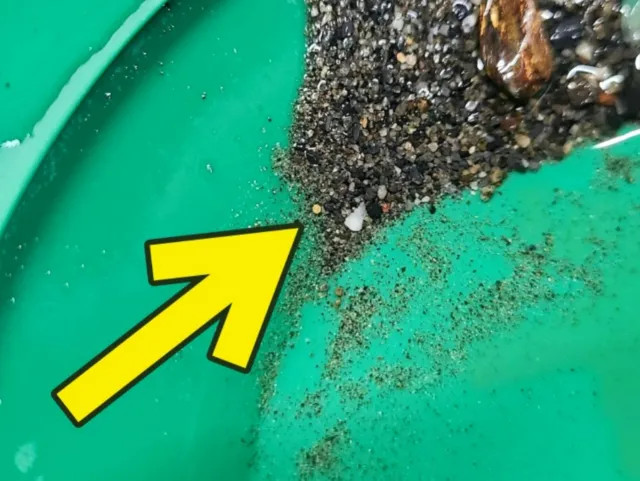
It was! A speck of gold dust!!
She’d been fairly rough about rinsing her sand out this time, but nevertheless there was gold trapped in the grooves of her plate. You can’t tell from the photo, but in person it really was sparkly and much easier to distinguish than she’d expected. The dust may have been small, but it was pure, 24-karat gold!
▼ Later, she managed to get even more.
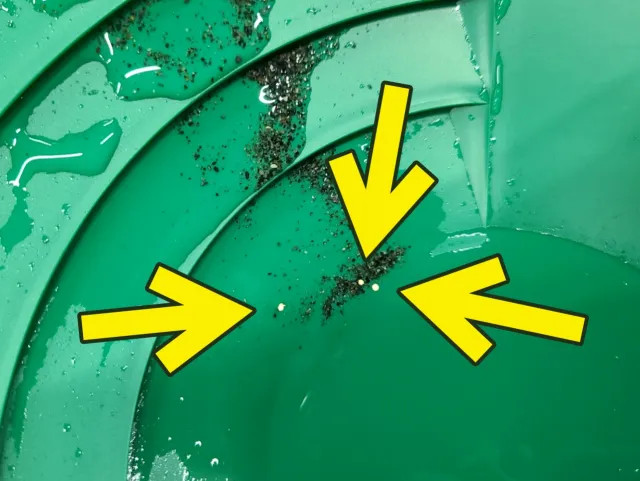
After that, Maro worked at a vigorous speed for 30 minutes and managed to collect seven specks of gold dust.
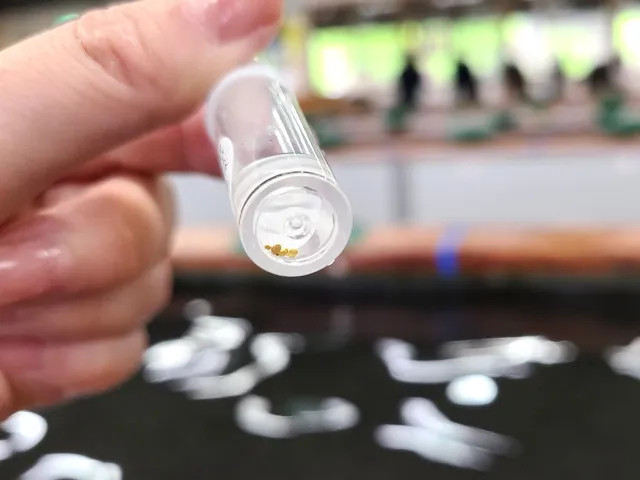
She had to think she’d done a pretty good job. Surely the average is about two or three grains?!
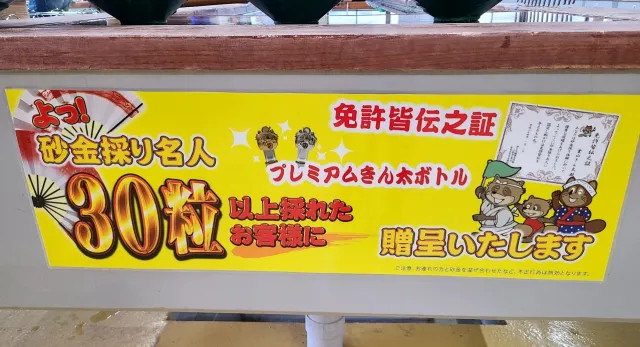
Apparently someone really good at panning could collect about 30 grains in 30 minutes, which is quite a lot more than Maro acquired. If you manage to do so, you get to take home a special certificate and a premium bottle featuring the museum’s mascot, Kinta. Surely luck must play into it. She’d dearly love to see someone collect so much in such a short amount of time.
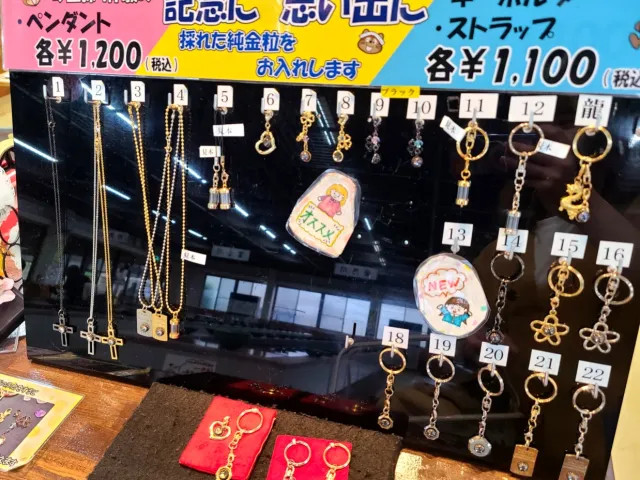
You get to take home the gold you collected in a little jar, or for an extra fee you can have it incorporated into some kind of accessory. Maro was still reveling in the highs of her success, small thought it may be, so she had hers put on display within a keychain.
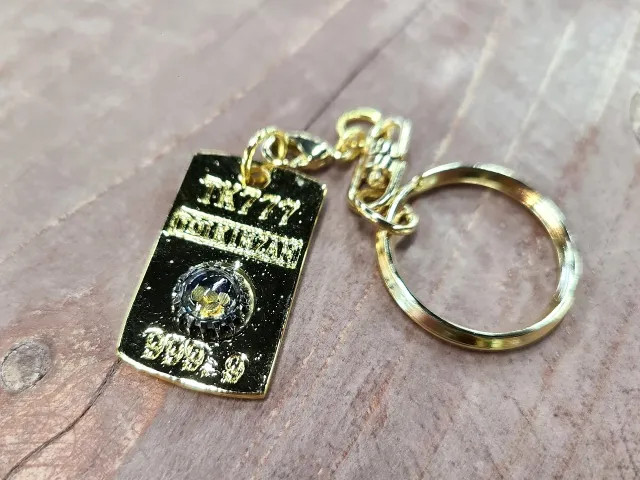
Panning for gold turned out to be a lot of fun and the 30 minutes flew by in no time. Altogether, including the panning experience, Maro would say you can explore the museum and mine shaft in one to two hours, but it’s well worth the time. Between the museum and the gift shop, there’s so much gold to dazzle the eye, you’re sure to be satisfied with your visit. And though you likely won’t be any richer in coin, you’ll undoubtedly be richer in mind and spirit for the experience.
By the way, if you plan to get there by car, be sure to stop at the Izu no Heso Roadside Station on the way, which has, among other exciting things, a shiitake mushroom crane game you just have to try!
Museum information
Toi Gold Mine / 土肥金山
Shizuoka-ken Izu-shi Toi 2726
静岡県伊豆市土肥2726
Open daily from 9 a.m. to 5 p.m. (last entry at 4:30, last gold panning at 4:20)
Website
Images © SoraNews24
● Want to hear about SoraNews24’s latest articles as soon as they’re published? Follow us on Facebook and Twitter!
[ Read in Japanese ]
 We try super rare Shizuoka food souvenirs in the form of blue gelato and purple baumkuchen
 We try Starbucks Japan’s new sand dunes Frappuccino in Tottori
 Tokyo turns its phone booths into free Wi-Fi hotspots, and here’s how to use them
 Foreign man arrested for walking on Shinkansen tracks, claims he was on the run from yakuza
 Schoolkids learn life skills through shopping field trips at street markets in Kochi Prefecture
 Japanese manhole lid raises eyebrows with fertility god symbol that looks like… well, you know
 How to take your home ramen to the next level by making your own chashu pork in a frying pan
 Peanuts and Coke becomes a viral hit in Japan, but is it a trend worth joining?
 Pokémon Centers across Japan cancel April events after stabbing in Tokyo
 How far away from Tokyo can you get with 5,000 yen? Let’s find out!
 Japan’s handsome anime ramen idols are back again to give you their hot, flavorful noodles【Vid】
 Final Fantasy’s Yoshitaka Amano illustrates exclusive Japan-only Magic: The Gathering card
 Pokémon and Ikea Japan cross over into each other’s worlds with collaboration events
 Japan reportedly adding Japanese language skill requirement to most common foreigner work visa
 Starbucks Japan closing only Shinkansen platform branch for popularity-triggered renovations
 Two food hacks take Japan’s convenience store fried chicken to amazing new sandwich heights
 You can assemble a well-balanced team of Pokémon, them eat them, thanks to Japanese cake chain
 Fading Tokyo – Searching for signs of the Showa era as local neighborhoods evolve[Photos]
 Pokémon lacquerware series expands for Year of the Horse with new handcrafted design[Video]
 Tokyo teahouse serves up a sakura matcha dessert you won’t find anywhere else
 Totoro Fund line of beautiful artwork and apparel lets you help the real-world Totoro Forest
 Japan now has a special desk for people who work at home with a pet cat[Photos]
 Famous Tokyo cherry blossom spot installs view-blocking screens to fight overcrowding[Video]
 Uniqlo announces new T-shirts for One Piece, Naruto and more for manga publisher’s 100th birthday
 Train station platform ramen store closes its doors on half a century of history in Tokyo
 Starbucks Japan releases new My Fruit³ Frappuccino at only 34 stores around the country
 Studio Ghibli releases Catbus pullback keychain that runs like the anime character
 Krispy Kreme releases Super Mario doughnuts in Japan for a limited time
 Japanese onsen egg maker from 100-yen store Daiso needs to be on your shopping list
 Survey asks foreign tourists what bothered them in Japan, more than half gave same answer
 Japan’s human washing machines will go on sale to general public, demos to be held in Tokyo
 Starbucks Japan releases new drinkware and goods for Valentine’s Day
 We deeply regret going into this tunnel on our walk in the mountains of Japan
 Studio Ghibli releases Kodama forest spirits from Princess Mononoke to light up your home
 Starbucks Japan releases new sakura goods and drinkware for cherry blossom season 2026
 Japan’s newest Shinkansen has no seats…or passengers [Video]
 Major Japanese hotel chain says reservations via overseas booking sites may not be valid
 Put sesame oil in your coffee? Japanese maker says it’s the best way to start your day【Taste test】
 No more using real katana for tourism activities, Japan’s National Police Agency says