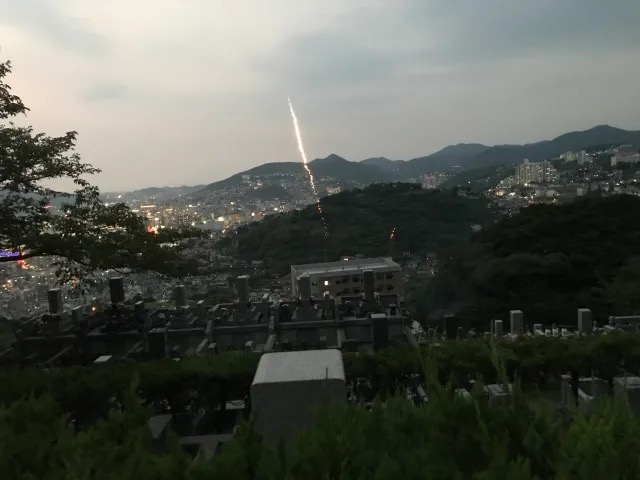
One of the few places in Japan where you’ll see families setting off fireworks at the cemetery.
When you’re a child growing up, it’s easy to think that everything your family and friends do is the way everyone does things. It’s only upon growing up and travelling beyond your hometown that you realise your “normal” might not be the same as everyone else’s.
That’s what happened to our reporter Mariko Ohanabatake, who always thought the way her family in Nagasaki celebrated Obon was the way everyone in Japan did it. Obon, which generally takes place from 13-16 August, honours the spirits of dead ancestors, who are believed to visit their living relatives during this period, and in most parts of the country, lights, generally in the form of lanterns or fires, are commonly lit to help guide the spirits home. At the end of Obon, lanterns are sent off in rivers, lakes and seas to symbolically send the spirits back to the other world.
▼ Nagasaki is particularly famous for its “shoro nagashi” (“spirit boat procession”), which takes place in various places around the prefecture.
8月15日 島原精霊流し
— 島原市 (@cityshimabara) August 13, 2024
日暮れと共に町内に待機した精霊船が切子とうろうを飾り出発
担ぎ手の掛け声は
『ナマイドー、ナマイドー』
切子とうろうにロウソクを灯した精霊船が、闇夜の有明海に浮かぶ姿は幻想的で美しいものです#精霊流し#精霊船#島原#切子とうろう#japantrip#japantravel pic.twitter.com/0jDQhPZVOB
While Nagasaki’s impressive send-off for the spirits is relatively well known, the way locals welcome the spirits and spend time with them is a surprise to everyone outside the prefecture. That’s because in Nagasaki, families light fireworks at the graves of their dead ancestors.

Lighting fireworks is a common summer activity in Japan, but in most parts of the country it would be considered disrespectful to let off fireworks in a graveyard. However, that’s not the case in Nagasaki, where it’s all part of how they help guide their ancestor’s spirits back home.
In the evenings, relatives gather for Obon, and before the sun sets, they let off fireworks, mainly the types that make noise, such as firecrackers, yabiya (rocket fireworks), and parachutes.
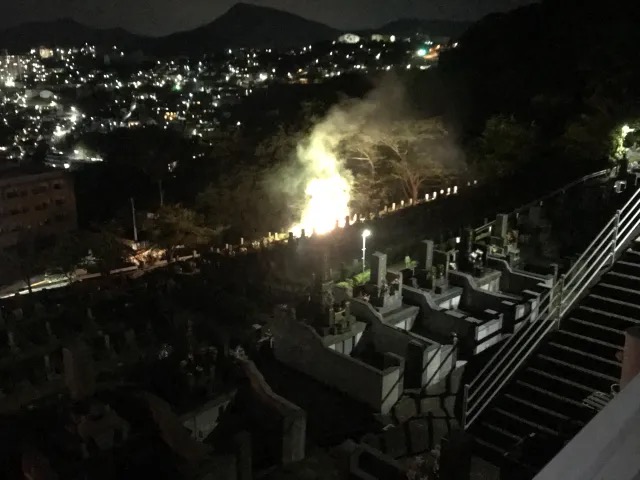
Once it gets dark, people switch over to hand-held fireworks, small fireworks, and sparklers. The light of the fireworks and the sound of children’s voices can be heard all around the graveyard, creating a lively atmosphere.
▼ At first glance, this might look like a fire, but it’s actually people enjoying fireworks at a cemetery.
Whenever Mariko spoke to people from other prefectures about her obon traditions, their jaws would drop and they would say things like, “It’s impolite to use fireworks at graves during Obon!” However, Mariko, who long thought such a thing was normal, thought they were the weird ones. From her point of view, cemeteries are outdoors, and equipped with candles, incense and buckets of water, so it seems like the perfect place to set off fireworks.
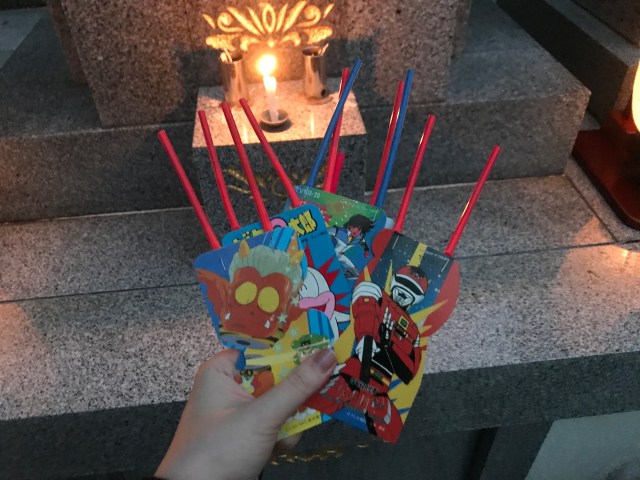
▼ If you’re not letting off fireworks in a cemetery, then you’re not celebrating right.
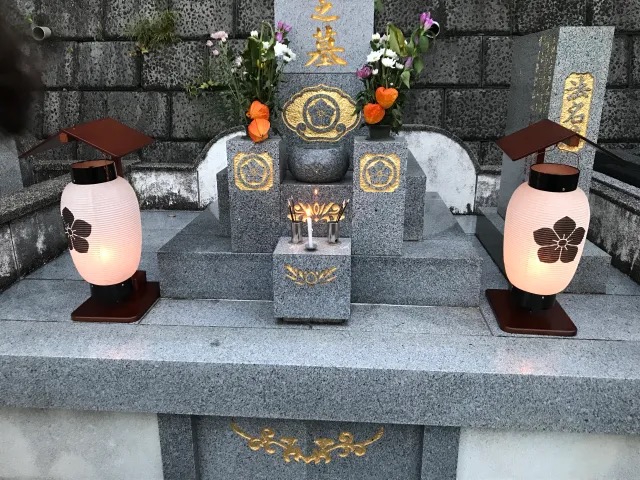
▼ Another unusual way they celebrate in Nagasaki is by placing lanterns not only at houses but also at graves, and some of those graves are decorated with gold.
For Mariko, and many others in Nagasaki, Obon remains a fun childhood memory, where relatives gather and set off fireworks while enjoying drinks and food together at the gravesite. The party usually takes place on three consecutive evenings from 13-15 August, with families staying at the grave for about two hours, eating and drinking while talking fondly about their memories of the deceased.
▼ The food and drinks are often the deceased’s favourites, and this year, Mariko brought her late mother’s favourite baked goods to eat at her grave.

▼ As for the fireworks, a number of stores in the area sell them in summer, like this popular spot that’s usually a plastic model shop at other times of the year.
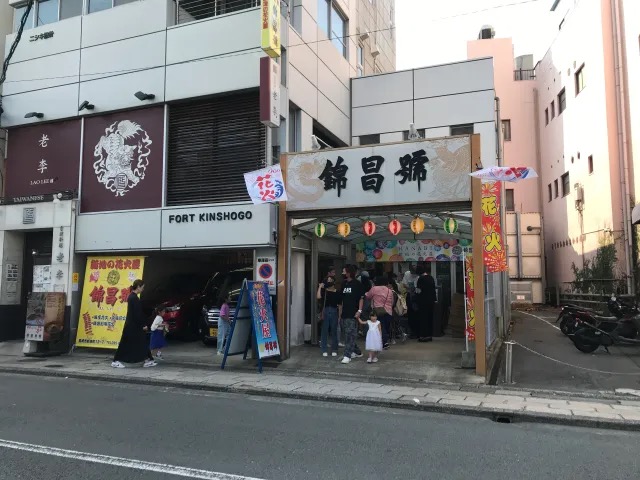
People from other prefectures would be shocked to see people drinking alcohol and eating food like bento boxed meals at a gravesite, but for Mariko, there’s nothing weird about it at all. It’s not like it’s a wild party — it’s just a family enjoying food and drink together as they would normally do, and the reason why families can stay there a long time is because the structure of the gravesite is different to those in other areas.
▼ First, the area in front of the grave is large, with room for about two or three tatami mats, and it’s separated from the neighbouring grave by a wall.
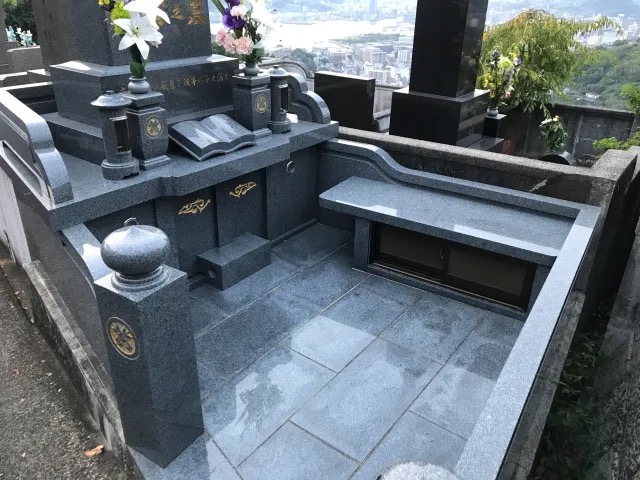
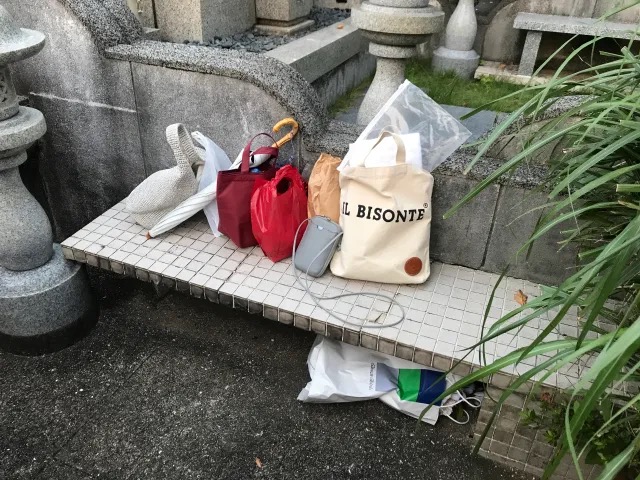
There’s also a stone bench inside the tomb that’s used as both storage space and a spot to sit. At the graves of wealthy families, there may even be both benches and tables.
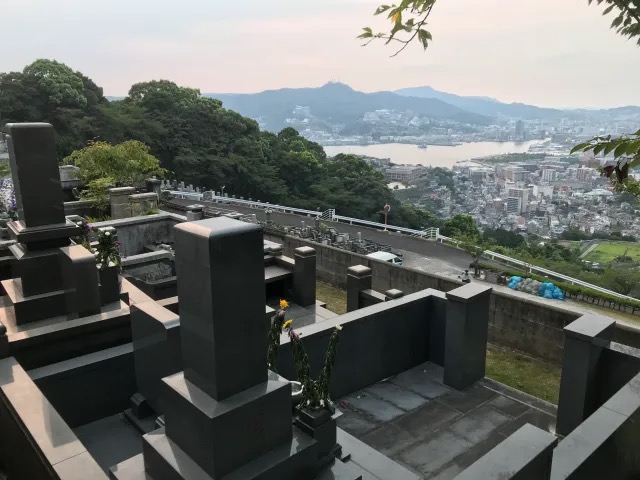
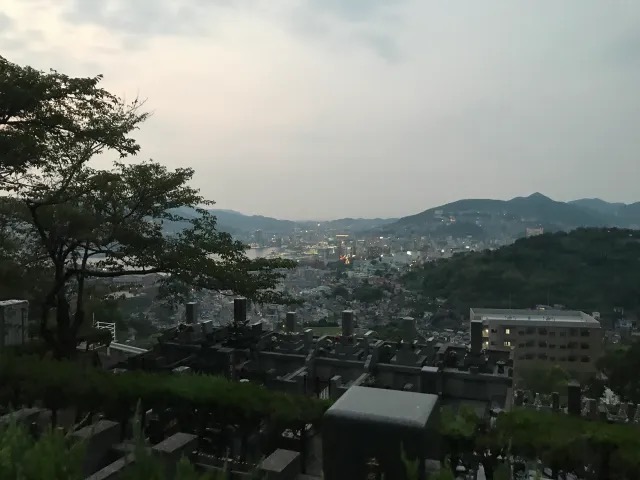
The night views from the cemetery that Mariko visits are stunning, and because Nagasaki is mostly hilly, cemeteries are usually located on high slopes, making them a nice spot to spend time in.
▼ From Mariko’s family cemetery, you can see the blue sea and sky of Nagasaki, as well as the setting sun.
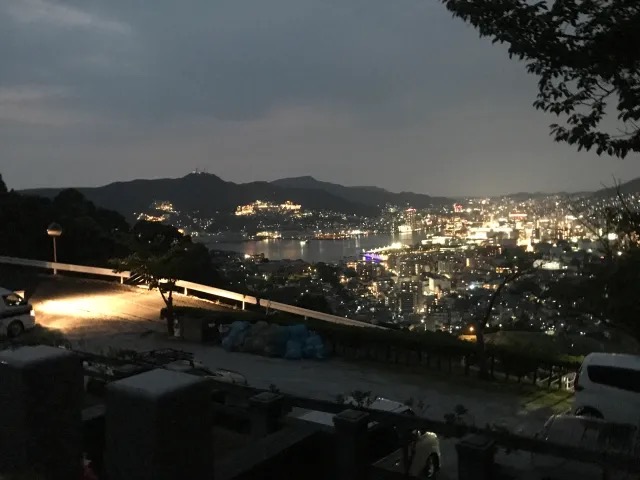
▼ The cemetery looks more beautiful at night than any other tourist spot in the area.
Spending Obon at the cemetery with this view and her family by her side, Mariko feels like her late mother and grandparents are enjoying the views and the fireworks with her. While some people might think it odd to spend so much time at a grave every year, Mariko wouldn’t miss it for the world as she has fond memories of her mother and grandparents and looks forward to their temporary return every summer. With every sparkler, it’s as if they’re there by her side, commenting on the beauty of the glow.
▼ “Oh that’s a beautiful sparkler you have there, Mariko!”
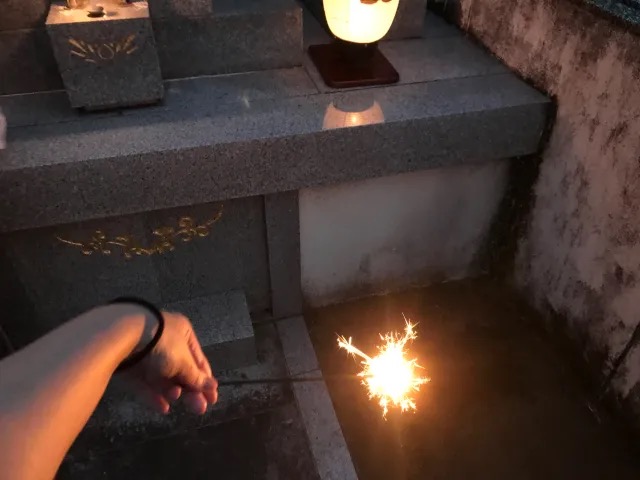
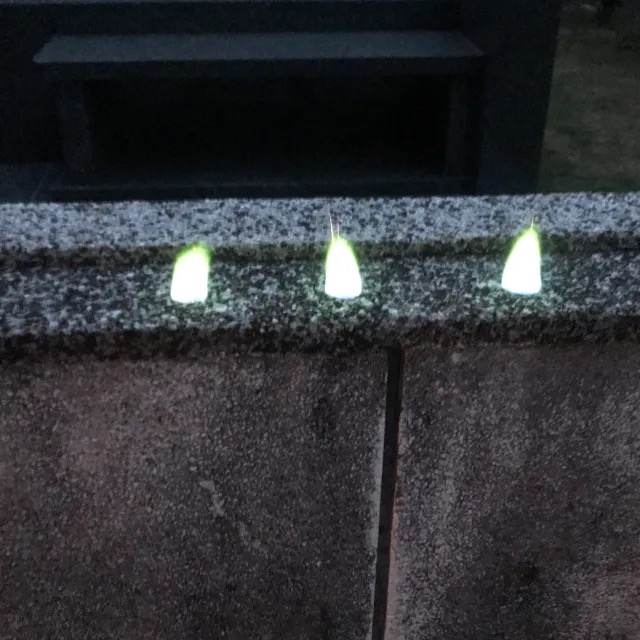
▼ Another beautiful firework Mariko found was one called “Angel Fire”, which glowed like ethereal fireballs.
While many people in Japan stick toothpicks into eggplants and cucumbers to represent the cow and horse that ancestral spirits use to ride back to the world of the living, that tradition doesn’t exist in Nagasaki. Obon customs certainly differ from region to region, but Nagasaki may well be the prefecture that differs most of all.
When you travel outside of your hometown your eyes can be opened to many new things, but for Mariko, she’ll always find comfort in lighting fireworks at the graveyard with her ancestors.
Photos ©SoraNews24
● Want to hear about SoraNews24’s latest articles as soon as they’re published? Follow us on Facebook and Twitter!
[ Read in Japanese ]