
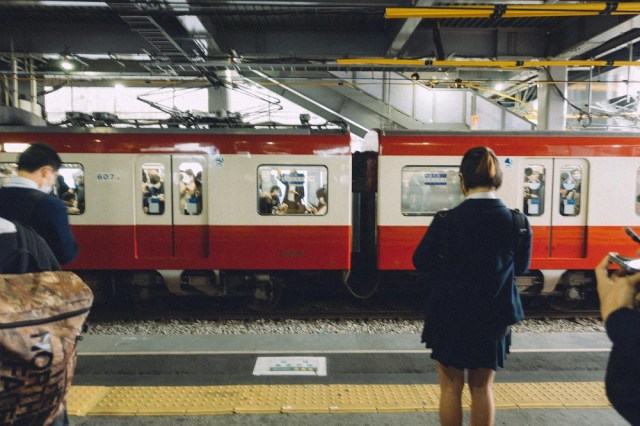
Survey finds 10 things to avoid as Japan experiences record-breaking, sometimes patience-testing levels of inbound international tourism.
Japan is seeing more inbound foreign tourists than ever these days, which also means more inbound foreign tourists than ever on public transportation. But as locals and Japanese residents increasingly rub elbows on trains, that also means more chances for tourist behavior to rub locals the wrong way.
As part of its annual study on train/station etiquette, the Japan Private Railway Association collected responses from 5,314 participants via an online survey. 62.9 percent of the respondents said they’d been bothered by impolite behavior by foreign tourists, and the survey then asked them to designate up to two specific complaints, resulting in the following top 10 list (technically top 11, if you count the entry of “other”).
11. Eating or drinking on the train (chosen by 3.3 percent of respondents)

Though pretty much every station has at least a kiosk where you can buy snacks and drinks, if not a full-on convenience store or bento boxed lunch shop, eating onboard trains is generally frowned upon in Japan. It’s not absolutely forbidden, but there’s a general understanding that the only things you should eat on most trains are bite-sized snacks, ones small enough that you can pop them whole into your mouth without anyone having to see them, and also that there should be no audible chewing or crunching, and no noticeable smell either. So tiny rice crackers or cookies you might be able to get away with, but chowing down on a Mos Burger is a no-no.
An exception is made for the Shinkansen and other obviously leisure travel-oriented lines, which often have fold-down seat trays (like the ones on airplanes) for passengers to use, but otherwise, eating anything large enough to be considered a meal, or to require multiple visible bites to consume, is likely to be seen as slovenly.
For drinks, the gray area is wider, but the same principles apply: if you’re going to drink something, it should be something you can drink quietly and that doesn’t have a detectable aroma. Alcoholic beverages are OK on the Shinkansen and sightseeing trains, but widely considered crass for commuter and local lines.
10. Sitting on the floor of the train (4.2 percent)
Yeah, maybe your legs are worn out after spending all morning touring temple in Kyoto. Perhaps you’re doing a backpacker-style trip across Japan, staying in hostels, washing your clothes in the sink, and otherwise enjoying roughing it as you experience the country’s rustic charms. Doesn’t matter. If there are no empty seats on the train, you’re supposed to stand, since sitting on the floor takes up extra space, makes it hard for others to get on or off the train, and just looks sloppy.
9. Bad manners regarding priority seats (4.4 percent)
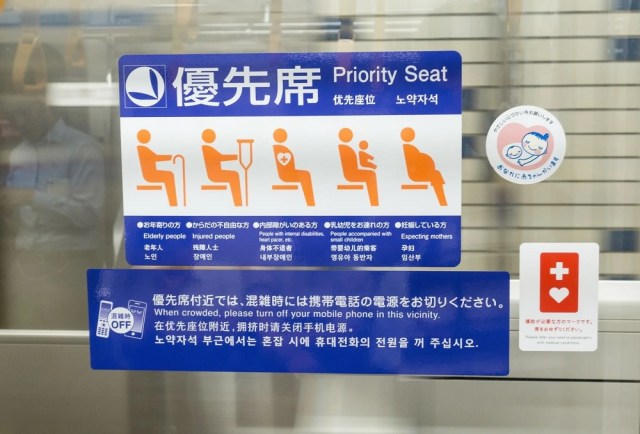
At the corner of many train cars in Japan is a short bench designated as priority seats (often with a sign above them with the kanji characters 優先席). These are meant to be used by elderly, injured, or disabled passengers, as well as those who are pregnant of traveling with small children. Other people aren’t necessarily prohibited from using those seats, though, which is where things get kind of tricky. You might think that even if you’re not part of any of those groups, it’s fine to sit in the priority seat and simply give it up if someone asks for it. However, some people in Japan believe that it’s inconsiderate to make someone else ask, and it becomes even more complicated since physical ailments aren’t always visually obvious. If a 60-year-old senior citizen with a bad back boards a train car and sees a much younger man sitting on a full priority seat bench, he might assume the younger man is, for example, recovering from a knee injury and needs to sit, and so not ask him for his seat. Meanwhile, the younger man might not actually have any such need to use the priority seat, but also might not be able to tell that the senior has back problems just from looking at him, so he won’t offer his seat either.
Such scenarios are why there’s a segment of the Japanese population that thinks if you don’t need to use a priority seat, you should leave it open for someone else who might. This isn’t something Japanese people have a consensus on, by the way, but it’s something that some people feel strongly about, and so they’re going to notice if seemingly able-bodied foreign travelers are sitting in the priority seats.
8. Leaving trash and drink bottles behind on the train (5.9 percent)
“Japan doesn’t have enough public trash cans!” is a very common complaint among foreign travelers. It’s also something you’ll rarely, if ever, hear Japanese people griping about. At this point, it’s common knowledge that it might not be easy to find a place to throw you garbage away while you’re out and about, so the local Japanese population takes it as a personal responsibility to take their trash home with them. If you’re uncomfortable putting your trash directly into your bag, keep a couple of plastic baggies in there so you can seal up whatever garbage you generate and then carry it back to your hotel to dispose of there at the end of the day.
7. Sitting style (9.6 percent)

No, this complaint isn’t about foreigners who can’t sit seiza-style. It’s about tourists who cross, spread, or stretch their legs while sitting on trains, taking up more space than is necessary, all of which are considered poor manners unless there are tons of empty space around, which is rarely the case on trains in big cities or near sightseeing destinations.
6. Talking on the phone (10.3 percent)
On any given train in Japan, you’ll see many, if not the majority, of passengers with a mobile phone in their hand. Very rarely, though, will you see anyone talking on them. In order to be heard over the sounds of the train itself, you’d have to speak loudly enough to be bothering the passengers around you, so barring legitimate emergencies, Japanese people don’t use their phones for talking while on the train.
As a side note, having sound playing from your smartphone speakers for non-phone call purposes is a major breach of etiquette too. Not everyone shares the same taste in songs or TikTok clips, so keep the sound off or use earphones if you’re killing time on the train watching videos or listening to music.
5. Other (12.1 percent)
4. Bad manners when boarding/getting off the train (16.5 percent)
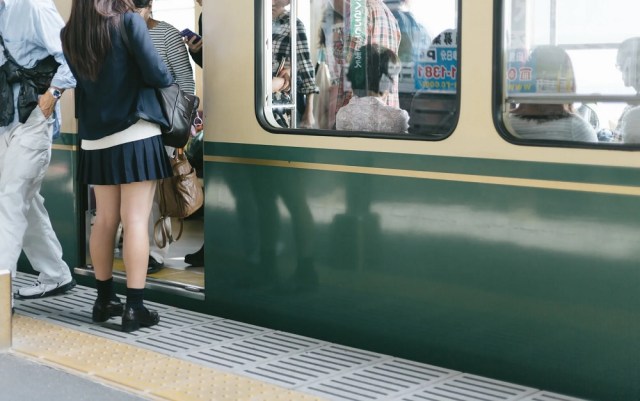
Japanese trains can get very crowded, and they also run on very precise schedules, and the only way that combination is possible is if everyone who needs to get on/off the train can do so in a swift, smooth manner. If you’re getting on the train, you should line up to the side of where the doors are opening, wait for everyone who’s getting off to do so, and then board, in the order that you’re lined up in on the platform. On the other hand, if you’re onboard a train that’s arrived at a station, even if you’re not planning to get off there, rather than blocking the door you’re supposed to step off onto the platform to let others get off, then reboard by the same door (and yes, the people who were waiting on the platform to get on the train are supposed to wait for the reboarders to reboard first).
3. Bad manners when walking through the station (24.8 percent)
You can’t use the train without using a station, so yes, there are manners to be aware of there too. Similar to the boarding process, everyone needs to work together to ensure a smooth flow of people through the station. Stations often have signs with arrows directing the flow of human traffic through walkways and on staircases, and these are supposed to be followed. Crossing over and walking against the flow can cause severe disruptions, or even collisions and injuries if someone gets bumped into and loses their balance in a crowd.
Another common complaint was foreign tourists stopping in the middle of walkways. Again, there’s an understandable reason for why this happens: some of Japan’s stations are massive and complex in their layouts, and even smaller ones can be confusing to navigate if it’s your first time in the country or you don’t read the language. Still, if you do need to stop and get your bearings, check a map, or converse with your traveling companions, first make sure you’ve moved to someplace out of the way (i.e. not the middle of a walkway or stairway) so that you’re not blocking traffic.
2. Not properly holding/setting down bags and luggage (37.1 percent)
Whether your bags are big or small, there are generally accepted rules for how to handle them. Starting with smaller ones, like purses or backpacks, it’s considered good form to hold them in front of yourself while on trains. The logic is that doing so takes up less space (essentially you transfer the space your bag would be taking up on your back or side to the otherwise unused space under your chin), and while that might not seem like it’d make much of a difference, when you multiply it by the dozens of people crammed into a rush hour train, it adds up. Likewise, sitting down on a seat and laying your bag next to you, as opposed to holding it on your lap or putting it on the overhead shelf, is considered rude, since it’s taking up a spot that someone else could be sitting in.
As for suitcases, it’s important to keep yours grouped together so as to take up as little space as possible. Even then, you should stay conscious of how much space you’re using, and also whether it’s blocking access to things like the doors or priority seats. An especially common problem is large groups of travelers essentially commandeering an entire section of a car with a cluster of suitcases, and to avoid doing so, you might want to split your party up within the train so that you’re not making any one section completely impassable.
1. Loud conversations/being rowdy on the train (51.8 percent)

Japanese people don’t expect library-level silence on trains, but there’s a general understanding that long and loud conversations should be saved for once you get off. That can be difficult to do if you and the rest of your traveling companions are pumped up with excitement about the cool stuff you’re on your way to see and do, and this complaint admittedly comes with a bit of an extra linguistic burden for foreigners. If the language you’re speaking isn’t Japanese, there’s an increased chance of it feeling like “noise” to Japanese passengers, making it more noticeable and annoying than the same conversation, at the same decibels, would in Japanese.
Still, the considerate thing to do, regardless of what language you’re speaking, is to keep your voice down. Likewise, other energetic antics, whether it’s scurrying around for group selfies, dancing for joy about making it to Japan, or anything else along those lines, is the sort of exuberance to keep a lid on until you’re off the train.
Now, having gone through all these, it’s worth pointing out that each and every one of these breaches of etiquette is something that you might see Japanese people doing too. However, that doesn’t make them acceptable behavior: it just means that some Japanese people have bad manners too. That said, most people who’ve lived or traveled in Japan would agree that, on average, Japan has a pretty high level of politeness in public spaces, and nothing on the list qualifies as esoteric-level old-school Kyoto etiquette. They’re all things that you can expect would at the very least annoy most Japanese people. With Japan in the midst of trying to sort out its feelings about the unprecedented numbers of inbound foreign tourists its receiving these days, there’s increased consciousness of and attention being paid to how travelers conduct themselves. Like it or not, if you don’t look like a local, you’re likely going to be, to an extent, seen as a representative of foreign tourism itself, so “more polite than a rude Japanese person” is definitely a standard to adhere to in how you conduct yourself.
Source: @Press
Top image: Pakutaso
Insert images: Pakutaso (1, 2, 3, 4, 5)
● Want to hear about SoraNews24’s latest articles as soon as they’re published? Follow us on Facebook and Twitter!
 The 10 most annoying things foreign tourists do on Japanese trains, according to locals
 10 times Japanese train passengers aren’t so polite【Survey】
 The 8 most annoying things people do on Japanese trains, according to local commuters
 Japan bad train manners survey reminds us of three things to watch out for while riding the rails
 15 rude things not to do on trains in Japan【Survey】
 Krispy Kreme releases Super Mario doughnuts in Japan for a limited time
 Ramen restaurant in top Tokyo tourist neighborhood skips price gouging, but how does it taste?
 7-Eleven Japan releases a crazy new viral sandwich: Chocolate Sprinkles and Whipped Cream
 Deer are appearing in Osaka City, may have wandered there from Nara[Video]
 Japan’s ministry of economy reminds us to “use sound judgment” before buying toilet paper
 Can you make butter by running with a pouch filled with cream? Let’s find out[Taste test]
 Starbucks Japan releases new My Fruit³ Frappuccino at only 34 stores around the country
 Drinkable pixels: 7-Eleven Japan creates new convenience store juice with “pixels” inside
 Nine reasons some Japanese women *only* date foreign guys
 Smartphone app finds empty restroom stalls in Tokyo subway station, makes pooing easier than ever
 Japanese onsen egg maker from 100-yen store Daiso needs to be on your shopping list
 Tokyo government organizes food truck event to clear out delinquent/homeless teen gathering area
 Cherry blossoms begin blooming in Japan with record-early starts for sakura season
 Nine amazing off-the-beaten-path cherry blossom spots in Japan for yaezakura and shidarezakura
 Stunning central Japan wisteria festival is like a purple fantasy straight out of a Ghibli movie
 Create a tiny Ghibli anime world on your bookshelf with new miniature papercraft art kits
 Studio Ghibli releases the My Neighbour Totoro tea caddy, with a magical self-closing lid
 Japan now has a “for foreign tourists only” Mt. Fuji sightseeing train[Video]
 When will the cherry blossoms reach full bloom in Japan this year?[Forecast]
 Starbucks Japan unveils new sakura cherry blossom collection for hanami season 2026
 Train station platform ramen store closes its doors on half a century of history in Tokyo
 Studio Ghibli releases Catbus pullback keychain that runs like the anime character
 Nine great places to see spring flowers in Japan, as chosen by travelers (with almost no sakura)
 Starbucks Japan releases first-ever Hinamatsuri Girls’ Day Frappuccino
 Studio Ghibli adds new Mother’s Day gift sets to its anime collection in Japan
 Virtual idol Hatsune Miku redesigned with look that adds new elements and brings back old ones
 Survey asks foreign tourists what bothered them in Japan, more than half gave same answer
 Japan’s human washing machines will go on sale to general public, demos to be held in Tokyo
 Starbucks Japan releases new drinkware and goods for Valentine’s Day
 We deeply regret going into this tunnel on our walk in the mountains of Japan
 Studio Ghibli releases Kodama forest spirits from Princess Mononoke to light up your home
 Starbucks Japan releases new sakura goods and drinkware for cherry blossom season 2026
 Japan’s newest Shinkansen has no seats…or passengers [Video]
 Major Japanese hotel chain says reservations via overseas booking sites may not be valid
 Put sesame oil in your coffee? Japanese maker says it’s the best way to start your day【Taste test】
 No more using real katana for tourism activities, Japan’s National Police Agency says
 An often-forgotten part of Japanese train etiquette that we should all keep in mind
 Train etiquette poster features legendary Japanese folklore hero in an unusual plot twist
 What are you supposed to do with your backpack on a crowded train in Japan?
 Video of foreign diplomat riding in Tokyo subway priority seat sparks manners debate【Video】
 Japanese town using ninja to correct impolite inbound tourist behavior
 Foreign tourists on Shinkansen bullet train break suitcase etiquette, angering local passengers
 Japan’s most annoying train behaviours: Passengers reveal the things that irk them most
 Foreign tourists pick the top 10 inconveniences about traveling in Japan【Survey】
 10 types of people Japanese women hate sitting next to on public transportation【Video】
 Japan votes on the rudest behaviors seen on trains and at stations this year
 Japanese celebrity (sort of) apologizes for swapping seats with foreign traveler on Shinkansen
 Man flips out on train after being confronted for his rude behavior【Video】
 To sit or not to sit? Linguistic and societal debate on Japanese train seats for the elderly
 Train etiquette: top ten inconsiderate behaviors that tick Japanese train commuters off the most
 Japanese manners videos show how to be a “really cool” traveller in Japan 【Videos】
 A reminder of why you shouldn’t be quick to judge who’s sitting in Japans’ priority train seats