
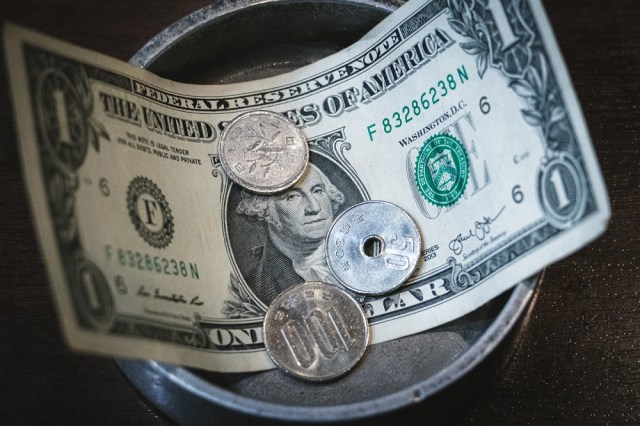
Beef cutlet chain’s policy attracting a new wave of attention as inbound foreign tourist numbers and consumer prices continue to rise.
Tipping isn’t a thing at Japanese restaurants. While some foreign-language cultural guidebooks frame the situation as tipping being rude or offensive to the sensibilities of Japanese restauranteurs, it’d be more accurate to say tipping in Japanese restaurants is seen as weird, something they don’t expect or need customers to do. Trying to tip restaurant staff in Japan will usually get you the same sort of reaction as if you tried to tip the staff at an electronics shop or shoe store, not anger, but a confused “What? No, that’s more than you’re supposed to pay.”
However, one Japanese restaurant chain has started accepting, and you could even say asking for, tips, as a direct response to an increase in foreign customers. Recently, a photo taken at a branch of beef cutlet restaurant chain Gyukatsu Motomura has been making the rounds on the Japanese Internet. The photo shows a clear plastic box near the register where customers pay for their meals with the in-English message “Tip Box. Thank you!!” written on it, and a number of bills (most noticeably 1,000-yen and US$5 notes) stuffed inside.
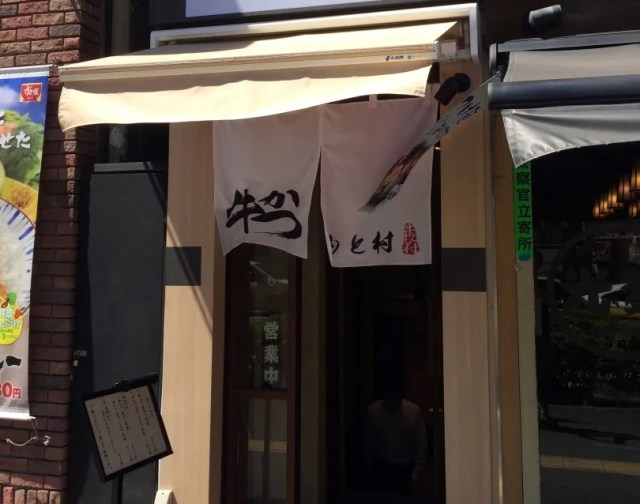
The exact branch where that photo was taken isn’t clear, but it could have been any number of Gyukatsu Motomura’s 24 branches. In February of 2024, Gyukatsu Motomura installed tip boxes in all of its restaurants except for those in which the management of the buildings/facilities they’re located in prohibited the chain from doing so.
▼ A Gyukatsu Motomura branch
Gyukatsu Motomura says it did this in response to a growing number of incidents in which foreign tourist customers attempted to give cash tips directly to the restaurant waitstaff. However, under Japanese law income tax would have to be paid on such gratuities, and with employers often handling their employees’ tax filings in Japan, Gyukatsu Motomura decided to install the tip boxes so it could centrally manage the associated reporting legalities. “We saw this as recognition of the efforts being made by everyone at the restaurants,” says a spokesperson for Gyukatsu Motomura’s managing company.
Among online reactions are local Japanese residents approving of the move, seeing it as a way for the restaurant to reap the benefits of the unprecedented inbound international tourism boom, in which many foreign travelers are flush with cash to throw around as a result of favorable-to-them exchange rates following the yen’s drop in value in recent years. Others, though, are expressing worry and frustration about how foreign tourists offering tips, and restaurants accepting them, could influence dining culture in Japan.
Currently, restaurants in Japan neither expect nor rely on tips. While izakaya/pubs and upscale dining establishments (neither of which Gyukatsu Motomura is) may include a service charge, at casual and even moderately stylish eateries, management sets the prices to what they feel is an acceptable and appropriate price, with no pressure to customers to pay extra beyond what’s listed on the menu. Likewise, restaurants offer wages at a level high enough to attract workers through their promised pay, not some unsustainably low hourly rate that they have to hope tips will make up for.
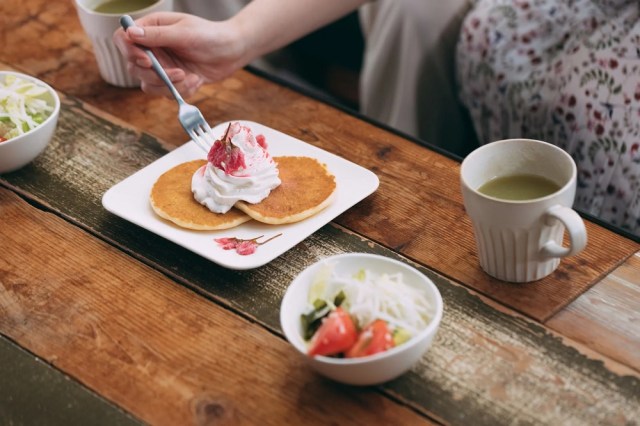
▼ Those pancakes might come with whipped cream and strawberry sauce, but they don’t come with any expectation of a tip.
Introducing tipping into that system could potentially upset its balance in all sorts of ways. If waitstaff begin supplementing their earnings with tips, employers may feel less need to offer as high of a base pay as they have been. Alternatively, if enough restaurants introduce tipping while keeping base pay unchanged, restaurants without tipping systems would need to raise their base pay in order to secure workers, and since restaurant owners are unlikely to just eat those added costs, they’d probably be passed on to consumers as higher prices.
Even setting aside the issue of increased costs, there’s also the possibility that foreign tourists throwing extra money at restaurants in and of itself could lead to higher prices, as a demonstration that there’s a customer demographic willing to pay more than what the restaurant is charging. However, while an extra 1,000 yen here or there during a two-week vacation in Japan might not feel like much to foreign tourists who’re leveraging a favorable exchange rate, adding tips, or tip-triggered menu price increases, onto eating-out expenses would be a major burden to the local Japanese population, especially as many people in Japan are already struggling with rapid inflation that’s affecting consumer prices for just about everything.
In addition, setting up a tip box, as Gyukatsu Motomura has, creates a sort of chicken-and-the-egg situation. Yes, Gyukatsu Motomura says it installed tip boxes because foreign tourists were trying to give them tips, but the presence of a tip box implicitly solicits gratuities. Putting a tip box next to the register may not completely normalize tipping at Gyukatsu Motomura, but it moves the needle in that direction. By creating a system of “Here’s how you can tip us,” you separate your customers into two groups: those who tip, and those who don’t. Foreign tourists who see Gyukatsu Motomura’s tip boxes may mistakenly interpret them as a sign that tipping is expected in Japanese restaurants and feel compelled to slide in some extra cash, widening the gap between tourist and local diners, with the later then having to choose between adhering to a costly foreign custom or feeling guilty, or at least self-conscious, about simply paying the price the restaurant asks for.
All of the above is before even getting into the lengthy discussion of how in the U.S., the prospect of a tip is widely considered a necessity to ensure even adequate service, whereas in Japan the societal expectation is that good service should always be provided, and that payment is an internal issue for waitstaff and management to work out without direct involvement by the customer. With no tipping, there’s no incentive for waitstaff to prioritize large parties or diners ordering more expensive items over other customers, helping to ensure universally good service for all.
It’s worth keeping in mind that contributing to Gyukatsu Motomura’s tip boxes is completely voluntary. Tipping in the U.S., though, is, even now, technically completely voluntary, and yet has still become a practically compulsory social norm. So it’s not surprising that while Japan’s local population doesn’t necessarily begrudge Gyukatsu Motomura picking up some extra cash from free-spending Japanese tourists, they don’t like the idea of it leading towards tipping becoming prevalent at restaurants in general.
Source: Encount via Yahoo! Japan News via Jin
Top image: Pakutaso
Insert images: SoraNews24, Pakutaso
● Want to hear about SoraNews24’s latest articles as soon as they’re published? Follow us on Facebook and Twitter!
 Restaurant payment app starts its second attempt to make tipping a thing in Japan
 More tip jars appear at Japanese restaurants, but there are important reasons why you shouldn’t tip
 Five reasons there’s no tipping at restaurants in Japan
 Is China’s don’t-go-to-Japan warning affecting the lines at a popular Tokyo gyukatsu restaurant?
 New Tokyo restaurant charges higher prices to foreign tourists than Japanese locals
 Japan now has a special desk for people who work at home with a pet cat[Photos]
 Famous Tokyo cherry blossom spot installs view-blocking screens to fight overcrowding[Video]
 Uniqlo announces new T-shirts for One Piece, Naruto and more for manga publisher’s 100th birthday
 Krispy Kreme releases Super Mario doughnuts in Japan for a limited time
 Japanese kindness restores our faith in humanity after a highway bus accident in Tokyo
 Final Fantasy invites you to adventure in Fukushima with Fukushima Fantasy Chocobo fun[Video]
 Starbucks Japan adds new Sencha Matcha Tea Frappuccino to its menu, but only at 28 locations
 Nara unveils new vending machines that sell deer crackers
 Japan’s ministry of economy reminds us to “use sound judgment” before buying toilet paper
 Totoro and Calcifer become little light-up lanterns for Ghibli-style excursions or at-home decor
 7-Eleven Japan releases a crazy new viral sandwich: Chocolate Sprinkles and Whipped Cream
 Starbucks Japan releases new My Fruit³ Frappuccino at only 34 stores around the country
 Japan now has a “for foreign tourists only” Mt. Fuji sightseeing train[Video]
 Nine amazing off-the-beaten-path cherry blossom spots in Japan for yaezakura and shidarezakura
 Stunning central Japan wisteria festival is like a purple fantasy straight out of a Ghibli movie
 Studio Ghibli releases the My Neighbour Totoro tea caddy, with a magical self-closing lid
 Create a tiny Ghibli anime world on your bookshelf with new miniature papercraft art kits
 Studio Ghibli unveils new Rollbahn notebook in honour of Howl’s Moving Castle
 Starbucks Japan unveils new sakura cherry blossom collection for hanami season 2026
 Train station platform ramen store closes its doors on half a century of history in Tokyo
 Studio Ghibli releases Catbus pullback keychain that runs like the anime character
 Japanese onsen egg maker from 100-yen store Daiso needs to be on your shopping list
 Nine great places to see spring flowers in Japan, as chosen by travelers (with almost no sakura)
 Starbucks Japan releases first-ever Hinamatsuri Girls’ Day Frappuccino
 Cherry blossoms begin blooming in Japan with record-early starts for sakura season
 Survey asks foreign tourists what bothered them in Japan, more than half gave same answer
 Japan’s human washing machines will go on sale to general public, demos to be held in Tokyo
 Starbucks Japan releases new drinkware and goods for Valentine’s Day
 We deeply regret going into this tunnel on our walk in the mountains of Japan
 Studio Ghibli releases Kodama forest spirits from Princess Mononoke to light up your home
 Starbucks Japan releases new sakura goods and drinkware for cherry blossom season 2026
 Japan’s newest Shinkansen has no seats…or passengers [Video]
 Major Japanese hotel chain says reservations via overseas booking sites may not be valid
 Put sesame oil in your coffee? Japanese maker says it’s the best way to start your day【Taste test】
 No more using real katana for tourism activities, Japan’s National Police Agency says
 All you need to know about Japan’s unasked-for restaurant appetizers that you have to pay for
 Stingy people rejoice as Japanese restaurants in New York introduce a ban on tipping
 7 odd and uniquely Japanese restaurant experiences
 Akihabara ramen restaurant becomes a hit with foreign tourists
 Time for Japan to start tipping taxi drivers? Cab company now gives passengers option in Tokyo
 Could you eat 50 beef cutlet refill pieces? If so, this Japanese restaurant will let you eat for free
 Foreign tourist steals offering and chugs booze in Japanese cemetery, sparking police investigation
 Tsukemen ramen restaurant becomes a hit with foreign tourists in Tokyo
 5 cultural tips for taking photos in Japan
 Ramen restaurant’s English menu prices are nearly double its Japanese ones, denies discriminating
 W.T.F. Japan: Top 5 crazy awesome features of Japanese restaurants 【Weird Top Five】
 Japanese avoiding domestic travel as foreign tourists increase, possibly creating vicious cycle
 Japanese prefectural governor wants foreign tourists to pay special extra fee
 Is Tokyo’s obviously for-foreign-tourists wagyu sukiyaki crepe delicious enough for a local?
 Japanese restaurant chain’s solo-diner boxes look depressing, but are actually pretty awesome