
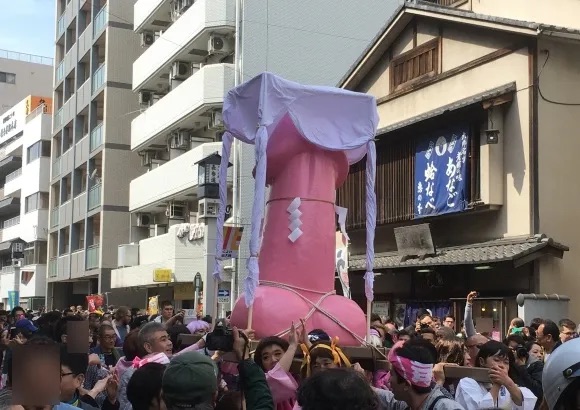
Festival of the Steel Phallus deity gets a steel lid in a rural city.
For all its staid traditions and formal etiquette, Japanese culture can be surprisingly uninhibited in ways that can leave visitors from abroad clutching their pearls.
Take, for example, a new manhole lid that’s just been installed in front of Kobunoki Shrine in Ninohe City, Iwate Prefecture. This sacred place of worship is in full support of the new manhole cover, which features… a colourful and playful phallic design.
While large, glistening penises aren’t something you’re likely to find on a city-endorsed road cover in other parts of the world, here in Japan they don’t shy away from images of male genitalia, seeing them as symbols of the fertility deity Kanamara Daimyojin.
Kanamara Daimyojin, which literally translates as “Great Deity of the Metal Phallus”, is a Shinto deity associated with fertility, safe childbirth, marriage, and protection from sexually transmitted diseases. Commonly represented by a phallus symbol, Kanamara Daimyojin is most famously worshiped at the annual Kanamara Matsuri held at Kanayama Shrine in Tokyo’s neighbouring Kawasaki Prefecture.
▼ The festival, which was held on 5 April this year, features phallic floats, foods and souvenirs.
It was the parishioners’ association at Kobunoki Shrine who donated the manhole cover to the city, in the hopes that it will encourage passersby to stop and take notice of the image, which has been in the hands of a specialist designer since June last year. With its bright, neon-like colours, this manhole lid stands out on the path right in front of the shrine’s vermilion torii gate, and it’s been drawing attention since it was installed on 24 March.
The attention is a welcome draw for the rural city, which is facing economic challenges as younger residents move to big cities. The shrine itself is seen as an important asset for the community, so much so that it received overwhelming support for the crowdfunding campaign held to fund its recent relocation, surpassing its 10 million yen (US$63,085.71) goal.
▼ Despite the recent relocation (the below image shows the pre-construction phase in late 2024), Kobunoki Shrine has a history that can be traced back to 1854.
The shrine is now just a two-minute walk from Ninohe Station, which is a stop on the Tohoku Shinkansen line, making it easy to access from Tokyo. The trip from Japan’s capital takes about three hours, but it’ll make for a memorable destination… and the fertility god will smile on you when you get there.
Shrine Information
Kobunoki Shrine / 枋ノ木神社
Address: Iwate-ken, Ninohe-shi, Ishikiridokoro, Kobunoki 50-7
岩手県二戸市石切所字枋ノ木 50-7
Open 24 hours
Website
Sources: Iwate Nippo, Kobunoki Shrine, Ready For/Ninohe Station Area Neighbourhood Association
Images©SoraNews24
● Want to hear about SoraNews24’s latest articles as soon as they’re published? Follow us on Facebook and Twitter!
 Japan reportedly adding Japanese language skill requirement to most common foreigner work visa
 New 7-Eleven sandwich goes viral in Japan, but is it everything it’s cracked up to be?
 Peanuts and Coke becomes a viral hit in Japan, but is it a trend worth joining?
 How to take your home ramen to the next level by making your own chashu pork in a frying pan
 McDonald’s Japan adds new Hello Kitty and Pompompurin drinks to the menu for a limited time
 Japan reportedly adding Japanese language skill requirement to most common foreigner work visa
 New 7-Eleven sandwich goes viral in Japan, but is it everything it’s cracked up to be?
 Peanuts and Coke becomes a viral hit in Japan, but is it a trend worth joining?
 How to take your home ramen to the next level by making your own chashu pork in a frying pan
 McDonald’s Japan adds new Hello Kitty and Pompompurin drinks to the menu for a limited time
 Foreign man arrested for walking on Shinkansen tracks, claims he was on the run from yakuza
 Japanese manhole lid raises eyebrows with fertility god symbol that looks like… well, you know
 7-Eleven Japan’s new baked-in-store sweet treat is only available in three parts of the country
 Man bites woman at cherry blossom park in Japan, dies shortly after
 Deer that appeared in downtown Osaka gets a new home, a new name, and a lot of snacks[Video]
 Pokémon and Ikea Japan cross over into each other’s worlds with collaboration events
 Starbucks Japan closing only Shinkansen platform branch for popularity-triggered renovations
 Two food hacks take Japan’s convenience store fried chicken to amazing new sandwich heights
 You can assemble a well-balanced team of Pokémon, them eat them, thanks to Japanese cake chain
 Fading Tokyo – Searching for signs of the Showa era as local neighborhoods evolve[Photos]
 Pokémon lacquerware series expands for Year of the Horse with new handcrafted design[Video]
 Tokyo turns its phone booths into free Wi-Fi hotspots, and here’s how to use them
 Tokyo teahouse serves up a sakura matcha dessert you won’t find anywhere else
 Totoro Fund line of beautiful artwork and apparel lets you help the real-world Totoro Forest
 Japan now has a special desk for people who work at home with a pet cat[Photos]
 Famous Tokyo cherry blossom spot installs view-blocking screens to fight overcrowding[Video]
 Uniqlo announces new T-shirts for One Piece, Naruto and more for manga publisher’s 100th birthday
 Train station platform ramen store closes its doors on half a century of history in Tokyo
 Starbucks Japan releases new My Fruit³ Frappuccino at only 34 stores around the country
 Studio Ghibli releases Catbus pullback keychain that runs like the anime character
 Krispy Kreme releases Super Mario doughnuts in Japan for a limited time
 Japanese onsen egg maker from 100-yen store Daiso needs to be on your shopping list
 Survey asks foreign tourists what bothered them in Japan, more than half gave same answer
 Japan’s human washing machines will go on sale to general public, demos to be held in Tokyo
 Starbucks Japan releases new drinkware and goods for Valentine’s Day
 We deeply regret going into this tunnel on our walk in the mountains of Japan
 Studio Ghibli releases Kodama forest spirits from Princess Mononoke to light up your home
 Starbucks Japan releases new sakura goods and drinkware for cherry blossom season 2026
 Japan’s newest Shinkansen has no seats…or passengers [Video]
 Major Japanese hotel chain says reservations via overseas booking sites may not be valid
 Put sesame oil in your coffee? Japanese maker says it’s the best way to start your day【Taste test】
 No more using real katana for tourism activities, Japan’s National Police Agency says
 Foreign man arrested for walking on Shinkansen tracks, claims he was on the run from yakuza
 Japanese manhole lid raises eyebrows with fertility god symbol that looks like… well, you know
 7-Eleven Japan’s new baked-in-store sweet treat is only available in three parts of the country
 Man bites woman at cherry blossom park in Japan, dies shortly after
 Deer that appeared in downtown Osaka gets a new home, a new name, and a lot of snacks[Video]
 New Studio Ghibli Spirited Away merchandise: Golden amulets tell fortunes from No Face’s belly
 Japanese smart mirror with sexy anime voice will feed women compliments, read their moods【Video】
 What Japanese women really think about the gender gap in Japan【Video】
 Anime voice actor star of Cowboy Bebop marries former idol less than half his age
 Leading Japanese voice actors help develop new line of throat lozenges
 Drift ice in Japan is a disappearing winter miracle you need to see now
 Poop is in full bloom at the Unko Museums for cherry blossom season
 Yakuzen ramen restaurant in Tokyo is very different to a yakuza ramen restaurant
 Tokyo street sweets: The must-snack treats of Nakano’s Refutei