It rarely appears in beginner or intermediate textbooks, but spend a day with any native Japanese speaker and you’ll soon realise that onomatopoeia is a vital part of the language. Utterances such as, “The rain fell like ‘pssshaaaa'” and, “My heart was going ‘boom boom boom’ the whole time!” may come across as a little ineloquent when said in English, but in Japanese these kinds of mimetic words are not only considered perfectly acceptable, but pop up absolutely everywhere.
So if you’ve ever wondered what sound a Japanese pig makes, how best to describe a rolling boulder as opposed to a tiny marble, or would be perplexed if a doctor asked whether the pain you’re feeling is more shikushiku than kirikiri, now’s your chance to hone your language skills and add a few new words to your Japanese vocabulary!
There are in fact three distinct types of onomatopoeia in the Japanese language: 擬声語 giseigo, 擬音語 giongo and 擬態語 gitaigo. Let’s take a look at each and try out a few examples, starting with the simplest and most familiar.
- 擬声語 Giseigo
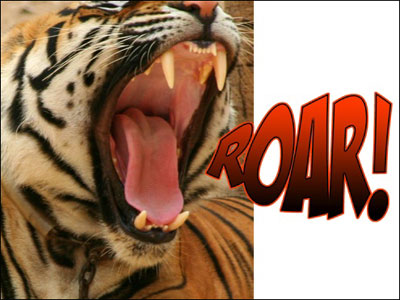
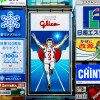
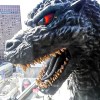
“Gao~!”
The simplest of the lot, these are words that mimic voices and sounds made by living things. Made up of the kanji characters 擬 gi (mimic) 声 sei (voice) and 語 go (word/language), the term giseigo literally means “voice mimicking word”, and are something that we encounter even before we can put whole sentences together, regardless of our native tongue.
In the same way that in English we teach our children that cats go “meow” and dogs go “woof”, Japanese too has a full animal phrase book. Tell a native Japanese speaker that in English a pig says “oink”, however, and they’ll probably look at you like you’ve just lost your mind, since Japanese giseigo really are much closer to the actual sounds animals make, regardless of whether the speaker does their best farmyard impression. Check these out:
buubuu: a pink grunting.
gao: a large animal or monster’s roar.
gerogero: a frog croaking.
ki~ki~: monkeys chattering.
kokekokko~: “cock-a-doodle-doo”, or the sound made by cockerels and roosters. Japanese are always especially astounded when they hear the English version of this one.
mehmeh: a sheep or goat bleating.
mo~mo~: a cow lowing (remember, it’s not “moo” as in “boo” but “mo” as in lawn “mower”, which when you think about it is kind of what cows do).
nyan: as if we needed reminding, this is a (nyan) cat meowing.
wanwan: a dog barking
- 擬音語 Giongo
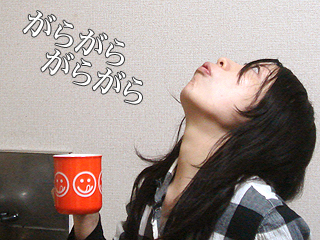
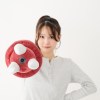
“Gargle gargle”
Most frequently found in manga, giongo – written with the kanji for mimic 擬, sound 音, and word 語 – are used to describe sounds that exist in the world around us. Rather than making their own mimetic words up, however, or being stumped when asked how to spell the word that describes, say, paper being ripped or a car braking hard, most native Japanese speakers will be able to immediately point you to the correct phrase. Here’s a very small sample of what’s on offer.
katakata/gatagata: the sound of rattling, the latter being a “heavier” sound.
gatangoton, gatangoton: the rhythmic sound of a train clattering along its tracks.
garagara: the sound of rattling, often used to describe a person gargling.
mesomeso: uncontrollable weeping.
pakupaku: the sound of someone eating or happily chomping on something.
pa~n/ba~n: said with feeling, this mimics the sound of a firm slap or a (small) explosion such as a balloon popping, the latter for deeper pitch.
patapata: the sound of raindrops falling softly onto a surface, wings flapping, or light, quick footsteps.
pekopeko: an empty stomach grumbling.
poki/boki: the sound of thin object, such as a twig or waribashi chopsticks, being broken. The latter is used for larger, thicker objects.
shikushiku: to cry audibly though not as hard as mesomeso.
tekuteku: footsteps as a person trudges along, usually depressed or crestfallen.
waiwai: many people being loud.
warawara: the sound of a place bustling with activity and movement.
za~za~: the sound of heavy rainfall
- 擬態語 Gitaigo
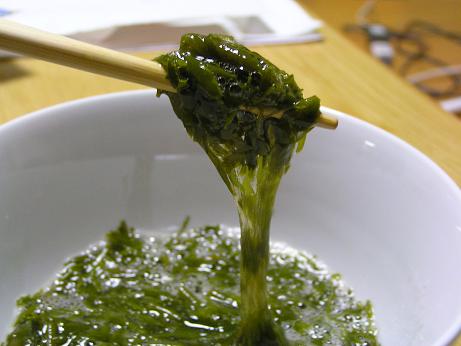
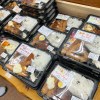
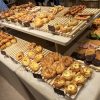
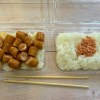
“This dish is the most nebaneba I’ve ever seen…”
This is where things get really interesting, especially for those whose native languages do not employ such words. Like the two categories that come before it, gitaito 擬態語 features the kanji characters for “mimic” and “sound”, but sandwiched in the middle you’ll find “態”, meaning attitude, condition or appearance. Not technically onomatopoeia, gitaigo are mimetic words that describe actions or states and can be applied to almost anything. There is some cross-over with giongo, but on the whole these words do not exist as “sounds” per-se, and used in the right context their meaning will be obvious to a native speaker.
batabata: to be extremely busy and rushing around, sometimes (but not always) making a lot of noise in the process
boroboro: the word used to describe your clothes, bag, books etc being worn out and shabby.
burabura: to stroll or wander around (usually positive and suggesting a carefree attitude).
buyobuyo: used to describe something being fat or flabby.
furafura: to be dizzy or unsteady on one’s feet.
garagara: to be empty or unoccupied. This is often used to describe things like rooms, train carriages etc.
gassha~n: the sound of something fragile, such as glass, exploding, frequently used in manga.
geragera: loud laughter. Imagine the powerful, bearded character Mamma Aiuto from Ghibli’s Porco Rosso bursting into laughter and you’ll be on the right track.
iraira: to be irritable or on angry, typically in adults.
ja~n!/jaja~n!: the Japanese version of “tadaa”, used when something (usually impressive or pleasant) appears or is suddenly revealed.
jirojiro: to stare, often conveying hostility or suggesting a lack of manners in the person doing it.
ka~n ka~n/go~n go~n: a church or temple bell ringing, the latter being a lower pitch.
kirakira: something sparkling; diamonds, the sunlight on the surface of a lake, the eyes of the girl or boy you’re trying to woo…
kirikiri: a sharp pain.
kusukusu: the sound of giggling or quiet laughter.
kasakasa/gasagasa: crisp, dry objects, such as paper rubbing together, the latter used for larger objects.
korokoro/gorogoro: round, rolling objects, usually large and heavy when the latter is used.
kurukuru: an object whirling or revolving at speed.
morimori: word used to describe something or someone swelling up, usually with pride or energy.
nebaneba: sticky and stringy substances. The perfect word to describe foods like natto.
nikoniko: you may know it from the video service of the same name, but this word describes smiling happily.
niyaniya: not to be confused with “nya“, this describes a person grinning.
nyoronyoro: a long, thin object or creature squirming or moving.
perapera: a word used most often to describe fluency in speech. It can also be used to describe the action of flipping pages in a book.
pikapika: shiny and new, not just one of our pal Pikachu‘s few phrases of speech.
punpun: to be angry or sulky. Often used to imply an element of cuteness at the same time.
pyonpyon: hopping or skipping with spritely energy.
shinshin: not to be confused with “chinchin” (which means penis), this word is predominantly used to describe soft snow falling silently and at speed, and is one of this writer’s absolute favourites.
ukiuki: to be in high spirits.
shikushiku: a constant dull pain when used with the word “itai”, meaning pain.
uruuru: describes the action of wandering around aimlessly (usually a negative connotation), otherwise describing someone’s teary-eyed expression.
wakuwaku: to be excited or nervous in anticipation.
zukizuki: a throbbing pain. A very useful word when going to the clinic!
There are, of course, hundreds of other onomatopoeic words out there for you to discover and learn, so keep your eyes and ears open and see what you can find. It may take a while to learn how to use each of these terms, but with this short list as a reference and a little practice, you’re bound to be told how “perapera” you are in no time! Be sure to let us know your own favourite Japanese onomatopoeic words in the comments section below!
Top image: Wikimedia Commons
Additional images: nifty, shinribukuro rakuten