
Last spring, BuzzFeed released a pair of videos, one dealing with what people around the world eat when they get up in the morning, and the other about what they eat after they get liquored up in a bar. Those are both interesting concepts, since breakfast is the most important meal of the day, and the post-drinking, pre-hangover snack is the happiest, but we couldn’t help but scratch our heads at their selections for Japan, neither of which were things we remembered eating in our time living in the country.
Now, BuzzFeed has moved on from the foods Japan puts in its mouth to the words coming out of it, with a new video titled 11 Anime Expressions To Show How You Really Feel. Let’s see how they handled the switch from gastronomy to linguistics.
Right off the bat, let’s clear up that the main objective of the video is to get a laugh, and in that regard, it works. It’s quick-paced and has a couple of clever twists, and provides a reasonable amount of chuckles for the minute and a half it takes to watch.
With that out of the way, it’s time to put on our humorless linguist hat.
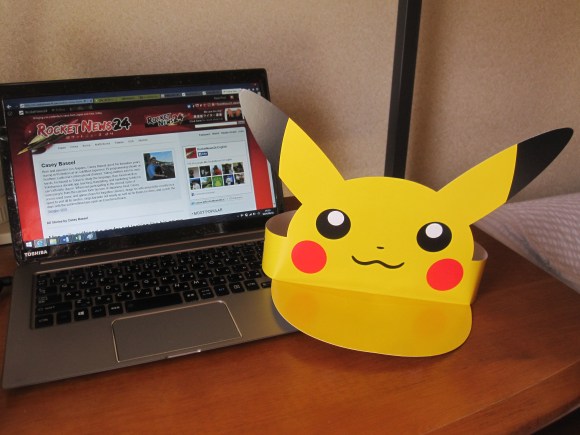
▼ Which is, ironically, shaped like Pikachu
Let’s take a look at Buzzfeed’s 11 picks, along with their provided translations.
1. kanashii/sadness
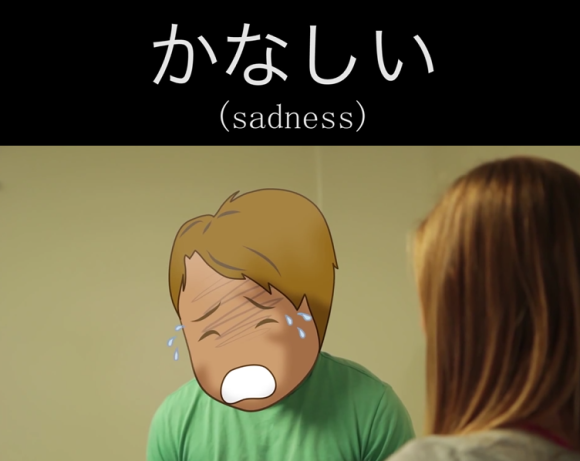
Actually, kanashii is an adjective, so really it should translate as “sad.” Like most Japanese adjectives that end in -i, you can change it to a noun by swapping the last letter for -sa, so if you really wanted to say “sadness,” it’d be kanashisa.
Nice anime-style giant tears, though!
2. neru/sleepy
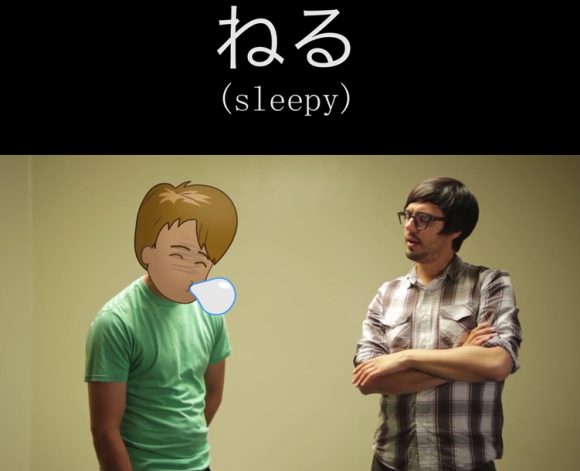
Um, actually, “sleepy” would be nemui, which just like kanashii is an adjective that ends in -i. Generally, Japanese words that end in -u are verbs, and neru actually means “sleep.”
The video does a little better with the imagery, as a bubble similar to this one usually does designate a sleeping character in manga. It’s usually seen coming from the nose, though, since it’s supposed to be a snot bubble. Seriously, if you have this much mucus coming from your mouth, see a doctor. Odds are the fatigue you feel isn’t from being nemui, but from being near death because of a serious disease/infection of the mouth.
3. shunki/sexual desire
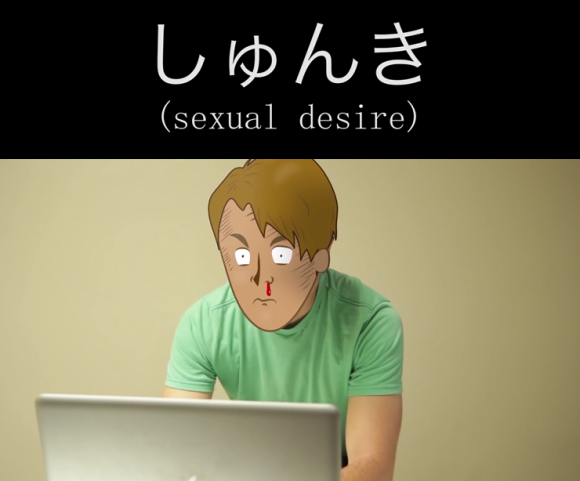
Nice, this time the Japanese term and the provided English equivalent are both the same class of word, as shunki is indeed a noun, and it does mean sexual desire. However, there’s another Japanese word with the same meaning, seiyoku, which is a little more readily understood than the rather stiff shunki.
4. hazukashii/embarrassed
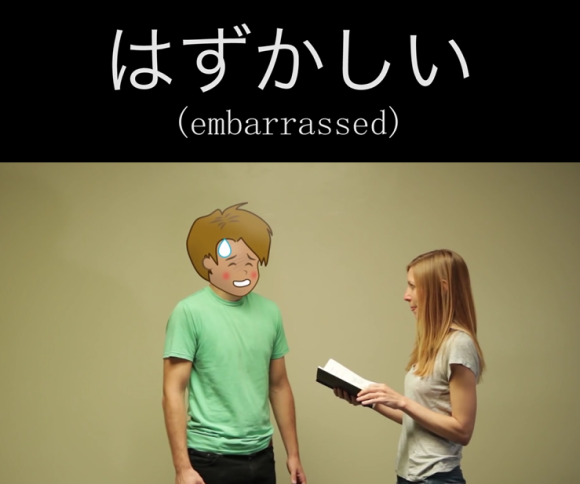
No problems here, plus the continued use of standard anime visual cues with the sweat drop denoting embarrassment or awkwardness.
5. itamu/dejected
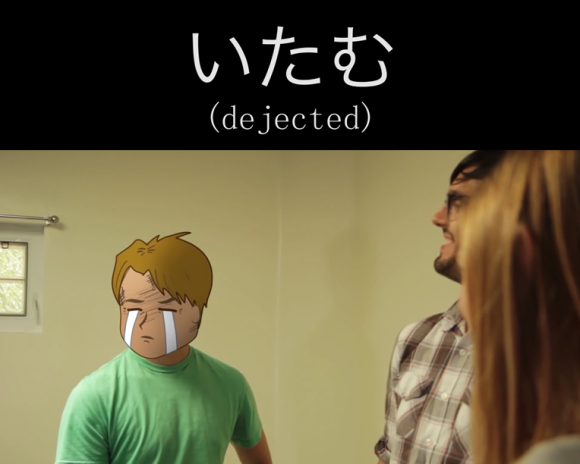
BuzzFeed is on pretty solid linguistic ground here, too. Sure, itamu is technically a verb, but it can be used to show someone is feeling a strong disappointment. Still, it’s a pretty stiff choice of vocabulary, and saying it would be akin to announcing, “I lament this!”
The tears are perfect, though, as these less kinetic river-like flows are the anime artist’s choice to show someone trying but failing to maintain a stiff upper lip.
6. shikatanai/annoyed
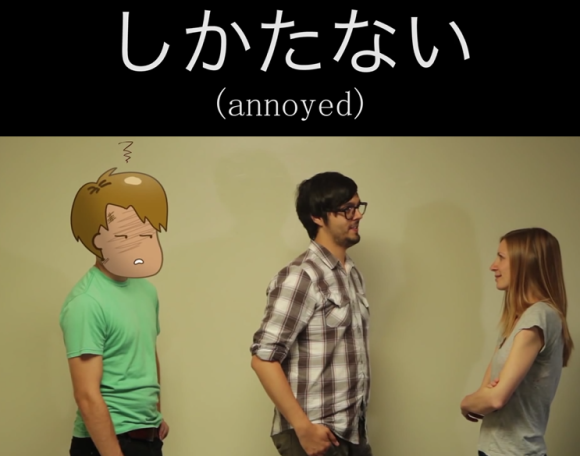
Like shunki, this is another puzzling translation choice, since actually, the phrase shikatanai is much more likely to cause annoyance than show it. It literally means, “There’s no way to do it,” or put more naturally, “It can’t be helped.” Given Japanese society’s leanings towards fatalism and conflict avoidance, you’ll often hear this in situations where it really could be helped, but no one is willing to take a stand and make a change.
Need to show someone you’re annoyed in Japanese? How about ira ira suru, which shares a syllable with its English equivalent, “to feel irritated.”
7. doki doki/nervous
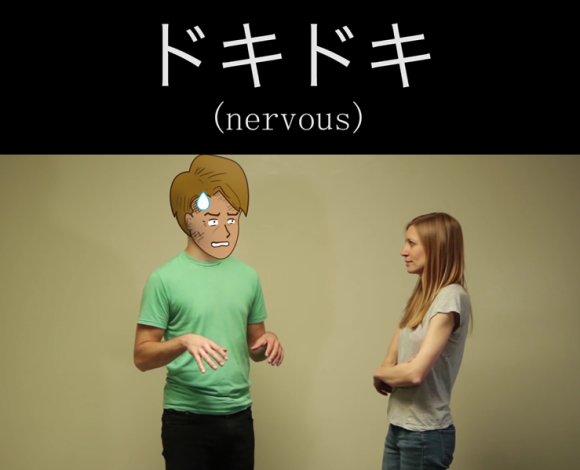
Technically, BuzzFeed is in the clear here, and also gets bonus points for the return of the sweat drop. If you’ll forgive us for spoiling the joke, though, doki doki is a bit of an odd choice for your girlfriend telling you she might be pregnant.
Doki doki refers to the quickened beating of your heart, whether out of excitement or tension. It’s got a definitely feminine ring to it, though. Teenage girls’ hearts go doki doki when they pass by their dreamy upperclassman in the halls on the way to math class, for example. Being told “I’m pregnant” isn’t the time for a grown man to feel doki doki…
8. shokku/shocked
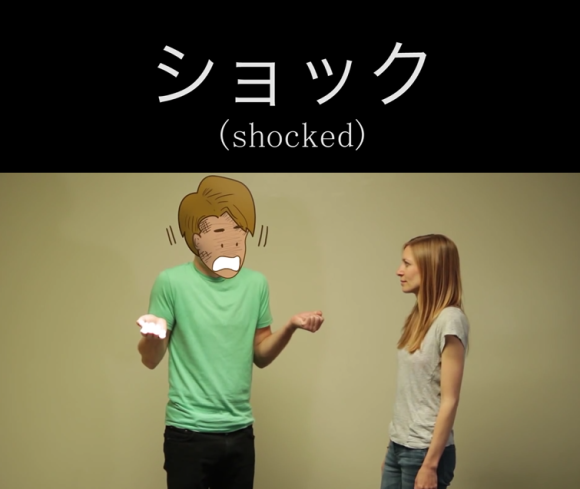
Nice work, since in Japanese the -ed in “shocked” always drops off.
9. konran/confused
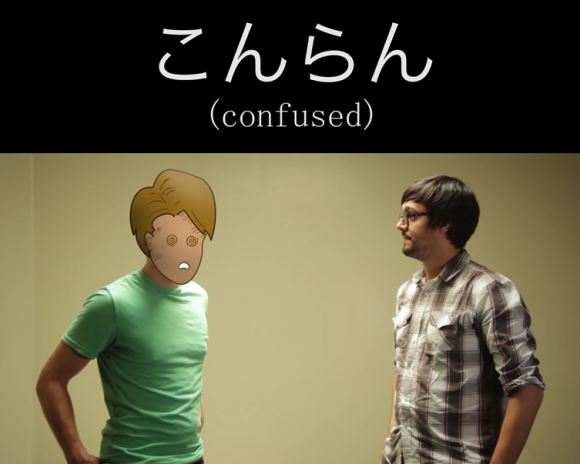
Linguistically this isn’t so bad, but it’s a bit formal for the sort of shockingly zany scenario depicted in the video. Something like wake ga wakaranai shows the same lack of understanding, but with a bit more punch, akin to, “What the heck is that supposed to mean?” Konran, meanwhile, is more often used in formal or business situations when discussing confusion, since it’s a bit stiffer.
10. ureshii/happy

No problems here, but since anime-morphing man is a guy, he might want to go with ureshii na or ureshii n da yo, both of which sound more masculine than the somewhat dainty unadorned ureshii.
11. okoru/angry

Once again, we’ve got a verb (which we can tell from it ending in -u), but in Japanese using okoru (“to be angry”) is indeed the most natural way to talk about the emotion.
However, if you’re upset enough to get an anime-style cross-shaped vein bulging out of your forehead (which BuzzFeed does a great job showing), you might want to use a more impassioned phrase such as mukatsuku or atama ni kita, essentially “I’m pissed” or “I’m mad as hell.”
So, all in all, how did BuzzFeed do? Well, these are Japanese words, but we’re not sure we’d call them “expressions.” It’s more like a list of vocabulary, many of which wouldn’t really be spoken in these situations, and we’re not sure what makes any of them particularly anime-like.
▼ “Memories” isn’t a Marvel Comics expression. It’s just English.

Still, we’re always happy to see people taking an interest in Japanese, and adding a dash of fun and humor can help create the sort of lasting impression that makes it easier to remember a new word. The video’s explanations may miss as often as they hit, but it’s always nice to see someone trying to provide a little context for a language lesson.
So for making that effort, otsukaresama, BuzzFeed.
Source: Livedoor, YouTube
Top image: YouTube
Insert images: YouTube, RocketNews24, Brandeis University