

As you may have heard, e-books and the Internet are leading the charge to burn down libraries, destroying civilization, and generally ruin everyone’s day. While this may be a bit of an exaggeration, there’s no denying the impact that these disruptive technologies have had on how we read and where we buy our content.
This is true even in Japan, which has a rather significant publishing industry and a large pool of eager readers, where physical books and magazines have had high sales well into the 21st century. While the country is known for its technology, Japanese consumers have been slow to adopt new modes of purchasing their texts.
But all that’s starting to change.
As we’ve seen in many locales, the rise of e-book readers and online retailers has opened up access to more and cheaper books for the average person. And with improved distribution, it’s a matter of days–at most–from the time you click “purchase” to the time your new books arrive on your doorstep.
Japan, though initially resistant, has proven not much different. Amazon Japan and Rakuten both have e-book readers and both sell books at prices lower than what you’ll usually find in a store, especially small-to-mid-sized retailers and specialty stores.
In fact, Mainichi Shinbun recently reported on the closing of some of these smaller stores, marking the shift in the retail landscape from brick-and-mortar stores to digital retailers. In the thirteen years between 2000 and 2013, 34 percent of the bookstores in Japan were shuttered.
▼Kaibundo Bookstore, nationally recognized bookstore, before September closure
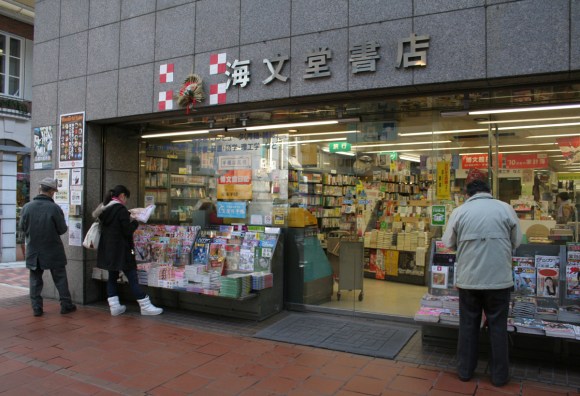
Even Kobe’s Kaibundo Bookstore, a nationally famous bookstore specializing in maritime publications, felt the crunch and finally went out of business last month, 99 years after opening. On the stores final day of business, a crowd of hundreds gathered, waiting for the shutters to close for good. Hiroyasu Fukuoka, the store manager, stood outside and addressed the numerous people, saying, “Everyone, please buy books at bookstores. If you don’t bookstores will completely disappear from your towns.”
▼Mr. Fukuoka addressing a crowd of hundreds before closing Kaibundo’s doors forever.

Speaking with reporters, the store manager explained the problem by laying the blame on customers. “People are impatient,” he told reporters, adding that customers wouldn’t wait a week for a book to arrive when they could get it from Amazon in a few days. Mr. Fukuoka also added that bookstores used to appeal to customers by offering valuable recommendations and finding rare books. But now the recommendation algorithms are better online–and so is the selection.
Even large chain stores are struggling to keep up with Internet retailers. It seems that the only way for large chains like Maruzen and Kinokuniya to stay competitive is to maintain enormous stocks of books on hand–which can get expensive quickly. Whether or not it’s an effective tactic remains to be seen.
▼Ripuru Naniwa, another nationally recognized bookstore that closed this year.
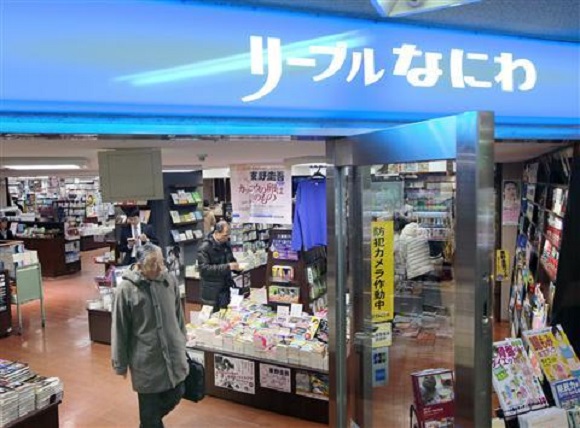
While avid readers and booksellers alike are fretting about the future of bookstores, Internet commenters have a slightly more cavalier attitude towards the situation.
Amazon and convenience stores are good enough.
The extinct bookstores will live on in our hearts.
It’s natural selection. Sad as it may be, just give up!
I like bookstores as places, but when it comes to actually buying books, I go online.
Specializing in a specific field and not bothering to sell country-wide online is no good. Make it so people can get your books online. Right now, Amazon is doing this, and that’s why they’re winning.
It’s bizarre how little business sense bookstore owners have. Read a book or something and learn a little!
Does he not understand how business works?? No matter how you complain, it won’t change anything.
Do something about your distribution system! You’re taking way too long to deliver books.
What in the world is the merit of buying at a bookstore?
Don’t just stand around crying! Create some reason for us to buy books at your store. If you can’t, you’re just going to go down and down, and it’s only natural that you go out of business.
A harsh lot of folks, these commenters are! But it’s not difficult to understand their point, is it? If you can’t take the papercuts, get out of the book business.
▼Interior of home branch of Maruzen, one of the largest bookstore chains in Japan.
That said, we can’t help wondering if there is some cultural or societal need for bookstores. Isn’t it possible that there is something to justify subsidizing the industry, especially since the Japanese government currently subsidized domestic farmers? It’s hard to say!
Obviously, this is not an issue that Japan is facing alone, and it clearly affects everything from music to clothing. As long as something can be bought online for a few dollars less, that’s where customers will tend to go.
Now the question is: Who can disrupt the disruptive technology?
Sources: Itai News 2Channel, Mainichi
Images: Konohana, YouTube, Maruzen, Yamamori 2Channel News