

I’ve lived abroad three times in my life. Once was a homestay in France, once was a semester studying in Germany, and now I live and work in Japan. I don’t expect that I will ever move back to the States. I love Japan and have wanted to live abroad almost as long as I can remember. Even so, it has sometimes been challenging for a girl from suburban Arizona who didn’t even get a passport until she was 18, and lately I’ve been wondering what I would tell my younger self to better prepare her for this crazy expat life.
With the help of our globetrotting friends, we’ve come up with this list of seven things you should know before moving abroad.
1. Not everybody cares about your adventures
I get it. Moving abroad is super exciting! A new culture, new city, new language, new people, there’s just so much to take in and you want to tell your friends and family back home all about it. Only problem is, they don’t seem all that interested. Sure, when you talk to them, they ask, “So, how’s [insert country here]?” But before you can even start telling them about this amazing noodle stand you found in an alley or the weird way everybody at the office stands up and shouts “GOOD MORNING!!!” when the boss arrives, they’ve moved on to gossiping about the new guy June is seeing and how he works at that shady body shop down on 8th Street and always wears sleeveless shirts.
This is frustrating. And totally normal.
Conversations require a shared frame of reference, and it’s not always terribly interesting for people back hope to hear about the little details of your life abroad because they may not be able to access the topic in a way that’s interesting for them. But you do know June and that shady body shop on 8th and how silly sleeveless shirts are, so that is a topic everyone can join in on. Your discoveries and adventures seem far more momentous to you than some trivial neighborhood gossip, but remember that June’s love life is far more real and immediate to the people back home, so if you would have been interested before you left, make an effort to still be interested. It will help you to maintain ties with the people you love.
▼ Oh you saw the pyramids? Great. Speaking of old stuff, Grandma has gout.

2. Distance matters, no matter how flat the world gets
A hundred years ago, being an expat meant separating yourself from home by a dangerous ocean journey that could take weeks. By comparison, in today’s interconnected world, where you can just hop on a plane and be on the other side of the planet before the day is out, distance seems unimportant. It’s not actually that simple though.
There is a psychological component to being so far away. Yes, you could get on a plane and get home relatively quickly if you needed to, but international travel presents a few more challenges that hopping in a car and driving to Mom’s. The cost alone is prohibitive for most people. Then there are visa issues. For many years in Japan, you had to get a special reentry permission when you left the country or your work visa would be invalidated. Or you may need a transit visa if your flight isn’t direct.
And it’s not just physically going back and forth that presents problems. As my friend Aaron, now living in Beijing put it, “No matter how fast your internet is, America is still a long way away and there is still a time difference that you have to take in account when you want to drunk dial your friends… I mean call your family.”
Video calling programs like Skype have made it much easier to keep in touch, but I’m almost exactly twelve hours ahead of my hometown. When I’m getting up, they’re going to bed. When I finish work, they’re still sleeping. Calls often have to be scheduled. Of course, in an emergency, we wouldn’t worry about such things, but sometimes you’ve had a rough day or you just got some good news, and you want to pick up the phone and tell your mom or your best friend about it and you can’t.
▼ Unless you don’t mind being the guy who wakes people up in the middle of the night with a photo of their cat.

Image: Digital Trends
3. Making friends as an adult is harder
Having experienced moving to a new country at different ages, I can tell you that it gets harder to make new friends as you get older. Not that you will be alone because it is quite easy when you are foreign to find other foreigners and interested locals to talk to or share a beer, but I’m talking about building meaningful friendships.
It takes time to build up the trust and shared experience that makes a friendship, but most adults already have things in place—a job, a family, kids, old friends—that take up their time. So maybe you’ve just arrived and have an empty schedule, most of the people around you don’t. It can be hard to get over this initial hurdle, particularly if there are big language or cultural differences to boot.
Joining clubs or other group activities is great way to meet like-minded people, but it will still take time to find close friends. In the meantime, make lots of invitations and accept every one that comes your way. You never know when you are going to meet someone interesting.
4. Get used to saying goodbye
This is one of the hardest things about the expat life, in my opinion. As an expat, particularly in a major city like Tokyo, you will likely end up surrounded by other expats and internationally minded locals. That is a group of people that doesn’t stay in one place for long. You will have to say goodbye to people that you really like on a regular basis.
Whether they are in the foreign service or doing some time at an international branch of their company, many of your fellow expats will only be around for a couple of years. Don’t let this stop you from making friends with them because they tend to be really fascinating, well-traveled people. Even locals don’t always stick around. One of my best Japanese friends is marrying an American and moving to the States. Others have taken jobs overseas. They want to experience life outside their home country and are intrepid, fascinating people. That’s why I became friends with them, and that’s also why they are most likely to leave.
▼ So ronery…
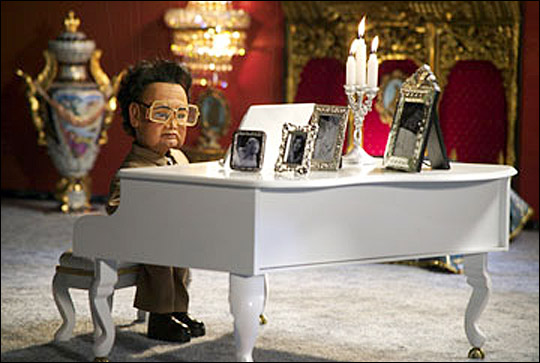
Image: Meet the Matts
On the flip side, all this moving around creates quite an international network! Having a friend living abroad creates both a reason to travel somewhere and a place to stay when you get there.
5. You represent your country/ethnicity/hometown/etc. whether you like it or not
In a recent post, I talked about people in Japan assuming that I am American. Often, what follows next is a question about some random element of American culture or a question about US foreign policy. I haven’t lived in the US for a decade. I don’t really know who Kim Kardashian is, much less why people seem to like her! And as for justifying US policy, you’ve got the wrong girl. I want to see some justification myself. It’s not my job to officially represent the good ol’ US of A, it’s a role I’m very uncomfortable with, and yet it’s often where I end up.
▼ This pretty much covers it.

Image: MKGraphics
Your nationality or ethnicity is usually one of the first things people find out about you when you are abroad, so the conversation naturally starts there. You may be the first America/Swede/Ghanaian they’ve had a chance to talk to or maybe they are just bringing up a news item they heard about to make conversation. It can be frustrating at times to be confronted with stereotypes, but it is usually an effort to engage you on your own turf, so to speak, so try to think of it as a friendly approach.
Juntaro, a Japanese friend of mine, recommends educating yourself more about your own culture, so you can make these sort of questions a springboard. “Everyone in the US thinks all Japanese do aikido or jujutsu,” he says. While it must get tiring talking about martial arts if that’s not where your interests lie, at least it’s a place to start.
6. Reverse culture shock is much worse that culture shock
When you move overseas, everybody talks about how difficult culture shock must be. Personally, I haven’t found it to be much of a problem because you expect things to be different. If you are smart, you even research beforehand how they will be different. Even if you are well prepared, things will surprise you, but you will be unsurprised at your surprise, if that makes sense.
What has been hard for me is going back to the States, particularly the first time I went back after living in Japan for some time. So many things that you have forgotten about daily life in your home country will confront you again in a bizarre combination of familiarity and surprise. It’s quite disorienting.
When I go back to the States, I spend a couple days being overwhelmed by the amount and volume of English around me, for example. I don’t know if Americans are really as loud as all that, or if I’ve just lost the ability to filter out ambient conversation, but it is like a tidal wave of English beating at my head.
Random things upset me. Japan is a cash society, so paying with the equivalent of a $100 bill, even if you are just buying a pack of gum, is a non-issue. Try buying a pack of gum with a $20 bill in the States and you’ll often catch an attitude from the cashier. This infuriates me every time, along with the generally abysmal customer service in America. It is familiar and expected, and I just can’t handle it any more.

7. Finally, living abroad can be addicting
I can’t even tell you how many people I know, myself included, who intended to live abroad for a fixed term and then just never left. No one ever counts on love. Whether it’s with a person, a place, or just the intoxicating feeling of newness when you start over in another country, it’s usually love that sucks you in and keeps you there.
When I came to Japan, I left a very sweet boyfriend of many years waiting for me. That relationship eventually fell apart because I didn’t want to leave Japan and I resented him for being the reason I “had to” go back. I wish that I had been self-aware enough to end things cleanly before I left or as soon as I realized I’d be sticking around a while, rather than messily over the phone before I had to leave for work one morning!
As Tolkein put it, “It’s a dangerous business… going out your door. You step onto the road, and if you don’t keep your feet, there’s no knowing where you might be swept off to.” So before you go, consider the possibility that you might not be coming back, or at least not in the way that you expect.
But if that thought gives you pause, consider this as well: if you stay, you might not discover where you are really meant to be.
Featured image: angerguru
Inset mages: RocketNews24, except where noted
 10 things one Japanese expat is always sure to stock up on when returning to Japan
 Foreigners reveal the moments they felt they really “got this whole Japan thing”
 5 reasons why Japanese expats say “sayonara” to their homeland for good
 Five awkward moments that prove you’ve finally nailed that whole “living in Japan” thing
 6 things Japanese expats miss most about Japan
 Foreign man arrested for walking on Shinkansen tracks, claims he was on the run from yakuza
 Mt. Fuji decorated with a 500,000-flower pink carpet is Japan’s ultimate spring view
 New Travelling Bento pouches turn your luggage into a Japanese lunch box
 Schoolkids learn life skills through shopping field trips at street markets in Kochi Prefecture
 McDonald’s and Gundam team up for customized anime mecha and fried chicken sandwiches[Video]
 Which Gundam is the favorite for fans in different countries? Gundam election announces results
 Studio Ghibli unveils Mother’s Day gift set that captures the love in My Neighbour Totoro
 Disney young adult novels get new beautiful shojo anime-style covers for Japan
 All Japanese customers banned from restaurant…in Japan?!?
 The young girl starring in this cool retro-style McDonald’s Japan video is actually 62 years old!
 Japan reportedly adding Japanese language skill requirement to most common foreigner work visa
 Pokémon and Ikea Japan cross over into each other’s worlds with collaboration events
 Starbucks Japan closing only Shinkansen platform branch for popularity-triggered renovations
 Two food hacks take Japan’s convenience store fried chicken to amazing new sandwich heights
 You can assemble a well-balanced team of Pokémon, them eat them, thanks to Japanese cake chain
 Tokyo turns its phone booths into free Wi-Fi hotspots, and here’s how to use them
 Fading Tokyo – Searching for signs of the Showa era as local neighborhoods evolve[Photos]
 Tokyo teahouse serves up a sakura matcha dessert you won’t find anywhere else
 7-Eleven Japan’s new baked-in-store sweet treat is only available in three parts of the country
 Man bites woman at cherry blossom park in Japan, dies shortly after
 Japan now has a special desk for people who work at home with a pet cat[Photos]
 Famous Tokyo cherry blossom spot installs view-blocking screens to fight overcrowding[Video]
 Uniqlo announces new T-shirts for One Piece, Naruto and more for manga publisher’s 100th birthday
 Train station platform ramen store closes its doors on half a century of history in Tokyo
 Starbucks Japan releases new My Fruit³ Frappuccino at only 34 stores around the country
 Studio Ghibli releases Catbus pullback keychain that runs like the anime character
 Krispy Kreme releases Super Mario doughnuts in Japan for a limited time
 Japanese onsen egg maker from 100-yen store Daiso needs to be on your shopping list
 Survey asks foreign tourists what bothered them in Japan, more than half gave same answer
 Japan’s human washing machines will go on sale to general public, demos to be held in Tokyo
 Starbucks Japan releases new drinkware and goods for Valentine’s Day
 We deeply regret going into this tunnel on our walk in the mountains of Japan
 Starbucks Japan releases new sakura goods and drinkware for cherry blossom season 2026
 Studio Ghibli releases Kodama forest spirits from Princess Mononoke to light up your home
 Japan’s newest Shinkansen has no seats…or passengers [Video]
 Major Japanese hotel chain says reservations via overseas booking sites may not be valid
 Put sesame oil in your coffee? Japanese maker says it’s the best way to start your day【Taste test】
 No more using real katana for tourism activities, Japan’s National Police Agency says
 Expat Insider’s Quality of Life survey 2017 reveals Japan has slipped down the rankings, but why?
 Five things you should know before coming to Japan【Video】
 Living in Japan: 10 “normal” things you won’t find here
 Five things that shock Japanese people living abroad
 8 things you should never say to a Japanese person
 Expat blogger dishes on her favorite foods to bring back to Japan after a trip home
 Here’s one of the first things you should do if you just moved into a new apartment in Japan
 Beaver logs, Christmas dinner, and other crazy stuff foreigners bring to Japan in their suitcases
 Japanese temple puts up three messages of wisdom the Internet should take to heart
 What makes people want to move to Japan?
 Japanese Tourists Share 15 Impressions of Traveling Abroad With Limited English Ability
 Four things to hate about looking for an apartment in Japan as a foreigner
 Does the experience of living in Japan make you a better person? The good, bad and ugly
