We asked expats living in Japan if they thought that simply living here has made them a better person. Find out the results: the good, the bad and the ugly!
We all know that living abroad gives you an opportunity to have a greater understanding of other cultures. If you’ve ever lived somewhere other than your home town, even the other side of your own country, you’re bound to be affected by the things you experienced on the other side.
But we at RocketNews24 wanted to dig a little deeper. We wanted to know how the Japan experience had influenced the behavior of foreigners living here. In particular, we were interested in the impact derived from Japanese culture. We then found common patterns and grouped their answers according to societal, lingual, philosophical, aesthetic, and religious influences.
Here is insight on living in Japan, from those who’ve lived here:
Societal Influences

The biggest influence on foreigners, as you might expect, was Japanese society itself and her core values. Japan imposes a decorum that few other societies have achieved and, according to our survey, most people felt that just being among nice and polite people was infectious! One person felt that “the general level of politeness has a civilizing effect” while another said: “The general niceness and benevolence of people makes me want to be nicer too,” and several admitted: “I’m a much nicer person than I was before.”
Others claim having gained a greater ability to put other people before themselves, and to do so more often. The advantages attributed to these abilities were a greater sense of cohesiveness, harmony among society, humility (less ego) and improved manners. As one person I recently spoke with who had visited Japan said, “We could all learn from Japan to exercise better manners. After all, good manners are free—they don’t cost anything.” So it appears that we benefit from living among good role models.
Regarding “consideration for others,” one person said that “Japanese people exercise this [consideration for others] in every public place (not talking loudly, keeping to queues, following rules properly, etc.) and if you choose to follow their example, it makes you a more considerate citizen.”
Some also experienced a heightened level of awareness of the people around them. “I’m more sensitive to an individual’s feelings and needs and to the intricacies of interpersonal relationships.”

This heightened level of awareness came up in almost every aspect concerning Japanese society, catapulting people to superior degrees: I’m more aware, I’m nicer, I’m more respectful, more considerate, more tolerant…”
It’s not that one was exactly unaware of things before they came to Japan, but that they have benefited from further exploration of certain aspects of being, and have chosen to assimilate these facets. Thus: “Japan taught me to be even more respectful of those around me, especially my elders or seniors,” and “I have come to expect higher levels of service and professionalism, from others and from myself.”
So it seems that Japanese society has the ability to tug you more in the direction of good, perhaps even meritorious, because virtue is expected rather than being offered a mere guideline.
More specific insights into the culture were: “I learned how people can simultaneously give up their individualism for an ordered society, and yet at the same time retain their individualism in their hobbies and interests,” and, “I learned that you can be outstanding without standing out.”
Another person reflects on her life saying, “I’m less outspoken now that I’ve lived in Japan. I do still speak my mind, but I think about how it will affect others first, or how it will affect processes.”
Gratitude was another point foreigners valued having learned in Japan. “Expressing thanks for the service of others, whether ancestors, parents, lovers or those one has dealings with,” has come to be regarded as an important life skill for these inhabitants. Learning to be tolerant was also attributed to the island nation because of the innate foreign aspect of the Japanese culture. “Since in Japan there are many cultural things a Westerner is not used to, such as sitting on the floor, there is a lot of tolerance involved. After it is accepted, it has a chance to become an acquired taste. That makes one a better person with a wide open heart for the unknown.”
Japanese Language Influences
Ichigo Ichie: one chance, one meeting

A couple people said they gained insight on the country and culture by studying the language. Certain concepts such as “ichinichi ichizen” (one day, one good thing) made them consider more deeply how they lived their lives. Ichinichi Ichizen means that while it’s not always easy to do good deeds, we should try to do just one good thing, no matter how small, every day. Another example was “ichigo-ichie,” which literally means “one chance, one meeting” and encourages people to value their encounters with others. Not only may you never meet that person again, but even if you do, it will inevitably be under different circumstances, emphasizing that each encounter should be treated as a unique experience.
Philosophical Influences
Ikigai is one’s “purpose for life,” which is different for each person.
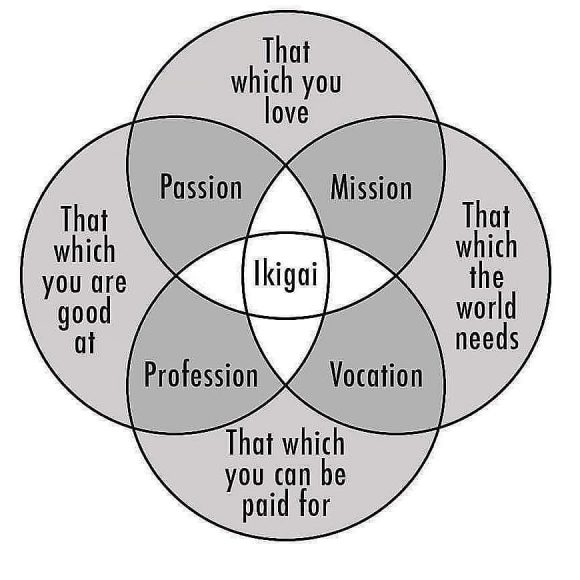
Many of Japan’s principles for living can be found nestled in Zen koans or in Japanese concept words. One such concept that has helped at least one person organize their life is that of ikigai which refers to your “purpose for living,” an inward journey explained in the above infograph. Other life concepts such as enlightenment, wa (harmony), mushin (no mind state) and wabi sabi are embedded in Japanese culture and may come to the surface during our time here, prompting us to reconsider some aspects of our lives.
Influences in the Arts
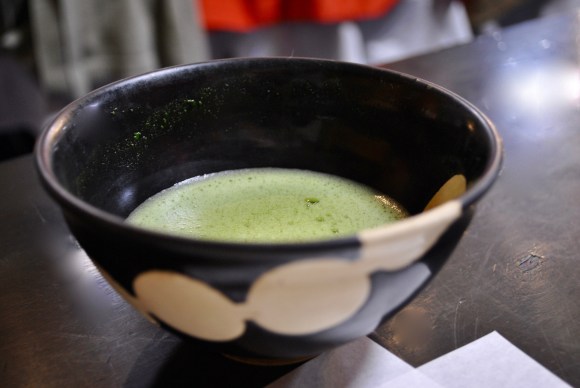
The entire Japanese culture is reflected in a cup of green tea!
RocketNews24
The essence of Japanese culture can be found in the tea ceremony, according to another person: “Style, silence, respect, form, service to others, taste, and much more.” There is deep meaning behind even the smallest gestures in the Japanese cultural arts, such as the tea ceremony, where every aspect of making tea is valued to the point that it must be practiced over and over with the goal of achieving perfection.
Another aesthete reconsidered art and beauty after her experience in Japan. “Beauty in Japan is quite different from that in Europe. I have learned to love Japanese pots which are often very irregular but totally charming.” Purposefully crafted to be uneven, such characteristics, even blemishes, provide a unique flavor to a piece.
Secular Education
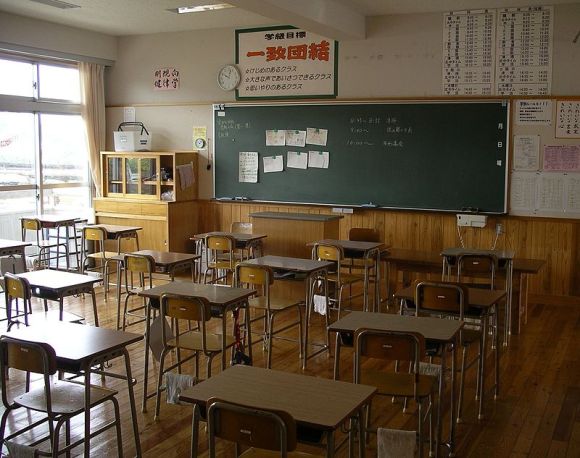
Many people agreed that they were impressed with the clear separation of religion and education in Japan. “They do a very good job of teaching children morality without tying it to theology.” While goodliness and cleanliness are often connected to religious rituals and beliefs in other cultures (the paternoster “Do unto others as you would want them to do unto you” from the Bible or The 10 Commandments, for example), “Japan taught me that one can be nice even if they do not follow any religion. Being considerate to others, being clean inside and outside, being on time, etc. seem to be the common rules followed by everyone here.”
Experiences from Japan’s Dark Side

Of course, not everyone has benefited by coming to Japan. While the more sanguine might say that even bad experiences are good because they teach us how to deal with adversity, one can also argue that no one should have to endure injustices. In particular, having to return to your home country because of labor disputes, unfair contracts, corporate exploitation, or visa complications is all too prevalent in Japan. I doubt anyone who has fallen prey to violations of the Hague Convention and Japan’s international childhood abduction laws (which have allowed Japanese women to take children away from their fathers with little recourse), is something anyone would feel is a good experience. Yet these things do happen, and several people admitted to having been victims of the system, with varying results.
Has experiencing Japan made you a better person? Whether the answer is yes or no, let us know how in the comments section.