Is Japan’s recycling system the most complicated in the world? It sure feels like it sometimes. Household waste must of course be separated into burnable and non-burnable, but after that there’s a dizzying array of recycling categories to break your non-burnables into. Since Japan is a relatively small country without masses of land to use for burying waste, the vast majority of waste used to be incinerated. However, with increasing ecological awareness in the 1990s came new legislation to minimise the amount of waste being burnt, and promote recycling.
Public awareness of the need to recycle is high, but the system can be baffling for new foreign residents. The problem lies not only in the array of recycling categories, but also in the apparent overlap between them: the grey areas. Is an empty pizza box considered recycled paper? Or is it burnable? Paper packages? “Other”? And if a bottle is made of a different type of plastic to the standard PET, is still a “pet bottle”, or is it just “plastic”?
Today we bring you six reasons to learn what goes in what box, and a few hints for getting it right along the way.
1. It’s required by law
Well, for businesses, anyway. Under the excitingly-named Containers and Packaging Recycling Law, medium- and large-scale businesses are obligated to recycle all glass and plastic bottles, paper and plastic containers. See, we told you we love Japan!
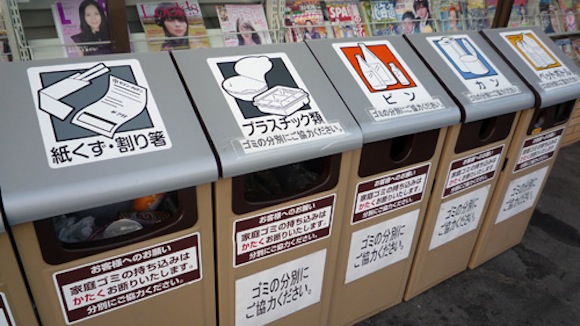
Businesses have to pay – based on weight and volume – for recyclables to be collected, which also explains those signs outside convenience stores that tell you not to put trash in that’s not from their store.
▼ “Please, quit bringing your trash here!”
2. No-one’s gonna do it for you
In my native England, recycling collection varies from city to city – just as it does in Japan – but kerbside sorting is common: you put all your recyclables (cardboard, glass, plastic) in one container all mixed up, and when the waste collection guys come round they sort it for you, throwing the different types of recyclables into different parts of their giant truck. There’s one important reason for this: properly trained staff are much better at sorting trash than us ordinary British folk, so having the professionals do it is actually a good way to minimise waste.
In Japan, however, the onus is on citizens to sort their own trash correctly, and they’re pretty good at it: national recycling rates for aluminium cans, for example, come in annually at well over 90%. After the 2011 East Japan earthquake and tsunami, displaced residents in Tohoku were praised for continuing to sort their trash for recycling, despite the fact they were living in emergency shelters in the wake of a large-scale natural disaster. Even in non-emergency situations, though, Japanese people tend be pretty diligent about following recycling rules, not least because if you don’t, you might end up with…
3. The red sticker of shame
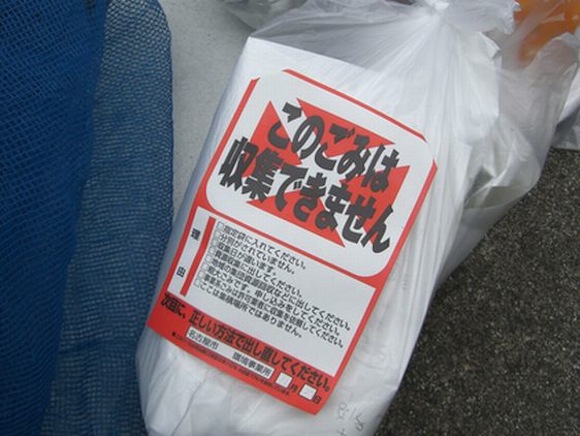
Recycling (and combustibles, too) has to be put out in local-authority designated clear bags – so if you put the wrong thing in the wrong bag, you might well find your trash left at the collection point with a doom-inducing sticker on it explaining your misdemeanour. And then everyone in the neighbourhood will know that you hate the planet.
▼ Red card! “This trash cannot be accepted.”
4. Japanese textbooks are full of it
I swear one of the first words I learned in a textbook after coming to Japan was bunbetsu (分別, the separation of rubbish when recycling). Whether you’re studying JLPT exam materials or a more integrated course, separating trash correctly is bound to turn up in your Japanese textbook soon enough, probably in some painfully didactic situation that goes a bit like this:
Bill is outside the apartment block. He sees a woman from the neighbourhood.
Bill: Good morning! It’s a beautiful day today, isn’t it!
Woman: Oh, Bill-san, good morning! Oh… oh no! Bill-san, you can’t put out old video cassettes on Tuesdays. Video cassettes have to go out on the third Wednesday of the month. And I noticed last week you put your trash out the night before the collection! You can’t do that. Please only take it out before 7 am on the day of collection like everybody else.
Bill: Oh, I am very sorry. Thank you so much for your kind advice. I will be more careful.
See? Even perfectly fluent exchange students make mistakes sometimes! If you’re studying Japanese, check your textbook for trash-related apology phrases. You’re going to need them at some point.

5. Endless rules in endless languages
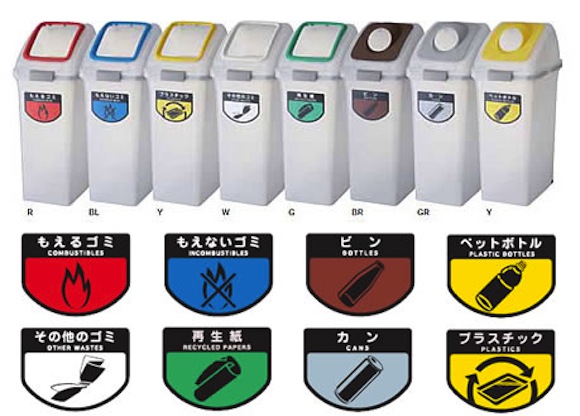
Sure, there might be nine different categories of recyclables and waste:
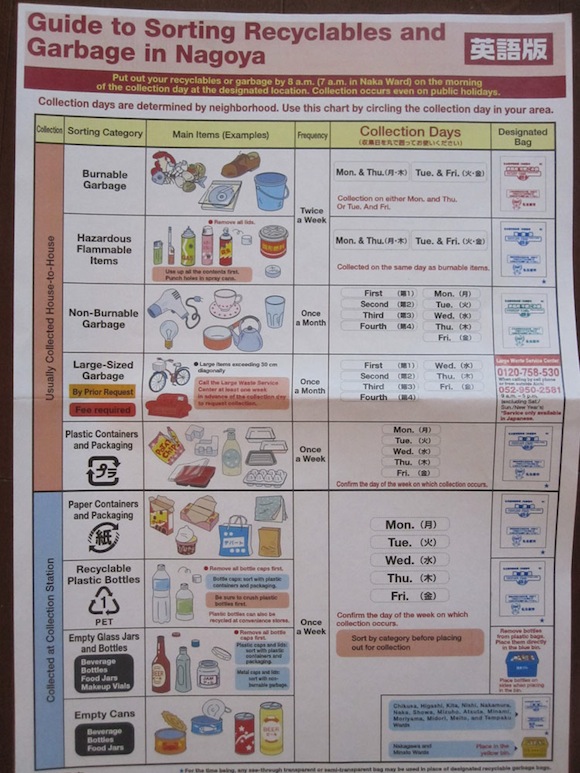
…but those rules are available – in most cities anyway – on a handy poster that you can cover your entire fridge door with! And it’s available in (wait for it) English, Japanese, Chinese, Korean, Portuguese, Spanish, Filipino and Italian. What’s your excuse?
6. You can leave the packaging in the store anyway
As Japanese blogging site Madame Riri pointed out in an article last month that asked why Japan is so darn good at recycling anyway, Japan has an overpackaging problem. Although there are more eco-oriented alternatives available (furoshiki, anyone?) it’s fair to say that Japan is pretty keen on wrapping up things that don’t need it. Individually wrapped bananas, corn on the cob, and even oranges are common sights.
▼We can’t say Kitty isn’t cute, but bananas already come with a wrapper… it’s yellow and biodegradable.
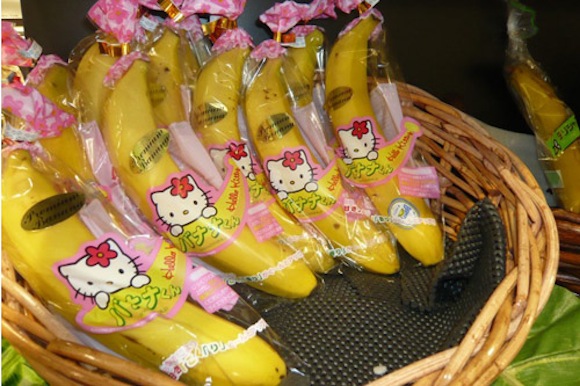
A side-effect of this packaging mania is that in supermarkets, there’ll often be a recycling bin right next to the cash register, where you can remove excess packaging from your goods as soon as you’ve paid for them. Sure, it’d be better if the supermarkets actually stopped plastic-wrapping corn and apples, rather than packaging them up and then allowing you to unpack them immediately, but it’s a start.
Ever the enterprising nation, Japan has come up with some impressive ways to use recycled materials, too. Tokyo’s Haneda Airport is built on an artificial island made of garbage, and there are brilliantly obscure recycling initiatives like The Japan Denture Recycle Association, a one-man venture based in Saitama Prefecture that recycles the metal from donated unused dentures, with proceeds going to UNICEF.
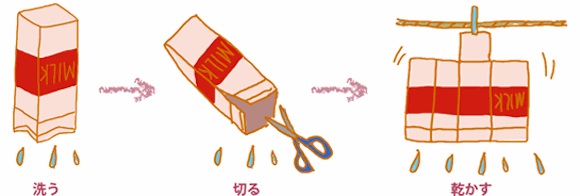
On a less extraordinary scale though, I’ve also found asking which trashcan something is supposed to go in can actually make a pretty good conversation starter with Japanese coworkers. Now if you’ll excuse me, I have to go and wash and hang out my milk cartons…
Sources: JCPRA, Madame Riri
Top image: lazrcat