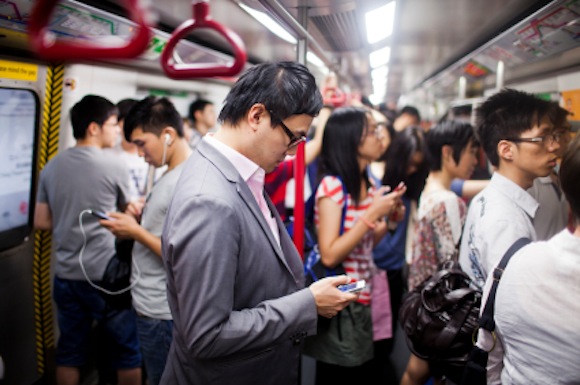
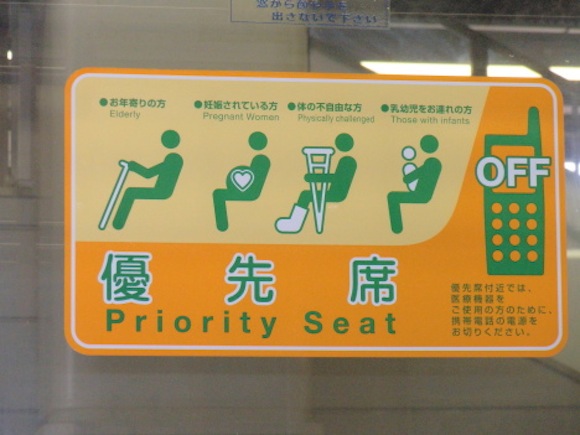
There are seemingly endless things one is not allowed to do on Japanese trains: eat or drink, put on makeup, talk on the phone, take up too much room. Most of these are sensible if strict, making life more pleasant for everybody in a jam-packed carriage. There’s one rule that’s a bit more unusual, though, and that’s the requirement that you switch your phone off near the priority seats.
Mobile phones can interfere with pacemakers, ran the conventional wisdom. So to give passengers with medical equipment a safe haven from electronic interference, most train companies asked passengers to switch phones off completely in certain areas. This summer, rail companies in Kansai more or less ditched that policy, saying it’s no longer necessary. Tokyo, meanwhile, shows no signs of changing the rules.
▼ Phone-free carriages: also great for people who hate technology.
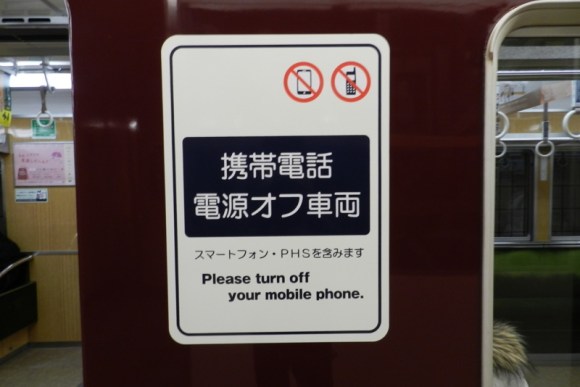
The ‘power off ‘ rule stems from a 2005 recommendation from the Ministry of Internal Affairs and Communications. Rail companies’ implementation of it varies, however: some ask that passengers turn phones off near priority seating; other companies have separate carriages; on some lines, all carriages are designated ‘power off’.
When 2G mobile phones were phased out, though, the danger posed to people with pacemakers all but vanished. Until 2012, the ministry recommended that phones be kept 22cm from a pacemaker – in a crowded train, there was a reasonable possibility of that being breached. Now, the recommendation is 3cm. So in the Kansai area, rail companies dropped the ‘power off’ rule this July, except for at busy times.
▼ Busy times are busy.
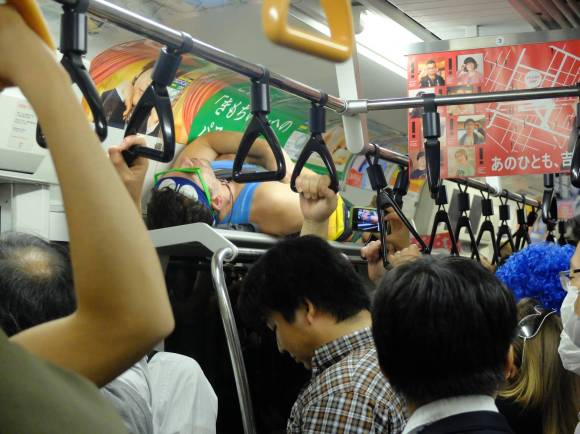
In Kantō, however, the area further east including Tokyo that shares a centuries-old rivalry with Kansai, rail companies say they have no intention of relaxing the rules. Kantō’s urban trains are famously crowded, so perhaps that’s part of the thinking, although JR East and Tokyo Metro both cited customer unease as the reason:
“Passengers with pacemakers are [still] uneasy about the use of mobile phones.”
The government, however, has been clear that the old ‘power off’ recommendations were for 2G service, and are not necessary now that it’s no longer used. It seems like there’s a case for educating people that the risks have changed, rather than keeping the rules the same because of passengers’ misconceptions.
▼ Spotted: a phone with an actual antenna.
Source: IT media news
Top image: yumekata


10 times Japanese train passengers aren’t so polite【Survey】
Man boards women-only carriage on Japanese train, gets his glasses knocked off【Video】
Yamanote Line train temporarily suspended after carriage fills with smoke in Tokyo
What to do if your phone battery dies when using a mobile transit pass on a Japanese train

Rugby World Cup fans slammed for singing anthems, forming human pyramids on Japanese trains
Family Mart Japan installs red-eyed “Monster Wolf” to keep bears away from convenience store
Starbucks Japan reopens Shinkansen platform store after redesigning it for speed
Tokyo cops arrest foreigner for suspected visa violation, don’t know what new residence cards look like
The adorable, delicious joy of the Totoro cream puff gift box[Taste test]
Japanese sweets brand creates new drinkable Cigare and we’re totally here for it
Japanese theme park adding Immersive Death Game with a “bomb collar” you have to wear
Japan launches first overnight Shinkansen bullet train between Tokyo and Osaka this summer
TKG Debate: What’s the best way to eat Japan’s beloved raw egg comfort dish?
Pikachu brings electric style to brand-new Pokémon G-Shock watch featuring every stater trio
Starbucks Japan creates special drink bottle bags, adorable stickers for all 47 prefectures[Pics]
Japan announces sudden 400-percent increase in visa fees for foreigners entering the country
Japanese ninja certification exam attracts 131 candidates from Japan and abroad
Studio Ghibli store Donguri Republic announces opening of first-ever store in America
“Phantom Egg Shop” opens in Japan, with a dozen rare Japanese varieties
Starbucks Japan releases new Frappuccino, tea and soda drinks for summer
Japanese sweets shop sells an ohagi so exquisite it sells out by noon
New Japanese overnight train coming to connect Tokyo with Tohoku in sleep-travel style
Uniqlo reveals third round of massive 100-year-anniversary manga T-shirts for Jump’s Shueisha
Even at twice regular Daiso price, this handy item is still great for summer travel in Japan
New official Ghibli anime food cookbook will teach you how to make Ponyo’s ramen and more
Forget Tokyo go-karts – there’s a new way to sightsee on four wheels in Japan
Japan’s human washing machines will go on sale to general public, demos to be held in Tokyo
Starbucks Japan releases new drinkware and goods for Valentine’s Day
We deeply regret going into this tunnel on our walk in the mountains of Japan
Starbucks Japan releases new sakura goods and drinkware for cherry blossom season 2026
Japan’s newest Shinkansen has no seats…or passengers [Video]
Put sesame oil in your coffee? Japanese maker says it’s the best way to start your day【Taste test】
Japan reportedly adding Japanese language skill requirement to most common foreigner work visa
Japan’s 5.3 million beautiful Hitachi Nemophila flowers are now in full bloom[Photos]
Mobile battery fire breaks out on Tokyo’s main commuter line
Major Tokyo subway line shut down by in-train mobile battery fire
Seats descend from ceiling on Japanese train to provide extra comfort for passengers【Video】
Japanese train conductor flips off rail fan photographer, prompts apology from JR
To sit or not to sit? Linguistic and societal debate on Japanese train seats for the elderly
Can you guess where this amazing Japanese commuter train is hiding some extra seats? 【Video】
New Japanese train etiquette point arises from high temperatures and high handy fan sales
The 10 most annoying things foreign tourists do on Japanese trains, according to locals