
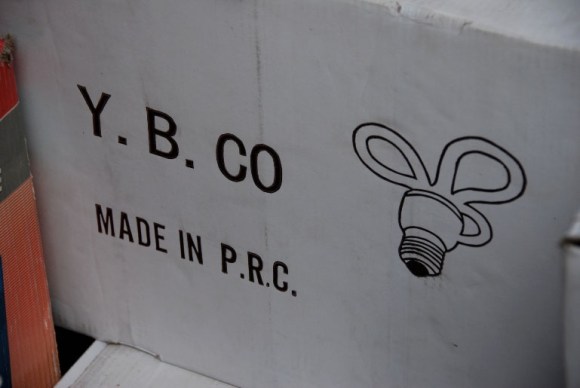
In today’s globalized economy, it’s perfectly normal to be wearing shoes made in Malaysia, listening to an American pop star on a Korean smartphone while driving a German car fitted with Japanese tires. But how many times have you taken a good look to find out where those new jeans or those headphones you got for Christmas were really made?
Recently Japanese consumers have been discovering that some of their products are from “P.R.C.,” a country they had never heard of, and would like some answers on what appears to be a legal gray zone in product labeling regulations.
Although still not as confusing an anthropromorphic pear currently having a hit song in Japan, a linguistic loophole of sorts has been allowing some products produced in China to be labeled in English as “Made in P.R.C.” Referring to China’s official name, the People’s Republic of China, the label is accused by some consumer advocates as being misleading. They say it’s a disingenuous attempt to rebrand the country after a series of food scandals tainted the image of Chinese-made goods around the world.
▼ Is this piece of clothing still worth almost 9,000 yen (US$74) if you knew it was made in China?
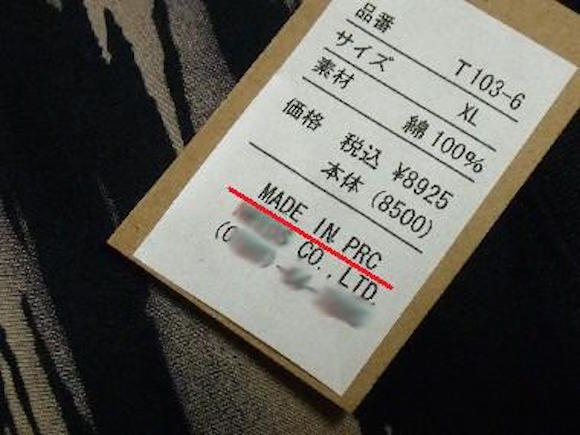 Image: Seesaa blogs (ooruri777)
Typically in Japan, goods from China are labeled 中国産 (chugokusan), literally meaning “produce of China”. But some Chinese manufacturers seem to be piggybacking off the more commonly seen wording for products in Japan from the United States of America—Made in U.S.A. These Chinese manufacturers could argue that, just like “U.S.A.,” they have every right to use the abbreviation of their country’s official name, in English, when identifying where their products come from.
▼ The practice of using the English abbreviation of a country’s official name is not unheard of, like these tires from Taiwan stamped with its formal name—Republic of China
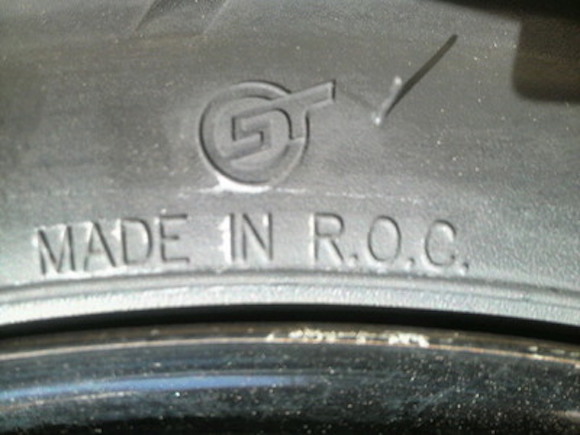 Image: Teacup Blogs (Maru no Obegaki)
According to Harumi Hori, a corporate lawyer in Tokyo, the proliferation of goods with the “Made in P.R.C.” really started sometime after January 2008 when frozen packaged gyoza dumplings from China were recalled amidst a food poisoning scare. The “new” label may have been made to appeal to Japanese consumers who were starting to avoid all products coming out of China.
Although safety regulators in Japan require food manufacturers to clearly label the country of origins of all food in Japanese, other products do not fall under the same regulation. And since P.R.C. is just as legitimate an abbreviation as U.S.A., regulators are hesitant to call the “Made in P.R.C.” label “misleading.” Hori and other consumer advocates would like labeling regulations to be equal across all industries, requiring Japanese to be used when identifying which country made the product in a customer’s hands.
The confusion about the label has caused a number of products on online shopping sites, such as Yahoo! Shopping or Amazon Japan, to be labeled “Made in China,” but “Made in P.R.C.” on the actual physical package and vice versa. When contacted by the Japanese economic newspaper Sankei Shimbun, a company spokespersons said that there are no regulations prohibiting such labeling. The Japanese online retailer Rakuten said that it is the responsibility of the manufacturers themselves to identify where the product is made.
The Consumer Affairs Agency of Japan, which regulates the labeling of products, has said that while consumers may have a “low degree of familiarity” with the term P.R.C., the phrase does not appear to be in violation of the rule that prohibits misleading wording about a product’s origin. Consumers trying to avoid Chinese-made goods are now trying to increase awareness that a product made in “P.R.C.” is actually from China.
▼ This dramatic video (evidently from someone not too fond of Chinese products) makes the point quite clear that PRC and China are the same
Are Japanese consumers overreacting to something they should have perhaps learned in middle school social studies class? Or are Chinese manufacturers just trolling the China haters? Without a clear judgement from regulators on whether product labels can use the abbreviation of a country’s formal, but not as commonly known, name, the “Made in P.R.C.” label seems like it is here to stay.
Source: Yahoo! Japan News
Feature Image: Seesaa blogs (ooruri777)
 Does a long line mean a sweeter deal? We compare two sweets from a Hokkaido food fair【Taste test】
 New Travelling Bento pouches turn your luggage into a Japanese lunch box
 New Japanese KitKats come in sakura flavour, with poetic symbolism for success
 Mt. Fuji decorated with a 500,000-flower pink carpet is Japan’s ultimate spring view
 Can a downtown Tokyo super sento bathhouse beat a hotel for a one-night stay?
 Does a long line mean a sweeter deal? We compare two sweets from a Hokkaido food fair【Taste test】
 New Travelling Bento pouches turn your luggage into a Japanese lunch box
 New Japanese KitKats come in sakura flavour, with poetic symbolism for success
 Mt. Fuji decorated with a 500,000-flower pink carpet is Japan’s ultimate spring view
 Can a downtown Tokyo super sento bathhouse beat a hotel for a one-night stay?
 Studio Ghibli releases 400 images from eight movies free to download online
 Japan reportedly adding Japanese language skill requirement to most common foreigner work visa
 Man bites woman at cherry blossom park in Japan, dies shortly after
 Japan’s plus-sized idol singer group releases new video about the joys of eating【Video】
 The 10 best day trips from downtown Tokyo【Survey】
 Pokémon and Ikea Japan cross over into each other’s worlds with collaboration events
 Starbucks Japan closing only Shinkansen platform branch for popularity-triggered renovations
 Two food hacks take Japan’s convenience store fried chicken to amazing new sandwich heights
 You can assemble a well-balanced team of Pokémon, them eat them, thanks to Japanese cake chain
 Tokyo turns its phone booths into free Wi-Fi hotspots, and here’s how to use them
 Fading Tokyo – Searching for signs of the Showa era as local neighborhoods evolve[Photos]
 Tokyo teahouse serves up a sakura matcha dessert you won’t find anywhere else
 7-Eleven Japan’s new baked-in-store sweet treat is only available in three parts of the country
 Japan now has a special desk for people who work at home with a pet cat[Photos]
 Famous Tokyo cherry blossom spot installs view-blocking screens to fight overcrowding[Video]
 Uniqlo announces new T-shirts for One Piece, Naruto and more for manga publisher’s 100th birthday
 Train station platform ramen store closes its doors on half a century of history in Tokyo
 Starbucks Japan releases new My Fruit³ Frappuccino at only 34 stores around the country
 Studio Ghibli releases Catbus pullback keychain that runs like the anime character
 Krispy Kreme releases Super Mario doughnuts in Japan for a limited time
 Japanese onsen egg maker from 100-yen store Daiso needs to be on your shopping list
 Survey asks foreign tourists what bothered them in Japan, more than half gave same answer
 Japan’s human washing machines will go on sale to general public, demos to be held in Tokyo
 Starbucks Japan releases new drinkware and goods for Valentine’s Day
 We deeply regret going into this tunnel on our walk in the mountains of Japan
 Starbucks Japan releases new sakura goods and drinkware for cherry blossom season 2026
 Studio Ghibli releases Kodama forest spirits from Princess Mononoke to light up your home
 Japan’s newest Shinkansen has no seats…or passengers [Video]
 Major Japanese hotel chain says reservations via overseas booking sites may not be valid
 Put sesame oil in your coffee? Japanese maker says it’s the best way to start your day【Taste test】
 No more using real katana for tourism activities, Japan’s National Police Agency says
 Studio Ghibli releases 400 images from eight movies free to download online
 Japan reportedly adding Japanese language skill requirement to most common foreigner work visa
 Man bites woman at cherry blossom park in Japan, dies shortly after
 Japan’s plus-sized idol singer group releases new video about the joys of eating【Video】
 The 10 best day trips from downtown Tokyo【Survey】
 One Piece creator has hidden secret of anime treasure’s identity in chest at bottom of real-world ocean
 Three reasons why you should definitely visit Taiho Ramen in Fukuoka Prefecture
 Japanese employees show almost unanimous support for in-office romances in survey
 Foreign man arrested for walking on Shinkansen tracks, claims he was on the run from yakuza
 New 7-Eleven sandwich goes viral in Japan, but is it everything it’s cracked up to be?
 Mt. Fuji’s “field sakura” coming into bloom as Shibazakura Festival begins
 Shimane has a secret hot spring town that feels like stepping into an old Japanese film
 McDonald’s and Gundam team up for customized anime mecha and fried chicken sandwiches[Video]