Vegetarians traveling to Japan may find it difficult to find food that fits their dietary lifestyle. Fish seems to be in everything including the soup stock used to make miso soup. To make matters worse, many foods in convenience stores, bakeries or even Starbucks have misleading labels, and that “vegetable sandwich,” or “vegetable pizza” may actually have meat in it too! You can order foods like okonomiyaki or monjayaki with no meat, but you still can’t be sure it won’t come with shredded fish flakes on top that there isn’t fish lurking in the dashi-based sauces.
I always recommend to my vegetarian friends that rather than asking Japanese restaurants to make something special for them, it’s better to just order food that doesn’t have fish or meat (or dairy) in it from the beginning. Fish has always been a staple in the Japanese diet, but the eating of wild and domestic game was banned for over 1,200 years in Japan, and Buddhist tradition gave rise to a special vegetarian cuisine called shojin ryori. Even now, the traditional Buddhist meal called ozen (rice, miso soup, pickles, boiled/simmered vegetables and beans), is still served at funerals in Japan.
So traditionally, there is a lot of vegetarian food in the Japanese diet. You just have to discover it. And RocketNews24 is here to help! In this article we’ll introduce you to common Japanese dishes that can be ordered at almost any Japanese restaurant that have no meat, fish or animal products in them, so, let’s jump into Japanese vegetarianism 101.
Most people in Japan who eat meat also eat lots of vegetarian food–they just don’t realize it! You’ll find the following foods at most izakaya and other typical Japanese restaurants. In addition, just as there are noodle restaurants or yakiniku beef restaurants in Japan, you can also find tofu restaurants, garlic restaurants and potato restaurants focusing on a particular kind of food that happens to be vegetarian. So once you find a vegetarian food you like, if you do a little more research to find places specializing in that particular cuisine, you’ll open up a whole new gastronomic world!
1. Mochi 餅
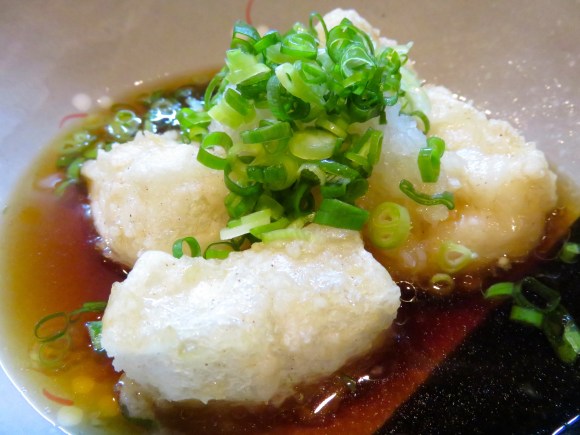
Mochi, most often found in the form of dense rice cakes, shows up in some okonomiyaki and monjayaki (where it is cut into little rectangles), and it can also be served either grilled (kirimochi) or fried (agedashimochi). It’s a nice warm dish that soothes the belly in the autumn when the days are getting cooler.
▼ Agedashimochi served with grated daikon radish and leeks
2. Eggplant/nasu なす (and other vegetable side dishes)
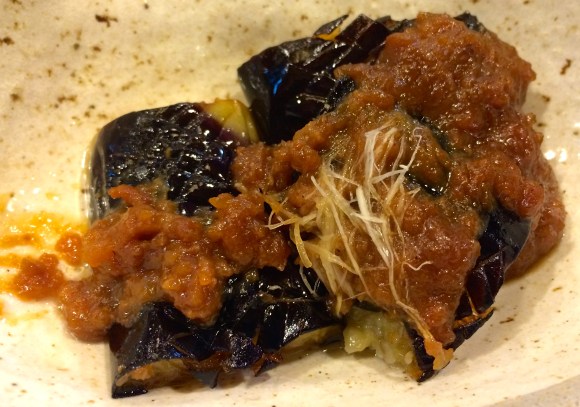
Eggplant (nasu in Japanese) is often ordered as a side dish at Japanese restaurants. It is served grilled (yakinasu) or baked and flavored with a warm miso sauce (made from soy beans, sea salt, and koji). To me, nobody does eggplant like the Japanese! When cooked properly, it is truly epicurean. Other vegetables served as sides are konyaku (a gelatin type food made with yams), yamaimo potato, and pumpkin. Even raw cabbage leaves are served with salt, and they go well with beer!
Tempura is also a favorite food of vegetarians. In addition to fried vegetables, you can also get herbaceous plants such as shiso leaves and even maple leaves. But be careful because mixed tempura sets typically include shrimp and other fish items.
▼ Nasu dengaku–grilled eggplant with miso
▼ Goats have known for a long time that there’s nothing wrong with eating raw cabbage leaves.

▼ Tempura is a perfect dish to share with your meat-eating friends because there’s a little something for everybody.
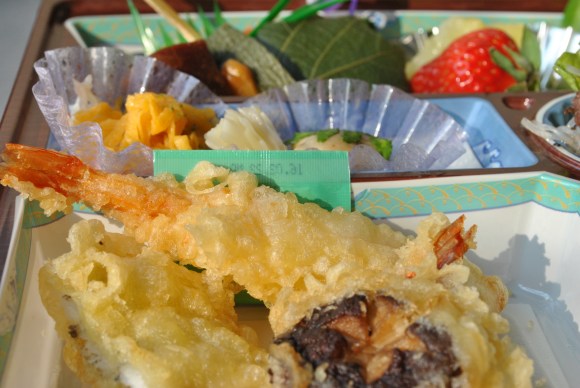
Tip: In Tokyo near Shinjuku Station try the Tsunahachi tempura restaurant.
3. Kushimono 串物
Kushimono, or skewered food, is readily available in Japan. Lotus root, mushrooms, green pepper, okra and many other vegetables such as gingko nuts (as well as meats) are served on sticks. Kushiage is the same stuff, but fried, on a stick. Try vegetable croquettes also.
▼ Renkon (lotus root) on a stick. At least you can see exactly what you’re getting.
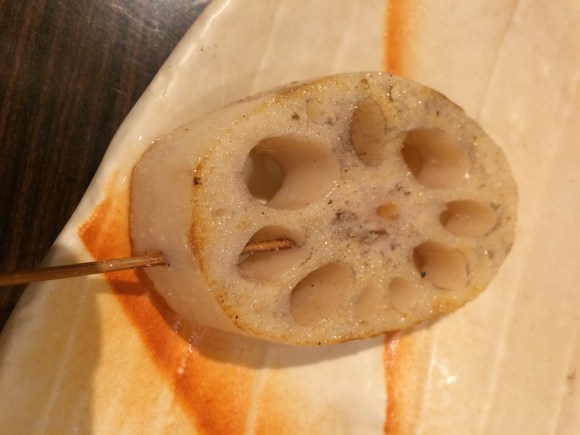
Tip: There are even kushimono restaurants dedicated to the pleasure of eating off a stick. If you’re in Osaka, try Tenjin Jinja, a kushimono restaurant on Dotonburi street next to the Kani Doraku crab.
4. Pickles/tsukemono 漬物
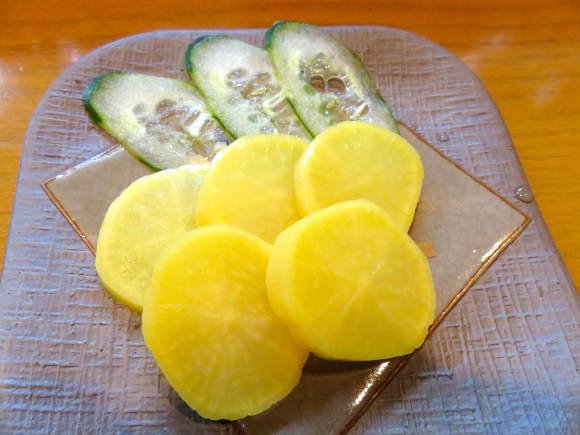
Tsukemono, pickled vegetables, often come as an accompaniment to a meal. Soaked in brine, tsukemono can be quite salty. If it is soaked in sugar or a combination of vinegar and sugar, it can be mild and almost sweet.
▼ Daikon radish (takuan) and cucumber tsukemono.
▼ Pickled plums, or umeboshi can be served as tsukemono and are also used inside rice balls.
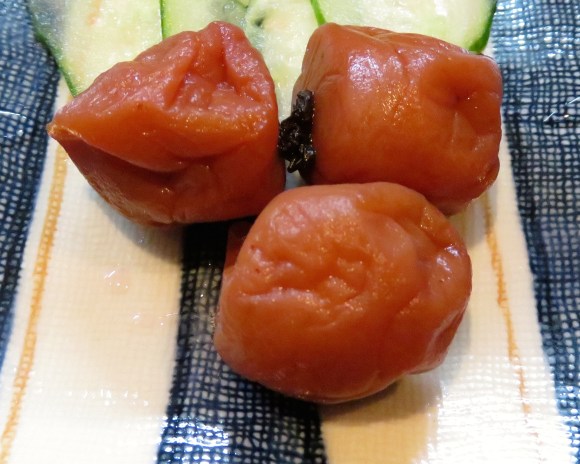
Tip: The purpose of tsukemono is to clean the pallet, balance out the umami flavors in a Japanese meal, and to help balance the meal psychedelically as, according to Japanese haute cuisine, meals are supposed to contain 5 colors: black, red, yellow, green, and white.
5. Daikon 大根
The daikon radish is so versatile it can be served pickled (tsukemono, takuan), boiled (oden), shredded (with sashimi), eaten as a salad (daikon salad). or grated to accompany dipping sauces. Daikon is also the most consumed vegetable in Japan as well as one of the most intelligent.

▼ Grated daikon adds a cool and refreshing touch to many foods.

Tip: Sauces accompany many Japanese foods. If you’re not sure if the sauce has fish in it, ask for a side of soy sauce (made from wheat, soybeans, water and salt) or mirin, made out of sweet rice wine. Be careful with ponzu sauce, a tangy citrus liquid made with rice wine, rice vinegar, and seaweed, but also fish flakes.
6. Beans/mame 豆
Beans (mame) are used in all kinds of Japanese fare, from natto (fermented beans) to edamame (soy beans), kuromame (sweet black beans), and red azuki beans mixed with rice and called sekihan. Sweetened beans can be found in Japanese desserts such as anpan, dorayaki, manjū, monaka, taiyaki and daifuku.
▼ Boiled soy beans are often served as an appetizer in restaurants.

Tip: Be sure to try Japanese soy milk, which I find to be superior to Western brands. Try the Kikkoman brand in a bright green carton, which can be picked up in 200-milliliter (6.8-ounce) one-serving boxes at any Japanese convenience store, made out of nice, biodegradable paper.
7. Nori seaweed (and kelp) 海苔
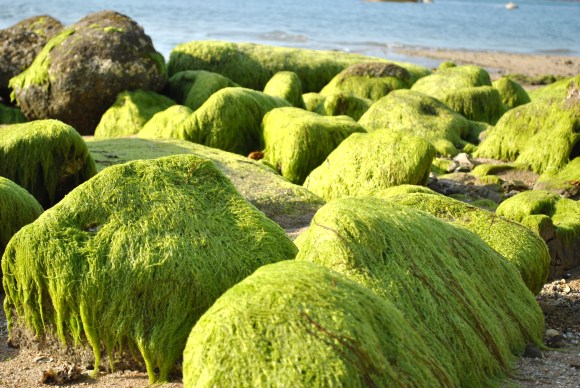
The varieties of edible seaweed and kelp are overwhelming, and most likely, you’ve never heard of many of them: hijiki, tokoroten, aonori, as well as the more familiar konbu and wakame. Used in sauces and soups, served as a side, a dessert (tokorten) or on top of salads, seaweed and kelp are nutritious and delicious.
▼ Aonori, which ends up on the top of okonomiyaki. Who woulda thunkit?
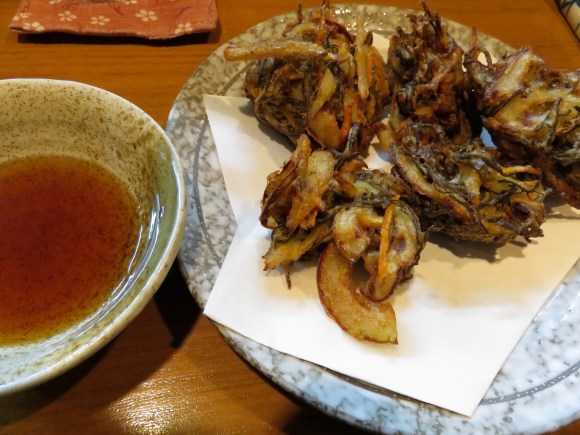
▼ Mozuku, a type of seaweed from Okinawa, is fried together with vegetables here and served like tempura.
Tip: Japanese seaweed is a great gift to take back home. The packages are light and typically divided into several smaller packets so you can divide them up among friends and family.
8. Tofu 豆腐
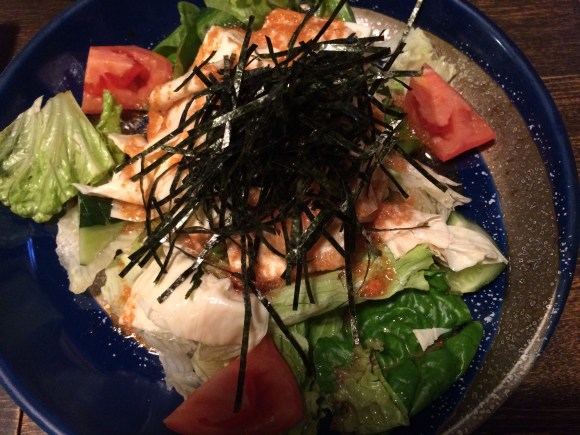
If you think you don’t like tofu, it’s probably because you haven’t tried it here. The Japanese are masters of tofu! Served boiled (yudofu) or fried (agedofu), whether made from white sesame seeds (gomadofu) or just reconstituted and spongy (koyadofu) don’t neglect to try the many forms of this extremely versatile, protein-rich bean curd. Tofu restaurants abound in Japan, so do seek them out!
▼ A tofu salad with seaweed on top.
Tip: Kyoto is one of the best places to find yudofu, which is a regional specialty. In other parts of Japan, try the Ukai chain of tofu restaurants.
9. Kinpira きんぴら
Kinpira is a Japanese method of cooking by sauteing and simmering root vegetables. Lotus root, carrots, gobo (burdock root), bamboo shoots, and even hijiki (seaweed) and tofu are cooked this way and served in a sauce of soy and mirin.
▼ A bamboo shoot paired with broccoli (underneath), shellfish and fish paste
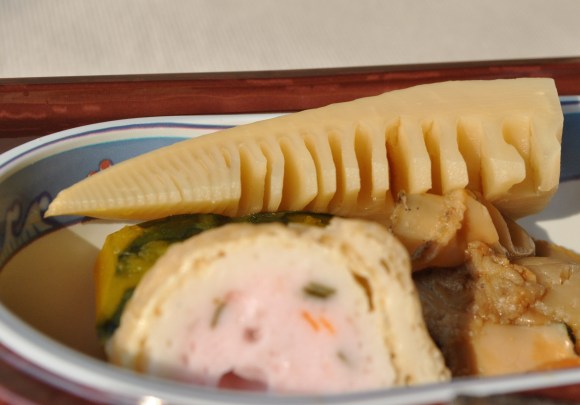
Tip: Kinpira is typically served as part of Japanese teishoku (a set menu), and is the contents of one of the myriad small bowls.
10. Rice 米
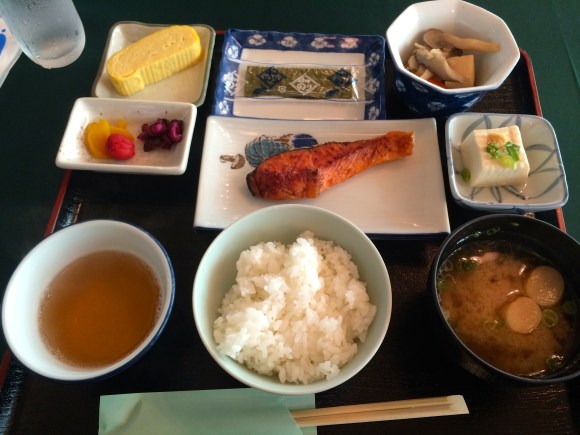
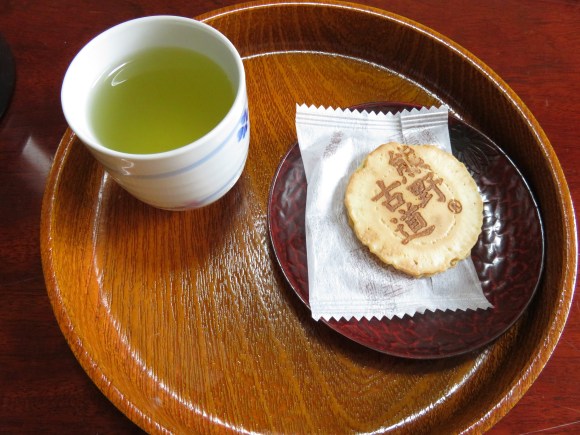
Whether onigiri rice balls (also called O-musubi), kappa maki (sushi rolls with cucumber inside them instead of fish), ochazuke (rice with green tea, often served at the end of a meal) inarizushi (rice in bean curd pockets served in bentos), okayu (rice porridge), or zosui (pre-cooked rice and water), or served as a snack in the form of senbei rice crackers, Japanese rice satisfies on many levels. And oh, let’s not forget the humble bowl of rice served with a typical set lunch or dinner!
▼ A typical teishoku, set menu lunch. Almost all Japanese traditional meals include a bowl of unadulterated rice.
▼ Senbei (rice crackers) are often served with green tea.
Tip: Japanese people understand the English word rice, but it almost always refers to foreign rice. White rice served Japanese-style is called okome.
Others
Alcohol:
Did we mention beer? Sake and shochu? Also vegan!

Noodles: Somen and zaru udon are two of the few noodles not served in a meat-based sauce. As they are a summer food, they’ll be difficult to find outside of the hot season.
Sansai (mountain vegetables): Japanese mountain vegetables such as warabi and bracken make wonderful pickings, but since they are more often a part of Japanese kaiseki (haute cuisine), they aren’t always available in regular restaurants. If you do get an opportunity to try them however, don’t miss the chance!
Every year, more and more Japanese restaurants start to offer vegetarian options in addition to those above. The recently opened Sushi Nova in Tokyo even offers vegetarian sushi!
This is by no means a complete list of Japanese vegetarian foods, so do weigh in if you have a favorite that we’ve skipped!
All images ©Amy Chavez/RocketNews24