
Despite Japan’s relative safety, abundance of delicious food, fascinating culture, and friendly people, the country still lags behind as a tourist destination for foreign travellers. So the upcoming 2020 Tokyo Olympic Games are the perfect opportunity for Japan to show off its famed omotenashi hospitality to the droves of foreign visitors who’ll be pouring into Tokyo to spectate.
As foreigners who’ve been living in Japan for a while, we think we might have some pretty good ideas about certain things Japan could do in order to make things a little easier on this influx of foreign guests…
Before we begin, a little disclaimer: the following list contains suggestions for ways that Japan could accommodate foreign guests during the Tokyo Olympic Games, and is not intended to be a list of complaints about the way things are done in Japan. (After all, we choose to live here, so we’re pretty cool with how things are done, for the most part!) We’re also in no way suggesting that Tokyo citizens turn their lives upside down just to pander to picky foreigners! While we’re sure that the country is already putting in all sorts of measures to prepare for the Olympics, this list contains just a few of the things that we personally think would be really helpful to foreigner visitors who might not know very much about the country or its customs before their trip.
With that out of the way, let’s begin!
1) How about… a smoking ban in public spaces?
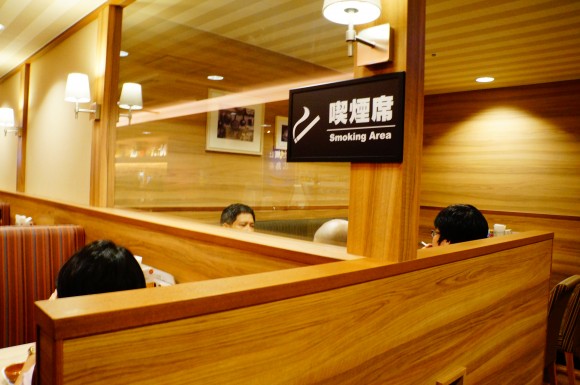
While many other countries in the world have become increasingly health-conscious when it comes to cigarette smoking, smoking in public places is still rife in Japan. While measures have been put into place to prevent people from openly smoking on certain streets, smoking inside most restaurants is basically taken for granted, and even family-style restaurants for people with kids make do with flimsy glass partitions separating the “smoking” from the “non-smoking” sections.
Starbucks is one coffee chain in Japan that does not permit smoking in any of its locations, and it’s for that reason that I’m a frequent customer. Other coffee chains relegate smokers to smoking rooms, give them a floor of their own (which is fine so long as it’s not the middle floor and you have to pass through it in search of a table), or force smokers and non-smokers to sit together. Visitors from countries with public smoking bans might really appreciate it if Japan could stub it out countrywide in time for the Olympics, but I accept that this one is still probably a tall order in a country where so many people still smoke. The fact that many “foreigner bars” in Japan have started implementing smoking bans on their premises shows that many foreign visitors from countries with public smoking bans don’t really enjoy all the cancer-stick puffing going on here, so Japan’s pubs and bars may want to consider this one if they’re hoping to entice foreign patrons during the Olympics.
▼ This pane of glass represents the line between the smoking and non-smoking areas of this restaurant. Sadly, the majority of smoke does not know how to read…
2) How about… more free Wi-Fi?
If you’re visiting Japan, it’s a good idea to pick up a pocket Wi-Fi device at the airport to use for the duration of your stay, since public Wi-Fi isn’t too easy to find here, and even though Starbucks does have pretty good Wi-Fi at the majority of their branches, you do have to pre-register. While some savvy tour companies have been putting new measures into place to provide short-term visitors with access to Wi-Fi hotspots, and some places are starting to provide wireless internet services for tourists, this is still one area which we think has a lot of potential for improvement. After all, how are you going to share all those braggy “I’m in Japan!” Instagram selfies and snaps of your yummy sushi meals without a fast and reliable internet connection?
3) How about… later-running trains?
Japan’s trains, while clean, fast and incredibly punctual, unfortunately stop running some time after midnight, leaving late-night revellers with no choice but to hole up in a nearby internet cafe or 24 hour McDonald’s until the trains start running again in the early hours of the morning. If you’re out to go clubbing or party hardcore, you’re basically in it until dawn, unless you can get a taxi back to where you’re staying. Tokyo is a big place, though, and by and large its people rely on the train network to get them home at the end of the evening. Midnight isn’t really all that late, and it’s easy for those who aren’t familiar with the system to accidentally miss their last train. We reckon laying on some later train services for the duration of the Olympics might be useful in order to reduce the number of drunken, stranded tourists who’ve miscalculated the train schedule through a haze of alcohol and high spirits. We’ve heard some rumblings about all-night transport services before, and the Olympics would be the perfect time to bring the concept into reality.
▼ Missing one’s shuuden (last train) and braving the elements all night is a rite of passage for many resident foreigners, but tourists might not be quite so receptive to a night on the cold, hard streets.
4) How about… accepting credit cards more often?
Japan is by and large very much a cash-based society. Here, it’s considered totally normal to walk around with a couple of hundreds of dollars’ worth of yen in your wallet, and shop assistants think nothing of breaking a 10,000 yen (US$81) bill for a pack of chewing gum. For tourists, however, it’s both inconvenient and a little nerve-wracking to have to carry around a ton of cash, however safe Japan may be. While more establishments have started to accept credit cards in recent years, you’re still likely to be told “cash only!” at the majority of the places you visit, so you really need to have a big stash of yen on you when you come to Japan. If Japan wants visitors to spend lots of money and boost the country’s economy during the Olympics, it only makes sense for them to make it easier for them to do this by getting on board with credit cards.
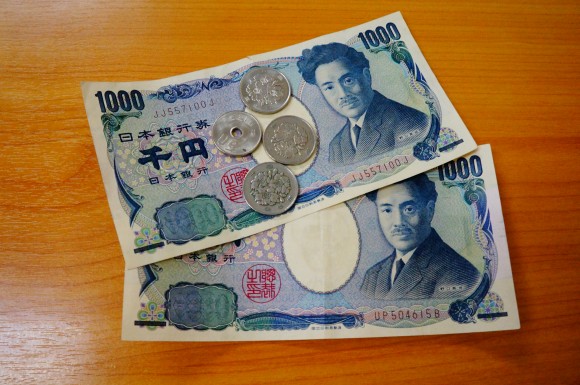
▼ This dapper chap is Hideyo Noguchi. He discovered syphilis and in reward he has been immortalised as the face of the 1,000 yen bill. Also, his hairstyle and moustache are totally baller.
5) How about… listing allergens on menus?
In Japan, it’s not really the “done” thing to be too picky at restaurants – asking for meals without certain elements added, or with something “on the side” is only going to draw raised eyebrows here. In the US, for example, restaurants are pretty accommodating about letting their customers have things “their way”, but in Japan, what’s listed on the menu or seen in the wax food displays is what you get – and there’s really not much point arguing about it.
While the country is now getting a little better at listing allergens, it’s still something that’s not considered very often. Foreign guests with certain allergies, food intolerances and religious or ethical dietary restrictions would, no doubt, really appreciate having a clear list of exactly what’s gone in to certain dishes. And in multiple languages, if it’s not too much to ask!
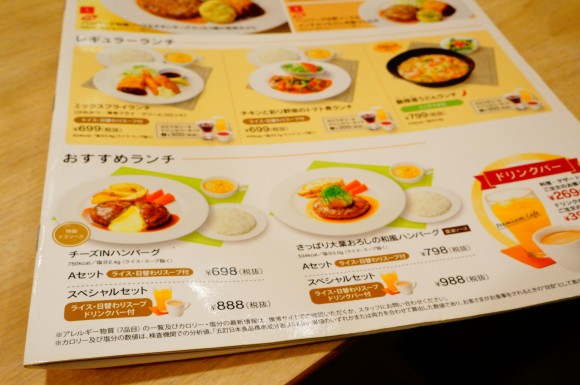
▼ At the bottom of this Japanese language only menu, it says “please ask the staff for allergen information”. Better start brushing up that Japanese, folks.
6) How about… more rental bikes?
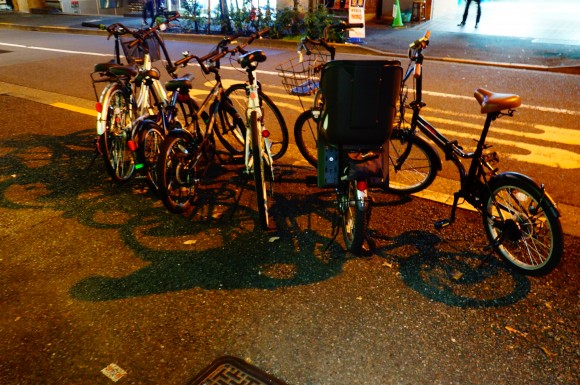
Tokyo is one big place, and while the train system is completely awesome, you miss out on a whole lot if you simply rely on the rails to shuttle you from place to place. Tokyo is a beautiful city with gorgeous parks and landmarks, and what better way to explore than by bicycle? Adding more rental bikes for foreign tourists to use, like they do in places like London, would help to alleviate the strain on the packed train system a little bit while enabling tourists to actually see more of the city! It’s a totally win-win situation.
▼ Bikes are everywhere in Japan, so why not?
7) How about… improving the signage in stations?
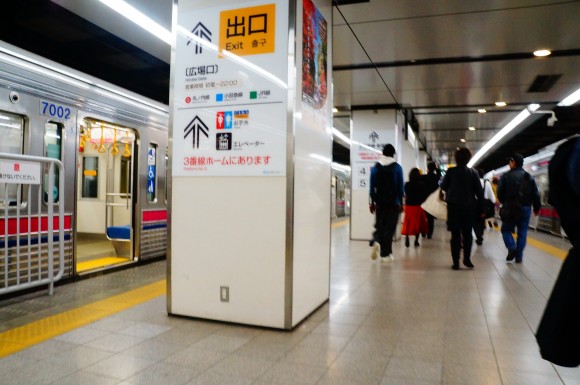
Walk around any train station in one of Japan’s major cities and you’ll spot English everywhere. They really do try to accommodate foreign tourists by writing out the names of train destinations in romaji (romanised readings of Japanese words and names), and providing signage which is designed to help English speakers find their way. The problem is that Japan’s train stations tend to be extremely complex. We’re not sure if it’s true, but we’ve definitely heard rumours of foreigners who’ve gotten lost in complicated stations like Shinjuku or Osaka station, and eventually their bones have been discovered years later.
Okay so we totally made that last bit up, but trust us, those places are crazy complex! The issue is that the stations tend to be huge, with a colossal number of exits, multiple train lines, and a huge assortment of completely non-station related stuff mixed in, like department stores, restaurant “streets”, and various shops of all kinds. Take a wrong turn in Shinjuku Station and you can find yourself gazing at women’s support pants in the lingerie department of the Keio department store, with no idea how to get to the Yamanote Line. Perhaps some large, idiot-proof signs in multiple languages might help prevent any more tourists from getting lost in the wilds of Japan’s bigger transport hubs.
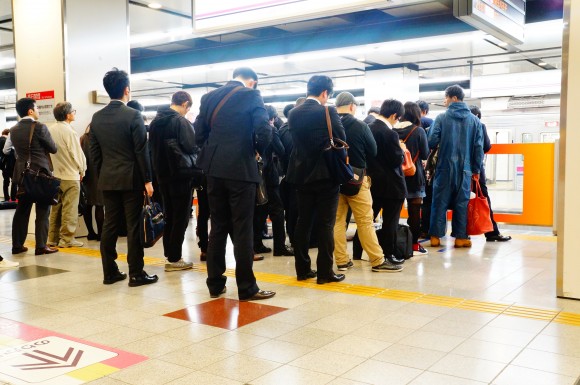
▼ Spend enough time commuting through Tokyo’s stations, and you can master even the notoriously complicated Shinjuku Station. However, it does take time to memorise all the shortcuts.
8) How about… hiring some really good translators?
In general, Japan is really pretty good about providing English translations in public places. The problem is that they are often gibberish. This is just my personal opinion, of course, but sometimes it feels to me that in Japan machine translated English is often considered “good enough”. Whether or not the English is accurate seems to be a secondary concern, as if the fact that an English translation, of sorts, has been provided at all is all that matters. However, bad English tends to inspire doubt as to the authenticity of the thing being said, and incites distrust of the “speaker”. And in some cases that can have pretty awkward consequences. Hiring some extra, Anglosphere wordsmiths to do some translation or even native checking of signage and information relating to the Olympics would go a long way towards maintaining Japan’s efficient, distinguished image. And let’s not just stop at English — how about hiring a whole bunch of native speakers of various languages to provide multilingual support? After all, not everyone who visits Japan from abroad speaks English!
9) How about… adding more trash bins?
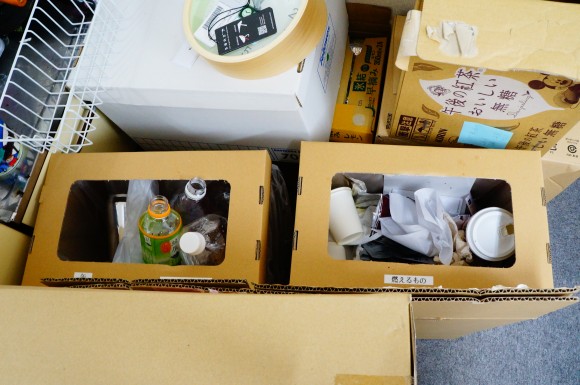
The lack of public trash receptacles in Japan is a common gripe for tourists, with many unable to understand why Japan’s streets are so (relatively) clean when trash cans are such a rare sight. The reason for Japan’s lack of bins is complicated, and probably has something to do with concerns over terrorism. The sarin gas attack on the Tokyo subway in 1995 could be seen as a major factor behind the removal of bins in Japan in general, and the 2004 Madrid train bombings were followed by the silent removal of trash bins on most of Tokyo’s subway platforms. However, a big influx of foreign tourists for the Olympics is going to mean more rubbish, so we’re wondering if a solution couldn’t be worked out to avoid a big mess on the streets. The London Underground, which is, as we know, no stranger to terrorist attacks itself, still has bins, although they’re more of a clear-plastic-bag-on-a-metal-hoop sort of deal, which prevents anything unsavoury being hidden in them. Perhaps Japan could come up with something similar? (And yes, we’ll admit, we’re kind of tired of having to carry our trash around with us in our bags all day long…)
▼ Surprisingly enough, I couldn’t find a public bin to photograph, so enjoy this peek into the RN24 office’s trash.
Hosting the Olympics is always an exciting time for any city, and we’re sure that lots of people are going to fall in love with Japan when they come here to watch the games and do some sightseeing on the side. These are just a few of the things we reckon Japan could do to sweeten the deal even more—if you have any other suggestions, be sure to let us know in the comments section!
All photos © RocketNews24
 Japanese government reveals new hot spring symbol for foreign tourists ahead of Tokyo Olympics
 Foreign tourists pick the top 10 inconveniences about traveling in Japan【Survey】
 Report reveals that more than 40 percent of Tokyo Olympics volunteers are made up of foreigners
 Applications for the ticket lottery for Tokyo 2020 Olympics matches and ceremonies are now open!
 2020 Summer Olympics in Tokyo will Blow. You. Away.
 Japan reportedly adding Japanese language skill requirement to most common foreigner work visa
 Pokémon and Ikea Japan cross over into each other’s worlds with collaboration events
 Starbucks Japan closing only Shinkansen platform branch for popularity-triggered renovations
 You can assemble a well-balanced team of Pokémon, them eat them, thanks to Japanese cake chain
 Japan named most sleep-deprived country for fourth year in a row, according to survey
 Totoro Fund line of beautiful artwork and apparel lets you help the real-world Totoro Forest
 Japanese kindness restores our faith in humanity after a highway bus accident in Tokyo
 Giant Chiikawa statues appear in one of Tokyo’s most confusing train stations【Photos】
 Cup Noodle’s Nissin develops space ramen, space curry rice for astronauts to eat among the stars
 Made In Japan Fender Limited Edition Hello Kitty Stratocaster now on sale in Japan
 Pokémon lacquerware series expands for Year of the Horse with new handcrafted design[Video]
 Two food hacks take Japan’s convenience store fried chicken to amazing new sandwich heights
 Tokyo’s best museum for foreign travelers finally reopens after being closed for four years
 Fading Tokyo – Searching for signs of the Showa era as local neighborhoods evolve[Photos]
 Tokyo turns its phone booths into free Wi-Fi hotspots, and here’s how to use them
 Japan now has a special desk for people who work at home with a pet cat[Photos]
 Famous Tokyo cherry blossom spot installs view-blocking screens to fight overcrowding[Video]
 Uniqlo announces new T-shirts for One Piece, Naruto and more for manga publisher’s 100th birthday
 Train station platform ramen store closes its doors on half a century of history in Tokyo
 Starbucks Japan releases new My Fruit³ Frappuccino at only 34 stores around the country
 Studio Ghibli releases Catbus pullback keychain that runs like the anime character
 Krispy Kreme releases Super Mario doughnuts in Japan for a limited time
 Japanese onsen egg maker from 100-yen store Daiso needs to be on your shopping list
 Nine great places to see spring flowers in Japan, as chosen by travelers (with almost no sakura)
 Survey asks foreign tourists what bothered them in Japan, more than half gave same answer
 Japan’s human washing machines will go on sale to general public, demos to be held in Tokyo
 Starbucks Japan releases new drinkware and goods for Valentine’s Day
 We deeply regret going into this tunnel on our walk in the mountains of Japan
 Studio Ghibli releases Kodama forest spirits from Princess Mononoke to light up your home
 Starbucks Japan releases new sakura goods and drinkware for cherry blossom season 2026
 Japan’s newest Shinkansen has no seats…or passengers [Video]
 Major Japanese hotel chain says reservations via overseas booking sites may not be valid
 Put sesame oil in your coffee? Japanese maker says it’s the best way to start your day【Taste test】
 No more using real katana for tourism activities, Japan’s National Police Agency says
 Could the 2020 Tokyo Olympics logo possibly be plagiarized?
 Tokyo Olympics will not allow spectators from overseas
 Survey asks foreign tourists what bothered them in Japan, more than half gave same answer
 Advice for Tokyo 2020 Olympics volunteers: Dress like a Japanese ninja
 Half of Tokyo’s universities to use credits to “convince” students to volunteer in 2020 Olympics
 Japan’s Harajuku Station to be rebuilt ahead of 2020 Tokyo Olympics
 Spirit of volunteering strong for Tokyo 2020 Olympics, but data suggests something may be off
 Should the 2020 (now 2021) Tokyo Olympics be cancelled? Japanese citizens are divided
 Kyoto raises hotel accommodation tax to fight overtourism, travelers could pay up to 10 times more
 A look inside the Tokyo Media Centre for the 2020 Olympic and Paralympic Games
 IOC member says decisions on Tokyo Olympics must be made by late May due to coronavirus fears
 Japanese sandwiches give foreign reporters culture shock at Tokyo Olympics
 McDonald’s Japan gets into the spirit of the games with new Tokyo 2020 Olympics tumblers
 Japan to reopen to international tourists with new entry requirements
 Looks like it’s time to say good-bye, and maybe good riddance, to the 2020 Tokyo Olympics logo